Joel Kotkin

Joel Kotkin is the author of The Coming of Neo-Feudalism: A Warning to the Global Middle Class

Slouching towards Gavin

More through historical accident than anything else, Gavin Newsom has emerged as the de facto leader of the Democratic resistance. His dubious attempt to redistrict California along partisan lines won at the ballot box last month. It was a gamble – an open and explicit attempt at gerrymandering – which voters have rewarded. He is conspicuously modeling his image on Bill Clinton’s and Slick Willie is returning the compliment by letting insiders know that he is hugely impressed by Newsom’s talents. Newsom is also audaciously recasting himself as a working-class hero. He has said he spent his childhood “hustling” and that he “raised himself.” That rather downplays his rise as a protégé of the Getty family, which employed his father as its lawyer.


Gavin Newsom

Why we need to talk about black anti-Semitism

At the Glastonbury musical festival in England this weekend Bobby Vylan – a British-born rapper of African heritage – led the crowd in a chant of "Death, death, to the IDF". It was a potent reminder of a dispiriting trend: the growing hostility among those of African heritage in the United States towards Israel and even to Judaism itself. One notable development seen during the bitter battle over Gaza and the recent strike on Iran has been broad embrace by African-American celebrities of anti-Israel and sometimes openly anti-Semitic memes. These include such figures as the influencer Candace Owens, Kanye West, also known as Ye, and, to a less heinous extent, the New York Times' Afro-centrist columnist Charles Blow. These figures, as well as the usual anti-Semites like Rev.

Anti-Semitism

What’s the matter with Los Angeles?

Los Angeles is reeling once again from urban disturbances, as it did in 1965, 1992 and 2020. After each outbreak the city is widely seen as a hopeless disaster that epitomizes everything wrong with American cities. That’s ironic because since its infancy Los Angeles sought to develop a new model of post-Dickensian urbanity – what the early 20th century minister and writer Dana Bartlett called “the better city” – one dominated by middle class single family homes. At the time, the city that was among the whitest, and most protestant in the nation. Bartlett predicted it would become “a place of inspiration for nobler living.”The strategy, a combination of vaulting ambition and careful planning, worked brilliantly.

LA Riots

Why cities have lost their appeal

Over the past half century, media and academic sources repeatedly suggested that increasingly dense cities would dominate the future. Places such as London, San Francisco and Chicago would dominate an economy. Today, this assessment seems grossly dated. Even in the pages of the urbanista New York Times there are widespread fears of an “urban doom loop.” But this, too, is a stretch. Great core cities will not go the way of post-imperial Rome, but their role is being recast as the urban frontier shifts increasingly to the periphery. What we are seeing mirrors H.G. Wells’s vision. He predicted that most economic life, and most families, would shift to the suburbs and exurbs.

cities

The climate has changed on climate change

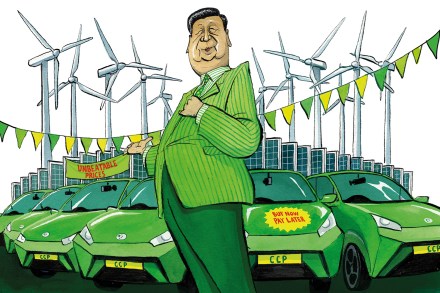
Like the Marxist dialectic, or the predictions of the Gospels, the green movement has long seen its triumph as preordained. Yet sometimes the inevitable turns out to be not so. Over the past few years green policies — notably the drive for “net zero” — have been failing. Both markets and politicians have seen the light. WhatJoe Biden’s treasury secretary Janet Yellen once called “the greatest business opportunity of the twenty-first century” has revealed itself to be something of a disaster. The new American President is likely to be blamed for the implosion of the green agenda, but its collapse long pre-dates his re-ascension.

The battle of the oligarchs

Money and power have rarely been strangers; often nations are made to shudder when the ruling elites battle each other. Britain’s late empire was divided between liberal manufacturers and aristocratic interests, whose conflicts hastened the rise of the Labour Party and the end of empire. In the United States, opposition to powerful trusts defined progressive politics for decades, ultimately laying the basis for the New Deal and a greater scope for government. In the West today we are witnessing a similar divide among the uber-rich class — epitomized by Elon Musk’s embrace of Donald Trump — that is already reshaping politics. Until 2016 the US establishment, both Republican and Democratic, embraced similar views on national security, global trade and multilateral institutions.

oligarchs

The West faces a new type of housing crisis

Throughout the West, particularly the Anglosphere, housing costs are ravaging the middle class. Homeownership, long the key to social mobility, is on the decline, particularly among younger generations and minorities. According to the Organization for Economic Cooperation and Development, house prices in high-income countries have been rising “three times faster than household median income over the last two decades,” causing the standard of living “to stagnate or decline.” Unlike previous housing crises, this one is not primarily caused by mass displacements due to wars or natural disasters or population growth.

housing

The Californication of the Democratic Party

When Joe Biden was elected in 2020, an overjoyed Los Angeles Times boasted that his goal was to “make America California again.” Biden has fulfilled the Times’s vision, if with less than complete success. Over the past few weeks, however, lunchbucket Joe from Scranton has been unceremoniously dumped by the Golden State elite — Nancy Pelosi, Adam Schiff, George Clooney and a passel of tech oligarchs — to be replaced with one of their own, Vice President Kamala Harris. But given the chances of a GOP win this year, the Californians have another favorite in the wings, Governor Gavin Newsom, for 2028. Harris’s elevation and Newsom’s looming challenge are but parts of what can be best described as the Californication of the Democratic Party.

California

The gloomy future facing trade unions

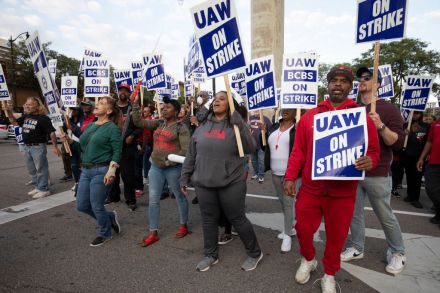
Few developments have more cheered progressive activists than the perceived resurgence of labor unions. This has been sparked by largely symbolic efforts to unionize in places such as Starbucks and Amazon, as well as more sizable wins by the Writers Guild of America and the Screen Actors Guild and United Auto Workers, the country’s most important private labor union. In 2022 strike activity more than doubled from the previous year. Yet ultimately these wins may turn out to be largely Pyrrhic.

unions

Who is winning America’s class war?

From our UK edition

38 min listen

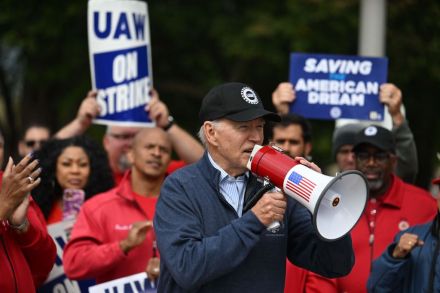
This week Freddy is joined in The Spectator offices by regular contributor and fellow of urban studies at Chapman University, Joel Kotkin. They discuss Biden and Trump's respective attempts to burnish their credentials with the unions this week, how the cultural agenda is alienating voters, and whether technology could prevent the coming of neo-feudalism.

The decline of the West: America’s Pacific cities face a bleak future

From our UK edition

As recently as the early Nineties, when the great cities of the Midwest and East Coast were careening toward what seemed like an inevitable downturn, the urban agglomerations along the Pacific coast offered a demonstrably brighter urban future. From San Diego to the Puget Sound, urban centres along America’s western edge continued to thrive and expand as migrants from other parts of the country, and the world, crowded in. In the process, the Pacific cities seized the economic initiative. The West Coast became home to the country’s premier trade entrepôt and its dominant entertainment and technology centres, and home to five of the world’s six most valuable companies. Yet now these same cities — despite differing histories and industrial mixes — face a precipitous decline.

Artificial Intelligence is the crack cocaine of the digital age

From our UK edition

The rise of artificial intelligence may be rescuing the tech oligarchy, but its current trajectory could hasten our steps towards what virtual reality guru Rony Abovitz calls ‘computational autocracy’. The new possibilities posed by AI represent a force multiplier for the large tech firms. Musk, Apple, Meta, Google and Microsoft already seem poised to dominate the field. Yet the emerging politics of AI are likely to be confusing. Even its architects like Sam Altman, chairman and CEO of OpenAI, the company which developed ChatGPT, recently warned that about an 'existential risk' to humanity.

The new corporatism that’s killing capitalism

Over the years since the financial crisis, economic power and wealth has become ever more concentrated in fewer hands. This is something leaders have acknowledged, and policymakers have tried to do something about. And yet, despite brave talk of breaking up mega-giant companies, anti-trust efforts have been anemic, as most recently demonstrated by the failure to stop Microsoft from swallowing game maker Activision. The future looked a little brighter in the immediate aftermath of the pandemic. There were signs of a grassroots resurgence, with a strong uptick in new business formations in the United States. But since then, as interest rates have risen and regulatory pressures have increased, there has been a slackening off of new firms.

the new corporatism

Is it the end of Silicon Valley?

From our UK edition

39 min listen

Freddy Gray speaks to Joel Kotkin who is the author of The Coming of Neo-Feudalism: A Warning to the Global Middle Class. On the podcast, they discuss the collapse of Silicon Valley. With mass layoffs in the tech sector and a post-pandemic real estate downturn, Kotkin argues the Valley is entering a period of long-term decline – but can it come back from this? Produced by Natasha Feroze.

The end of the Silicon Valley dream

From our UK edition

It is difficult, given what Silicon Valley has become, to convey exactly what it was like in the 1970s and ‘80s. It was a remarkable centre of technology, but also the embodiment of the spirit of capitalism at its very best, as epitomised by garage start-ups like Apple. Greed, of course, is always a human motivation, but the early Valley culture was created by entrepreneurial outsiders who genuinely wanted to make the world better. In the early days of the tech revolution, some watchers imagined an almost utopian, communitarian society on the horizon.

How America’s ‘big sort’ will upend politics

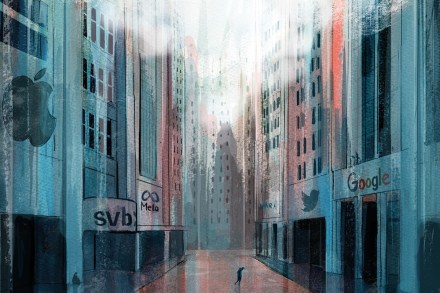
The world may not be turning upside down, but it’s certainly tilting. In the long shadow of the pandemic, with war on the European continent and the West and China entering a new cold war, the “new economy” of bits and bytes that was supposed to connect and shape the world has hit a rough patch. Meanwhile, the much disdained “old” economy of manufacturing, agriculture and energy is thriving. Today, it’s not steel companies or gas plants that are experiencing mass layoffs, but firms such as Goldman Sachs, Meta, Amazon, Microsoft, Snap and Google. Last year, media companies  lost $500 billion in value and tech firms have shed $4 trillion off their valuations. Industrial spaces are in high demand while downtown offices sit half-empty.

big sort

America is entering a golden age of democratic capitalism

From our UK edition

America could be entering the 'Great Stagflation', defined by economist Noriel Roubini as 'an era of high inflation, low growth, high debt and the potential for severe recessions'. Certainly, weak growth numbers, declining rates of labour participation and productivity rates falling at the fastest rate in a half century are not harbingers of happy times. But the coming downturn could prove a boon overall, if Americans make the choices that restore competition and bring production back to the United States and the West. In the United States, the contours of a new post-pandemic economy are becoming clear, particularly in the Sun Belt and parts of the heartland. That revival could result in an economy that is stronger, more innovative and entrepreneurial.

The revenge of the analog economy

The last few decades have seen the emergence of two rival economies: an older analog one built on the actual production of goods, and another that profits from financial transactions, images and customer surveillance. The contest between the two has been rather one-sided, with the “laptop economy” the big winner, particularly during the pandemic. But while lockdowns made this one-sidedness clear, recent developments have been an unwelcome reminder that the pain suffered in the analog economy still matters. Whether through inflation, energy shortages or supply chain issues, we are getting an uncomfortable lesson in the enduring relevance of the material world. Sadly, the needs of the analog economy aren’t taken seriously enough in Washington.

fracking

How the boomers robbed the young of all hope

"Young people do not degenerate; this occurs only after grown men have already become corrupt.” — Montesquieu, The Spirit of Laws, 1748. The great test of a generation is whether it leaves better prospects for its descendants. Yet by virtually every indication, the baby boomers, and even the Gen Xers, are leaving a heritage of economic carnage — as well as a growing social and cultural dissipation that could shape our future and the fate of democratic self-rule, and not for the better. This legacy comes not from outside forces, but the investment bankers, tech oligarchs and their partners in the clerisy who have weakened their national economies and undermined the chances of upward mobility for most young people.

young

Welcome to the end of democracy

From our UK edition

We bemoan autocracies in Latin America, the Middle East, Africa, Russia and China but largely ignore the more subtle authoritarian trend in the West. Don’t expect a crudely effective dictatorship out of Orwell’s Nineteen Eighty-Four: we may remain, as we are now, nominally democratic, but be ruled by a technocratic class empowered by greater powers of surveillance than those enjoyed by even the nosiest of dictatorships. The new autocracy rises from a relentless economic concentration which has engendered a new and fabulously wealthy elite. Five years ago, around four hundred billionaires owned as much as half of the world’s assets. Today, only one hundred billionaires own that share, and Oxfam reduces that number to a mere twenty-six.