Economy

  • AAPL

    213.43 (+0.29%)

  • BARC-LN

    1205.7 (-1.46%)

  • NKE

    94.05 (+0.39%)

  • CVX

    152.67 (-1.00%)

  • CRM

    230.27 (-2.34%)

  • INTC

    30.5 (-0.87%)

  • DIS

    100.16 (-0.67%)

  • DOW

    55.79 (-0.82%)

Is Britain losing its sense of fairness?

Has Britain become a freeloader’s paradise, asks the Spectator’s economics editor Michael Simmons in our cover piece this week. Michael analyses ‘the benefits of benefits’, at a time when Britain’s welfare bill is burgeoning and most households are struggling with cost of living. For example, while a family of four can expect to pay £111 to visit the Tower of London, that is just £4 total on Universal Credit (UC), and for London Zoo it is £108 compared to £26. Michael is not arguing against the idea of helping those in need, but pointing out that – as the benefits bill continues to increase – this is another case of

Spotlight

Featured economics news and data.

Cutting Britain’s giant welfare bill would be an act of kindness

Does having money really matter that much? There are those, usually with quite a bit of it, who want us to care less about materialism. But, unequivocally, money really does matter – not because of any status it supposedly brings, but for the freedom it buys: freedom to choose how we live and how we look after others. Considering this, it seems that the deep disillusionment with mainstream politicians in recent years stems from a protracted and ongoing period of stagnant living standards over which they have presided. But the truth is that the average person has not got poorer since the global financial crisis. They have got a little

Save our railway ticket offices!

‘Always be cheerful’ – a motto to which I’ll return in the final item – speaks to my natural demeanour. But when asked whether I see grounds for optimism in the UK business scene, I’ve struggled lately to find anything positive in the near-certain advent of a Labour government, the agonisingly slow retreat of inflation and the damage of still-rising interest rates. Nevertheless, let me take a step back. In an ONS survey this month, four times as many respondents (36 per cent) thought their business performance would improve over the next 12 months compared with those who thought it would decline (9 per cent). There were also upticks in

Sunak still has his work cut out to halve inflation

The rate of inflation has fallen again. CPI rose 7.9 per cent on the year in June, down from 8.7 per cent on the year in May. This takes the headline rate back to its lowest level since March last year – although it remains the highest across major economies.  A drop in motor fuel prices was the biggest contributor to the dip in the headline rate, bringing down transport costs. We are starting to see some movement in food prices too, which continued to rise on the year to June by a painful 17.3 per cent, ‘but by less than in June 2022, also leading to an easing in

Why Starmer is choosing fiscal discipline, above all else

It’s been more than two days since Keir Starmer told the BBC’s Laura Kuenssberg that Labour would keep the two-child benefit cap, yet the party seems no closer to finding resolution on the issue. The pushback within the party has been intense, with plenty of people (including, reportedly, members of the shadow cabinet) asking how the opposition leader can keep a benefits cap that he once railed against. But Starmer isn’t budging. Speaking on a conference stage with former prime minister Tony Blair this evening, Starmer insisted this wasn’t an issue of changing hearts, but rather a changing set of circumstances. Speaking about spending commitments more generally, Starmer noted that:

If the Tories scrap inheritance tax, I’m voting Labour

I have been playing a game with myself recently: asking just what would it take for me to vote Labour at the next election? The gossip out of No. 10 has answered it for me: if, as rumoured, the Prime Minister toys with the idea of abolishing inheritance tax – at a time when the government has jacked up tax for many millions of workers through fiscal drag and lowering the 45 pence tax threshold – then suddenly Keir Starmer is going to look a relatively attractive option. Yes, I really would rather have a PM who thinks a woman can have a penis, than I would a party that

How do we fix Britain’s stagnant economy?

21 min listen

Advanced economies are not seeing the economic growth that they once did, and none more so than the UK where there has been little productivity or real wage growth since 2008. What factors have contributed to this? Which industries will be at the forefront as we chart a path towards a high-growth British future? Kate Andrews speaks to American economist Tyler Cowen, at Civic Future’s Great Stagnation Summit in Cambridge.  Produced by Oscar Edmondson.

Will public sector pay rises stop the strikes?

That Rishi Sunak chose to announce his decision to give public sector workers a 5 to 7 per cent pay rise with a press conference tells you everything you need to know. There is no requirement for him to be anywhere near a pay announcement: indeed, it was chief secretary to the Treasury John Glen who made the statement in the Commons. But Sunak clearly thinks there is a big political win here for him in dealing with the ongoing strikes. Sunak confirmed in his opening statement that ‘we are accepting the headline recommendations of the Pay Review bodies in full but we will not fund them by borrowing more,

Rishi’s pledge to grow the economy isn’t going well

The economy contracted by 0.1 per cent in May – down by 0.4 per cent compared to May 2022. But this dip is largely being attributed to the extra bank holiday for the King’s Coronation. This morning’s update from the Office for National Statistics shows some changes in behaviour due to this one-off occasion, including a fall in production of 0.6 per cent (the biggest contributor to the overall dip in GDP) but a 1.8 rise in arts, entertainment and recreation. Other events can be spotted in the data. Health and social work activities saw the biggest bounce back from April – a rise of 1.1 per cent – as

Liz Truss resurrects her pro-growth agenda

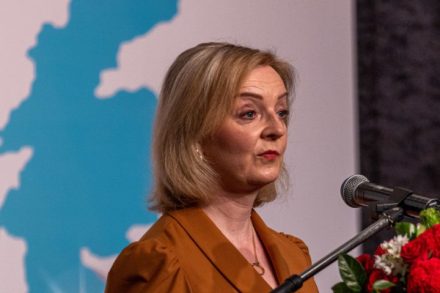
What will Liz Truss’s legacy be? The obvious answer is her 49-day stint in Downing Street. But she is determined not to settle for that. Today in Westminster, she oversaw the formal launch of her new project, The Growth Commission, dedicated to spreading the message she tried to convey as prime minister: the importance of growing the size of the economy. Truss can take some credit for shifting the national conversation towards a more pro-growth agenda Today’s launch was attended by Truss, who is stressed to have convened the commission but holds no formal role within it. The Telegraph’s Liam Halligan chaired a panel of four members of the commission:

Who’s to blame for rising mortgage costs?

Mortgage costs have reached a 15-year high today, with the average two-year fixed deal hitting 6.66 per cent – the highest level since the summer of the 2008 financial crash. But today’s mortgage news is being pegged to far more recent history, as average deals just topped their peak from last autumn, when Liz Truss’s mini-Budget sent interest rate expectations soaring, and mortgage offers along with them. Truss’s premiership came to an end because so many numbers were spiralling upward, including the cost of government borrowing, mortgage repayments, and the number of Tory MPs who – amid all the chaos – were simply not going to take instructions from her

Wages are up – but the Bank won’t be happy about it

The labour market continues to show signs of becoming less tight – but this won’t be fast enough for the Bank of England’s liking. The UK unemployment rate rose to 4 per cent – up 0.2 per cent on the quarter. But this relatively small change is indicative of more people moving off the economic inactivity list, which fell by 0.4 per cent between March and May: a change that the Office for National Statistics largely attributes to men in this latest update.  Meanwhile the number of job vacancies in Britain fell for the twelfth time in a row: down 85,000, but still sitting at 1,034,000. Vacancies are now significantly

Is Jeremy Hunt following in Gordon Brown’s footsteps?

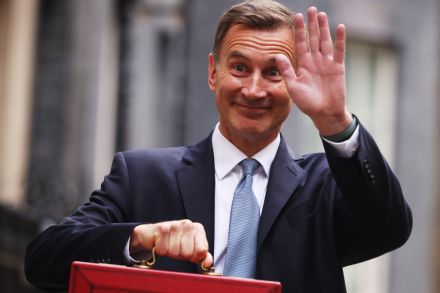
Anyone fancy having a flutter with 5 per cent of their pension fund on unlisted start-ups? It is not necessarily a bad idea – it is only 5 per cent, after all. As part of a portfolio which is balanced by more bread and butter investments it need not be reckless. At best, you might just pick a future Microsoft or Google – and at worst, well, the other 95 per cent of your investments could smother your losses. But it seems that we are not really going to have the choice – at least not those of us who have defined contribution pension funds. The Chancellor, Jeremy Hunt, used

Jeremy Hunt’s City reforms are far too timid

There will be some tweaks to the way that pension funds are allowed to invest their money. There will be some modest rewriting of EU rules on the way investment banks can provide analysis of company performance. And there will be some reduction in the big bundles of paper a company needs to issue before it can sell new shares. And, er, that seems to be about it. The Chancellor Jeremy Hunt may be trying to sell his latest round of City reforms as a significant reduction in red tape that will allow the financial sector to grow again. But, in keeping with his tepid, managerial style, they lack any

The housing crash we’re heading for might not be the one you think

Are house prices falling? The Halifax house price index, published today, is finally showing a significant year on year fall: average prices are 2.6 per cent down in the 12 months to June. This is the biggest annual fall shown by the index in 12 years. But it is still hard to depict what is happening in the housing market as a bloodbath. The finer print shows that prices are actually up over the last quarter, by 0.3 per cent – with the 12 monthly figure pulled down by what happened by last autumn. As has happens so often in the housing market, predictions of deep gloom (or deep joy, if you

Let’s flush away the idea of a return to state-owned water

Water, water everywhere in the media this week, as the Thames Water utility – crippled by debt and shamed by Niagaras of raw sewage – reached the brink of collapse. Anticipating government intervention if Thames’s owners cannot inject sufficient new equity, pundits decried the 1989 privatisation of English and Welsh water – which passed from conventional shareholders to private equity and foreign sovereign wealth that combined to extract £72 billion of dividends while loading the industry with £60 billion of debt and allegedly denying it new reservoirs and leak-free pipes. Put like that, the fate of water – a resource so natural that some say it should be immune from

The mortgage pain is going to get worse

When the average two-year fixed mortgage hit 6 per cent last month, panic started to set in. For the 1.3 million homeowners set to renew before Christmas, many would now be facing interest payments three times higher than what they had originally paid. Chancellor Jeremy Hunt immediately called a meeting with lenders and customer representatives to formalise safety nets, including repayment holidays and moving people over to interest-only payments.  But this was always set to be the start – not the end – of mortgage pain. Today we learn from Moneyfacts that the average five-year fixed-rate mortgage has also now passed 6 per cent.  The last time five-year fixed rates

Is this really the best Labour can offer teachers?

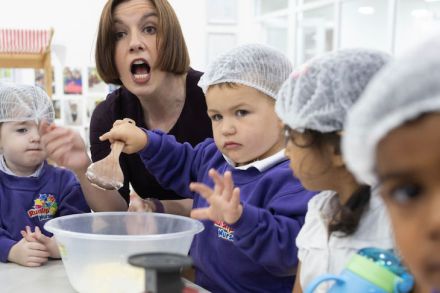
Bridget Phillipson was appointed Labour’s shadow education secretary in November 2021. After 18 months in the role, she has now finally unveiled Labour’s ambitious new idea to help tackle the teacher retention and recruitment crisis: use the tax raid on private school fees to fund a £2,400 welcome bonus to every teacher who has completed their two years of training. This is a classic case of copying someone’s homework, except – no surprises – it wasn’t very good the first time round. The Conservatives have already increased the starting salaries of newly-qualified teachers to £30,000. Teaching unions have already overwhelmingly voted to reject a one-off payment. The government has already tried giving bonuses to maths teachers,

Has the Bank of England’s net zero obsession fuelled inflation?

The Bank of England was made independent to take monetary policy away from flighty politicians who are slaves to expediency and fashionable sound bites. Instead, central bankers imbued with objectivity, prudence and, most of all, economic expertise would be in charge. But when it comes to climate change and net zero, the Bank has shown that poor judgment is certainly not exclusive to elected officials. Only a month ago, Andrew Bailey, Governor of the Bank of England was touting net zero as a growth elixir. ‘The transition to net zero is a major structural change that needs substantial investment and can over quite a prolonged transition period help to raise

Is Thames Water about to sink?

Thames Water appears to be in trouble. The company, which has billions in debt, is in talks with the Treasury about a possible bailout. We may soon be adding the firm, which serves one in four Brits, to the list of victims of rising interest rates. ‘Victim,’ in this case, is perhaps the wrong word. It’s hard to feel sorry for a company that has been relying on ultra-low rates to keep itself afloat, racking up £14 billion worth of debt and now severely struggling to service it. Financial mismanagement is just one of a series of accusations levelled against the company. Its problems have been in the spotlight for years, especially

Markets will celebrate Putin’s fall – but not yet

As the Wagner convoy rumbled northwards towards Moscow on Saturday, markets braced for turmoil. What would armed uprising in Russia do to the supply and price of oil, gas, wheat or fertiliser? Would it provoke investor flights to gold or bitcoin? But when the episode fizzled out, Monday’s prices saw little more than upticks, with natural gas traders more preoccupied by outages in Norway and FTSE action refocused on dim domestic economic prospects. Sighs of relief all round, then, and a simple conclusion: world markets will hail the demise of Vladimir Putin – so long as he goes slowly, of natural causes, and not before the end of the great

How do we fix Britain’s stagnant economy?

With every passing week it becomes clearer that the British economy is in crisis. Not the ‘here today, gone tomorrow’ sort of crisis that bedevils the financial markets, but rather the deep-seated, slow-burning crisis of a progressive, life-threatening disease. ‘I am totally 100 per cent on it, and it is going to be okay and we are going to get through this,’ the Prime Minister promised last week. If so, he’s got his work cut out. The economic performance of the UK economy has deteriorated sharply over the last decade-and-a-half compared to its performance beforehand. On key measures, such as output per hour worked, the UK was a poor performer even before the