Economy

  • AAPL

    213.43 (+0.29%)

  • BARC-LN

    1205.7 (-1.46%)

  • NKE

    94.05 (+0.39%)

  • CVX

    152.67 (-1.00%)

  • CRM

    230.27 (-2.34%)

  • INTC

    30.5 (-0.87%)

  • DIS

    100.16 (-0.67%)

  • DOW

    55.79 (-0.82%)

Is Britain losing its sense of fairness?

Has Britain become a freeloader’s paradise, asks the Spectator’s economics editor Michael Simmons in our cover piece this week. Michael analyses ‘the benefits of benefits’, at a time when Britain’s welfare bill is burgeoning and most households are struggling with cost of living. For example, while a family of four can expect to pay £111 to visit the Tower of London, that is just £4 total on Universal Credit (UC), and for London Zoo it is £108 compared to £26. Michael is not arguing against the idea of helping those in need, but pointing out that – as the benefits bill continues to increase – this is another case of

Spotlight

Featured economics news and data.

Cutting Britain’s giant welfare bill would be an act of kindness

Does having money really matter that much? There are those, usually with quite a bit of it, who want us to care less about materialism. But, unequivocally, money really does matter – not because of any status it supposedly brings, but for the freedom it buys: freedom to choose how we live and how we look after others. Considering this, it seems that the deep disillusionment with mainstream politicians in recent years stems from a protracted and ongoing period of stagnant living standards over which they have presided. But the truth is that the average person has not got poorer since the global financial crisis. They have got a little

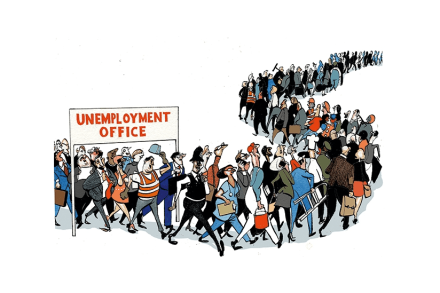
Britain’s growing army of pensioners should be delivering pizza

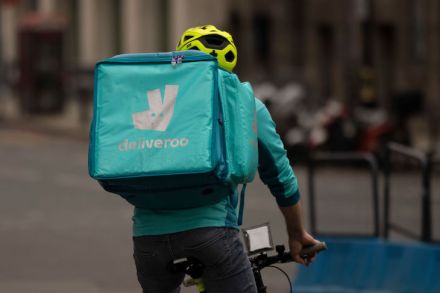
Over-50s could deliver pizza. They could try their hand at Uber driving. Or they could put in the occasional shift at the Amazon warehouse. Mel Stride, the work and pensions secretary, won’t have done his political career any favours this week with his suggestion that retired people who are struggling to make ends meet could earn extra cash in the gig economy. But whether voters in the leafy shires like it or not, Stride is spot on: many pensioners can, and should, work part time and they can’t be too fussy about what jobs are available. The Prime Minister Rishi Sunak is probably already wondering how quickly he can fire

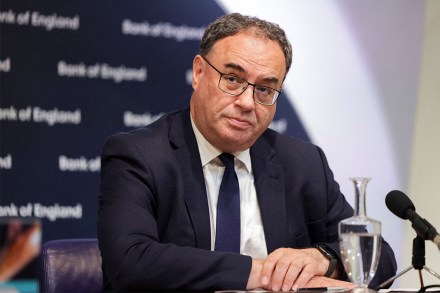
What Andrew Bailey’s eyebrows can tell us about the NatWest scandal

Enough said about the fall of Dame Alison Rose; more than enough about the second coming of Nigel Farage. But one question remains: what happened to the Governor’s eyebrows? In former times, the fate of errant bank chiefs was unequivocally a matter for the Bank of England. Careers were sunk or salvaged by a twitch of the governor’s supercilia. When Bob Diamond of Barclays was under fire in 2012 after the rate-fixing scandal and the Barclays board tried to save him by offering the head of chairman Marcus Agiusinstead, the then governor, Mervyn King, ordered Agius to unresign and fire Diamond – while the chancellor George Osborne denied any part,

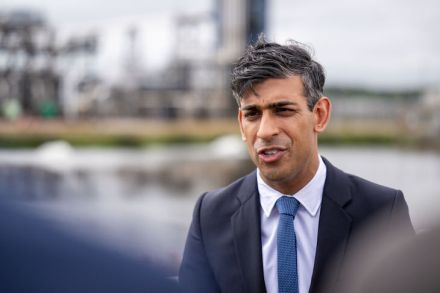
Rishi Sunak is right to hedge his bets on oil and gas

It is quite right that the Prime Minister has chosen to approve new licences for oil and gas extraction in the North Sea, in spite of the bitter reaction from climate activists, the Labour party – and some of his own MPs. Chris Skidmore, who just recently completed a review of net zero policies on behalf of the government, said this week that the decision to award new licences ‘is on the wrong side of the future economy that will be founded on renewable and clean industries and not fossil fuels’. Yet the Prime Minister is not retrenching on investment in renewable energy; he is hedging the government’s bets. While

‘Lazy girls’ aren’t what’s hurting the British economy

The current government will do almost anything to avoid reforming welfare or the NHS. Last month, we were informed school leavers might be allowed to train as doctors without a traditional medical degree in an ill-conceived cosplay scheme. And it was reported yesterday that GPs may be encouraged to refer patients to life coaches, rather than issue sick notes, to help people get back into work. Between the starts of 2019 and 2023, the number of economically inactive working adults with depression or anxiety jumped by 40 per cent to hit 1.35 million. There are 400,000 more people on long-term sickness than before the pandemic. Yet rather than hiring more

Coutts gives Nigel Farage his account back

Is Nigel Farage’s war with Coutts finally over? The former Brexit party leader has claimed that the bank – which closed his account over concerns about his political views – has now offered to reinstate his account. The interim chief executive of Coutts, Mohammad Kamal Syed, wrote to Farage to give him the good news. Speaking on his GB News programme, Farage said: ‘He has written to me to say I can keep both my personal and my business accounts. And that’s good and I thank him for it.’ But it seems that might not be the end of the row. Farage said the fallout has caused him ‘enormous harm’

The collateral damage of lockdowns on children is still emerging

There has been plenty of evidence published over the past three years of the severe effects on children’s education and wellbeing of closing schools during Covid lockdowns, but a new study by the Institute of Fiscal Studies (IFS) and University College London (UCL) has a slightly different emphasis – linking children’s social and emotional development with the employment situation of their parents. Overall, it found that 47 per cent of parents reported that their children’s social and emotional skills had declined during the pandemic – with just a sixth of parents reporting that there had been an improvement. The effect was more severe along younger children – 52 per cent of

Inheritance tax has become yet another stealth tax

Most people will not see their estates subject to inheritance tax. Still, most people oppose the principle of the tax altogether. New polling from Ipsos confirms, once again, how loathed the death tax is: 23 per cent of people perceive the tax as ‘fair’ (tied for the lowest ranking, alongside stamp duty). Meanwhile 43 per cent of people see the tax as ‘unfair’ (the highest ranking, even more hated than income tax paid by the lowest earners). It won’t go down well, then, that almost 50,000 additional households are expected to be dragged in to paying inheritance tax, nearly four times the expected increase according to HMRC forecasts seen by the Daily Telegraph.

The triumph of oil

If you want a laugh, I recommend an article which appeared in the March 1998 issue of Scientific American, ‘The End of Cheap Oil’. In it, oil geologists Colin J Campbell and Jean H Laherrere used terribly clever models to tell us that global oil production would peak around 2004-05, after which we would be trying to rely on an ever-dwindling, ever more expensive supply of oil, with huge consequences for the global economy. Campbell was so sure of his thesis that three years later he formed the Association for the Study of Peak Oil, coining a new term which would be thrown about over the next couple of decades.

The US economy is bouncing back – unlike Europe’s

Every country that imposed a lockdown during the pandemic accepted that there would be an economic price to pay. But governments hoped that, on this measure, their own nation would fare better than others. The objective here was simple: don’t be the ugliest country of the bunch. Now, with some distance between those lockdowns and life today, we’re returning to a more established form of economic competition. Rather than focusing on whose economy looks particularly bad, the emphasis has returned to who is looking good. And on this metric, the United States is putting Europe – and Britain – to shame. The US government reports that its economy grew by

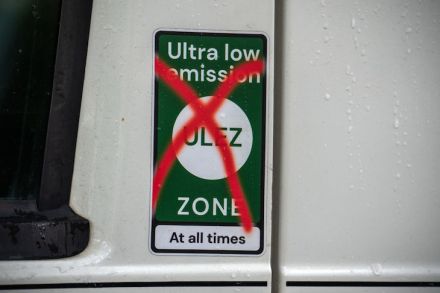
Tories should never have taken their Ulez challenge to court

Expanding London’s Ultra Low Emission Zone (Ulez) may be a bad policy, a regressive tax which will impact on people of modest means while leaving the not-very-much-less-polluting cars of the wealthy untouched. But that doesn’t mean the High Court is wrong to reject the case brought by Conservative councils against the scheme. On the contrary, anyone who values democracy should be pleased that Ulez has been thrown back into the political arena, where it belongs. It is alarming the way that so many matters of public policy now end up being dragged through the courts under the judicial review process. How we impose motorist taxes, whether we build rail lines, runways

Dame Alison’s ousting lifts the lid on banking’s wider moral pickle

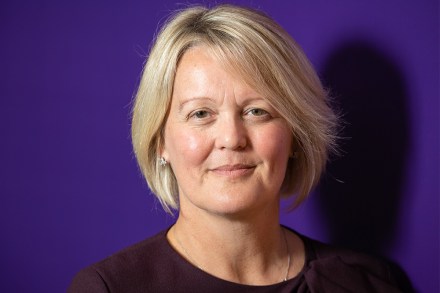
When Dame Alison Rose was a frontrunner for chief executive of NatWest in 2019, I described her as ‘sensible’ and ‘unspun’ and said I hoped she’d get the job. That view was based partly on personal impression and partly on a prejudice of mine, expressed consistently since the 2008 crisis, that women often make better senior bankers than men, being less prone to macho risk-taking. Rose has now yielded to political pressure and resigned over her role in the false reporting of the decision to ‘exit’ Nigel Farage as a customer of NatWest’s subsidiary, Coutts. But this column has never been in the business of following the baying crowd in

Will the NatWest debacle end the ‘debanking’ scandal?

The NatWest saga is fast becoming a textbook example of what some consider to be an ‘establishment’ attack on minority (and often right-leaning) viewpoints. The fast U-turn from the NatWest board which now sees Dame Alison Rose out of a job (Mr Steerpike has the details here) confirms that this was not a nuanced or two-sided debate that the bank originally tried to make it out to be. It’s no surprise, then, that the government has been fairly robust in its growing condemnation of NatWest’s actions. No. 10 insisted last night that it had serious concerns about the bank’s actions, and ministers have been saying it was ‘right’ for Rose to

Will the Tories learn from Coutts’ mistake in taking on Nigel Farage?

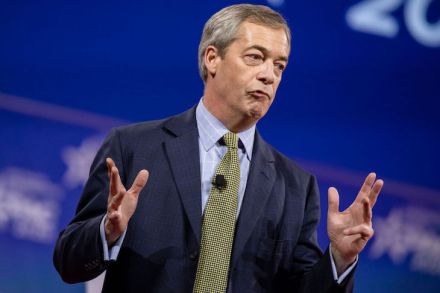
Not for the first time in his colourful life, the perennial rebel Nigel Farage has the establishment on the run. This time it is the financial establishment and its media allies. The former Ukip leader has already garnered apologies over conduct or coverage from NatWest, which owns Coutts bank, the high-profile podcaster and former BBC man Jon Sopel, the BBC’s business editor Simon Jack and the chief executive of BBC News Deborah Turness. Farage is currently circling NatWest chief executive Dame Alison Rose in the manner of a hungry shark who has scented blood in the water. Not his, but hers. Dame Alison appears to be Farage’s prime suspect in

Elon Musk has launched X to kill Twitter

It will trash the brand. It will alienate its core users. And relaunching and rebranding a failing business almost never works. As Elon Musk drops the Twitter blue bird and swaps it for an X, we will hear plenty of arguments about why the world’s second richest man has made another critical commercial mistake. In fairness, some of them have a point. Yet Musk’s critics are making a mistake by missing the real purpose of the new name. X only exists to kill off Twitter. The rebrand was announced in a typically haphazard way. As of today, Twitter will be known simply as X. It was Musk’s boldest move yet

Rishi Sunak is caught in a debt trap

Two by-election defeats have made it a miserable morning for the Tories, even if they did manage to cling on in Uxbridge. But they’ve had better-than-expected news on another front. This morning’s update from the Office for National Statistics (ONS) reveals that public sector net borrowing has come in lower than what was forecast at the March Budget: £18.5 billion in June, compared to the Office for Budget Responsibility’s (OBR) prediction of £21.1 billion. Borrowing last month was £0.4 billion less than the year before, while interest payments on government debt saw a huge drop: from £20 billion last June down to £12.5 billion this June. Don’t be fooled: these are still

Has Britain avoided falling into recession?

Earlier in the week, the stock market responded very positively to news that inflation had come out a little lower than expected (even though, at 7.9 per cent, it is still far ahead of where most forecasters, from the vantage point of the beginning of 2023, would have expected it to be by now). Markets have been left largely unmoved, however, by two pieces of positive news this morning: lower than expected public borrowing in June, and higher retail sales, also in June.  The volume of sales was up 0.7 per cent in June compared with May. While that was, in part, due to the extra bank holiday in May, which

Striking consultants aren’t likely to get sympathy

Today and tomorrow’s strike by NHS consultants underlines how industrial action has become the preserve of the well-paid. The consultants appealing for public sympathy were, according to NHS figures, paid a mean basic salary of more than £97,000 in the year to March. On top of this they received mean overtime and bonus payments of close to £30,000, bringing their total mean earnings to more than £127,000. Yet not all of these were working full-time. The mean basic salary for full-time staff was more than £105,000. And of course, on top of this they have been offered a pay rise of 6 per cent – which they have rejected. The

Nigel Farage, NatWest, and the sinister rise of corporate ‘purpose’ 

The plot is thickening. If it turns out NatWest CEO Alison Rose was the source for BBC business editor Simon Jack’s scoop that private bank Coutts, part of the NatWest Group, rejected Nigel Farage as a customer not because of his political views but for a supposed lack of funds, then it’s hard to see how she will last in her job to the end of the week. According to the Daily Telegraph, Rose sat next to Jack at a charity dinner the night before he published his story. At the time of writing, neither had responded to questions about what they’d discussed. Certainly, the Coutts dossier that Farage has

Coutts’ reputation committee has destroyed its own reputation 

Nigel Farage has been cancelled by his bank because their reputation risk committee doesn’t approve of his political views and has branded him a ‘chancer’ and ‘grifter’. This matters to him because, having been cancelled by one bank, it is almost impossible to get an account with another – you are obliged upon opening a new account to reveal if you have ever been turned down or thrown out of a bank before.  Reputation risk has become all the rage in recent years as companies, governments and individuals scramble to protect themselves from the fate suffered by trial by media and powerful regulators. PR firms and management consultancies charge high fees to

How investors could benefit from the cooling housing market

There are, of course, many people struggling with their mortgage repayments. There are first-time buyers who have been especially hard hit, but also the buy-to-let investors who fooled themselves into thinking that ultra-low interest rates would last indefinitely and have over-borrowed.  Few will feel a lot of sympathy for the latter group, many of whom have been forced to sell up, according to anecdotal evidence. But their plight shouldn’t distract from the fact that, for all the talk of a house price crash, property has not been a bad investment over the past twelve months. This morning, the Office for National Statistics (ONS) published its two monthly indices, on house prices