Book Reviews

Our reviews of the latest in literature

Garbriel García Márquez has been ill-served by his sons

I blame Kafka. When he died in 1924, the vast majority of his imaginative work remained unpublished, including three novels and a substantial number of remarkable short stories. He left instructions, however, for Max Brod, his literary executor, that all his unpublished work should be destroyed. Brod ignored this, and brought some classics of German literature into print after the author’s death. He sensibly concluded that if Kafka had been serious about wanting his work destroyed he wouldn’t have appointed Brod as literary executor in the first place. Much of the story seems like something that floated into Márquez’s head and then drifted off The case was a good one;

New light on the New Testament

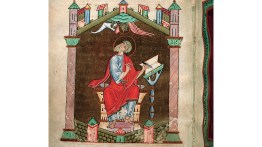
Readers of the Bible, you are almost certainly in for a shock. A new book, drawing on recent archaeology and literary criticism, persuasively argues that some of the most important parts of the New Testament were written or edited by slaves. Its author, Candida Moss, presents this thesis in God’s Ghostwriters, a general interest book which asks readers to look beyond the Bible’s named authors and imagine their collaborators, some of whom were enslaved scribes. In the Roman era, ‘writers’ did not usually inscribe the text themselves but composed through dictation; and most people who took dictation were enslaved. They were well educated from a young age, and it was

The healing power of Grasmere

William Wordsworth’s life is the foundational version of the nature cure. After a disrupted, troubled childhood, sent to live with unsympathetic relations after his mother’s death, a chaotically disaffected time at Cambridge and a muddled youth, fathering a child on a woman he loved but scarcely knew in France, Wordsworth refused all his family’s urgings to a nice career in the church or the law. Instead, he stumbled towards the kind of poetry he wanted to write and looked, with his sister Dorothy, for a sense of home in Dorset and Somerset. Finally, he returned to the Lake District, and in December 1799 came to Dove Cottage and Grasmere, where

Ghosts of the KKK still haunt American politics

This is the first history of the Ku Klux Klan from ‘its origins in post-Civil War Tennessee to the present day’ and it makes for a lively read. Kristofer Allerfeldt, a history professor at the University of Exeter, combines lucid political analysis with eye-popping details of violence. One victim of a lynching was made to climb a tree with a noose round his neck but stubbornly clung onto a branch. Rather than waste a bullet and spare him a slow death by strangulation, a Klan member climbed up after him and sawed off his fingers one by one until he dropped. The Klan started as a fraternity of six young,

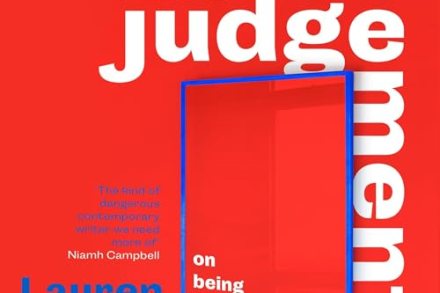
Lauren Oyler: No Judgement

40 min listen

This week’s Book Club podcast sees me speaking to the critic and novelist Lauren Oyler about her first collection of essays, No Judgment: On Being Critical. Lauren and I talked about the freedoms and affordances of the essay form; about how making and criticising art has been changed – and hasn’t – by the advent of the digital age; why it’s weird we all still treat the internet as if it’s a new thing; and about why David Foster Wallace can still be a role-model even after his cancellation.

How ever did the inbred Habsburgs control their vast empire?

In 1960, Felipe Fernández-Armesto and Manuel Lucena Giraldo tell us, Lucian Freud went to the Goya Museum in Castres in search of a particular painting. He wanted to create portraits that were character studies and ‘not mere likenesses’, and Goya’s collective portrait ‘La Real Compañía de Filipinas’,a study in human nullity that represented ‘absolutely nothing’, was just what he was looking for. Fernández-Armesto explains: The work belongs in the tradition of what might be called Spanish ‘anti-portraiture’, from Velázquez’s ‘Las Meninas’ to Goya’s own devastatingly candid royal family group, ‘Familia de Carlos IV’, moral as well as physical delineations of regal vacuity. King Ferdinand VII appears amid the company’s directors,

The dirty war of Sefton Delmer

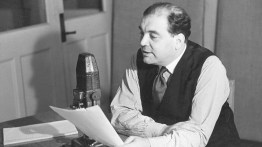
There is an obvious problem with trying to judge who ‘won’ a propaganda war. Unlike its physical counterpart, there is virtually no real-world evidence either way, and everyone involved has spent years learning how to spin, manipulate and outright lie about reality to try to shape it into what they want. As a result, it remains the conventional wisdom – among those who think of such things, at least – that despite their eventual and total defeat in the second world war, it was the Nazis who won the propaganda war of their era. Fake letters from dead German soldiers to their parents reported thatthey had survived, deserted and were

How much would your family stump up for your ransom?

‘I can’t quite believe I’m here, having a steak dinner with a killer,’ writes Jenny Kleeman, as she sits with a hitman for the big opening to her book about the price we put on life. Someone paid to take lives is about to spill the beans on his dark trade. There should be tension. There should be jeopardy. We should be worried about Kleeman’s safety. So why does it feel a bit flat? It is difficult to find a hired gun, obviously. This one is John Alite, who was ‘a hitman for the Gambino dynasty’. However, he is now ‘a motivational speaker’ and ‘host of several podcasts’, and seems

Work, walk, meditate: Practice, by Rosalind Brown, reviewed

Practice is a short novel set in a ‘narrow room’: one day in the life of an Oxford undergraduate writing an essay on Shakespeare’s sonnets. Annabel is trying to ‘perfect her routine, to get more out of each day’. She goes to bed early and rises at 6 a.m. She makes coffee like it’s a ritual and drinks it from the same small, brown mug. She has a plan. She will work, walk, do yoga, meditate, each at their allotted time. The restriction of the novel – a single day, a single character, discrete passages strung together like a sonnet sequence – lends itself to a delicate portrait of Annabel’s

You are what you don’t eat

If asked to think about food preservation for a moment you might picture an aproned woman boiling oranges for marmalade in a large copper maslin pan; or vegetable scraps being turned into stock; or those recipes from wartime rationing using root veg in place of sugar; or even, with an eye to the modern, you might imagine a trendy chef preparing offal in a gleaming chrome kitchen to ensure the nose-to-tail credentials of his restaurant. Some of the attempts in the past to spin out the life of fresh produce sound positively disgusting But there is more to the history of preservation than preserves, and the obvious enemy, when we

The end of days: It Lasts Forever And Then It’s Over, by Anne de Marcken, reviewed

How do you picture the end of days? ‘When I was alive, I imagined something redemptive about the end of the world,’ muses the unnamed narrator in It Lasts Forever And Then It’s Over. ‘I thought it would be a kind of purification. Or at least a simplification. Rectification through reduction.’ But no: ‘The end of the world looks exactly the way you remember. Don’t try to picture the apocalypse. Everything is the same,’ she continues from her vantage point in an afterlife, brought into vivid existence by Anne de Marcken. It’s telling that the author’s biography states that she ‘lives in the United States on unceded land of the

The stark horror of Barbara Comyns’s fiction was all too autobiographical

Barbara Comyns’s reputation rises and falls like a Mexican wave, making her one of the most rediscovered novelists of recent times. She’s credited with anticipating Angela Carter and for being in the vanguard of tackling themes of traumatic dissociation and the realities of childbirth. Yet younger, trendier writers have regularly eclipsed her. Aged 29, Barbara was broke: a single mother who’d weathered affairs, an abortion and a suicide attempt Every fan remembers their first Comyns novel: the visceral jolt of black humour, the suckerpunch of stark horror. Knowing that she drew from life, we have longed for a biography, and hooray, it’s finally here. Avril Horner, emeritus professor of English

A web of rivalries: The Extinction of Irena Rey, by Jennifer Croft, reviewed

Jennifer Croft is a translator of uncommon energy. In 2018 she won the International Booker Prize for her rendering of Flights by Olga Tokarczuk. In 2021, she took on Tokarczuk’s The Books of Jacob, a great big historical epic. Now she’s written a satirical page-turner set over what one character calls ‘seven toxic, harrowing, oddly arousing, extremely fruitful weeks’. Like members of some ancient mystery cult, eight translators fetch up in a house near a primeval forest in Poland on the Belarus border. The year is 2017. ‘Bedraggled and ecstatic’, they’ve come to translate Szara eminencja (Grey Eminence), a novel about art and mass extinction, by the Stockholm-worthy woman of

The tyranny of 1970s self-help gurus

As any book about the rise of that most nebulous idea ‘wellness’, should, James Riley’s Well Beings begins with Gwyneth Paltrow, purveyor of ‘This Smells Like My Vagina’ candles, ‘Metabolism-Boosting Super-powder’ and nostrums about mindfulness and ‘self-care’ – for which read self-indulgence. In 2019 Paltrow’s company Goop chartered a luxury liner for a ‘Goop at Sea’ extravaganza, at which attendees were invited to spend $4,200 for the ‘basic’ cruise and a suite at the ship’s onboard spa, and a further $750 for the event itself, the highlight of which would be an appearance by the high priestess of wellness herself. Goop at Sea was cancelled due to Covid. But it

Peter Pomerantsev: How To Win An Information War

44 min listen

My guest on this week’s Book Club podcast is Peter Pomerantsev. Peter’s new book How To Win An Information War: The Propagandist Who Outwitted Hitler tells the story of Sefton Delmer, the great genius of twentieth-century propaganda. Peter tells me about Delmer’s remarkable life, compromised ethics, and the lessons he still has to offer us.  

Dinosaurs, dogma and the Victorian mind

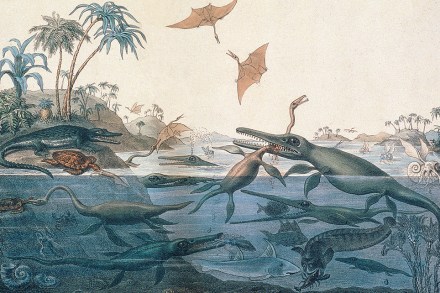
In March 1860, shortly after The Origin of Species was published, Charles Darwin wrote to Leonard Horner thanking him for some surprising information. ‘How curious about the Bible!’ he exclaimed. Horner had taken aim at the marginal notes that were printed in the standard (and ubiquitous) Authorised, or King James, Version. These began with the date of creation, 4004 BC, as calculated by Archbishop James Ussher in the 17th century. Darwin was astonished. ‘I had fancied that the date was somehow in the Bible,’ he wrote. The disturbing ‘monsters’ dug from the cliffs of Lyme Regis did not sit well with the literal reading of Genesis The fact that Darwin,

The skull beneath the skin: Ghost Pains, by Jessi Jezewska Stevens, reviewed

Hell, according to Jean-Paul Sartre, is other people. Jessi Jezewska Stevens would nominate parties. Social catastrophe can stem from the invitation: ‘Email!’ she laments. ‘The way all modern tragedies begin.’ She homes in on the space between what a woman thinks and says and does. Her anti-heroines can be relied on to make wrong decisions – men, marriage, nipple-piercing and, of course, parties. The choice invariably ends in failure. Ghost Pains is a collection of 11 stories, sardonic and elegant, imbued with a sense of isolation and self-awareness. Stevens’s women throw spectacularly disastrous parties. And attend them. The result can be amusing for the reader while being grievous for the

The lonely passions of Carson McCullers

It may be true that The Heart is a Lonely Hunter (1940) – but in the case of Carson McCullers it could also be an indefatigable and exhausting one. Born Lula Carson Smith into a struggling middle-class family in Columbus, Georgia in 1917, she grew up hungering for great passions – and, like Hunter’s teenage protagonist Mick (her characters often carry gender-neutral names), she fell in love with classical piano at a young age. (Then Carson – not Mick – fell in love with her female piano teacher.) She married young a 20-year-old ex-serviceman named Reeves McCullers who, by all reports, was far more beautiful than her. Then together, almost

The many Jesus-like figures of the ancient world

What people tend to forget about Jesus Christ is that he killed children. As a five-year-old, Jesus was toddling through a village when a small boy ran past, knocking his shoulder. Taking it like any five-year-old would, Jesus shouted after him ‘you shall not go further on your way’, at which point the boy fell down dead. Later, when the boy’s parents admonished Joseph and Mary for failing to raise their son properly, Jesus blinded them. Something to bear in mind next time you ask yourself: ‘What would Jesus do?’ Jesus smites teachers, sells a ‘twin’ into slavery, and has someone crucified in his stead If this story is unfamiliar,