Book Reviews

Our reviews of the latest in literature

Time travellers’ tales: The Book of Records, by Madeleine Thien, reviewed

Those who have read Madeleine Thien’s bestselling Do Not Say We Have Nothing will recognise The Book of Records as being the title of the manuscript at its heart – a dangerously dissenting history of China. In her latest novel, Thien uses the title to explore the future rather than the past – or so it seems at first. Extensive flooding has caused Lina and her father to leave Foshan and retreat to ‘the Sea’, a labyrinthine ‘nothing place’ where people usually shelter just for a short while before moving on. It resembles Kowloon Walled City, the immense, densely populated structure that, before being demolished, was close to where Thien’s

Why going nuclear is humanity’s only hope

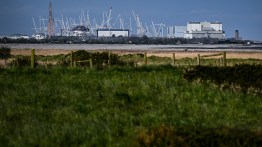
There are three parties when it comes to global warming. First, the hard right, which says it isn’t happening, and even if it is that we can do nothing about it. Then there are the far leftish Luddites who would smash all power generation systems, allowing only wind turbines, wave power etc. Finally there are the suave centrists who know perfectly well that only nuclear can save us. This book will become their bible. Tim Gregory is a nuclear scientist who works at Sellafield. He has a serious problem defending his conviction that nuclear is the answer: radiophobia, the terror people feel about radioactivity. Superficially, this terror seems well-founded. There

It seemed like the end of days: the eerie wasteland of 14th-century Europe

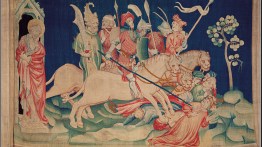
In the early 1370s, Louis I of Anjou, the second son of the French king, commissioned a vast series of tapestries, now on display at the Château d’Angers, representing the Book of Revelation. In the middle of the narrative is a group of men on horseback wearing distinctively English armour; one wears pheasant feathers in his helmet – another mark of English soldiery. As for the Apocalpyse itself, its horsemen were led by Edward III. Edward’s 50-year reign dominated 14th-century England. But, as we see in Sceptred Isle, Helen Carr’s gripping narrative account of the period, Edward himself was dominated by the dream of taking the French crown. It led

‘I secreted a venom which spurted out indiscriminately’ – Muriel Spark

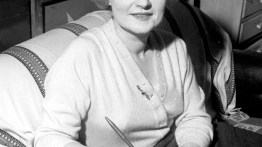
In 1995, Dame Muriel Spark, then one of Britain’s most distinguished living writers, was interviewed for a BBC documentary. During filming, the show’s editor commented that ‘her biographer must be the most depressed man in England’. Three years earlier, Spark had personally anointed Martin Stannard as the writer of what she intended to be the authorised version of her life, presenting him with the vast archive of documentation – spanning 50 years and 50 metres – gathered at her home in Arezzo. ‘Treat me as if I were dead,’ she instructed him. Stannard understood this to mean that he should proceed as a traditional historian; by the time his hag-ridden

The mystifying cult status of Gertrude Stein

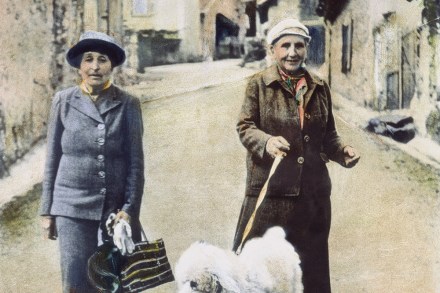
To most people, the salient qualities of Gertrude Stein are unreadability combined with monumental self-belief. This is the woman who once remarked that ‘the Jews have produced only three original geniuses – Christ, Spinoza and myself’. Of the reading aloud of her works, Harold Acton complained: ‘It was difficult not to fall into a trance.’ Even if you are as good a writer as Francesca Wade, it is still difficult to avoid the influence of what she herself calls Stein’s ‘haze of words’. So the first half of this impressively researched biography is cerebral rather than colourful. Stein’s writing career really began when, aged 28 (she was born in 1874),

Thomas More’s courage is an inspiration for all time

Three years ago, when memories of the final series of HBO’s Game of Thrones were still fresh, Joanne Paul published The House of Dudley, a gripping account of three generations of the Dudley family, whose efforts to seize the crown from the Tudors, as I noted in these pages, made the machinations of the Lannisters and the Starks look tame. Now, hard on the heels of the final instalment of the BBC’s adaptation of Hilary Mantel’s Wolf Hall trilogy – and with a revival of Robert Bolt’s A Man for All Seasons opening in the West End in August – Paul has published another book equally attuned to the zeitgeist.

The novel that makes Ulysses look positively inviting: The Aesthetics of Resistance, by Peter Weiss, reviewed

The translator’s preface to the third volume of The Aesthetics of Resistance informs us that ‘Several deadlines came and went on the way to this translation’. That is quite the understatement. The German edition of Peter Weiss’s 1,000-page historical novel appeared in 1975. A full English translation has been in the offing for more than 20 years. In the meantime, Weiss has won just about every literary accolade Germany has to offer, and his play Marat/Sade has become known as the theatrical ‘starting gun’ of the 1960s. Whatever the translator Joel Scott has in store for us, it had better be worth the wait. Weiss was moved to write his

Geoff Dyer – the Proust of prog rock and Airfix

39 min listen

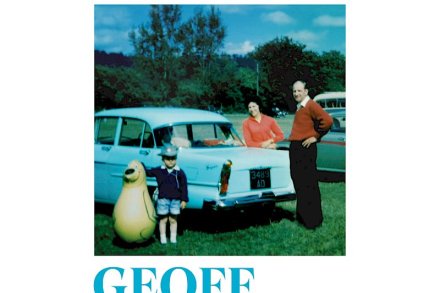
My guest in this week’s Book Club podcast is Geoff Dyer, who’s talking about his memoir Homework, in which he describes growing up as an only child in suburban Cheltenham, and how the eleven-plus and the postwar settlement irrevocably changed his life – propelling him away from the timid and unfulfilled world of his working-class parents. Geoff, in this new book, bids fair to be the Proust of Airfix models and prog rock.

Why are publishers such bad judges when it comes to their own memoirs?

‘The publisher who writes is like a cow in a milk bar,’ Arthur Koestler once declared. For some reason this put-down has never stopped publishers from fathering their memoirs, and the book trade titan’s life and times used to be as much a staple of the library shelf as slim volumes of nature poetry. As in other branches of life-writing, the procedural approach tends to vary. There are practical primers – Stanley Unwin’s The Truth about Publishing, say, from the year of the general strike, or Anthony Blond’s The Publishing Game (1971); there are delightful vagaries in the style pioneered by Grant Richards’s Author Hunting (1934); and there is the

Murderous impulses: The Possession, by Annie Ernaux, reviewed

‘The first thing I did after waking up was grab his cock – stiff with sleep – and hold still, as if hanging on to a branch.’ The opening of Annie Ernaux’s essay might suggest that the ‘possession’ of the title is of a husband’s penis. But after our nameless protagonist leaves ‘W’, her husband of 18 years, it is with his new woman that she becomes obsessed – possessed with a ‘primordial savagery’. She is maraboutée, or bewitched. Ernaux writes not in the heat of desire but in retrospect. The translation by Anna Moschovakis is chicly austere. Like concrete poetry, small paragraphs sit adrift on the page; the text

The hedgehog and the fox poll highest as ‘the nation’s top animal’

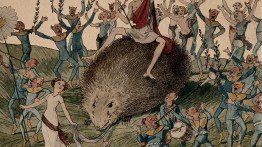
This is a truly wonderful book, erudite and fun. Karen R. Jones, a kind of alternative David Attenborough, explains her purpose: ‘Charismatic and amazing creatures are not only to be found in distant places. They are here. In our everyday spaces.’ Switching effortlessly and with relish between history, science and anecdote, the author selects ten creatures to represent Britain. Hedgehog and fox are polled highest as ‘the nation’s top animal’. Her other choices may surprise: sheep, pigeon, newt, herring, stag beetle, flea, black dog and plesiosaur.  The largest fox ever recorded, reported by the Daily Mail in 2012, was in Moray, Aberdeenshire, weighing 17 kilos. Foxes mate for life. One

The night has a thousand eyes

From a young age – ten perhaps – the author Dan Richards has had a strained relationship with night-time. Grappling with insomnia, he would take ‘the homeopathic approach to [his] waking nightmares’, rereading Moominland Midwinter despite its existential terrors. Even now, he writes, he finds it easier to sleep when he is not at home. This has, for better or worse, given him time to think – and lots to think about – while not much else was going on. In the avowed spirit of Auden/Britten’s Night Mail, Richards now invites us to follow him across ‘an usual threshold at an unusual hour’, exploring nocturnal life on the streets of

Round the world in a vast, unlovely barge

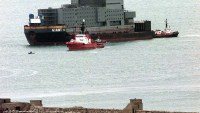
Ships change not just their location but their identity throughout their lives. Medieval trading vessels became warships at royal command. The Queen Mary was a troop ship during the second world war. Ian Kumekawa, of Harvard University, has had the clever idea of following a modern ship through its metamorphoses and asking how these changes in use reflect the economic conditions of our time. But this ship is no Queen Mary. He calls it the Vessel, because it changes its name and owner so many times. Without its superstructure, no one would give it a second glance. It has neither an engine nor a rudder. It had to be mounted

Amid the alien corn: Beautyland, by Marie-Helene Bertino

‘I am an Adina,’ the four-year-old protagonist of Marie-Helene Bertino’s Beautyland writes to her extraterrestrial superiors on Planet Cricket Rice, which is light years away from Earth. ‘Yesterday I saw bunnies on the grass,’ she adds, using the fax machine her mother retrieved from their neighbour’s trash. ‘DESCRIBE BUNNIES,’ they respond, sparking a dialogue that continues well into her adulthood. Adina’s premature birth in September 1977 coincided with the departure of the Voyager 1 probe, which was launched with a phonograph record of sounds intended to explain human life to intelligent extra-terrestrials. The timing is significant because Adina was sent to Earth from Planet Cricket Rice to report on human

A psychopath on the loose: Never Flinch, by Stephen King, reviewed

Stephen King, 77, is a writer of towering brilliance whose fiction appeals to a reading public both popular and serious. His 60th novel, Never Flinch, unfolds in Buckeye City, Ohio, where a serial murderer is on the loose under the alias of Bill Wilson – the name of the man who co-founded Alcoholics Anonymous. Wilson has sworn to kill 14 people in revenge for the death of a friend and former alcoholic who was framed and convicted for child pornography offences. The plot is steeped in AA lore (‘Honesty in all our affairs’) and an awareness of the deleterious effects of drinking to excess. It’s no secret that King is

My obsession with ageing rock stars – by Kate Mossman

‘The older male rock star isn’t just my specialist subject, it’s my obsession,’ admits Kate Mossman in the opening pages of Men of a Certain Age. Over the 15 years she’s spent interviewing ageing rockers such as Sting, Tom Jones, Ray Davies, Glen Campbell and Nick Cave for the Word and the New Statesman, she describes feeling ‘something inside of me ignite… so excited, yet so at ease’. ‘How is it,’ she asks, ‘that in the presence of a wrinkly rock star twice my age, I sometimes feel like I’m meeting… me?’ Having encountered my share of these guys myself, I know precisely what she means. Rock journalism is a

Richard Ellmann: the man and his masks

Richard Ellmann’s acclaimed life of James Joyce was published in 1959, with a revised and expanded edition appearing in 1982. The first edition, the work of an ambitious young American academic, received what Ellmann’s editor at Oxford University Press described as ‘the most ecstatic reaction I have seen to any book I have known anything about’. Ellmann’s work would ‘fix Joyce’s image for a generation’ wrote Frank Kermode in The Spectator, a prediction described by Zachary Leader as ‘if anything, too cautious’. By the time of the second edition, Ellmann had become a lionised Oxford don and the image of Joyce he had fixed was starting to chafe. Post-structuralism was

The problem with Pascal’s wager

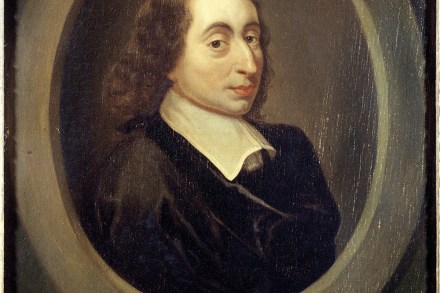
Blaise Pascal resists definition. During a short life (he died in 1662, aged 39) he invented the calculator, laid the foundations for probability theory and created the first public transport system. He was also an austere Catholic, whose call for a return to strict Augustinian doctrines put him outside the religious mainstream. As a philosopher, he is remembered today for his ‘wager’ argument – a challenge to atheists, framed as a cosmic gamble. As Graham Tomlin shows in this lively, conversational biography, Pascal worked in threes, often steering a course between extremes. As a Catholic, he refused to commit to the new sect of Jansenism, but also abhorred the Jesuits’

Max Hastings on the real story of D-Day – The Book Club live

As a subscriber-only special, get exclusive access to The Spectator’s Book Club Live: an evening with Max Hastings. Join The Spectator’s literary editor, Sam Leith, and the military historian and former Telegraph editor-in-chief Max Hastings, to uncover the real story of D-Day. They will be discussing Max’s new book, Sword: D-Day – Trial by Battle, which explores – with extraordinary vividness – the actions of the Commando brigade, Montgomery’s 3rd Infantry and 6th Airborne divisions at Sword beach in June 1944. It will also be an opportunity to celebrate the 80th anniversary of VE Day. Following the discussion, attendees put their own questions to Max.