Arts Reviews

The good, bad and ugly in arts and exhbitions

A final farewell to the dating game in New York

The wedding of the author’s wing-woman The HBO drama Sex and the City arrived on our shores in 1999. Prior to that television show, it would be fair to say, British women (and, for that matter, men) were fairly clueless when it came to matters of grown-up ‘dating’. Sex and the City offered a stylish and contemporary guide to social and sexual mores in the Big Apple, teaching a generation about such concepts as exclusive dating and non-exclusive dating, A-list nights and B-list nights, and the three-day rule (as in the ‘always wait three days after the date to phone him otherwise you come across as too keen’ rule). Unfortunately
An American Life and Death

Christopher Hitchens’ piece in this month’s Vanity Fair is quite something. Mark Daily, a young officer in the Seventh Cavalry, volunteered for the army despite his reservations about the wisdom of the war in part because some of Christopher’s articles inspired him to do so. Hitch’s latest piece reflects on that heavy burden (shared to one degree or another by all of us who supported the war) and on the life and death of a remarkable young American. If you read one thing today, make it this article. Here’s Christopher describing his first meeting with the Daily family: As soon as they arrived, I knew I had been wrong to

Evil’s inspiration

I’m certainly not suggesting that any of the political parties follow this particular source of inspiration but if you want to see, terrifyingly clearly, exactly where Hitler got a great many of his ideas about military parades, civic display and how to combine an appealing brand of paganism with symbolic Christianity, look no further than the British Film Institute on the Southbank. Last night, and again on Saturday, you could see Fritz Lang’s silent film Siegfried – not the Wagner version but based on the original Nibelung saga. It was made in 1924 and is quite astonishing, helped along by a brilliant improvised piano accompaniment. Also on Saturday, and again

An award winning life

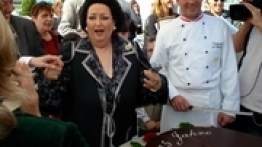
A huge screen behind the stage at the Dorchester Hotel yesterday showed Montserrat Caballé singing for a hot-dog in a café. Sadly, she wasn’t there in person to collect the Lifetime Achievement award at the Classic FM Gramophone Awards. Neither was Steven Isserlis present, but his friend Barry Humphries — in the wittiest speech of the lunch — collected the Instrumental award on his behalf for his Bach Cello Suites (Hyperion). Other winners included the violinist Julia Fischer (Artist of the Year) and Vasily Petrenko (Young Artist Award), Principal Conductor of the Royal Liverpool Philharmonic Orchestra.

A portrait of the artist

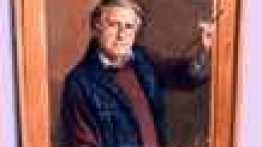
An exhibition of self-portraits by members of the Royal Society of Portrait Painters has opened at the Bulldog Trust, 2 Temple Place, London WC2, and runs until 10 October. The Trust, which was started in 1983, supports selected charities, such as Hampshire Hospices and the Prince’s Trust, and gives advice as well as money. Rolf Harris has a self-portrait in the show, as do some 50 other artists, including Michael Noakes (pictured). The winner of the first Bulldog Bursary worth £5,000 is Joseph Galvin (31), who says he will move from Wales to London for a year.

Pulitzer Bait

This post reminded me of a terrific piece Sarah Lyall (one of the NYT’s under-appreciated stars) wrote for Slate a couple of years ago. She made the mistake of attending the British Press Awards dinner. The Pulitzers these are not. Most papers crow about their own successes while failing to even report the existence of winners from other titles. Happily, however, there are enough award ceremonies for almost everyone to claim the title “Newspaper of the Year”. In their own way, the hacks treat these awards with the proper level of contempt and, since no-one spends all year dreaming of ways to win them we are at least spared the

Is Don Giovanni really the greatest?

Just received an email from Washington National Opera touting their new production of Don Giovanni in which they claim that it’s “widely regarded as the greatest opera ever composed”. Is this true? I suppose it could be, but as with novels it had never occurred to me that there was a clear or obvious “Number 1 Opera”. Still, parlour-game time: if you had to nominate an opera for “Greatest Ever” status, what would you select and, secondly, what opera would you choose to see if it was understood that this would be the last opera you’d ever see? UPDATE: Meanwhile, the Lyric Opera of Chicago calls La Boheme “the world’s

Man with a mission | 29 September 2007

Mary Wakefield talks to Jonathan Kent about his plans to jump-start the West End Something is rotten in the West End. It’s not just the sour smell of lager, or the Saturday night binge drinkers. It’s more that as I walk up St Martin’s Lane, through what should be the beating heart of theatreland, there’s an unmistakable whiff of artistic decay. It’s been said before and often, with varying degrees of gloom, but it’s difficult to deny: nearly all the shows on offer here are musicals, and most of them adapted from movies or TV: The Lion King (‘Pure delight floods the Lyceum!’) Bad Girls: The Musical (‘If you’re in

Topsy turvy

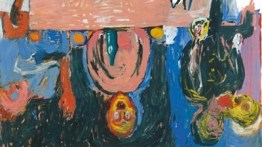
Born Georg Kern in 1938, Baselitz adopted the name of his birthplace in Saxony, East Germany just after his definitive move to the West in 1958. Brought up in an atmosphere of gloom and social realism, he had been expelled from art school in East Berlin for ‘social-political immaturity’. He fared better in West Berlin and firmly grasped the fashionable nettle of existential angst while struggling with a whole raft of Western influences, from Abstract Expressionism to Pop Art. He developed his own brand of uncouth and aggressive figuration, making his trade-mark (from 1969) the upside-down motif. Baselitz paints his pictures flat on the floor, working all round them, but

Pleasure at the Proms

Positively oceanic was the season’s principal novelty. It was not a new commission; rather, the rediscovery 440 years after its composition of the Mass in 40 parts by Alessandro Striggio, whose final Agnus Dei rises to a staggering 60, which ought to leave Tallis’s celebrated Motet (whose inspiration is reckoned to originate here) pale and gasping in comparison. Which is to hint already at disappointment. In the event (17 July) it was Striggio who paled. Even what one expected — an exploitation of spaces and masses in great planes of slow-shifting harmony — was curiously ordinary for such an extraordinary venture; almost completely devoid of the intricate finesse of the

Magnificent six

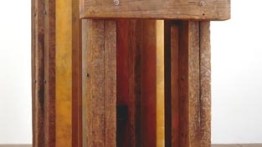
Anyone who goes into the Annely Juda Gallery in Dering Street expecting something like those light, airy, weight-denying abstract steel sculptures, painted bright red all over perhaps, like the Tate’s song-evoking ‘Early One Morning’, 1962, is in for a big surprise. All works shown here stand with absolute, resolute, broad-based firmness as if to proclaim that they are what they are. ‘Jupiter’, for example, made in 2005, boasts some nine points of contact with the floor. Caro famously shed the need for a pedestal over 40 years ago and this decision continues to add a certain strength of identity to his sculptures. Self-contained strength is what most of his recent

Gorgeous George

Michael Clayton is one of those American films about American lawyers doing American lawyer stuff which isn’t usually my kind of thing. And, anyway, didn’t money-hungry men in neat suits stop being cool or interesting in about 1982? But you know what? This is a pretty decent corporate thriller: tense, exciting, involving, and best of all it stars George Clooney, who is just so hot. I recently read he’d broken a foot in a motorcycle accident and just in case he happens to be a Spectator reader — and why not?; all the best people are — I would like to say this: ‘George, I am willing and ready to

Guilty pleasure

Guilty pleasure (Radio 4) Unmasking the English (Radio 4) In 1908 Gerald Mills borrowed £1,000 (worth about £52,000 in today’s money) to set up a publishing company with his friend Charles Boon. Among their first authors were P.G. Wodehouse and Jack London, who would probably be horrified to realise that their books are now associated with a company that promotes titles such as Purchased for Pleasure and Tall, Tanned and Texan. But you can’t be snooty about a publisher who sells 200 million books worldwide every year (that’s one every six seconds according to a proud Mills & Boon editor). Or who once turned down a manuscript by Helen Fielding,

Porn with knickers on

I once knew a young woman who worked for a large public-interest organisation. She was clever and well educated, but funds were tight, and she feared she was about to lose her job. In which case, she planned to follow a university friend and become a high-class prostitute. It sounded marvellous, she said. The agency vetted the clients, she worked at home, and made hundreds of pounds a day for little work and next to no risk. Her parents thought she was a secretary; when they were in town she simply took the day off. It sounded dreadfully sad to me, and I was delighted when I heard that my

Mowl’s quest

It is more than 40 years since the foundation of the Garden History Society signalled that the study of the history of gardens and designed landscapes had become an important subject in its own right, instead of being simply an optional add-on to the study of historic buildings. Since then, our knowledge of the subject has increased exponentially, with academic research enlisted as a guide to preserving existing gardens, as well as uncovering those thought lost. The trick, however, is how to ensure that knowledge of garden history, acquired in academic circles, filters out to the general reader, and there is none better at this than Timothy Mowl, who since

A Matter for Debate

Lloyd Evans Zimbabwe – last in the dictionary and too often last on the agenda. The new season of Intelligence Squared debates opened with the motion ‘Britain Has Failed Zimbabwe.’  Moderator Richard Lindley set the scene by taking us back to Salisbury, now Harare, on November 11th, 1965 where, as a young journalist, he reported on Ian Smith’s announcement of UDI. Back then, everyone expected that within weeks British paratroopers would descend from the heavens and sort the country out.  They’re still waiting. Peter Godwin, a Zimbabwean journalist, opened in support of the motion with an unsettling quip: ‘If we were in Zimbabwe you wouldn’t be able to go to

Masters of the artistic universe

On The Courtauld’s 75th anniversary, Robin Simon looks back at its colourful and distinguished history The Tate Gallery …sorry, I’ll start again. ‘Tate’ spent £100,000 a few years back just to lose its ‘the’. Staff are strictly instructed by the gallery’s Oberkommando to refer to it according to the brand name, as in ‘I’m at Tate’. It sounds as if they come from Mars — or Yorkshire. It doesn’t work, and I enjoy the announcement on the Victoria Line at Pimlico which gets it all wrong: ‘Alight here for the Tate Britain.’ The Courtauld Institute of Art turns 75 on 6 October this year and has also undergone a rather

Miller’s colourful tale

This beautiful exhibition celebrates the 100th anniversary of Lee Miller’s birth in Poughkeepsie, New York State, and it takes place 30 years after her death from cancer. When she died, her only child Antony Penrose had no idea of her achievements as muse and artist, and only learnt about them gradually. As he grew to understand her better, he determined to set about the rehabilitation of her artistic reputation. This he has achieved with exemplary thoroughness, through a series of publications and exhibitions which have made Lee Miller a well-known and much admired figure. The last substantial museum show was at the National Portrait Gallery in 2005 — is it