Arts Reviews

The good, bad and ugly in arts and exhbitions

Literary juggler

Afterlife Lyttelton Dickens Unplugged Comedy Afterlife is pH-neutral. It doesn’t enhance Michael Frayn’s reputation and doesn’t damage it either. Max Reinhardt was one of the great theatrical magicians of the 20th century and it’s easy to see what drew Frayn and his long-standing collaborator, the director Michael Blakemore, to the challenge of putting his life on stage. The result is a grand, beautiful, finely acted and richly imaginative show. One snag. Frayn shouldn’t have written it. Reinhardt is now almost forgotten so first up you need some plain-speaking nuts-and-bolts data entry. Who is he, where’s he from, what did he do? But Frayn the literary juggler wants to create a
Four play | 18 June 2008

The Edge of Love 15, Nationwide The Edge of Love, which is based loosely on real events, explores the ménage à quatre that existed for a few years between the Welsh poet Dylan Thomas (Matthew Rhys), his wife Caitlin (Sienna Miller), his childhood friend Vera Phillips (Keira Knightley) and her eventual husband, William Killick (Cillian Murphy), and if all these people were exactly as portrayed in this film, then so be it but, boy, are they tiresome. If you ever went out to dinner with the Thomases and the Killicks you would say afterwards, ‘I’m sorry, my dear, but what a bore. Did you notice, by dessert, I’d begun to

Asylum Galore! Or, Passport to the Kingsway

Good grief. This is a terrific, amazing story. Congratulations to Rachel Stevenson and Harriet Grant. It’s almost like an Ealing comedy except, of course, you know, serious. And, I think, really rather wonderful: At first sight, the Kingsway seems an unwelcoming place. Wind whips around the 15-storey tower blocks, the windows in the lobby doors are broken, the corridors are gloomy and bare. Remnants of police incident tape flicker from lampposts and prominent surveillance cameras add an air of menace to its pathways. There is little to dispel the sense that this is one of Britain’s forgotten pockets of poverty. But when hundreds of asylum seekers were placed there to

Morality takes to the stage

Henrietta Bredi joins in the preparations for Vaughan Williams’s ‘The Pilgrim’s Progress’ ‘Come, thou blessed of the Lord’ sing the sopranos and altos, and now the tenors and basses are joining them, with a wondrously layered swelling of sound. The hairs on the back of my neck are standing on end — this is the first rehearsal and the first music I’ve heard from Vaughan Williams’s The Pilgrim’s Progress, which will be given two performances at Sadler’s Wells, on 20 and 22 June. VW, as some people matily refer to him (personally, I wouldn’t dare), died 50 years ago, and celebrations of his life and work are abounding. One of

Sometimes Washington Really is a Small Town

Like anyone else who’s spent any time in Washington these past 20 years, I was stunned by the sad news of Tim Russert’s death, aged just 58, on Friday. these must be terrible times for his friends and family. Like Matt Yglesias, I’ve criticised Russert before, but de mortuis nil nisi bonum and all that. For myself, I never thought Russert as “tough” as his legend suggested. “Tougher than Bob Schieffer” isn’t quite the same thing. American journalism – and politics – of course, makes a virtue of having a less cynical, less antagonistic style than that which those of us brought up in Britain are accustomed to enjoying. There

The Wiki Man | 14 June 2008

A 1980s cartoon from Private Eye shows a teenage boy, dressed in animal skins, staring intently into the dancing flames of a small fire. Behind him, bearded and leaning on a club, stands his scowling Neanderthal father, horrified: ‘When I was a boy we had to make our own entertainment.’ The great Douglas Adams believed technology always arouses one of three different reactions in us, depending on our age at the time it first appeared. So anything invented before our tenth birthday leaves us unfazed — it’s mere infrastructure (just as my daughters are no more excited by Sky+ than I am by plumbing). By contrast the stuff invented in

Mixed blessings

Summer Exhibition Royal Academy, until 17 August The Summer Exhibition at the Royal Academy, now in its 240th year, is still an event, even if visitors don’t dress up quite as ornately as once they did. For the first time I attended Buyers’ Day. The atmosphere is convivial but competitive, as people jostle to see exhibits and further thicken the crowds round the provenly popular. It’s not always easy to look at art in these conditions, but the acquisitive hum in the air almost compensates for the lack of calm. The more affluent, or relaxed, sip from glasses of champagne or Pimms while pondering their purchases, as the Academy offers

Dylan obsession

There are artists you admire and there are artists you love, and for me Bob Dylan has long fallen into the former category. I have been listening to him, sporadically, since I was a schoolboy, when his rebellious stance and imagistic, freewheeling lyrics had an obvious appeal to a bolshie adolescent at a boy’s boarding school who fancied himself as a poet. But while I can appreciate that such albums as Blonde on Blonde, Highway 61 Revisited and Blood on the Tracks are compelling and lyrically profound, it would be dishonest to pretend that I listen to them often. Looking at my shelves I’m astonished to discover that I own

Unappealing characters

Rosmersholm Almeida Love — The Musical Lyric Fat Pig Trafalgar Studio A Norwegian melodrama about suicide, socialism and thwarted sexual passion. If you saw that on the poster would you be tempted? Nor me. Add the authorship of Ibsen and you might change your mind but you’d be unwise. Rosmersholm is a clumsy, unengaging late play with ghastly characters and weird, wonky relationships. Rosmer, a former priest, shares his house with a blonde sex bomb Rebecca, who was the best friend of his mad wife who drowned herself in a pond. Instead of enjoying a summer of love, the priest and the blonde live a life of irritating and blameless

It’s so unfair

Margaret Thatcher – the Long Walk to Finchley (BBC4)  You don’t have to look very hard for signs that the Tories are going to romp home in the next general election. There was another one on TV this week: a drama showing Margaret Thatcher as an achingly sexy young woman who made fantastic speeches and whose hard-won victory, after numerous setbacks, in gaining the Tory candidacy for the Finchley seat had you weeping tears of joy. Imagine the BBC commissioning something like that ten years ago. Or even two years ago. It just wouldn’t have happened. The Thatcher brand was so badly contaminated you simply weren’t allowed to admit that

Verdi’s riches

Don Carlo Royal Opera House Verdi’s Don Carlo is as much of an obsession for me as one of my favourite operas. Though it isn’t perfect, and can’t be made perfect, whatever you include or eliminate from the extraordinary number of options available (including two languages), it has so many prolonged scenes of incontrovertible greatness, and their density increases as the opera proceeds, so that the last 80 minutes or so are all magnificent (ignoring the perfunctory endings of both the last two acts), that it seems to me obvious that it ranks with the Requiem as Verdi’s finest work. Yet this richness brings the inevitable problem of casting a

Drawing a blank | 11 June 2008

Irina Palm 15, Barbican and key cities The big film this week is, I suppose, The Incredible Hulk but I chose not to see it because, aside from anything else, isn’t this the second Hulk film in about ten minutes? When was the Ang Lee one? I have no idea why it’s come round again so soon. Perhaps it’s to do with the Hulk himself, who stormed Marvel’s production offices saying, ‘Why no one make another Hulk? It make Hulk mad. Make Hulk film or Hulk smash truck then Hulk smash you.’ Well, I certainly won’t support such behaviour so, instead, chose to see the smaller, quieter film, Irina Palm.

China’s piano fever

Petroc Trelawny visits the world’s largest piano factory in the country where under Mao it was dangerous to play the instrument As my plane makes its final approach into the southern Chinese city of Guangzhou, the mountains give way briefly to green paddy fields, and then industry takes over. Beneath are hundreds of vast blue-roofed sheds and smoking red-brick chimney stacks. The landscape is mapped with railway marshalling yards and lorry parks; heavily laden barges crawl along the creeks of the Pearl River. With a massive economy that’s now larger than that of nearby Hong Kong, Guangdong Province deserves its title as the factory of China. I’ve come here to

Liz suggests

MUSIC Proms: Get booking now for this two-month season (18 July to 13 September). Highlights include the Berliner Philharmoniker with Sir Simon Rattle (Brahms and Shostakovich) on 3 September; Handel’s Belshazzar conducted by Sir Charles Mackerras (16 August); Daniel Barbenboim’s West-Eastern Divan Orchestra playing Haydn, Schoenberg and Brahms (14 August); plus endless other goodies. For tickets tel: 0845 401 5040 or book online www.bbc.co.uk/proms OPERA Opera Holland Park is always a challenge at this time of year — will it rain or not? On opening night (Il trovatore) it poured — but nobody seemed to mind much. Other operas include Donizetti’s La Fille du Regiment and Mozart’s Magic Flute. For

And Another Thing | 7 June 2008

‘Mr Pont, may I introduce you to Miss Austen?’ There is something infinitely touching about a creative artist who dies young, not before displaying sure evidence of a glorious gift but without having time to set up the arching parabola of developing genius. One thinks of that magic group at the beginning of the 19th century — Keats, coughing his heart out in Rome; Shelley, drowned in his crazy yacht off the stormy Ligurian shore; Girtin, about whom Turner said ‘If Tom had lived, I should have starved’; Bonnington, whose watercolours (said Delacroix) ‘shone like jewels’; and the grim and mysterious Géricault, who adored English horses ‘and the fierce Amazons

Saved by the horses

Mongol 15, Nationwide Mongol traces the early years of the legendary warrior Genghis Khan and does not feature, at any point, the world’s greatest adventurer/archaeologist or four fortysomething women living and loving in New York. Yes, it is probably safe to come out now. They’re all gone! However, having said that, the other morning when I went to put on my shoes I did find Indy in one and Carrie in the other. ‘Be off,’ I said as I tipped them out. ‘You’ve had your moment, now shoo!’ So it is safer but I don’t think we are quite out of the woods yet. Be vigilant. And always shake your

Top women

This weekend, by chance, brought us television biographies of the two most famous British women of the 19th century. They were very different programmes, for good reason. Queen Victoria’s Men on Monday was made for Channel 4, so of course it had to be in that channel’s long iconoclastic tradition: General Custer, a great tactician; Captain Bligh, fine navigator and leader of men; the Few, a bunch of snivelling cowards. So, of course, the woman who gave her name to the very notion of propriety, decorum and discretion — ‘a byword for sexual and emotional repression’, as the script put it — had to be nookie-crazed. Or, at least, a

A recommendation

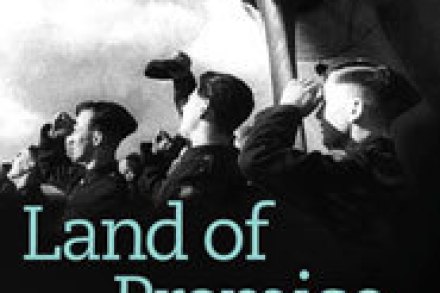
British cinema is renowned largely for its spirit of documentary realism. Think Ken Loach, think Mike Leigh, or – more recently – think Shane Meadows. The four-disc, forty-film box set ‘Land of Promise: The British Documentary Film Movement, 1930-1950’ (recently released by the British Film Institute, and available here) represents the primordial soup from which this tradition was birthed. This is not to say that the films within it are primitive. Far from it. They are poetic, lyrical and – in their own quiet way – revolutionary. This is especially true of those documentaries made by the leading lights of the movement – John Grierson, Paul Rotha and Humphrey Jennings