Arts Reviews

The good, bad and ugly in arts and exhbitions

Taking on the most dangerous job in journalism

Readers will recall the sad demise of Tatler Alan, the cute pooch who came to a sticky end in a tragic accident involving the doors of Vogue House, where the magazine is based. Well, I am the bearer of happier news this time: the girls in pearls have a new canine recruit, Geoffrey, a puppy that seems just as sweet as his unlucky predecessor. So then. Happiness restored at last and a dark chapter in Bystander’s history closed. Just watch out for those revolving doors, Geoffrey.

Educating Yorkshire was, for the most part, self-indulgent pap

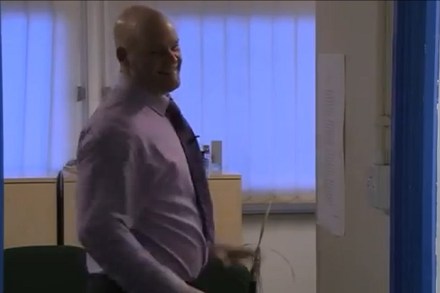
I don’t know if you’ve seen the documentary series, Educating Yorkshire, which has been as depressing as you might imagine from the title. Some of the teachers in the film were excellent, but the overall feeling one got was of inadequate individuals endlessly indulging their arrogant and stupid charges. As described here, rather brilliantly, in The Daily Mail. The headmaster in particular got my goat. I don’t think heads should address the pupils as ‘mate’ and suck up to them. There was an especially emetic final scene for the end of year address from the headmaster to the year 11 pupils, in which the staff all started crying. This over-emoting

Welcome home, Malcolm Morley

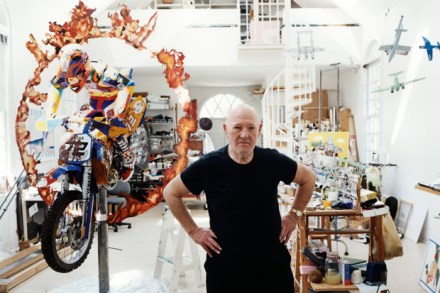
The Ashmolean Museum has taken the radical step of embracing contemporary art, and is currently hosting (until 30 March 2014) a mini-retrospective of Malcolm Morley’s work, curated by Sir Norman Rosenthal and borrowed entirely from the prestigious American-based Hall Art Foundation. Morley (born London 1931) was the first winner of the ever-controversial Turner Prize (apparently David Sylvester threatened to resign as a judge if Morley was not awarded the prize), but has lived in America since 1958 and visits these shores rarely. The last time he was here was in 2001, for a full-scale retrospective of his work at the Hayward Gallery. We haven’t seen enough of his art in

Braque in full flight

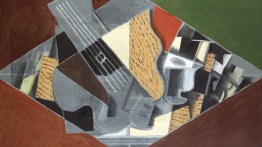
Towards the end of his life, Georges Braque described his vision in the following terms: ‘No object can be tied down to any one sort of reality; a stone may be part of a wall, a piece of sculpture, a lethal weapon, a pebble on a beach… Everything is subject to metamorphoses.’ Since then, set ideas of Braque’s oeuvre have crusted over like dry impasto: Braque the cubist, Braque the inventor of the papier-collé, Braque whose blue birds soar on the ceiling of the Louvre. The Grand Palais now hosts the first retrospective of the artist’s work to be held in Paris for 40 years, setting those metamorphoses back in

The big tease

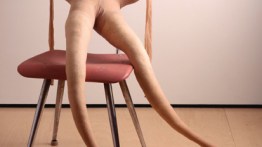
Perhaps the greatest irony of many in this first solo London show of Sarah Lucas is that it is sponsored by Louis Vuitton. ‘Symbolising French elegance and joie de vivre, the Maison LV has always collaborated with the best engineers, decorators and artists,’ it claims. Well, welcome to a new world. Soiled mattresses provocatively pierced by fruit’n’veg, two dessicated hams shoved into a pair of knickers, a mechanical ‘wanking’ machine, a primeval soup of penises — you get the drift. It is of course vintage Lucas, a retrospective of work drawn from two decades of artistic confrontation, and the site she has chosen for this engagement is the human body.

The Light Princess badly needs a mission

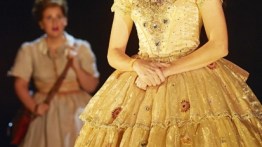
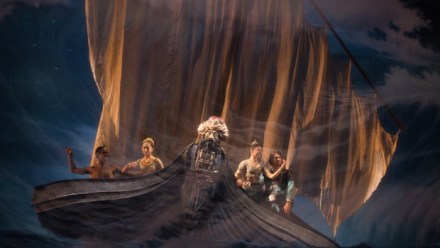
There are many pleasures in The Light Princess, a new musical by Tori Amos. George MacDonald’s fairy story introduces us to a beautiful red-haired royal, Althea (Rosalie Craig), who has a mysterious resistance to gravity. After various tribulations she abandons life on dry land and becomes a mermaid. The show meets these technical challenges with some brilliance. Althea seems to float mysteriously across the stage in midair while being supported on the limbs of black-clad gymnasts. Later she moves to a lake, which is suggested by intricate layers of shimmering blue cloth. But despite the sumptuous and ingenious special effects, the show hasn’t a powerful enough storyline or sufficient character

Dear Simon Jenkins, please stop moaning about developers

When architectural preservationists meet at the tedious conferences and grim councils of despair that feed oxygen to their nihilistic and unventilated ‘heritage’ world-view, the word ‘developer’ is spat out with contempt. It is as though they are speaking of Satan and his diabolical agents, who used to appear in the horror novels of Dennis Wheatley that I so enjoyed in my youth. To hear Simon Jenkins, for example, refer to a ‘developer’ is to appreciate the impressive range over which the human voice can express contempt. To Jenkins, a ‘developer’ is a loathsome thing bent on profaning all that is sacred. ‘Developers’ despoil the countryside and debauch the city. They

I hope you spotted the epic ‘existential struggle’ in Les vêpres siciliennes — I didn’t

Verdi’s Les vêpres siciliennes is his least performed mature opera, even in its more familiar version as I vespri siciliani. So mounting it with a top-ranking cast and an interesting production is just what the Royal Opera should do in a so far seriously under-celebrated Verdi bicentenary year. What has actually happened is that we have a first-rate musical performance and a dismally confusing, cluttered, pretentious and conspicuously consuming production by the most fashionable of Continental directors, Stefan Herheim, abetted by the set designs of Philipp Fürhofer and the ideas of his regular dramaturg Alexander Meier-Dörzenbach. The action of Vêpres, which is set in 1282, only makes sense, insofar as

Deborah Ross: The Selfish Giant is not fresh, but it’s superbly performed

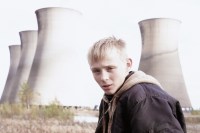
The Selfish Giant is a British social-realism film in the tradition of all such films from Kes onwards, so it never feels particularly fresh, but it does feel real and true, is superbly performed, and it does pack quite an emotional punch. I had to gather myself afterwards, and I’m still gathering myself, and may be gathering myself for some time to come. So it’s good at what it does, even though what it does has been done before. At least I think that’s what I’m trying to say. I’m never really that sure. This is the second feature from Clio Barnard, whose first, The Arbor, was a portrait  of

Will the women of The X Factor stop perving?

Will the women on ITV’s The X Factor (Saturday) stop perving? I suppose there are two ways to tackle the issue of gender equality — one is to dictate that nobody mention sexuality at all; the other is to make females slobber over the males the way men purportedly slobber over women all the time. The women judges of The X Factor are lurching towards the latter. ‘I’ve got my eye on you,’ Sharon Osbourne winked at a contestant, Nicholas McDonald. He is 15. She made him repeat the words ‘nearly sixteen’, because he pronounced it ‘sex-teen’. Young Nicholas is being sexualised before our eyes. ‘Tonight’s the first night I

Grayson Perry is an inspired choice for the Reith Lectures

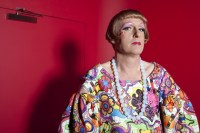
You’ve probably already read or heard somewhere that the inspiration for Grayson Perry’s current series of Reith Lectures on Radio 4 was none other than Lynda Snell. (I wonder if she knows.) What a coup for the establishment network, the home service, the epitome of right thinking and professional excellence. Here’s a cross-dressing potter from Essex, who revels in outrageous outfits and shockingly frank, message-ridden pots and tapestries about sex abuse and class warfare, daring to admit not just that he listens to The Archers but that he also takes his cue from Lynda’s determination to have someone (or something) from Ambridge installed on the Fourth Plinth in Trafalgar Square.

Jeremy Deller curates a fascinating and funny exhibition in Manchester

All That Is Solid Melts Into Air is an art show largely without art (at Manchester Art Gallery until 19 January 2014, then touring). No matter: Jeremy Deller, the curator, has found some surprising knick-knacks to illustrate how the Industrial Revolution has influenced popular culture. For instance, he plays rediscovered factory songs on a gloriously lurid jukebox. They are similar to Negro spirituals; but, while spirituals inspired R&B, our industrial folk music has descendants in heavy metal and rock. Deller charts this lineage by displaying the family trees of Noddy Holder and Bryan Ferry, reaching back to the 1790s. Continuity through time is Deller’s chief preoccupation. He stands a double

Tim Rice: How to get ahead in musicals

Like almost everyone else in the insane world of musical theatre, I don’t know how to create a hit. This hasn’t prevented me from contributing to, even originating, some. Most of these successes have come about by happy accident and could so easily have been disasters or stillborn but for matters or events beyond my control or totally unexpected. I suppose I could arrogantly claim that there was usually some artistic merit to the shows that did make it (and little to those that eventually flopped) but there must be many writers with wonderful musical ideas out there who have never had that vital unpredictable break. Like Napoleon, we all

Skymap Says We’re Nowhere Near Home

In Economy’s cramped haul it’s all I ever watch. Our course is laid on screen before me, a dotted line miles wide, plotting the next ten dry-eyed hours. This kind of travel is the loneliest of procedures: solo-piloting a pale track above computer-graphic continents.  Across the aisle a blindfold man dreams, ears cupped to rattling Springsteen.  It’s for me that the names of India’s cities ride at the horizon; that a picture aeroplane hauls its cartoon shadow. Just as I glaze over, the tracking shot pulls back: the round planet is ribboned in aerial desire paths. Our destination blinks and spins like a mandala. Nine hours, eight minutes. Below us,

James Delingpole: The Wrong Mans leaves me gasping with exhilaration and glee

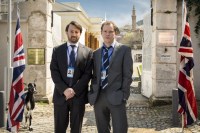
Among the criticisms rightly levelled at the BBC are that its commissioning editors are overcautious, unimaginative, unadventurous and over-reliant on star names and proven formulae. So I really didn’t have much hope for The Wrong Mans (BBC2, Tuesday), the latest vehicle for the painfully ubiquitous James Corden. Since Gavin & Stacey — which I know we’re all supposed to have cherished beyond measure — Corden has become as inescapable a part of the BBC furniture as David Jason was in the Eighties, or Robson & Jerome were in the Nineties. If Corden had pitched a script based on the Albanian telephone directory, I’m sure the BBC would have commissioned it

Tom Hanks is the greatest actor alive

The main thing you should know about Captain Phillips is that it really puts you through the wringer. It’s based on the true 2009 story of the hijacking of a US container ship by Somali pirates, and the Navy Seal rescue mission that ensued — pirates, a word of advice: if you are going to kidnap Tom Hanks, America is simply not going to let you get away with it — and my heart was in my mouth throughout. It is nail-bitingly exciting, even if you know the outcome, and I think I can safely say it’s a better film than the one I thought I was going to see.

Last week’s all-female Today proved women make for a more uplifting show

Boy, we’ve had to wait a long time for this. But last Thursday morning something unusual happened on Radio 4; something so unexpected, so rich with potential. It happened at peak time in the morning. Eight o’clock. The Today programme. And it began with the news, read by a woman — Corrie Corfield. Of course, there’s nothing unusual about that these days. It’s been decades since the BBC was forced to admit that women can enunciate just as clearly as men and that their ‘lighter register’ is not more difficult to pick up for those who are hard of hearing. Afterwards, though, we had a female presenter, a female co-presenter,

Dreaming in the Renaissance

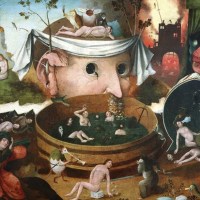
The exhibition The Renaissance and Dream at the Musée du Luxembourg in Paris (until 26 January 2014) explores how artists have wrestled with the furthest limits of the imagination, in forms ranging from the muscular elegance of Michelangelo to the luminous naivety of Lorenzo Lotto. In tackling a subject as inexhaustibly popular as dreams, the exhibition has avoided being either nebulous or anachronistic. Freudian psychoanalysis is mentioned only once in passing, and the paintings are allowed to speak for themselves. What’s more, these artists were not depicting their own dreams. They were plundering from history, myth and religion in a quest for vision unimpeded by time, place or conventional imagery.