Arts Reviews

The good, bad and ugly in arts and exhbitions

Is this the greatest sculpted version of the Easter story? It’s certainly the strangest

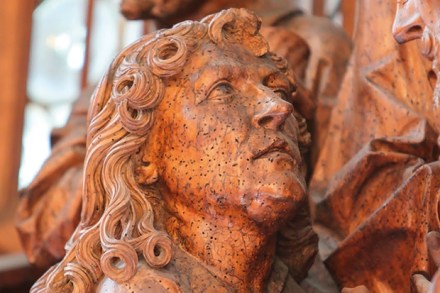
In April 1501, about the time Michelangelo was returning from Rome to Florence to compete for the commission to carve a giant marble David, a very different sculptor named Tilman Riemenschneider agreed to make an altarpiece in the small German town of Rothenburg ob der Tauber. Since then, things have not changed much in Rothenburg. Though battered during the war, it has been restored to postcard perfection (or rather turned into a perfect place for tourists to take selfies of themselves against a Disneyesque medieval background). And the Altar of the Holy Blood is still there, in the place for which it was made, at the west end of the
Blunt and bloody: ENO’s Sweeney Todd reviewed

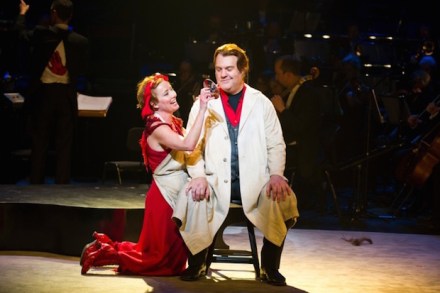
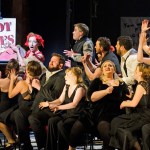
A wicked deception is sprung in the opening moments of this New York-originated concert staging of Stephen Sondheim and Hugh Wheeler’s Sweeney Todd. The English National Opera orchestra, liberated from the pit, is duly assembled on stage at the London Coliseum; flower arrangements and a Steinway grand add to the formality, and right on cue the conductor and cast, suitably attired in evening wear and with scores in hand, take their places behind a line of music stands. The applause dies and Bryn Terfel turns to the conductor, clears his throat and nods. The whirring ostinato introducing ‘The Ballad of Sweeney Todd’ begins — furtively — and Sweeney, of course,

Ghost Hands

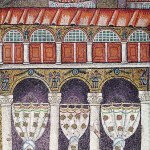
Sant’Apollinaire Nuovo, Ravenna Your hands brush marble, feel impelled   To touch where crisp cold tesserae    Compose a fine array Of arches that once held   A gallery of courtiers with gifts they gave A throne in mosaic palace down a long cool nave.   Now strung between the arches like a tapestry   Hang folds that robbed Theoderic of his majesty. Yes, it was curtains for him and his court,   Walls cleansed of every sign That Arian’s heresy was taught   Here. Now the floating drapery seems to swell    Like jaunty washing on a line Where once the line of courtiers spanned arcades,   Except where three white columns tell    The legacy that history deceives

Sweeney Todd, ENO, review: blunt and bloody

Sweeney Todd English National Opera, in rep until 9 April A wicked deception is sprung in the opening moments of this New York-originated concert staging of Stephen Sondheim and Hugh Wheeler’s Sweeney Todd. The English National Opera orchestra, liberated from the pit, is duly assembled on stage at the London Coliseum; flower arrangements and a Steinway grand add to the formality, and right on cue the conductor and cast, suitably attired in evening wear and with scores in hand, take their places behind a line of music stands. The applause dies and Bryn Terfel turns to the conductor, clears his throat and nods. The whirring ostinato introducing ‘The Ballad of Sweeney

Reimaging the lost masterpieces of antiquity

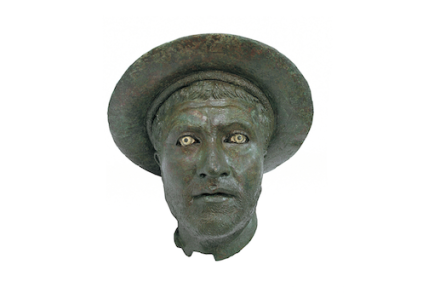
For centuries there has been a note of yearning in our feelings about ancient Greek and Roman art. We can’t help mourning for what has irretrievably vanished. In 1764 Johann Joachim Winckelmann wrote that we have ‘nothing but a shadowy outline left of the object of our wishes, but that very indistinctness awakens only a more earnest longing for what we have lost’. In the same spirit, Power and Pathos, an exhibition of Hellenistic bronze sculpture at the Palazzo Strozzi, Florence, begins with an empty plinth. It is the marble base of a statue, found in Corinth, on which are written the words ‘Lysippos made [this]’. The inscription is poignant

Wellington’s PR machine

The history of portraiture is festooned with images of sitters overwhelmed by dress, setting and the accoutrements of worldly success. Vanity, complacency and, frequently, insecurity have led men and women to commission or sit for likenesses in which an extra swag of braid, another row of pearls, flounce of silk or plume topples the finished image from celebration to indictment. In such portraits, the artist hardly needs to essay psychological insights: luscious visual bombast betrays the chasm between appearance and truth. In images as diverse as Van Eyck’s ‘Arnolfini Portrait’ of 1434, Antoine-François Callet’s 1775 coronation portrait of Louis XVI and Sargent’s ‘Mrs Carl Meyer and her Children’ of 1896,

Today’s reburial wasn’t about Richard III. It was about Benedict Cumberbatch

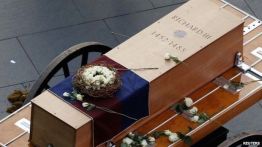
We should have known it. Today’s reburial isn’t about Richard III. It’s about Benedict Cumberbatch. Isn’t everything these days, somehow about Benedict Cumberbatch? I have a theory that he’s the one who really punched Oisin Tymon, and poor Clarkson is just taking the rap. Jeremy Clarkson, Richard III, both cruelly maligned blokes. They’ll be banning nepoticide at the BBC next. But back to The Batch. An hour ago, Cumberbatch popped up as the star attraction at the Richard III’s reinternment at Leicester Cathedral, to read a poem newly written for the service by poet laureate Carol Anne Duffy. This whole affair is beginning to feel uncomfortably like a Narnia reenactment

How gaming grew up

Sometimes a guy feels abstracted from the world. He visits Europe’s finest galleries, but the paintings seem to hang like corpses from the walls. The great symphonies fail to stir his interest, let alone his soul. So he goes home, pours a large whisky and does the only thing that’s left for him — he buys a PlayStation. That’s what I did last year, and I’ve been wired to my screen ever since. Parachuting from skies to impale some oblivious mercenary. Driving off buildings to escape the cops. Shooting and shooting — and shooting. Why haven’t I done this all my life? It was blockbuster games such as Grand Theft

Lily James’s Cinderella is more of a doormat than my actual doormat

Kenneth Branagh’s Cinderella is a Disney film based on a Disney film, so is double Disney, if you like. It is a live-action adaptation of the 1950 animated version, and an entirely faithful retelling. As such, it comes with no irony, no modern winks aimed at a modern audience and no smarty-pants updating of the smarty-pants kind. It is lush, with dazzling costumes by Sandy Powell, but without any reinvention whatsoever this is a film that, at some point, should have asked itself, ‘OK, I’m all dressed up, but do I actually have anywhere to go?’ It stars Lily James (from Downton, apparently) as our heroine, Ella. Ella had a

Shrapnel at the Arcola works for the slayers, not the slain

Quite a hit factory these days, the Hampstead Theatre. The latest candidate for West End glory is Hugh Whitemore’s bio-drama about Stevie Smith. Not an obvious choice. The script, from the 1970s, recreates the atmosphere of Stevie’s life with effortless accuracy. Her vocabulary, her taste in clothes, her habits of thought and expression appear by magic as if drawn from the evidence of intimate friends. Yet Whitemore never met his subject. Zoë Wanamaker plays her as an adorable suburban eccentric, whose razor-sharp intellect peeps out from behind a façade of emerald pinafores and sherry decanters. Stevie (Florence Margaret Smith) was born in Hull in 1902 and lived nearly all her

Does the future of radio really lie in podcasts?

To a debate on the future of radio at the BBC where it turns out not to be a discussion on who’s listening now but how they’re listening. The Reithian ambition to inform, educate and entertain needs to change, says Mary Hockaday, controller of BBC World Service English, and become ‘inform, educate and connect’. But how do you find and hold on to your audience in the digital age? The buzz word here is ‘podcast’ after the extraordinary success of Serial, the American-made documentary that went viral and has now reached an astonishing 75 million downloads worldwide, still rising. In many ways, though, Serial was very old-fashioned radio. True crime

Channel 4’s The Coalition reviewed: heroically free of cynicism

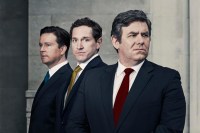
In a late schedule change, Channel 4’s Coalition was shifted from Thursday to Saturday to make room for Jeremy Paxman interviewing the party leaders. With most dramas, that would mean I’d have to issue the sternest of spoiler alerts for anybody reading before the programme goes out. In this case, though, you know the story already — because Coalition was a dramatisation of what happened in Westminster in the days after the last general election. Fortunately, one of the programme’s many qualities was its Day of the Jackal ability to keep us gripped even though we were always aware of the outcome — largely by reminding us that the characters

Studio Portrait

My uncle in his uniform, dog-collared, briar clutched at an angle, brilliantined hair with a central parting, très debonaire. This could have been central casting for the role of padre in a West End show, his Now let us pray moment, except that he’d left for war the next day. He returned to be vicar of several parishes, a warrior in mufti, modest, diligent, but no less the charmer of that portrait in his trim battle-dress, and seldom without the starched shine of a collar’s halo around his neck, put on each morning, still not a little glamorously worn.

For the Time Being

Time slips away while we conjecture how to make best use of it. Waking late, the hours already sliding by, the day unplanned and shrinking. We’ll fill the time, anaesthetise the loss, The final hour will come and it will pass.

Jeremy Clarkson rants about BBC at charity event: ‘I didn’t foresee my sacking’

Next week Lord Hall will read the BBC’s report into Jeremy Clarkson’s suspension from Top Gear and make a decision about Clarkson’s future. In light of this, Clarkson may well live to regret his night out at the Roundhouse gala. Mr S was a guest at last night’s charity fundraiser and witnessed Clarkson launching a foul-mouthed attack on the BBC over his alleged ‘fracas’ with a producer. The presenter got on stage at the glitzy bash and told the audience that the BBC were ‘f—ing b—–ds’, adding that by suspending him they had ‘f—ed themselves’. The comments came as Clarkson raised £100,000 for the arts charity, which helps young people in the creative industries, by offering attendees the chance to join

Will you miss Mad Men? James Delingpole won’t

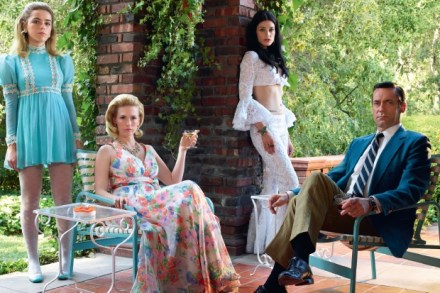
There’s a scene in the finale of season six that embodies everything that’s so right and so wrong with Mad Men. Don Draper, that fathomless enigma of a Madison Avenue copywriting anti-hero, is pitching for the Hershey’s chocolate account. Hershey’s represents that dream combination — an American brand legend that has never really advertised before. So winning this deal really matters. Draper — as always — is pitch-perfect. Selling products is about telling stories. And the story here is about how good the young Don Draper felt when his Daddy took him into a store and offered to buy him anything he wanted. Naturally he chose a Hershey’s bar. The

Richard Diebenkorn at the Royal Academy reviewed: among the best visual evocations of LA there are

It is true that, like wine, certain artists don’t travel. Richard Diebenkorn, subject of the spring exhibition in the Royal Academy’s Sackler Wing, is a case in point: an American painter who is revered in his native land, but of whom few will have heard over here. Will the RA show change that, and — more crucially — does it deserve to? Up to a point. Diebenkorn (1922–93) was no Mark Rothko or Willem de Kooning. He was a second-generation abstract expressionist, almost two decades younger than those two, and a lower-voltage talent to boot. But he created some memorably beautiful pictures, most of the best of them situated in

No man ever wanted a dumb broad for a wife

As I was flipping through some television garbage trying to induce sleep, I came upon an old western starring Kirk Douglas, Dorothy Malone and Rock Hudson. Once upon a time the above names would have been common points of reference — a collective vocabulary signifying the Fifties: chrome tailfins, standard-issue grey flannel suits, hats and stifled alternative views. No longer. Common points of reference today are unrecognisable, at least for yours truly, still stuck on black-and-white movies, good manners and correct dress. At one point in the film, a young, beautiful girl tells a middle-aged Kirk Douglas that she loves him. He dismisses it, telling her she’s just a girl

Game of Thrones premiere at the Tower of London, review: the pride before the fall

Television is in a golden age. Or at least so we are told. If you weren’t able to tell from the quality of the programming, the decadence of the parties would give the game away. With the vast budgets of HBO, Netflix and the like – the box-set barons that have usurped the grand Hollywood studios – big series now mean serious hospitality. This kind of pride usually comes before a fall, or at least some lukewarm reviews. Things are getting out of hand. The House of Cards premiere last month involved a whole hotel and a room full of pudding. Never to be outdone in matters of size, the