Arts Reviews

The good, bad and ugly in arts and exhbitions

Talisman

She’s meant to be good with words, used to medicating others with a timely postcard — FABULOUS WOMAN YOU! Today she can’t find it in herself to buy, let alone send, A SISTER IS WORTH A THOUSAND FRIENDS. If only she knew the right phrase, the sort other people have stored in their mouths, like a kindly tongue.    Cards as commands, white and black shouts on a carousel, IT’S CHOCOLATE O’CLOCK The shopkeeper can’t find it in herself to say good morning, even in lower case, as she heaves her cleavage about by the till. Maybe these cards aren’t even meant for other people, just something to tack above your
Spring

The sparrows banter in the bushes that crowd the walls of the World’s End alleyway as I walk to the library. There is, it seems, much to catch up on. Winter was bitter cold; five months that had us by the throat, five months in our house that were bone lonely. April. And earth is touched by the hand of a new sun. A sun, from its stoked store, that wants to warm us, pulls at zips, unbuttons a thick-coated Saxon taciturn resistance. The releasing rays bring back lost leisure: walking back home, in the dry dust of my road, a black and white tabby reclines, eyes me disdainfully with

i.m. AMSTRAD

Dear Lord Sugar, it’s been a sad week. A kind of bereavement, really. Today, a council employee in a yellow jacket climbed down from his municipal truck and flung into it my old friend of — what? — twenty years? We never needed passwords between us. It never told me bad news about my server or jumped off the edge of the screen or tried to sell me corduroy trousers or ham or celebrity gossip. It was like a butler: discreet, self-effacing. But at last it began to suffer touches of dementia. Sometimes, I told the council man, things have to die quietly and be eviscerated for the common good.

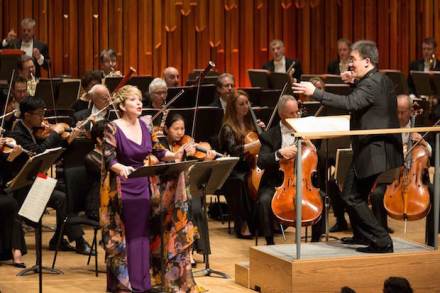
Joyce DiDonato, the New York Philharmonic and Alan Gilbert at the Barbican reviewed: ‘seductive’

We ought to have discovered Esa-Pekka Salonen’s Nyx (2011) before now. The dense orchestration was dappled with soupçons of indigenous music, folk, noir, Harryhausen Hollywood and French impressionism. The New York Philharmonic poured it all molten gold and plummy red and let it radiate about the auditorium. The premiere seemed to begin without its lighting engineer. All sat there fully lit, orchestra pounding away until the first decrescendo a few minutes in when the house was finally dimmed. If deliberate, it was rather gimmicky. Conductor Alan Gilbert put in a measured performance throughout but fell short of expressing a dedication to the full trajectory of each work. He didn’t bathe in any

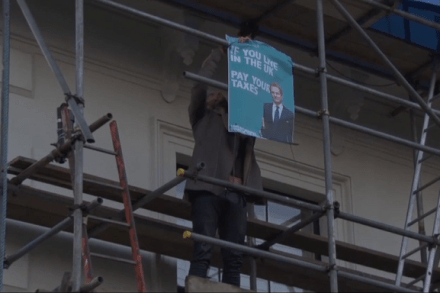
Watch: Russell Brand trespasses on Lord Rothermere’s property

Earlier this year Mr S revealed that Russell Brand had made an unwelcome visit to the home of Lord Rothermere, the proprietor of the Daily Mail newspaper group, as part of filming for his new documentary The Emperor’s New Clothes. Now new footage has been made public ahead of the film’s release. In the clip he is shown turning up at Lord Rothermere’s home only to find that he is not in. Brand then jumps the fence, climbs scaffolding and puts a poster on the property criticising Lord Rothermere’s non-dom status. Of course, if Ed Miliband wins the election Lord Rothermere’s non-domicile tax status could cease to exist. Not that the comedian will be bothering to

The trailer for the new Star Wars film suggests it could be the best yet

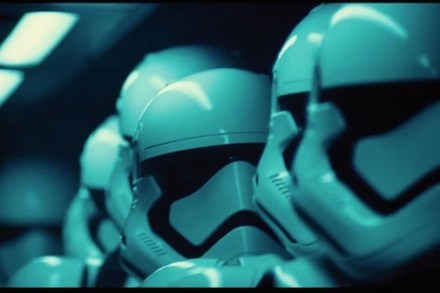
If the Fast & Furious team made Casablanca 2 (‘Morocco Drift’) it would be a more artistically credible, better acted, and more entertaining movie than Star Wars: Episode I – The Phantom Menace. Vin Diesel’s Victor Laszlo may have gained an impressive set of guns fighting for the Czech resistance since we last saw him – shame, too, about the hair loss – but at least he wouldn’t spend even one second of the film talking about ‘midi-chlorians’. In his decision to revisit the Star Wars universe and create a trilogy of prequels, George Lucas looked upon the epic vista of his cinematic triumph and decided to open-cast strip mine

Cathedrals on wheels

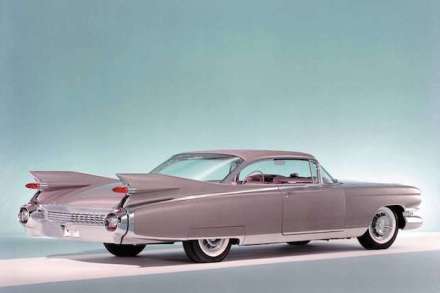
Imagine for a moment Harley Earl, head of design at General Motors, Detroit’s wizard of kitsch. Standing before him, in his studio, is the cetacean bulk, nipple-coloured pink paint, churrigueresque chrome ornaments and rocket-ship details of his 1959 Cadillac Eldorado Brougham Seville Convertible. He is talking to his acolytes, as attentive as Rubens’ studio assistants in Antwerp 300 years earlier. Earl is describing his stylist’s art, the astonishing formal achievement of the pink Caddy. He says, pointing perhaps to a tail fin: ‘I want that line to have a duflunky, to come across, have a little hook in it, and then do a rashoom or a zong.’ Our language lacks

Sonia alone

In 1978, shortly before she died, the artist Sonia Delaunay was asked in an interview whether she considered herself a feminist. ‘No! I despise the word!’ she replied. ‘I never thought of myself as a woman in any conscious way. I’m an artist.’ It is pretty obvious, though, that the Sonia Delaunay retrospective at Tate Modern (which has come from the Musée d’Art Moderne de la Ville de Paris) has been organised if not explicitly by feminists, then at least with feminism in mind. You can see the thinking behind it: let’s give the wives of the artists a break. And Mrs Delaunay, whose work has traditionally been discussed in

Boris’s London legacy

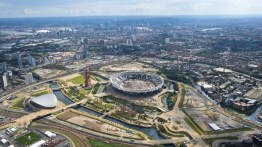
Overseeing Boris Johnson’s futuristic office, with its spectacular view of the increasingly culinary skyscape of the City of London with its Gherkins and Cheesegraters, is a bust of Pericles, distinctive in his helmet. It is no surprise that the Mayor should hold himself up to the gaze of the Athenian general and politician because he instituted the greatest programme of public works in the ancient world in Athens in the middle of the 5th century bc. Since Boris was elected Mayor in 2008 there has been an enormous amount of development in London. The demand that fuels growth is ever present. The south bank of the Thames is bristling with

Why is British dance training so poor? ‘Diversity’ is trumping quality

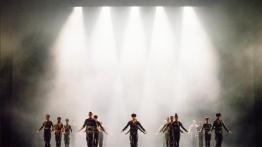
A very British thing happened at the dance industry conference last weekend. Three of the UK’s most celebrated contemporary choreographers said British contemporary dance training is not up to snuff. Foreign dancers were better trained from a younger age, they said, were fitter, readier, worked harder. That’s why they got more jobs in British companies than UK-trained graduates. The two instant results were (a) a chorus of outraged denial from the dance establishment and (b) the resignation of the chairman of Dance UK, the umbrella body and ‘voice of dance’, which staged the conference. Now, its chairman, Farooq Chaudhry, was certainly playing some fairly brutal politics. He is the producer

Deadly, not dull

Blimey, there has been so much good stuff to watch on telly of late: the Grand National, the Boat Race and the Masters; The Island with Bear Grylls; the final of University Challenge (bravura performance from Caius’s Loveday, though how the winning Cambridge team’s hearts must have sunk when they realised that the public intellectual chosen to present this year’s prize was that literary equivalent of a Dalí melting clock poster on a pretentious fifth former’s bedroom wall — Will Self); and, of course, the first episode of the new season’s Game of Thrones (Sky Atlantic, Monday). I’m assuming you’re all on board with Thrones, now, and that it doesn’t

Cold frames

A Little Chaos is a period drama directed by Alan Rickman and starring Kate Winslet as a woman charged to design and build a grand fountain garden for Louis XIV at Versailles. The film is, I noted from the poster, ‘the official film of RHS Gardening Week’, which may or may not be a hotly contested title, I just don’t know. All I can tell you is that it is, in fact, more of a love story than a horticultural story, and while it has occasional pleasing moments, and is lavishly costumed, it manages to do what I do whenever I try my hand at gardening. That is, despite my

Death by politics

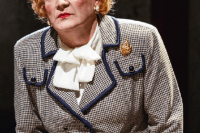
Dead Sheep is a curious dramatic half-breed that examines Geoffrey Howe’s troubled relationship with Margaret Thatcher. Structurally it’s a Mexican bean. It leaps all over the 1980s and it keeps shifting genre from cabaret to tragedy via cheesy political satire. Some actors are impersonators, some are caricaturists, some are neither. James Wilby’s study of Howe avoids his personal mannerisms, the pensive shabbiness, the punctilious, worried eyes, and the soft beguiling purr of his vocal chords. Instead Wilby presents him as a bewildered monk tiptoeing around a lion’s den. Steve Nallon does Mrs Thatcher as a drag-queen which looks pretty odd next to Wilby’s straightforward Howe but Nallon is a master

Falling down

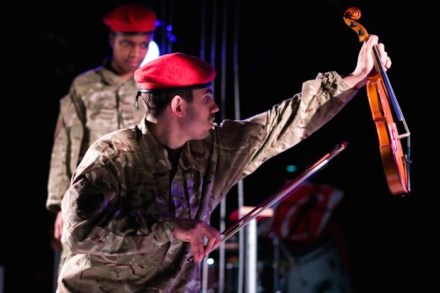
This week, some 200 years since Goya’s ‘The Disasters of War’, almost 80 years after Picasso’s ‘Guernica’, and over 50 since Malcolm Browne won a Pulitzer for his photograph of a self-immolating Buddhist monk, the British media found itself questioning whether art should, or even could, ever represent the horrors of recent history. It was a conversation that picked minutely over the ethical responsibilities of an opera based on the events of 9/11 — was it too soon? how would the families feel? would it exploit tragedy for drama? — but one whose ceaseless moral whys and wherefores prevented it ever arriving at the only real artistic question: how? The

Turtle

As if a turtle you have laid your eggs in a bowl of sand. Unlike the turtle you sit next to your own heap overlong considering the wondrous thing    you’ve done, the babies wrestling in the gritty dark. And all the while the land cools steadily, a small white light somewhere over    the sea, over the sea out there and finally, deeply and slowly you remember it. You’re setting off now. Here are your    paddles, this is the pale underneath of your shell scraping the pebbles beneath the    moon’s glare. Yourself, one thing alone now. Can    you feel the water’s lift? You are already there.

Words

Late afternoon I speak to Mum on the phone; she’s sorting through her past, four hundred or so odd-sized photographs. ‘Well, you won’t want to do it,’ she says, ‘when I’m gone, I won’t leave you that task.’ We switch tack, not from fear, from silent truth, what can’t come back. We talk of mulish rough weather, April squalls, the wind’s choking embrace of a newly dressed willow, bringing it down, its road wreckage near her place. Dad’s death was like that tree. She talks in tangents. Is this what she means?

By Air

Astonishing to think That not so long ago First the Brothers Wright Then Louis Blériot Initiated flight. And strapped into a seat Now we can choose a drink, Tomato juice, red wine, Some music or a film At 30, 000 feet. Remarkable to know That aviation fuel, Once vegetable remains, Comes from the earth as oil And energises planes. Comforting to presume The cabin’s pressurised And instruments of flight Are skilfully devised To navigate the night. Consoling to believe The forces that can heave The weight of this machine Above the ocean waves And alpine mountain scene. Strange to be conscious of The distant sea below And absent sky above

Benjamin’s Into The Little Hill is a masterpiece: Speech Acts at Shadwell Opera reviewed

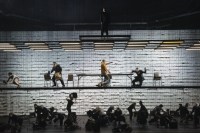
Speech Acts Shadwell Opera, Courtyard Theatre Election time is upon us again. But before we arrive at the main event there are the warm-up acts – televised debates, broadsheet profiles and daytime television interviews – to be endured. Making this political stand-up more bearable are the intelligent heckles coming from the arts. London’s theatres are filled with issue-plays talking about all the topics the politicians aren’t – the housing crisis, NHS, life on the dole – but despite a rich seam of politically-charged works at its disposal (The Marriage of Figaro, Don Carlo, Boris Godunov among them), the main UK opera houses aren’t following suit. Which makes Speech Acts –

The dreamer

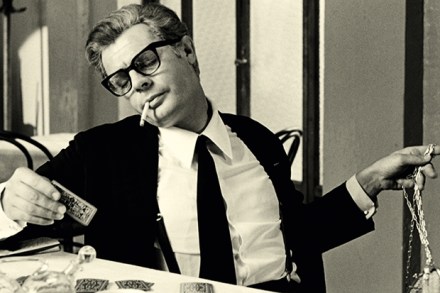
Federico Fellini’s La Dolce Vita was a box-office triumph in Italy in 1960. It made $1.5 million at the box office in three months — more than Gone With the Wind had. ‘It was the making of me,’ said Fellini. It was also the making of Marcello Mastroianni as the screen idol with a curiously impotent sex appeal. No other film captured so memorably the flashbulb glitz of Italy’s postwar ‘economic miracle’ and its consumer boom of Fiat 500s and Gaggia espresso machines. Unsurprisingly, the Vatican objected to the scene where Mastroianni makes love to the Swedish diva Anita Ekberg (who died earlier this year at the age of 83)