Arts Reviews

The good, bad and ugly in arts and exhbitions

Light fantastic

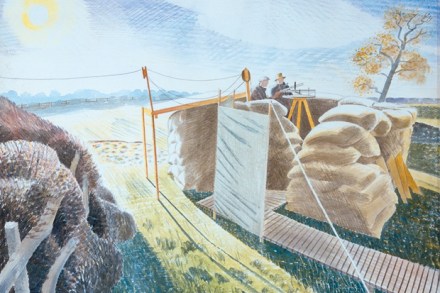
The most unusual picture in the exhibition of work by Eric Ravilious at Dulwich Picture Gallery, in terms of subject-matter at least, is entitled ‘Bomb Defusing Equipment’. In other ways — crisp linear precision, a designer’s eye for the melodious arrangement of shapes — it is typical of Ravilious. Characteristic, too, is the way he has given these implements associated with warfare and high explosives an almost jaunty air, shading into melancholy mysteriousness. That’s the Ravilious note, and I must admit I find it irresistible. Ravilious (1903–42) was one of the most beguiling of mid-20th-century British artists. Yet it is still not quite clear what position he has in art
James Bond

For fans of the franchise who remain unconvinced by Daniel Craig’s time on her majesty’s secret service, the stories leaking from the production of the latest film Spectre are further evidence that the time has come to hand 007 a glass of scotch and a revolver. Craig’s Bond always had less of an air of an expense-account gentleman spy and more the demeanour of a spornosexual plumber. This is a Bond who’d sooner take photographs of his abs in the bathroom mirror than go bird-watching. Stumbling after the surefooted remake of Casino Royale, there is no disguising the tedious drivel that was Quantum of Solace, nor that Skyfall borrowed heavily

Keeping the faith | 9 April 2015

There was no shortage of Easter music and talks across the BBC networks with a sunrise service on Radio 4 followed by much fuss and fanfare for the ‘live’ relay of Libby Lane’s first Easter sermon as Bishop. A significant milestone for the C of E as women are at last allowed to don mitres and wield a bishop’s crozier. Three, not to be outdone, invited the Revd Lucy Winkett (who had to outride the brouhaha caused by her appointment as the first woman priest at St Paul’s Cathedral) on to Private Passions, where she proved herself an insightful musician and theologian. Her impassioned explanation of the Easter message, the

Comics’ trip

Who says British television lacks imagination? You might have thought, for example, that every possible combination of comedian and travel programme had been exhausted long ago. After all, it’s now 26 years since Michael Palin set the trend by following in Phileas Fogg’s footsteps (sort of). In more recent times, we’ve had Stephen Fry going round America in a London taxi, Billy Connolly going round Australia on a Harley-Davidson trike and — perhaps drawing the short straw — Ade Edmondson going round Britain in a caravan. There’s also been Paul Merton in India, Sue Perkins in China, Sean Lock and Jon Richardson in the Deep South and… well, you get

Ayckbourn again

Experts are concerned that Alan Ayckbourn’s plays may soon face extinction. Fewer than 80 of these precious beasts still exist in their natural habitat, so theatre-goers will be cheered to know that the National Theatre has created a genetically identical replica and released it into the wild. Rules for Living, fashioned by Sam Holcroft from the Acykbourn blueprint, is a bourgeois natter-fest in which bickering couples meet for a fractious Christmas summit. The characters are a bit nice and a bit nasty. Stephen Mangan plays a failed cricket star married to a soak in a frock. They have an only child who suffers from this year’s must-have mental disorder. The

Crossing cultures

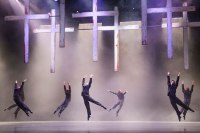
For an Indian woman to make a dancework about La Bayadère is a promising prospect. This classical ballet of 1877 by Russia’s French-born genius Marius Petipa tells the simple story of an Indian temple dancer — essentially a religious sex slave — whose potential salvation by an amorous young soldier is dashed when he expediently marries the rajah’s daughter. Death and transfiguration ensue in some addictively gorgeous balletic poetry, along with all sorts of improbable exotica to please the tsar’s eye. Londoner Shobana Jeyasingh, born in India, trained as a traditional Bharatanatyam dancer, and is a contemporary dance choreographer of keen intelligence, if sometimes letting her brain get the better

Beauty and the bleak

The Ice Break is Michael Tippett’s fourth opera, first produced at Covent Garden in 1977 and rarely produced anywhere since, though there is an excellent recording of it. Its brevity (75 minutes) rather took the wind out of the Royal Opera’s sails, since they had envisaged a full evening’s piece. So, I imagine, did its wackiness, though more extreme things in that line were to follow from Tippett. There are numerous ingredients in The Ice Break, but it gives the impression that its composer was so fascinated by all of them that he restlessly moves from one to another, leaving his audience to see whether they can make sense of

Too Many Poets

Too many poets pack a line with thought But melody refuses to take wing. It’s not that meaning has been dearly bought: It has been stifled, by a hankering For portent, as if music meant too much. Sidney called this a want of inward touch. True poets should walk singing as they weep, As Arnaut Daniel once epitomised; But nothing written will be worth its keep Composed by one who has not realised This to be true, and tested his own song On others, seeing if they listen long Or turn away. Verse is a public act To that extent at least. As cruel as love, The wished-for gift declines

Who will be the next head of the British Museum? Here are the runners and riders

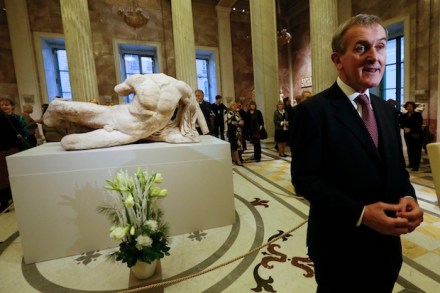
The hunt for the next head of the British Museum is not going to be easy. The director needs to have the confidence of his trustees, to inspire his curators and to convince the government to maintain the grant. In all of those areas MacGregor has been exceptional. The Standard reports that the internal candidate Joanna Mackle, deputy director, is unlikely to put her name forward. So who’s name is in the ring? One of the most prestigious jobs in the museum world, it suffers a handicap when it comes to salary. As such it is extremely unlikely that the most obvious candidate Thomas Campbell, currently director of the Metropolitan Museum (salary over $1m) could be persuaded to

The audio anoraks bringing the great vintage recordings back to life

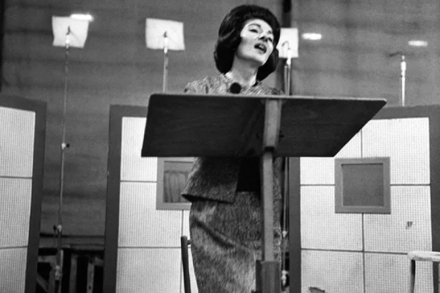
If there’s one thing people find annoying about classical music anoraks, it’s our passion for vintage recordings. ‘Listen to that ravishing rubato,’ we gush, as an elderly soprano swoops and scoops to the accompaniment of what sounds like a giant egg-and-bacon fry-up. And if non-anorak listeners do manage to ignore the pops, scratches and static, what do they hear? Wrong notes. Plenty of them. Is that really Artur Schnabel murdering the mighty fugue of Beethoven’s ‘Hammerklavier’ Sonata or is it Les Dawson? There are actually two problems here — a disconcerting style of performance and crappy recorded sound. It’s important to distinguish between them. Those 78rpm records and the first

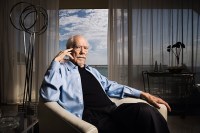
Max Hastings’s diary: The joys of middle age, and Prince Charles’s strange letters

I am living in rustic seclusion while writing a book. Our only cultural outing of the week was to Newbury cinema to see, transmitted from the National Theatre, Arthur Miller’s A View From the Bridge, object of rave reviews. We respected the piece but did not enjoy it. Granted, appreciation of all major works of art requires an effort by the viewer, listener, reader. But a pleasure of getting older is to be unafraid of waving the white flag. We resist modern-dress Shakespeare or worse, opera. We will cross continents to avoid the music of Harrison Birtwistle or the art of Damien Hirst. We are ardent Trollopeians, incorrigibly middlebrow. John

A Moment

There it is, the wren. Keep still. Breathe in. The tiny bird with stumpy tail has landed near the windowsill and moves from twig to stem as quietly as rain. Feathered and breathing, it matches its portrait on the copper farthings of my childhood sixty years ago but look away and it has gone again from then to now.

Did Radio 4 have to deal with the Germanwings disaster as it did?

‘You can hear pretty clearly the sound of one of the helicopters and you can see it in the darkness,’ yelled James Reynolds over the noise of helicopters, police sirens, vehicles on the move. It was 8.10 a.m., the Today programme on the morning after the fatal Airbus A320 crash in southern France last week. Reynolds, a fine reporter, had been sent off to the crash site for an on-the-spot report, ‘live’ action, high-octane drama, tension so taut it’s almost visible. ‘I can see a convoy of police vehicles coming up the road with blue sirens,’ he continued. ‘There goes the police helicopter…’ Huge noise of rotors whirring. ‘It’s almost

Why James Delingpole is addicted to Pointless

Ever since Boy got back from school my work schedule has fallen to pieces. Every few minutes, just when I’ve got my concentration back after the last interruption, Boy will burst into the office and say, ‘Dad, Dad. How good are you on obscure New Zealanders?’ Or, ‘Quick, Dad, it’s your subject: reptiles!’ Or, ‘Dad, this is ridiculous. Only four people recognised Johnny Marr.’ And so on and on it goes. If I were a stricter parent or a more self-disciplined worker, I wouldn’t let this happen. Problem is, the programme we’re talking about here is Pointless (BBC1, Mondays) and I’m afraid I’m just as addicted as Boy is. Helpless,

Bad Jews at the Arts Theatre reviewed: strange, raw, obsessive and brilliant

Bad Jews has completed its long trek from a smallish out-of-town venue to a full-scale West End berth. Billed as a ‘hilarious’ family comedy it opens on a low-key note in a New York apartment where three cousins have gathered for grandpa’s funeral. Daphna is a puritanical vegan Jewess, training as a rabbi, who wants to move to Israel, marry a soldier and serve in the IDF. She’s insanely jealous of Jonah and Shlomo, whose parents have bought them a flat before either has found a job. Shlomo (who calls himself Liam) is a ‘bad Jew’ obsessed with Japanese culture who intends to marry out. He shows up at midnight

Birmingham Royal Ballet review: A Father Ted Carmina Burana

We ballet-goers may be the most self-deceiving audiences in theatre. Put a ‘new work’ in front of us and half of us go into conniptions because the classical palace is being brought down and the other half into raptures at not having to sit through some old-hat ballet-ballet. Twenty years ago, David Bintley was appointed artistic director at Birmingham Royal Ballet. For his debut creation there, having defined himself at Covent Garden as a well house-trained classical choreographer, he picked on Carl Orff’s bold, brash choral work about naughty medieval priests, Carmina Burana. The London critics’ reception was broadly (if I remember rightly — I was one of them) sniffy.

I always think I’m going to hate Baumbach’s films and never do: While We’re Young reviewed

Every time I sit down to a Noah Baumbach film I think I’m going to hate it, but I never actually do. From the French New Wave idiosyncrasies of 2013’s Frances Ha to the growing pains of his semi-autobiographical breakthrough The Squid and the Whale, Baumbach always manages to stay just the right side of pretentious, creating lively hipster-filled worlds that amuse as much as they annoy. Nowhere is this delicate balance more on display than in While We’re Young, a heartbreaking and cautiously funny swipe both at unwelcome middle age and the follies of youth. For Josh (Ben Stiller) and Cornelia (Naomi Watts), the childlessness of their forties has