Arts Reviews

The good, bad and ugly in arts and exhbitions

Triple triumph | 30 April 2015

Three staples of the Italian repertoire, performed and seen in very different circumstances, have confirmed my view that they deserve their place in the repertoire, however many other works by their composers or contemporaries may be unearthed. I saw OperaUpClose’s version of Donizetti’s The Elixir of Love in the Mumford Theatre Cambridge, an underused venue that has the advantage of being 200 yards from my house. It is by far the best thing I have seen OUC do, and I regret catching only the last of many performances, but the only one here, where there is almost no interest in opera. Cleverly adapted and translated, this version takes place in
Presence of mind

‘It’s hard to know how to tell this story,’ she said as she began. ‘Because it’s so loaded. It’s so heavy-duty.’ Lore Wolfson was talking about the death of her husband, Paul, or rather about the onset of the illness that led him a year later to take an overdose of heroin, aged 61. He had been diagnosed with early-onset dementia, in a peculiarly aggressive form, rapidly losing his words, his memory, his capacity to work or function independently. Lore began recording her conversations with Paul very soon after they knew for sure why he was having word-finding difficulties. ‘It was the natural thing to do,’ she said, because she’s

The rudeness of John Eliot Gardiner

Sir John Eliot Gardiner is talented almost beyond measure. His Monteverdi Choir, English Baroque Soloists and stupidly named Orchestre Révolutionnaire et Romantique have notched up one triumph after another over the decades: benchmark recordings of the Monteverdi Vespers and Bach B minor Mass, the finest period-instrument Beethoven symphony cycle and a cantata pilgrimage of live performances of all the Bach sacred cantatas. His recordings of Mozart operas are dazzling. At 72, Gardiner is at his artistic peak. His live re-recordings of the Beethoven Fifth, Seventh and Missa Solemnis eclipse their predecessors and in its second account of the Bach motets the Monteverdi Choir sings with such eerie precision, infused with

Sum total

Midnight to dawn adding one more to the serial tally, love and irritation carried over, borrowed and paid back, all these vulgar fractions seeking to shape a perfection divisible only by one and itself.

If the Turin Shroud is the work of a medieval artist, it’s one of the greatest artworks ever created

Last week something rather unusual happened in the quiet Italian city of Turin. Inside the 15-century cathedral, an ancient, stained, and burned piece of medieval linen was removed from its airtight, bulletproof case and put on display. The exhibition will last 67 days. Last time the intensely controversial textile was brought out, in 2010, over 2.5 million people poured into the cathedral to see it. Or, more precisely, to see the images on the ivory-coloured fabric, which seem to depict faint life-size brown impressions of the front and back of a man. The details of the sepia images are rather indistinct, and it was only in 1898, when a lawyer named Secondo Pia photographed the cloth, that the world was able

The arts rely on the generosity of non-doms. We pursue them at our peril

This much we know. If Ed Miliband wins, he will reintroduce the 50p top rate of tax, impose a mansion tax on homes worth over £2 million and abolish rules enabling registered non-doms to cheerily reside in the UK and avoid tax on their overseas earnings. In other words, he’ll whack the rich. Whether the rich deserve to be whacked we have debated elsewhere. What hasn’t been discussed is whether our eagerness to whack the rich might not have an adverse impact on charitable giving, in particular donations to the arts? One non-dom to consider is Sir Christopher Ondaatje. He personally put forward £3 million toward the wing that now bears his name in the National Portrait Gallery and in 2002 helped

Force Majeure reviewed: meaty and hilarious – but it may wreck your relationship

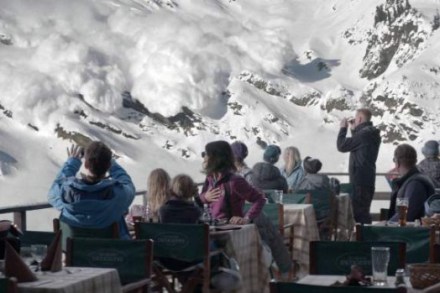
If you’re unsure about the man (or woman) you’re dating, go and see this film. It’ll cause rifts in a weak relationship, and yield powerful debate – or perhaps agreement on the central themes – in a strong one. It asks men to defend or disown the role of hero, and begs us to consider whether motherhood naturally graces its host with more altruistic instincts than fatherhood. Who’s braver: men or women? Or, let’s cut to the chase, you or me? At the core of this slick and sometimes hilarious Swedish film by Ruben Östlund is the non-rhetorical question: when push comes to shove, what would you do? I’ve always

The Falling reviewed: a film of beauty and magic

Long live the glockenspiel, that typically dull percussion stalwart usually relegated to primary school memories, along with humdrum gym classes and endless repetitions of Kumbaya. Here the glock is like a new instrument altogether. Its eery, metallic tones haunt the early scenes of Carol Morley’s The Falling, filling them with an unexpectedly ethereal quality that is both childlike and yet somehow sophisticated at the same time – just like the longed for worldliness of the impatient teenage girls at the heart of this warped coming of age story. The music (recorded by Everything but the Girls’s Tracey Thorn) is the backbone of this flawed yet deeply atmospheric film, which gets

Mistress of modernism

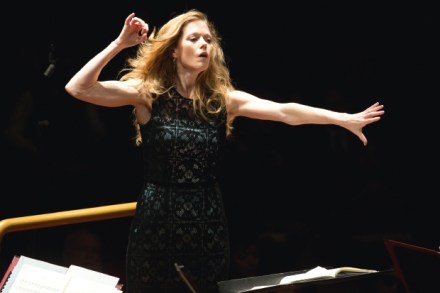
Everyone keeps talking about classical music’s image problem, and proposals on the table designed to rescue the music from apparent extinction have included the suggestion that conductors ought to face audiences rather than orchestras, and the cunning plan, mooted by Julian Lloyd Webber, that we stop calling it ‘classical music’. But what classical music really needs right now are more performers like Barbara Hannigan, whose embrace of music is absolute; whose solution to the problem of what classical music might represent in our increasingly fragmented culture is not to go into denial but to dive deeper, forever deeper, inside music. Hannigan has anchored her reputation around high-wire modernism. When a

Designer fatigue

Different concepts of luxury may be inferred from a comparison of the wedding feast of Charles Bovary and Emma Rouault with the habits of their contemporary the Duke of Wellington. At the Bovary wedding were served four sirloins, six chicken fricassées, stewed veal, three legs of mutton, four chitterlings (with sorrel), brandy, wine, foaming sweet cider, yellow custards, tarts and sweets with an architectural cake comprising angelica, oranges, nuts, jam and chocolate. The austere Duke’s ‘conception of duty’, David Piper wrote, ‘did not provoke popularity at all times’. His daily routine was tea with bread and butter in the morning, no lunch and an unvaryingly simple dinner of a joint

Russell Brand’s The Emperor’s New Clothes reviewed: ‘uncomfortable viewing’

For the past year Russell Brand – who is worth an estimated £10 million – has been making a film about inequality. You may already know this. The comedian’s antics filming across the capital have regularly made the news. His attempt to storm RBS resulted in a temp angrily blogging that the palaver had caused his paella to go cold. Meanwhile, his visit to confront the Daily Mail proprietor Lord Rothermere about his non-dom tax status came to no avail as he wasn’t home. Not that such a small technicality has stopped the scene from being included in the final cut. Russell instead interrogates a woman over the telecom – a woman who I can only

Sign of the Vulcan

She was considered the cleverest girl in the school, and deservedly so, and as such started the lower sixth with no trepidation, so who could not feel for her when she stretched back in her chair, casually, in a lesson-break on an autumnal afternoon, remarking, ‘Live long and prosper… that was Horace, right?’ There was a brief outbreak of disbelief then the boys’ eyes curled; they were on hand, forever after, chevaliers, free with the sign of the vulcan.

Three cheers

The new controller of Radio Three, Alan Davey, was on Feedback this week (Radio Four) talking to listeners about his plans for the network. Roger Bolton, who presents, wondered if Davey was worried about ratings — Radio Three hovers around two million listeners compared with the 5.5 million boasted by its commercial rival Classic FM, or perhaps more alarmingly the two million lured to BBC upstart 6 Music. ‘Ratings aren’t a pressure for me,’ said an ebullient Davey, while admitting that he does want to find more listeners, and then to ensure they stay tuned. But how? Without going down the Classic FM route of more audience participation, more gimmicks,

Target practice

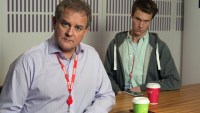
Ever since the days of Tony Hancock, many of the best British sitcoms — from Dad’s Army to Fawlty Towers, Rising Damp to The Royle Family — have featured a middle-aged man convinced that he’s the only sane person left in an increasingly mad world. The frankly subversive twist in W1A (BBC2, Thursday) is that the middle-aged man in question might well be right. As the BBC’s Head of Values, Ian Fletcher (Hugh Bonneville) is surrounded by any number of jargon-spouting younger colleagues whose apparent aim is not to let anybody realise how stupid they are — or at least it would be if they realised it themselves. Head of

Stage fright

The smash hit Matilda, based on a Roald Dahl story, has spawned a copycat effort, The Twits. Charm, sweetness and mystery aren’t Dahl’s strong points. He specialises in suburban grotesques who commit infantile barbarities. But his prose is sensational. No ‘style’ at all, just the simplicity and clarity of a master copywriter. He’s as good as Orwell. Mr and Mrs Twit are a pair of malignant outcasts who enjoy tormenting innocents. They keep a family of monkeys in a cage and they glue birds to trees and shoot them. You can read the story in about 20 minutes. It probably took Dahl a bit longer than that to write. And

Superheroic failure

Avengers: Age of Ultron is the second film in the Avengers franchise, as written and directed by Joss Whedon, and stars Robert Downey Jr as Tony Stark (Iron Man), Chris Evans as Captain America, Chris Hemsworth as Thor, Scarlett Johansson as Black Widow, Jeremy Renner as Hawkeye and Mark Ruffalo as Dr Bruce Banner, aka the Incredible Hulk, who probably had to be included, as no one would have wished to piss him off. (‘IF HULK NOT IN MOVIE HULK WILL THROW CAR!’) I am not among the target audience for this particular genre, but I attended with my son (22), which was useful, as I found it confusing —

Lethal weapon

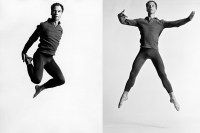
The current talking-point at the Royal Ballet is the Russians milling around. One can sound unfortunately as if one’s starting a Ukip conversation here, but the Royal Ballet never used to be short of half a dozen home principals, any one of whom could be looked on as sufficiently glittery to attract the opening-night audience. Right now, though, the recent loss of a wonderful generation of artists — Cojocaru, Kobborg, Rojo, Benjamin, Polunin — has left the top rank rather thinned of true star quality, especially among the women. Hence the excitement at the recruiting to the Royal of Natalia Osipova from the Mikhailovsky and Bolshoi, Vadim Muntagirov from English

Off colour

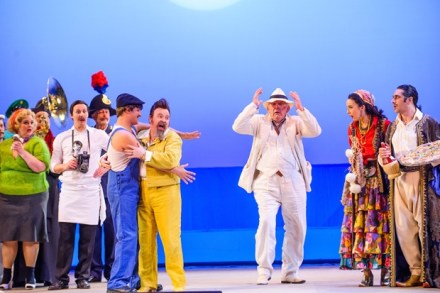
Big slats of orange, burning yellows, an Adriatic in electric blue: I wish I’d bought my sunglasses to the Royal Opera’s latest revival of Il turco in Italia. Moshe Leiser and Patrice Caurier’s production of Rossini’s opera buffo first burst on to the Covent Garden stage in 2005, and its shrieking colours haven’t dimmed with the years. For good or bad, this is one show when you do actually come out whistling the sets (they’re by Christian Fenouillat). I was humming Agostino Cavalca’s costumes too, from gypsy confusion through bouncing fezzes to the absurd glitter of the climactic masked ball. The world created has little to do with Fellini’s black-and-white