Arts Reviews

The good, bad and ugly in arts and exhbitions

Riveting – and disgusting: BFI's 'Dogs v Cats' and 'Eating In' collections reviewed

This week I’d like to point you in the direction of the British Film Institute and its free online archive collections, which are properly free. There is no signing up for one of those ‘free trials’ which means that, somewhere down the line, you’ll discover you’ve been paying £4.99 a month for something you didn’t want. And it’s certainly excellent value for the money you don’t pay, as there are 65 of these collections, grouped under various headings — ‘Football on Film’, ‘Black Britain on Film’ — although I plumped for ‘Eating In’, because it’s all any of us do now, and ‘Cats v Dogs’, as if that were even

Not merely funny but somehow also joyous: Sky One's Brassic reviewed

Danny Brocklehurst, the scriptwriter for Sky One’s Brassic, used to work for Shameless in its glory days — although if you didn’t know that already you could probably guess. For a start, the central characters are another close-knit group of ducking-and-diving working-class northerners not overburdened with a social conscience. But there’s also the fact that, no matter what they get up to, they’re clearly supposed to be lovable — coupled with the rather more mysterious fact that they are. However dark the storylines theoretically become, the programme presents them with such an infectious swagger, and such a thorough blurring of realism and wild imagination, that the result is not merely

How Tom Stoppard foretold what we’re living through

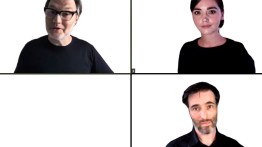
A TV play by Tom Stoppard, A Separate Peace, was broadcast live on Zoom last Saturday. I watched as my screen divided itself into four cubes in which appeared the actors, performing from home. The play was written in 1964 and it’s well suited to the split-split screen format because no physical contact occurs between the characters. Director Sam Yates added some rudimentary music and a bit of wobbly background scenery. Mr Brown (David Morrissey) is a mysterious Englishman who asks to be admitted to a private hospital in the middle of the night. Though he has no symptoms he’s given a bed, and he pays his bills in cash.

The unstoppable rise of television-rewatch podcasts

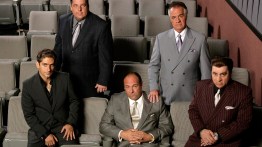
Talking Sopranos — a new weekly podcast which launched this month— is another example of a seemingly unstoppable sub-genre occupying an ever-growing slice of the podcast market: the television-rewatch podcast. The format is simple: take any much-loved yet expired television series (the kind usually prefaced by words like ‘I can’t believe you haven’t seen…’) and scan the cast list until you find some former stars willing to work for an affordable rate. Record them giving an audio commentary on each episode and, bingo, you’ve got yourself dozens of hours of podcasts — and a massive fan base waiting to be converted to listeners. Add a few external factors — say,

A short history of the kimono

‘Fashions have changed’, said the Japanese writer Ihara Saikaku in 1688. ‘Certain shrewd Kyoto people have started to lavish every manner of magnificence on men’s and women’s clothes. By then, everyone in Japan was wearing a kimono. But it was the new, eye-catching, sumptuous ones wrapped around a flourishing breed of fashionistas that Saikaku was talking about. How to show off your wealth and status in Edo-era Japan? Wear the latest kimono. This was the starting point for the V&A’s exhibition Kimono: Kyoto to Catwalk, which opened, then hurriedly closed just days before the lockdown. Those of us lucky enough to catch it can tell you it would’ve been the

The importance of sadism in writing a great screenplay

How do you tell a great story? According to Craig Mazin, you have to be a sadist. ‘As a writer, you are not the New Testament God who turns water into wine,’ Mazin chuckles on his long-running podcast Scriptnotes. ‘You are the Old Testament God who tortures Job because, I don’t know, it seems like fun.’ Mazin wrote HBO’s horrifying, incandescent miniseries Chernobyl, and so knows of what he speaks. In the episode of this podcast titled ‘How to Write a Movie’, he describes how screenwriters build plot out of suffering. He outlines a scenario, making the stakes higher each time. Suppose our main character is a single father desperate

Superbly convincing: Unorthodox reviewed

When I lived briefly in Stamford Hill I was mesmerised by the huge fur hats (shtreimel) worn by the local Hasidic Jews, and the wigs worn by their wives, and the almost tubercular pallor of their children. I often wondered how such a remote, aloof and archaic sect could possibly relate to 21st-century London. The answer, of course, was that they didn’t: they were like ghosts from another age, walking the same streets but not of this world. I wished I could get a glimpse of their private lives — and now, thanks to Unorthodox (Netflix), we all can. Loosely based on a memoir by Deborah Feldman, it tells the

The artist who left no physical record of her work

While locked-down galleries compete to keep their artists in the public eye — or ear — by uploading interview podcasts, a treasure trove of earlier recordings is being overlooked. Artists’ Lives, part of the British Library’s oral history archive, is a collection of interviews with 370 artists, 200 of which are available on the British Library Sounds website. As an account of British art of the past century they are more comprehensive than Vasari’s Lives and more reliable, coming as they do from the horse’s mouth. They are also exhaustive. But for those who haven’t got all day to follow the fascinating career of Guyanese-born Frank Bowling RA through 17

Worth watching for the comments thread alone: NT's Twelfth Night livestream reviewed

‘Enjoy world-class theatre online for free,’ announces the National Theatre. Every Thursday at 7 p.m. a play from the archive is livestreamed. I watched Twelfth Night, from 2017, starring Tamsin Greig as a female Malvolio. What a handsome, absorbing and brilliantly staged production this is. Greig’s comically petulant Malvolia won the plaudits, rightly, while the underrated Tim McMullan turned Sir Toby into a wry, wobbly, loveable drunkard, like a rock star enjoying a month on the lash. Having seen the original, I preferred the online experience, not least because of the noisy comments thread beside the screen. ‘How do you get Russian subtitles?’ ‘When’s the interval?’ ‘Why a female Malvolio?’

From Middlemarch to Mickey Mouse: a short history of The Spectator’s books and arts pages

The old masters: how well they understood. John Betjeman’s architecture column ran for just over three years in the mid-1950s. Yet during that short run he experienced the moment that comes, sooner or later, to every regular writer in The Spectator’s arts pages. ‘It is maddening the way people corner one and make one discuss politics at the moment,’ he wrote on 23 November 1956, clearly as bored of the Suez crisis as the rest of us were, until recently, by Brexit: Because I write in this paper, people assume that I share its Editor’s views about Suez… But I don’t know what the views of this paper about Suez

‘I think I’ve found a real paradise’: David Hockney interviewed

Spring has not been cancelled. Neither have the arts ceased to function. David Hockney’s marvellous exhibition at the National Portrait Gallery may be sadly shut, but the artist himself is firing on all cylinders. ‘I was just drawing on this thing I’m talking to you on,’ he announced when I spoke to him via FaceTime the other day. He was sitting in the sunshine outside his half-timbered farmhouse in Normandy. ‘We’re very busy here,’ Hockney explained, ‘because all the blossom is just coming out, and there’s a lot more to come. The big cherry tree looks glorious right now. Next the leaves will open, but at the moment the blossom

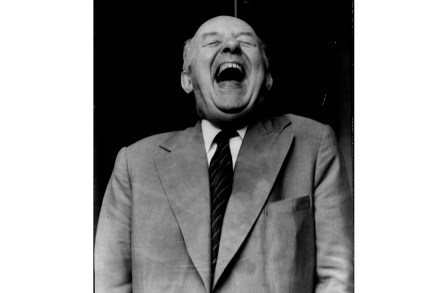
How The Spectator discovered Helen Mirren

One of the first jobs I ever did for The Spectator was to find out if professional wrestlers fixed the outcome of their fights in advance. This was 1965. The editor who wanted to know was Iain Macleod, a future chancellor of the exchequer filling in time while his party was out of office by dabbling in journalism. He turned out to be an addict of the professional wrestling screened on Saturday afternoon TV. In spite of the spinal disease that had immobilised his back and neck, he mimed what he meant by throttling himself without getting up from his chair in an Indian deathlock. His deputy editor, his political

I've lost patience with podcasts and their presenters

‘To be recognised and accepted by a peregrine,’ wrote J.A. Baker in 1967, ‘you must wear the same clothes, travel by the same way, perform actions in the same order. Like all birds, it fears the unpredictable.’ Sitting around in the same old clothes, performing chores in the same order, travelling by no way at all, I’ve found comfort in Baker’s assurance that I may at least prove attractive to birds in my slovenly purdah. Sir David Attenborough read The Peregrine beautifully on Radio 4 just before Christmas, but if you were too busy steaming puddings to listen, you may find this a good time for enjoying the series online.

Classic tangled thriller: Sky's Gangs of London reviewed

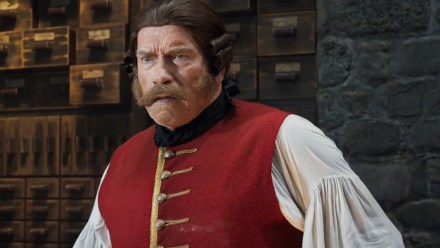
There were plenty of TV shows around this week designed to cheer us up. Sky Atlantic’s Gangs of London, however, wasn’t one of them. After decades of desensitisation, it’s not easy for any film or television programme these days to make its screen violence genuinely horrifying. Yet, by my reckoning, Thursday’s first episode managed to do it at least twice before the opening credits had even rolled. By the time they did, it was clear that two terrified Welsh lowlifes from some kind of travellers’ camp had been tricked into carrying out a hit on Finn Wallace (Colm Meaney), London’s most powerful criminal boss — rather than, as they’d fondly

The best theatre of the 21st century

Not looking great, is it? Until we all get jabbed, theatres may have to stay closed. And even the optimists say a reliable vaccine is unlikely to arrive before Christmas. As the darkness persists, here’s a round-up of my leading experiences over nearly two decades as a reviewer. There’s been a surge of output. More theatres have opened, especially on the London fringe, and several have created annexes for experimental work. Musicals have proliferated. The rise of the box-set has been excellent for the West End. Global hits such as Game of Thrones have created a host of British stars with enough clout to sell out a three-month run in

The bleak brilliance of Hud

Hud is a film that has haunted me for decades. I was never sure why. It seemed to be something about the bleakness of the setting and the story but also the extravagance of the hero and his car. I recently watched it as research for a book, and then, immediately, I watched it again. It is that good. There are two stars of Martin Ritt’s movie: Paul Newman and a 1958 Cadillac Series 62 Convertible. Out there in the ranchlands of the Texas Panhandle Newman looks just fine — big hat, jeans, cowboy shirt and boots — but the car looks all wrong. It is long, low and wide

The Amazon Prime doc that will convert anyone to cricket

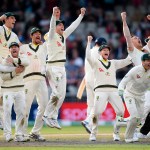
Imagine rooting for the Australian cricket team. If you’re Scottish, Welsh or Irish — or Australian obviously — it might not be such a stretch. But for an Englishman, I suspect, it’s nigh on impossible. It would be like supporting Germany in the (football) World Cup. Or yearning for the All Blacks to win the rugby. We invented cricket, after all. And in that particular sphere, Australia is our natural enemy. They burned our bails in 1882 — ‘the Ashes of English cricket’ — and quite properly we have never forgiven them. But if that’s how you feel — and I really don’t blame you — then you should treat

The genius of Joe Rogan

Last month, just before coronavirus conquered the airwaves entirely, millions of Americans gave up two hours to hear a professor of epidemiology discuss the emerging pandemic. Despite its huge reach, not to mention its quality, the interview wasn’t broadcast on any of the news networks. Rather it was the work of a former martial-arts pundit and hallucinogenic-drug enthusiast who also happens to be one of America’s most popular — and influential — podcasters. Although it racks up some 190 million downloads a month, The Joe Rogan Experience tends to fly somewhat under the cultural radar — particularly in Britain. Even worse, his brash style and predominantly male fan base means