Arts Reviews

The good, bad and ugly in arts and exhbitions

Does The Odyssey confirm that Christopher Nolan is camp?

Sir Christopher Nolan is many things. The Spielberg/Lucas/Cameron manqué of our time. A double Oscar-winner for Oppenheimer, a picture that is nowhere near his best work. The most acclaimed director of film bros, who somehow ignore his standing as a white, British privately educated filmmaker. But what nobody has ever seriously asked before is “Is Sir Christopher camp?” I hesitate to say that. The (relatively) newly knighted director is as serious a figure as has ever been seen in the film industry. But after watching the new trailer for his magnum opus, The Odyssey, it is a question that I must ask. We have Good Will Hunting himself, Matt Damon,

odyssey

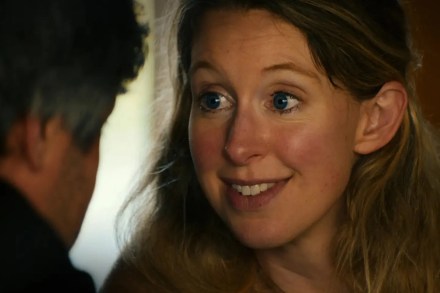
Lena Dunham is still her own worst enemy

In her seminal 1967 essay “Goodbye to All That,” Joan Didion writes of her former self, a 20-year-old naif arriving in New York City for the first time: “Was anyone ever so young?” Lena Dunham – an avowed Didion stan – should have used that line as the title of her new book, an account of the messy process of making Girls, the HBO show she created, scripted, directed and starred in. Despite her inexperience and juvenile blunders Dunham, at age 25, produced a hit. Why, then, call her memoir Famesick? Because, she contends, the most important story she has to tell is how her body turned on her “right

lena dunham

How good are the Rolling Stones’ alter egos, the Cockroaches?

Would you pay a tenner on the door to see the Cockroaches, the Fireman, Patchwork, the Network and Bingo Hand Job play your local pub? This unpromising lineup becomes a little more appealing (perhaps) upon learning that these are pseudonyms used by, respectively, the Rolling Stones, Paul McCartney, Pulp, Green Day and R.E.M. over the years. Pop stars spend the first part of their careers trampling over their grandmothers in the unseemly rush to demand the world take notice of who they are, and the second part whining about being pigeonholed. The only thing harder to escape in the music industry than your name is your original haircut. Hence, the

AI could never replace me

There are two main schools of thought on AI in the Delingpole household. I, as the resident batshit-crazy reactionary tinfoil-hat loon, think that it is evil, indeed quite possibly satanic, and that everything would be much better if only we went back to horse transport, herbal salves and abacuses. And Boy Delingpole, representing technologically literate youth, thinks I’m an idiot, that AI is the future and quite mind blowing in its potential to change everything. Probably we’re both right. Personally, I don’t feel quite as threatened by AI as perhaps I should. More by accident than design, I seem to have ended up in one of the very few jobs

The genius of Zurbaran – and why he vanished

A pious Caravaggio JASPREET SINGH BOPARAI The Spanish painter Francisco de Zurbaran is sometimes thought of as a pious equivalent to The Spanish painter Francisco de Zurbarán is sometimes thought of as a pious equivalent to Caravaggio – a Caravaggio without the bad temper, brutal vices or criminal record. But it seems difficult to argue that Caravaggio had any direct influence on his work. After all, he died when Zurbarán was 11 years old. Since Zurbarán never left Spain, he could not have seen any of Caravaggio’s paintings with his own eyes. Indeed, he might never even have heard the artist’s name. Still, there are unavoidable similarities between the two

The photographer who connects Bob Dylan and the Beatles

MAX JONES: “What do you think of the Beatles as artists and people?” BOB DYLAN: “Oh, I think they’re the best. They’re artists and they’re people.” —Melody Maker, March 1965 For more than 60 years, people have been fascinated by the connections between Bob Dylan and the Beatles. All were born during World War Two. All loved the music of Little Richard and Elvis Presley and Eddie Cochran; all were blues fans swept off their feet by rock and roll. Dylan was a Minnesota boy who early in his life became the avatar of the American folk scene, and then a protean man containing multitudes, both musically and otherwise. The

bob dylan

Don’t blame Kanye for his abject idiocy

Grade: C– Kanye? No, I can’t, quite. I will always quietly overlook the idiotic political sensibilities of the conformist millennial legions who comprise our pop charts – the keffiyeh-clad Hamas wannabes, the BLM halfwits, the greenies, the men-can-be-women wankpuffins – in order to let their music be judged on its own merits, free from boomer political disdain. But songs such as “Heil Hitler” and all those swastikas? Well, they are just a stretch too far for me. The man is an abject moron. Some will say, so what? There have been loads of abject morons down the years in pop. Why draw a line in the sand for Kanye West?

kanye west

The Pitt doesn’t make HBO Max worth a subscription

HBO Max is the latest streaming channel trying to lure you into yet another of those subscription contracts you only remember having signed up for about three years later when you’re trying to work out why you are so skint. Its showpiece series is The Pitt which attracts ten million viewers per episode and has been called “the best medical drama on television in years.” This is a category of excellence I find about as enticing as “most amusing form of cancer” or “most ineradicable variety of testicular lice.” But, just for you, I watched to see what the fuss is about. The Pitt looks as if it were tailor-made

the pitt
schiaparelli

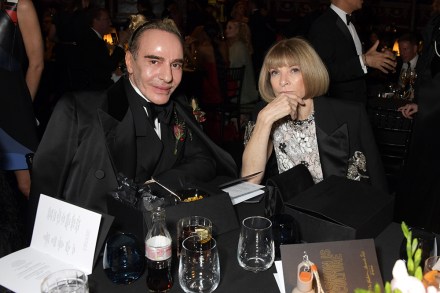
The art of Schiaparelli

It’s a great shame that Elsa Schiaparelli is less widely known than her rival Chanel. Perhaps that’s down to how difficult her name is to pronounce. Is it “shap,” “skap” or “skyap”? Tristram Hunt, director of the V&A, answers with a quip from Schiaparelli herself: “No one knows how to say it, but everyone knows what it means.” The V&A’s new exhibition Schiaparelli: Fashion Becomes Art traces the web of influences around one of the great couture houses of the 20th century. Like Coco Chanel (I hate to compare them), Elsa Schiaparelli created clothes for the modern, independent woman – it is now conventional to say so, but they “pushed

A Tate show with dreamy, elusive power

One of the miracles of art history is how painting, so often written off, keeps on coming back. Right now we are in the middle of just such a resurgence, and one sign of the current vitality of the medium is the emergence of painters such as Hurvin Anderson. Admittedly, Anderson – who was born in 1965 – has been emerging for a long time now. But, with the opening of a big retrospective at Tate Britain, his status as a major figure in modern British art is clear. Anderson is completely individual yet visibly connected to the tradition – indeed, to several traditions – and capable of creating huge,

basement jaxx

Unrelentingly entertaining: Basement Jaxx reviewed

How would you like your nostalgia served, sir (and it is usually “sir”): in mist-shrouded monochrome or crazed lysergic Technicolor? Earlier this month, I saw two bands in the same venue, a few days apart. Neither having released any new material for more than a decade, both duly crammed their sets with their greatest hits. And yet one felt like the future, and the other like the past. Felix Buxton and Simon Ratcliffe, aka turn-of-the-millennium electronic duo Basement Jaxx, should be credited for having great sport with that in-built characteristic of almost all electronic outfits. Namely, that two or three blokes pushing a bunch of keys and buttons cannot ever

This Hockney show is disorientingly enjoyable

When so much contemporary art is riven with obscurity and angst, it is disorienting, at first, to encounter something as straightforwardly enjoyable as Hockney’s latest exhibition. Aged 88, the artist went out into his garden in Normandy with his iPad to make a visual diary of the year 2020. A hundred or so of the iPad sketches he made have been put together here, blended into a frieze, a walk-through panorama of the seasons rendered with Vivaldi-like virtuosity. As we move along the curve of this 90-meter frieze, we see nature through Hockney’s bright yellow spectacles. He distills the garden to its dramatic essences. The chill mist of winter is

hockney

Will the Stones ever play live again?

How times change. Our forebears once thought that full-figured Bill Haley was at the razor-sharp, frighteningly decadent and anarchic edge of pop culture. Compared to the Rolling Stones’ subsequent carnival of drug busts, court appearances, car crashes, house fires, paternity suits and chosen or enforced overseas exile, not to mention the matter of Keith Richards’s alleged blood transfusion, or of his unusual choice in dispersing his father’s ashes (cocaine, nostril), Haley’s act now seems as quaint as the background accompaniment to an Edwardian tea-dance. Of course, the Stones themselves have moved on a bit from their heady, satanic-majesty days, when local shopkeepers prepared for their arrival by shuttering up their

twilight sad

Anthemic angst from The Twilight Sad

The only thing misery loves more than company is a backbeat. While capturing pure happiness surely remains the Holy Grail of any artistic endeavor, the blues is the bedrock of popular music for a reason. Sure enough, as we ready for the clocks to go forward, two albums arrive which could hardly be said to be full of the joys of spring, although they approach personal crisis – and catharsis – in very different ways. It’s The Long Goodbye, the sixth album by Scottish indie-rock band the Twilight Sad, is their first in seven years. During that hiatus lead singer and lyricist James Graham was dealing with his mother’s decline

Ovid puts today’s radicals to shame

It’s a crisp afternoon, and in a darkened room in central Amsterdam a woman is being smothered in snakes. Projected on to three walls is a massive video close-up of her face. She is young and beautiful and remarkably composed: just a nose twitch here, an eyelid flutter there, as a python wriggles across her mouth or languidly caresses her cheekbone with its tail. In the room behind me, another woman stares fiercely back. Her shoulders are bunched with muscle, arms stiff at her sides, like a nightclub brawler about to nut someone. But it’s the bull’s horns sprouting from her forehead, and the mane of matted fur marching down

The Royal Opera’s Siegfried is magnificent

Covent Garden’s new Ring cycle has reached Siegfried, and once again, you can only marvel at Wagner’s Shakespeare-like ability to anticipate modern preoccupations. Want to talk about the manosphere? Well, here’s opera’s most profound study of the playful, disruptive, world-making energy of the adolescent male psyche. The least interesting thing that you can say about Siegfried is that he’s an impulsive oaf. Well, duh. Have you never met (or if you’re really unfortunate, been) a teenage boy? Wagner could hardly make it more clear. Siegfried’s upbringing has been toxic. He has been isolated from humanity, and his only inkling of love has been brutally transactional. He’s the eternal disposable male,

siegfried

David Byrne has done it again

The title of David Byrne’s most recent album and current tour is Who Is The Sky? The phrase works two ways. Read literally, it has the playful 1960s feel of a Yoko Ono film or some absurdist Fluxus piece; firmly on brand, in other words, for someone as steeped as Byrne in New York’s downtown art lore. Read it aloud, however, and it becomes “Who Is This Guy?,” a more pointed title for an artist who has always seemed – to reference an old Talking Heads song – one of rock’s more slippery people. At the second of two recent Glasgow dates, both interpretations seem to fit. In Talking Heads,

The art of aging

More than 30 contemporary artists have contributed to the Wellcome Collection’s latest exhibition, which asks what it’s like to age at a time of unparalleled longevity. But as so often happens at the Wellcome’s exhibitions, it’s the ephemera that draw the eye first. “These 2 men are the same age,” says a leaflet advertising Kellogg’s All-Bran breakfast cereal. “One has driving power – energy – the will to succeed. The other is listless – tired all the time – it is an effort for him to plod through each day’s work.” The point being that aging is, to a not inconsiderable degree, something we do to ourselves, and something we

aging

Harry Styles has a cute voice

Grade: B In which the foppish Davy Jones figure from the manufactured band One Direction (Zayn Malik being Peter Tork; One Direction didn’t have a Mike Nesmith) sheds the soft-rock pop-lite that has served him so well and goes with what he fondly believes is challengingly funky EDM, a genre which I do not believe plays to his strengths. So what you get is lyrics as fabulously inane as on “Watermelon Sugar” but very little of the pleasant tunes which accompanied that and his many other hits. There are some interesting rhythmic textures for sure, and a surfeit of old-skool playground synths. There is also a surfeit of repetition, a

harry styles

The Peaky Blinders film is surprisingly literate

Peaky Blinders: The Immortal Man is the film that fans of the television show have long been waiting for, so I must watch what I say. The story follows a group of exceptionally violent Birmingham gangsters operating between the wars and if you see it at the cinema you’ll hear a message before the opening credits. It’s Cillian Murphy imploring audiences not to give away any spoilers and ruin it for everyone else “by order of the Peaky Blinders!” There will be no spoilers here today. I have no wish to get my face slashed. Although I’ve dipped in and out of Peaky Blinders down the years, I’ve never stuck

peaky blinders