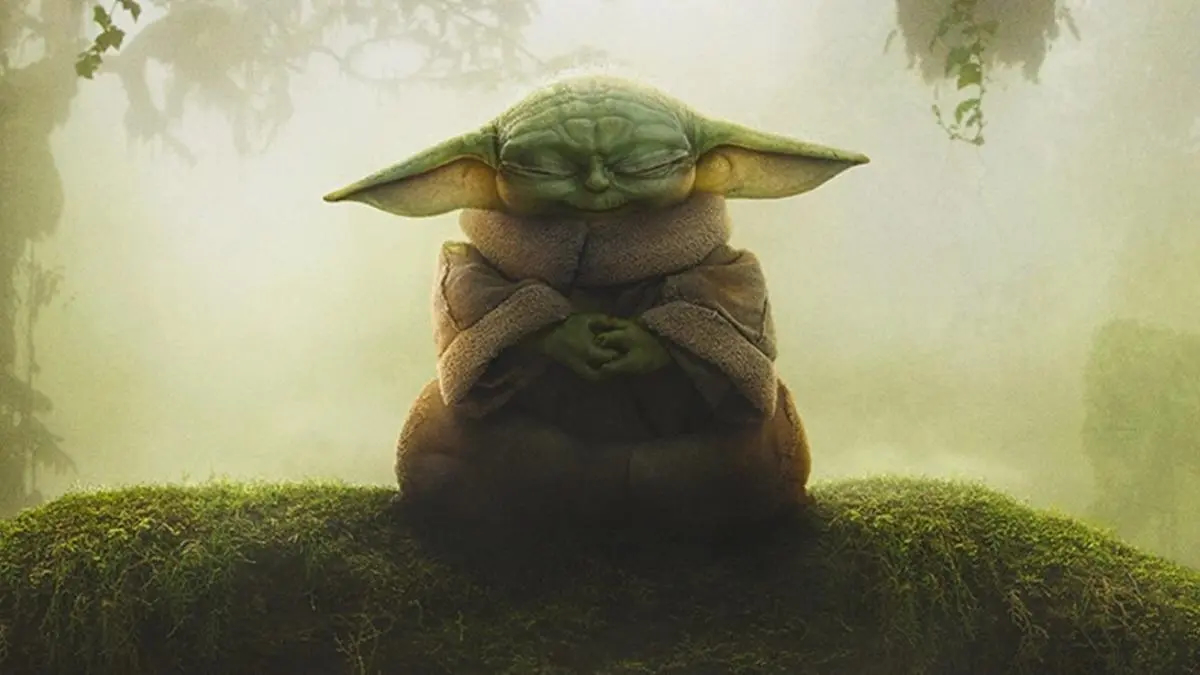
This week, the new Star Wars picture – the first live action film since 2019’s commercially successful but largely ridiculed Rise of Skywalker – will come out in cinemas. Clunkily entitled The Mandalorian and Grogu, it is a big-screen spin-off of the once-successful and now largely passé Mandalorian series. A lot is riding on its success, and Lucasfilm, now controlled by Dave Filoni, will be very relieved if it is a hit.
Unfortunately, audiences don’t seem especially interested. Advance word on it has been mediocre for some time now – the words “feature-length television movie” have been used more than once – and the box office prediction for its opening weekend is currently somewhere between $70 and $85 million. Which might sound like a big hit, but given that The Rise of Skywalker made nearly $90 million on its opening day nearly seven years ago, this is an unimpressive figure, which may of course decline further if word of mouth is brutally negative.

If it does underperform – “flop” is a bit strong – then questions will be asked of Filoni’s judgement. Whether next summer’s Ryan Gosling-starring Star Wars: Starfighter is similarly doomed – and if audiences are weary of a series that has been systematically exploited and therefore ruined for years. With the more than honorable exception of the excellent Andor – which, if rumors are to be believed, Filoni was bewildered by – there hasn’t been anything any good in the Star Wars universe since Lucasfilm was acquired by Disney for $4 billion back in 2012.
It isn’t hard to see why not. Regardless of whether you are an especially big fan of Star Wars or not, there is no denying the way that the first film completely reshaped the American cinematic landscape when it emerged in 1977. Becoming an even bigger hit than Spielberg’s Jaws two years before and laying the groundwork for virtually every big-budget science-fiction fantasy that followed ever since. Its sequel, The Empire Strikes Back, is justifiably believed to be one of the seminal films ever made, introducing elements of moral ambiguity and genuine wit into the series.
Yet when Disney paid the big bucks for Lucasfilm, they were not thinking about moral ambiguity or wit, but instead as to how they could monetize the franchise for all that it was worth. The first revived Star Wars picture, The Force Awakens, was an enormous hit – at one point, the highest-grossing film ever made – and initially the investment seemed justified. Then amid massive controversy as to the sequel, The Last Jedi, the gilt soon came off the gingerbread. Lucasfilm and Disney were accused, rightly, of pursuing wokery over coherent plotting or characterization, which led to a feeling of contempt both for the series and for its audiences. Show any old rubbish on screen, and the dumb millions will show up for it, because it’s got Star Wars branding on it. How else can you explain one of the worst line readings in cinema, Oscar Isaac’s notorious “Somehow, Palpatine returned”, from Rise of Skywalker?
Whatever you make of George Lucas, who has now been absent from cinema since 2005’s Revenge of the Sith, he was at least a visionary, whose dedication to putting something new and thrilling on screen made up for his lack of skill with actors or dialogue. Nobody who has come after Lucas has ever had his innate understanding of the Star Wars universe, which has meant instead that there are as many as yet unmade projects floating around as there are existing uses of the IP. Everyone from Taiki Waititi and James Mangold (who did a spectacularly poor job with another Lucasfilm acquisition, Indiana Jones) to Game of Thrones writers D.B Weiss and David Benioff have been linked to new films, none of which have yet materialized. It might be a mercy if none of them ever did.
Nobody who has come after Lucas has ever had his innate understanding of the Star Wars universe
If The Mandalorian and Grogu and the forthcoming Gosling vehicle both disappoint, that will probably be it for Star Wars in its current form. Perhaps there might be some future in more adult-oriented, smaller projects. Andor remains the gold standard, although its viewing figures were hardly stellar. But it is more likely that Disney will lick their wounds and look for the next much-loved series to ruin.
Or, alternatively, they will throw everything they have at luring Christopher Nolan into reviving the series, with all the bells and whistles that contemporary cinema has. Although given the current scuttlebutt on The Odyssey, that’s hardly a genius idea, either. No doubt their $4 billion investment has been returned many times over since 2012, but maybe it is time that Disney took the hit and found fresh worlds to conquer. Somehow, I doubt they’ll do so.





Comments