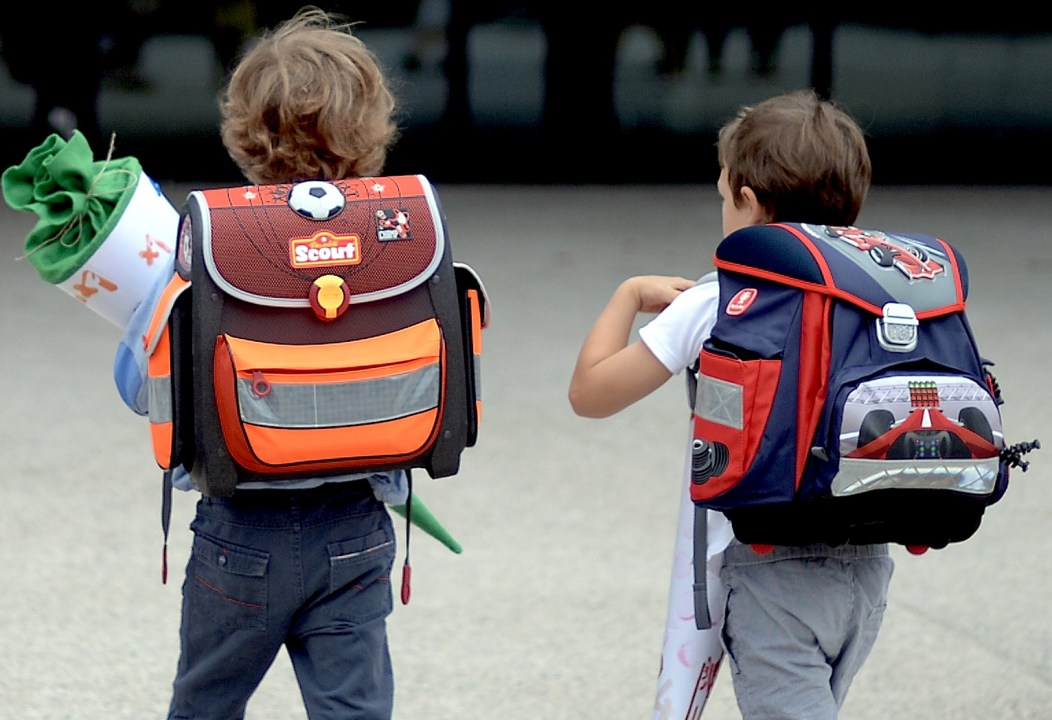
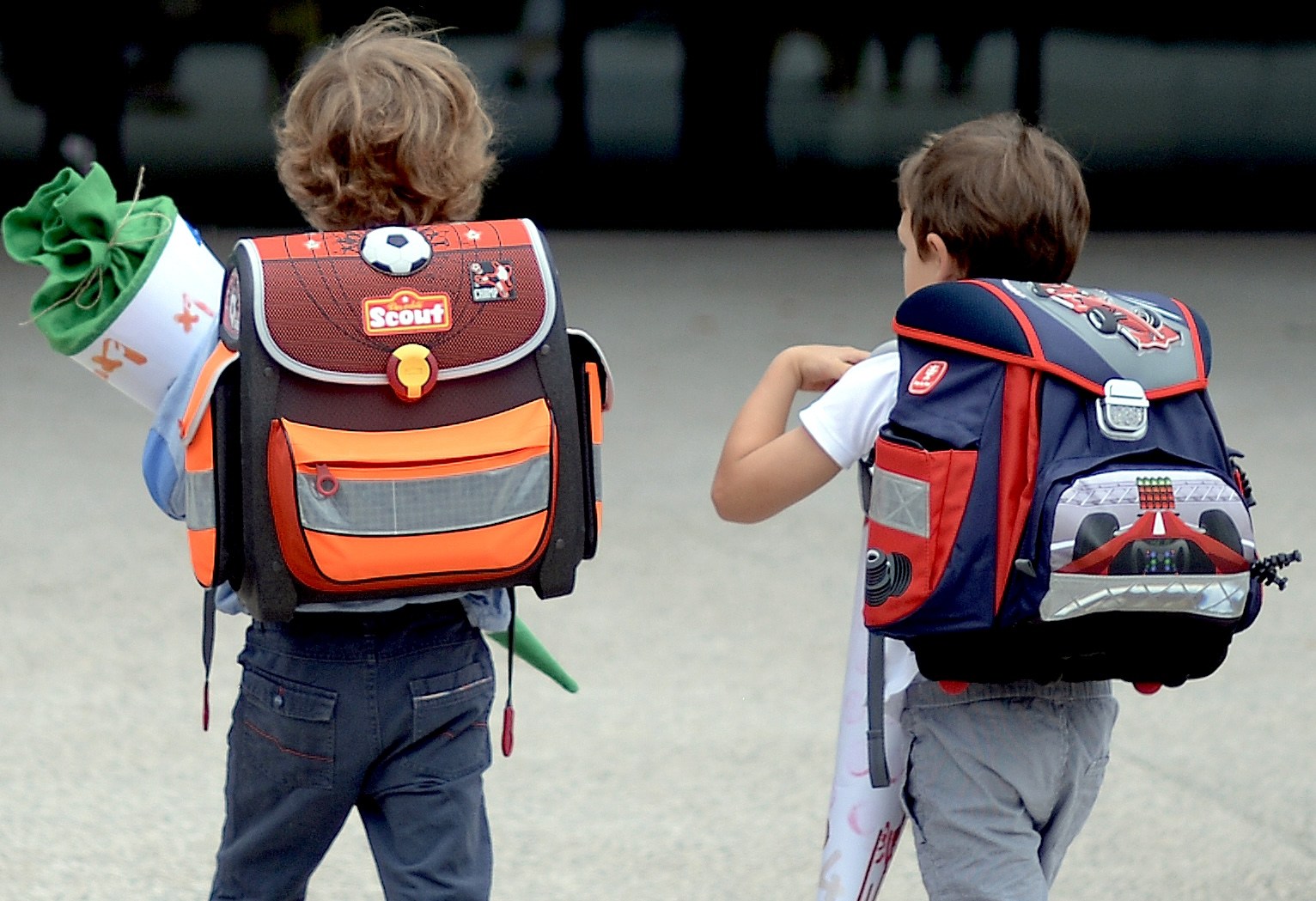
It’s that time of year again in Paris, when the cool breeze and light rain announce the arrival of the back-to-school rush known as the ‘rentrée scolaire’.
Every year, I am mildly alarmed at the sight of small schoolchildren carrying the weight of the world on their shoulders. I watch them lurching head-heavy down the pavement, burdened by large backpacks stuffed with textbooks and school supplies. I wonder how on earth their tiny frames can possibly carry such heavy loads.
They have no choice. A list of compulsory school supplies (called ‘fournitures scolaires’) is sent to French parents and published as an official decree on a government website. At the end of August, parents in France can be seen making mad dashes in supermarkets, their trolleys filled with tangled heaps of pens, pencils, notebooks and binders.
‘The hunt for supplies is brutal,’ a French parent told me. Many who scramble to shops at the last minute find empty shelves. Others frantically search for required items on Amazon. The average cost of school supplies per child in France is €200 (about £170).
It’s enough to drive a parent mad. But in France, the rule is inflexible. No child can show up for school at the rentrée without all the required supplies. A hassle for parents; a heavy load for children.
The heavy burden on the backs of French schoolchildren is, in many respects, the accumulated weight of more than 150 years of top-down bureaucracy. France’s massive education department – called the ‘mammoth’ – is notoriously fattened-up and stubbornly resistant to forward motion. Reform is virtually impossible. The French government has been issuing lists of mandatory school supplies since the birth of public school instruction in the 1880s under the Third Republic.
More than 150 years later, this year’s list, true to form, is meticulously detailed. Besides manuals and textbooks (many of them heavy door stoppers), every pupil must be equipped with blue, black, green and red pens; a lead pencil; coloured pencils; a pencil sharpener; a rubber; a ruler; scissors; a felt pen; a whiteboard marker and eraser; a highlighter; a compass; a square; folders; a three-ringed binder; slate; a slate brush; their agenda; a toothbrush; toothpaste; tissues. The list is actually less fastidious than in previous years when pupils were also required to bring plastic rolls, tubes of paint, paint brushes, glue sticks, Scotch tape, presentation folders, ink cartridges, and calculators.
Parents are instructed to have backup supplies for the entire year. Teachers conduct weekly checkups to ensure that everything is in order. An Anglo mother with a son in the French school system told me that the size of school bags and backpacks is carefully monitored. ‘They need to be a certain size to fit folders,’ she said. Parents also must be constantly vigilant, she added, to ensure nothing is missing. ‘You are obliged to check supplies throughout the year to ensure their pens have ink and pencils aren’t broken.’
Perhaps this rigorous Cartesian precision explains the success of the French education system, admired worldwide for producing clever and confident graduates with impressively analytical minds and excellent speaking skills. That may be true for a tiny minority of French children who attend the country’s elite schools. For most children in France, however, school can be a punishing experience.
France’s state school system is renowned for its centralised uniformity. Jules Ferry, the founder of public instruction, created a unified secular school system with a single national curriculum. According to the familiar legend, Ferry declared that he could look at his watch at ten o’clock in the morning and know that every child in the same grade was reading the same page of the same book.
French schools are also known for their punitive culture, following the familiar adage, ‘Qui aime bien châtie bien’. Chastisement is an expression of affection. On exams, pupils are not rewarded for correct answers, they are marked down for wrong answers. Grading is severe and marks (out of 20) are notoriously low. Anglo-American pupils who arrive in the French school system get a rude shock when they receive 11 out of 20 on an exam and are told it’s a decent mark.
For many schoolchildren in France, heavy backpacks are another form of punishment. Many pupils start school with a ‘cartable’ (school bag or satchel), but switch to a ‘sac à dos’ (backpack) as the weight increases, especially in elementary school beginning at age six. Some pupils leave books and supplies at school to avoid carrying heavy weights on their backs to and from school.
A London-based journalist who attended primary school in Paris and the French lycée in London recalls the severity of these strict rules. ‘At my school in Paris, for science and physics lessons you had to come with a blouse blanche(white coat),’ he says. ‘If you didn’t have one, you either received a warning from the teacher or you had to come in for a detention.’ At his lycée in London, it was the same draconian regime. ‘My parents had to go to a French bookshop in London’s South Kensington called La Page to buy supplies like four-coloured pens, rubber, pencil, ruler, compass and square. If you didn’t have them, you would get a warning.’
The excessive weight of backpacks has been debated in France for years. Parents complain that heavy backpacks put stress on their children’s spines and worry about long-term health consequences, including scoliosis. Official guidelines stipulate a backpack should not exceed 10 per cent of a child’s bodyweight. According to the Association of Osteopaths in France, however, the average weight of an 11-year-old pupil’s backpack is between 7 and 11 kilos. For 11-year-olds who weigh 40 kilos, that could exceed 20 per cent of their bodyweight.
Why, in our digital age, have iPads and e-books not made heavy backpacks obsolete?
If France is highly regulated, it is also heavily subsidised. For families with modest incomes, the cost of school supplies is covered by the state through an earmarked rentrée scolaire allowance. At about €450 (£386) per child, it subsidises school supplies and other costs such as sports equipment, insurance, and canteen expenses. The French state spends about €2 billion annually (£1.7 billion) on these subsidies which benefit nearly three million families to cover costs for about five million children.
It might be asked why, in our digital age, iPads and e-books have not made heavy backpacks obsolete. While the old system stubbornly prevails, there are signs of technological change. In some French lycées, pupils are asked to bring headphones and USB storage keys. At the same time, the French state has banned mobile devices in classrooms in maternal, primary and middle schools – and just extended the phone ban to high schools.
Perhaps the best solution is to scrap the centralised bureaucratic approach of issuing one-size-fits-all lists of school supplies. Schools in France should be given more autonomy to define the pedagogical needs of their own pupils.





Comments