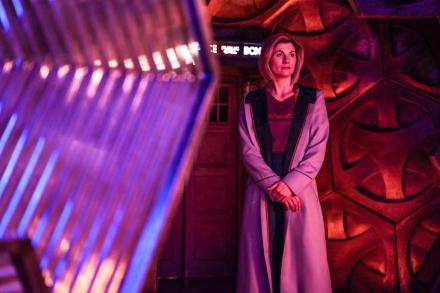
Gareth Roberts

Gareth Roberts

Gareth Roberts is a TV scriptwriter and novelist who has worked on Doctor Who and Coronation Street. He is the author of The Age of Stupid substack.

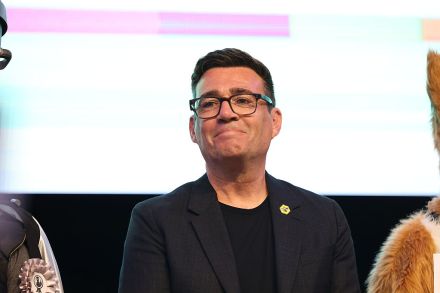
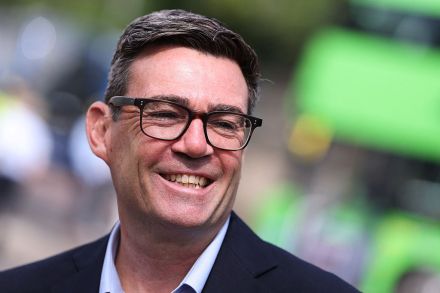
Andy Burnham is no saviour

From our UK edition

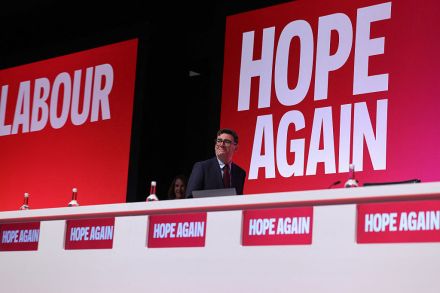
The outcome of the Prime Minister’s make-or-break speech yesterday morning was never really in any doubt, was it? It’s break. Did anybody except Keir Starmer himself think it could possibly win the nation over? He is, after all, one of the weakest of the country’s public speakers, whose attempts at warmth, sincerity and human feeling lack the easy bonhomie of a supermarket self-checkout. Keir’s speech merely reinforced all his bad qualities, reminding us of his unique ability to make our blood boil while simultaneously boring us to tears. Yes, Burnham is more likeable than Keir Starmer, and seems more like a human being – but then, so is Davros In such dire circumstances, it is natural and understandable that Labour would start to think longingly of alternatives.

What really terrifies me about Reform in No. 10

From our UK edition

Reform in No. 10? As the prospect gets more likely, the hand-wringing gets more theatrical. Should Reform somehow form the next government, we are told, Britain will descend into a dystopian ‘far-right’ nightmare of book-burnings, jackboots and midnight raids. Heavy words are thrown about very lightly: fascist, authoritarian, and my new favourite ‘post-democratic’. The real problem is not this name-calling. It is the scale of what Reform would have to do, just to shepherd the country back to its relatively sane status of 1996 This is, of course, nonsense. With Farage as PM, the world will not end. Britain will not become some kind of Fourth Reich.

The insufferable saintliness of Labour MPs

From our UK edition

It is a part of the human lot that we lug about feelings of doubt, regret and guilt. We carry our sins about like suitcases. Well, okay, maybe not quite all of us. Contrary to both scripture and psychology, there are people who struggle under a quite different burden – the sheer moral goodness of their spotless souls. I’m talking, of course, about Labour MPs. The insufferable moral superiority of Labour – and indeed many progressives of all stripes – can be very hard to digest for the vast remainder of flawed humanity. The shining ethical beacon that is Keir Starmer is almost too bright to behold with the mortal eye.

Why politicians make us wince

Mind your language! There has recently been another smattering of incidents featuring accusations of inappropriate choice of words, or even just the wrong tone. I think it’s worth taking a closer look at some of these for what they reveal about our hang-ups, the tender areas of our discourse. What makes us wince? What is considered appropriate, and what isn’t? On last week’s Edition podcast, former Archbishop of Canterbury Rowan Williams spoke of there being something ‘demonic’ about the current political culture of the US. Secretary of War Pete Hegseth’s ‘rhetoric about the violent obliteration of enemies’ strikes him as ‘diabolical’ – and of course Trump’s recent threat that ‘an entire civilisation will end’ (it didn’t).

Why is Labour so obsessed by what we eat?

From our UK edition

The government has serious work to do. As world war looms and the economy dives perilously close to recession, they have announced yet another bold and exciting policy to meet the historical moment: banning chips from school dinners. Labour are bizarrely obsessed with directly feeding the nation, something that the private sector has done pretty well over the last few thousands of years We were told yesterday that ‘fried food including chicken nuggets and fish and chips will be banned from being served in schools.’ This will, apparently, ‘reduce obesity’. Pizzas and sausage rolls will also be severely limited, and desserts will need to be composed of at least 50 per cent fruit. Now I can’t get nostalgic about school dinners.

The surprising conservativism of the old Doctor Who

From our UK edition

Before the 1980s, our broadcasters had a terrible habit of throwing their own recordings away to save storage space. Videotapes were simply wiped and reused. Every single episode of Doctor Who from the 1960s met this fate, but because the BBC sold the series around the world on film copies about two thirds have survived. Now, two more lost episodes from November 1965 – ‘The Nightmare Begins’ and ‘Devil’s Planet’, from an epic story featuring the Daleks – have been found in a private film collection, spruced up, and are available to watch on the iPlayer, 60 years on.

The remarkable blandness of Scott Mills

From our UK edition

Yesterday’s news that Scott Mills had been dismissed as the host of BBC Radio 2’s breakfast show – with immediate effect, his contract terminated – was a shock. The BBC never moves that fast; we are used to suspensions, investigations and deliberations before anything is actually done. The BBC issued a terse announcement from its cold high peak overlooking the universe, which loftily stated, ‘While we do not comment on matters relating to individuals, we can confirm Scott Mills is no longer contracted and has left the BBC’. It is striking that this dry and patrician tone, once the ‘voice’ of the Corporation, is heard nowadays only when it is in trouble.

Saturday Night Live is a major breakthrough in British TV

From our UK edition

The news that a British version of Saturday Night Live was in the offing raised an enormous gestalt groan throughout the land. A US show that was last a reasonable proposition in about 1996, reimagined for the UK? Why stop with SNL - there’s also Home Improvement, Murder She Wrote or Dr Quinn Medicine Woman. The besetting sin of firing Norm Macdonald is a stain from which the American SNL has never truly recovered. This offshoot had the air of a calamity in the making. The biggest surprise was that SNL UK was quite an upbeat, silly, jolly affair And the trailer released last week felt like the death of hope. I didn’t think it was possible to make Tina Fey (SNL veteran and host of the first show) unfunny, but they managed it.

Did Keir Starmer really need to address the nation for this?

From our UK edition

When I woke up yesterday morning, almost the first thing I saw was the announcement that Keir Starmer was to address the nation imminently. Despite the seriousness of the situation in the Middle East, I’m afraid my first thought was ‘Nah, we’re all right, don’t put yourself out Keir mate’, although possibly not quite so politely expressed. Because lecternmania – the getting out of that little prime ministerial podium to speak to the people of Britain – has gone too far. I do wish our beloved leaders would stop it.

The Green party is barking mad

From our UK edition

The enormous fun of Crufts has reminded us that Britain is a nation of dog lovers. Or maybe we’re kidding ourselves? Because policy documents on the Green party website reveal that they are ‘opposed to the wholesale breeding, manipulation and destruction of those animals who are chosen as companions to the human race’. What marvellously grandiose language! The next time I give the cat a treat I shall cackle evilly about choosing it as my companion for wholesale manipulation. The Greens continue: ‘We will introduce measures to regulate the care and conditions for such animals, including a two-tier system of dog-licensing (breeding and non-breeding), licensing of all animal breeders and dog owners.

The strange chutzpah of Nadiya Hussain

From our UK edition

Nadiya Hussain, winner of The Great British Bake Off in 2015, has it seems reached the end of the road with the BBC. Ten years in prime time is an incredible run; most TV careers are far shorter, and reality show breakouts usually flash by. The Alison Hammonds of the TV world are rare. It’s hard to believe, but even Gemma Collins has lost some of her sparkle. But Nadiya isn’t happy. In a video on Instagram last June, she spoke about ‘gaslighting’ in the TV industry, and said she felt that ‘as a Muslim woman’, she had not always been supported or allowed to fulfil her potential. Considering how fervently the BBC plugged her, this takes quite some chutzpah.

The Baftas n-word row has been very revealing

At the Baftas on Sunday night, John Davidson – whose story of living with Tourette’s syndrome is dramatised in the (very good) film I Swear – shouted out the n-word when black actors Delroy Lindo and Michael B. Jordan were on stage to present an award. You’d hope that by now people might understand the mechanics of Tourette’s symptoms – that the tics are totally involuntary, and consist of erupting with the worst possible things at the worst possible times; the imp of the perverse dialled up to 11. But no.

How many right-wing parties do we really need?

From our UK edition

Reform has topped every national poll for a good long while – benefitting, as the Greens also have and the Lib Dems haven’t (because there are limits), from a combination of public fatigue and disgust with the two old main parties. But there are other new kids on the right-wing block, both fronted by ex-associates of Nigel Farage and former Reformers. We now have Ben Habib’s Advance and Rupert Lowe’s Restore. First things first. These both sound like team names from The Apprentice. And this is fitting, because the kind of spatting, squabbling and blame-throwing that we see in Lord Sugar’s boardroom is now being acted out on the political stage.

Riz Ahmed, Olivia Colman and the danger of an actor with no script

From our UK edition

Actors have been saying unscripted things again. Riz Ahmed is the star of a new film version of Hamlet directed by Aneil Karia and set among the South Asian community in contemporary London. He told the BBC at the weekend that the ‘to be or not to be’ soliloquy is not actually about contemplating suicide at all, but about ‘resistance’. He adds that Hamlet has been ‘deradicalised’ in ‘recent years’. We expect performers who have superb performing skills to be intelligent and insightful. But this is a mistake Elsewhere, Olivia Colman has been promoting her role in another new film Jimpa, the everyday story of introducing her ‘non-binary’ daughter to gay grandad Jimpa, telling Them magazine, ‘I've never felt massively feminine in my being female.

A radio licence won’t save the BBC

From our UK edition

According to the Times, the BBC – strapped for cash as millions more stop paying the TV licence, and struggling to compete in a world dominated by high-gloss American ‘content’ – is brainstorming a portfolio of wizard wheezes to replenish its bank account. One of these, quite incredibly, could be the return of the radio licence. ‘BBC bosses are considering a new way of funding the corporation, which would result in people having to pay the licence fee to listen to any of its radio channels or use its news website.’ Here’s a wild idea. Maybe – just maybe – it would be a good idea to create programming that doesn’t routinely insult and abuse its audience, and then bill them for the pleasure?

The joy of Labour psychodrama

From our UK edition

As the three-word headline, ‘STARMER BLOCKS BURNHAM’ smashed on to our phone screens on Saturday, I felt I could almost hear the gleeful communal roar across the country; the same kind of Mexican wave of delight that passes through a school canteen when a dinner lady drops a big tray of puddings, a heap of custard and crockery. Labour wars always bring good cheer. In rotten times we have to get our pleasures where we can. In this particular case, any outcome would have been a banter-facilitating outcome. If Starmer had permitted Burnham to stand in the Gorton and Denton by-election, the reaction would have been similar: here we go, here we go, here we go.

We’re trapped in 2016

From our UK edition

With all the talk of Brexit, do you ever get the sense that social media is stuck in 2016? Well, now it really is. A trend has taken off online involving people posting throwback pictures from a decade ago. A Tumblr video captioned ‘Welcome back #2016’ kicked off the nostalgia. It has resulted in a 450 per cent surge in '2016' searches across platforms, as those born between 1997-2002 share photos, songs like Drake's ‘Views’ and Pokemon Go memories. A Tumblr video captioned ‘Welcome back #2016’ kicked off the nostalgia The year 2016 is being described as one in which pop culture peaked. But perhaps the most remarkable thing about those 12 months is how little has changed in the decade since.

This Labour government is fascinatingly awful

From our UK edition

The eerie and the uncanny fascinate us, whether it’s the abominable snowman, the Loch Ness monster or the Bermuda Triangle. And now we have another great mystery to puzzle over: why is this Labour government so awful? What is it all for? At the election I was not optimistic about Starmer’s mob, but I allowed myself a brief moment of wondering – even hoping, a bit – that I was wrong. What if Labour actually had the wits and the nerve to jolt Britain out of its decline? It seemed very unlikely, yes, though stranger things have happened. This government is fascinatingly bad, in a way that attracts your wonder at the same as it repels But in the end that wasn’t the case.

Three cheers for the death of the music video!

From our UK edition

MTV has pulled down the shutters on its dedicated music video channels, casting off what remained of its original raison d’être. In the age of YouTube and TikTok, the only surprise is that it’s taken so long. This is a signal moment. As a truly mass medium, the music video is – after almost half a century – over. Who mourns for it? Not me, anyway. For me, video shrunk music down rather than opened it up. The form emerged from the homespun promotional films shot by record companies in the 60s and 70s. These ‘pre-video’ videos, such as they are, are often more interesting than what followed, simply because the deadening smack of rote production, of This Is The Way Of Doing It, hadn’t yet occurred.

26 lessons for surviving 2026

From our UK edition

New Year’s resolutions are a cruel and demoralising prank. Don’t start any personal alterations until April. Spring is the real beginning of the year, as the Romans once knew and the taxman still does. Attempting to remodel yourself as a fountain of self-improvement in the bleak midwinter is just silly. But in the spirit of the many tip sheets and handy hints lists that pop up everywhere at the beginning of January, here’s mine: 26 for 2026. Don’t bother to watch any film or television series made after 2010. It only encourages them. (If the TV series began before 2010, perhaps, but that is the only exception.