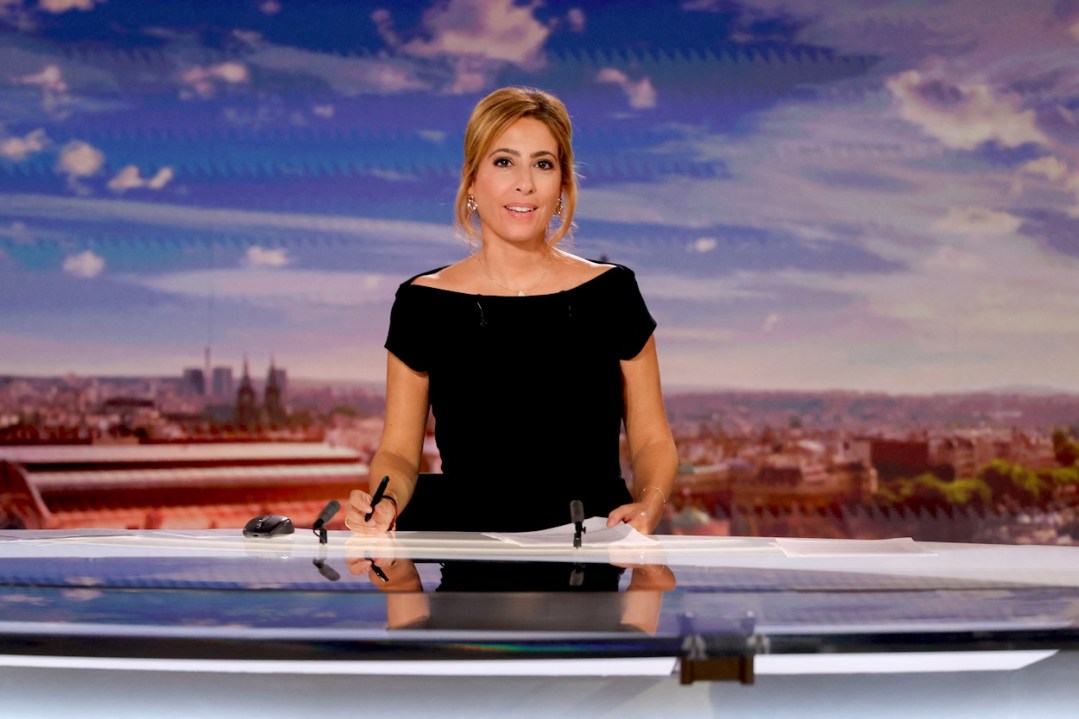
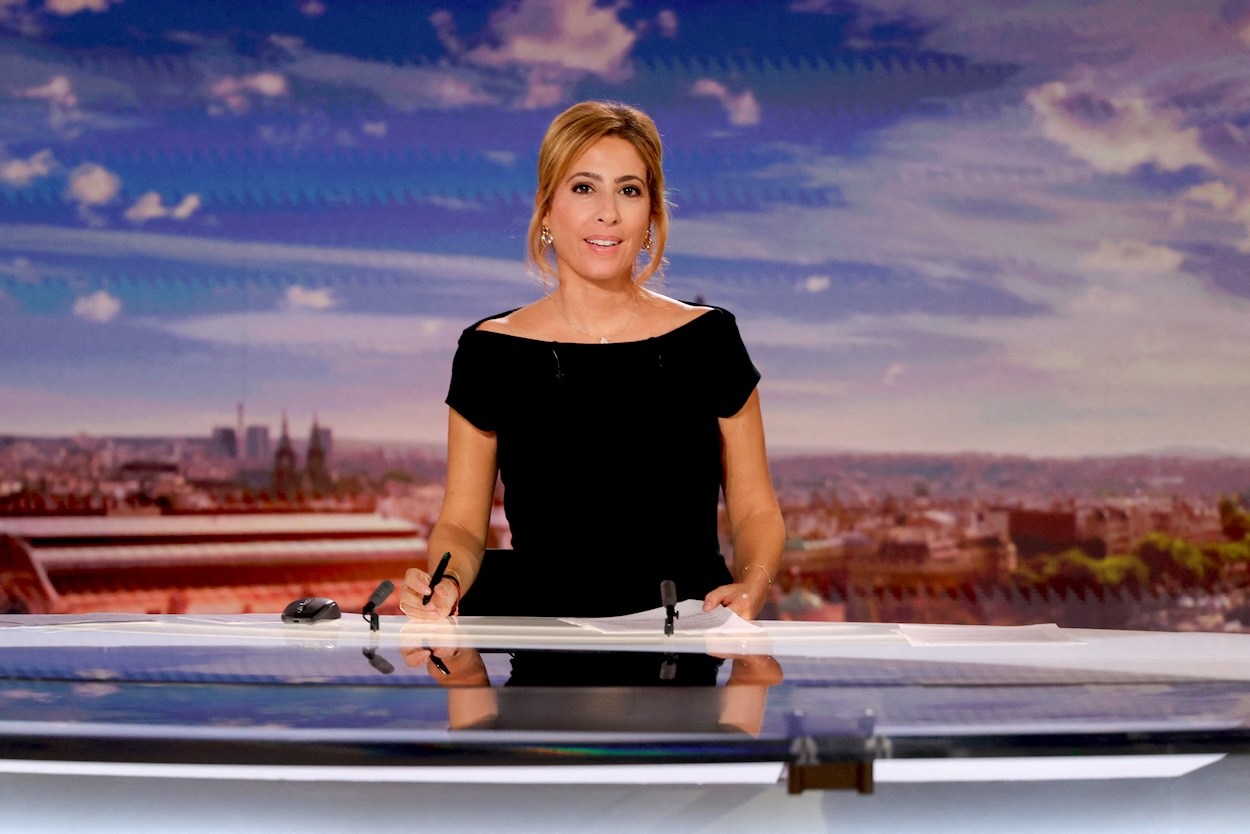
Léa Salamé is one of the most familiar faces on French television. For the past month, however, she has been absent from the anchor’s seat presenting the evening news on the big public network, France 2.
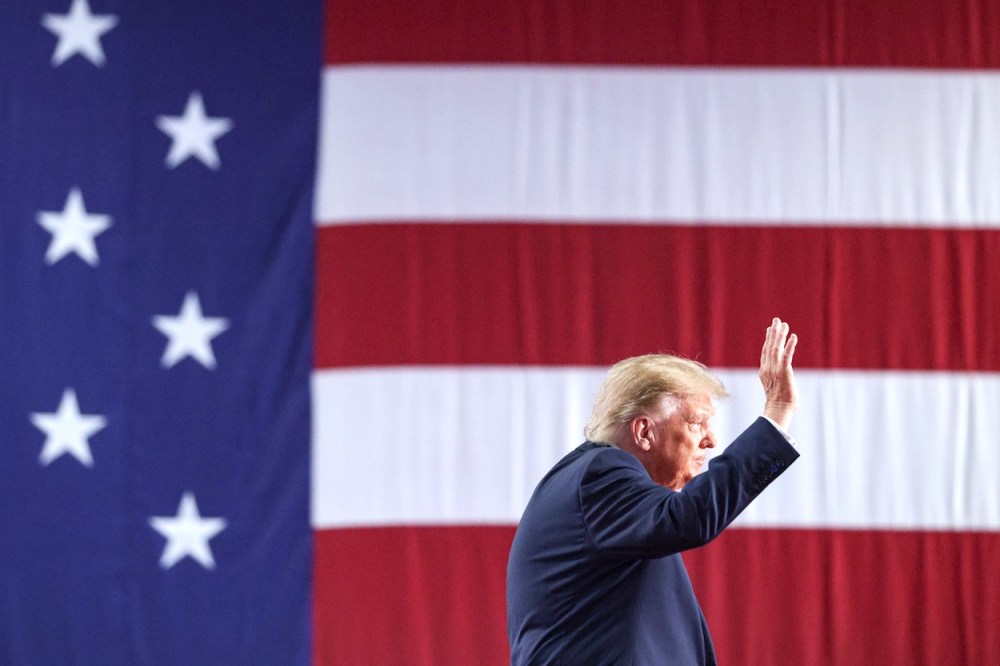
At the end of the summer, Salamé announced that she had taken a ‘difficult decision’ to step away from her high-profile programme to avoid any appearance of a conflict of interest. Salamé is romantically involved with politician Raphaël Glucksmann, who on Sunday won the Socialist primaries and is now the party’s official candidate in the French presidential election next spring. Salamé met Glucksmann 11 years ago on the set of a live television show, and today they have a nine-year-old son.
Glucksmann, son of French philosopher André Glucksmann, is not scoring high in election polls. It’s still early days, but he’s trailing far-left firebrand Jean-Luc Mélenchon and is far behind right-wing Marine Le Pen. No matter, Léa Salamé has walked away from France 2’s evening news so the man in her life can respond to the call of destiny.
Politicians dating and romancing – even marrying – influential television and radio presenters is hardly unique to France. In many countries politicians and journalists socialise, flirt, and sometimes tumble into bed. In France, however, the marriage of politics and journalism is pervasive. Over the past few decades, dozens of cabinet ministers, prime ministers, and even French presidents have formed couples – sometimes ephemeral, sometimes enduring – with female journalists. When François Hollande was elected president in 2012, he was romantically involved with a Paris Match journalist, Valérie Trierweiler. When she moved into the Élysée Palace with Hollande, she was dubbed the ‘First Girlfriend’.
The cosy world of French politicians and the journalists who cover them has been largely exempt from ethical scrutiny, partly because of the strict separation of public and private lives in France. Some claim the French are indifferent to what happens in the boudoirs of bedrooms of their leaders. During the Bourbon monarchy, the mistresses of French kings were usually aristocrats or, like Madame de Pompadour, courtesans hastily elevated to the nobility. In the Fifth Republic, court favourites tend to be glamorous faces in the media – actresses, television personalities, news presenters and journalists.
In the early days of the Fifth Republic, Charles de Gaulle looked upon sexual shenanigans of any kind with austere disapprobation. His wife Yvonne – who hung a Virgin Mary pietà in her official Élysée Palace apartments – kept herself well-informed on the personal vices of men surrounding her husband. When she once discovered that a top-ranking Gaullist baron was carrying on an adulterous affair with a journalist, Madame de Gaulle’s stern views on the matter kept the philanderer out of government for a decade.
In the sexually permissive 1970s, it was common for French politicians and journalists to engage in sexual dalliances. Jacques Chirac fell in love with a journalist from Le Figaro and was on the verge of divorcing his wife Bernadette. An intervention was hastily organised to put an end to the affair. One of Chirac’s top advisers met with the journalist and told her that, in the interest of the nation, she must never see Jacques Chirac again. The relationship ended. Chirac pursued his political ambitions with his wife Bernadette at this side – though he continued to seduce countless women, many of them journalists. His nickname was ‘Monsieur Cinq Minutes – douche comprise’ (Mr Five Minutes, shower included) because he was known to get straight down to business and dash off in a hurry.
Newspapers and magazines quickly realised that sex was the best way to extract secrets and scoops from powerful male politicians. The magazine L’Express began sending attractive, long-limbed journalists – called croqueuses – into the corridors of power dressed in miniskirts and provocative outfits. The strategy worked marvellously. ‘It was a bonkfest, everyone was having sex with everyone,’ veteran French political journalist Catherine Nay told the author of an erotic history of the Élysée Palace.
Socialist François Mitterrand’s presidential court was notorious for byzantine sexual intrigues. It was not uncommon for female news presenters to be romantically involved with – or married to – his government ministers. Anne Sinclair, the most famous television journalist of that era, met Dominique Strauss-Kahn live on air while interviewing him. They quickly had a discreet romance and later married. Thanks to his new wife’s fame and high-level connections, Strauss-Kahn’s career soared. He was soon appointed to Mitterrand’s cabinet. Meanwhile another minister, Bernard Kouchner, was married to television news presenter Christine Ockrent.
In 1992, French television viewers were treated to an extraordinary spectacle when François Mitterrand sat down for a live television interview. Mitterrand could not have felt in more reassuring company. His two interlocutors were Anne Sinclair and Christine Ockrent – both of whom were married to Mitterrand’s ministers. Ockrent went on to manage state-owned France 24 news network whilst her husband was France’s foreign minister (imagine the head of BBC World Service married to the UK foreign secretary).
Mitterrand could not have felt in more reassuring company. His two interlocutors were married to his ministers
The loose ethical climate changed gradually following the extravagant excesses of the Mitterrand era. At the end of the 1990s, Anne Sinclair stepped away from her television duties when Dominique Strauss-Kahn became finance minister (his presidential ambitions and marriage were later ruined by accusations of sexual assault, of which he was acquitted). In 2006, television presenter Béatrice Shönberg left her evening news programme when her husband Jean-Louis Borloo was appointed to Jacques Chirac’s cabinet. Another news presenter, Audrey Pulvar, was obliged to step aside because of her romantic relationship with Socialist politician Arnaud Montebourg, who in 2010 announced his presidential ambitions and subsequently was appointed finance minister in François Hollande’s government.
Some have noted sexism in these arrangements. It always seems to be women news presenters who feel pressured to sacrifice their careers, at least temporarily, for the political ambitions of the men in their lives. There are a few examples, though rare, of women cabinet ministers married to male journalists. One is radio presenter Franck Ballanger, who left his on-air job when his spouse, Roxana Maracineanu, was appointed sport minister in Emmanuel Macron’s government.
Léa Salamé’s decision to step down from France 2’s evening news follows the same ethical rigour about perceived conflict of interest. But while she is no longer presenting the France 2 news, Salamé is back on the air hosting a chat show, ‘Quelle Époque!’ Proof that news presenters in France, like ambitious politicians, never vanish entirely – even when their spouses are aspiring to Élysée Palace.






Comments