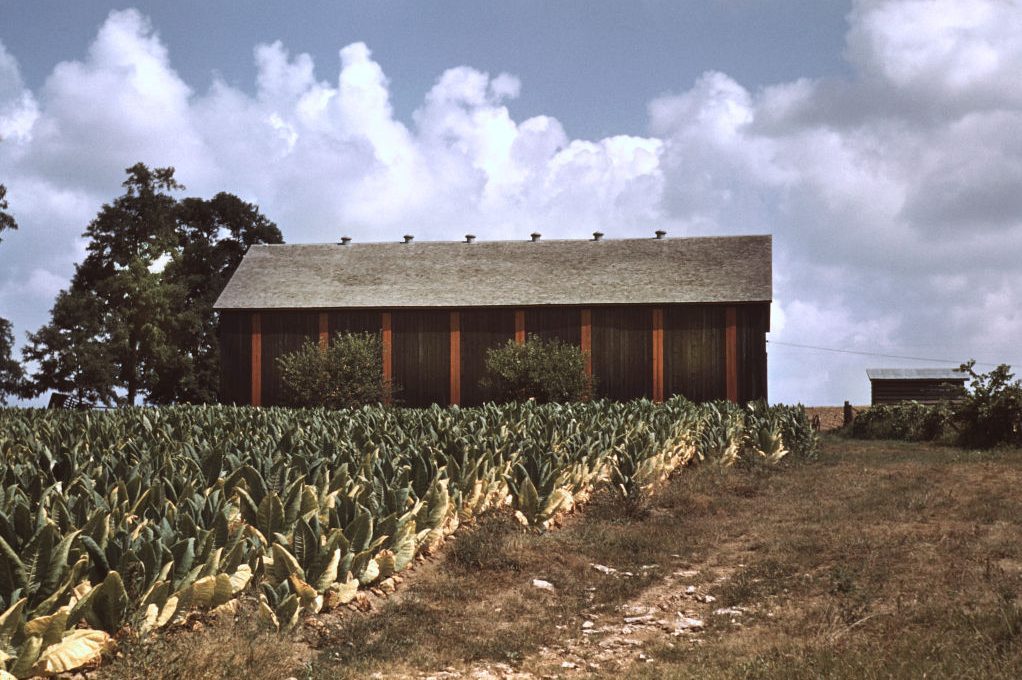
Wendell Berry, who died Monday aged 92, was a man who loved the soil and the soul. Writing from Kentucky, where his family has lived and farmed for generations, Berry built up, over more than sixty years, a corpus of fiction, non-fiction and poetry – all genres in which he distinguished himself – which, when taken as whole, reveals a profound and coherent philosophy of the earth and how it relates to human community.
Unfortunately, the average person probably doesn’t know who Berry is. Even those who have heard of him might only know his incendiary 1987 Harper’s essay “Why I Am Not Going to Buy a Computer” or his watershed 1977 takedown of maximalist agricultural practices, The Unsettling of America. These works are famous for a reason, establishing Berry as a cutthroat critic of the technocratic paradigm, the mentality that treats human beings and the soil as a means to the ends of wealth, efficiency and a vision of “progress” that always strives towards a vague “something better,” at the cost of the things that make us most human, especially our families and our land. But Berry was not primarily a critic. He was a philosopher and an artist, a farmer and a father. Berry saw these four elements of his life as manifestations of the same calling, a unity of purpose one can see characteristically in his fiction.
Berry argued that to be rooted in a place is an act of fidelity
Berry was an epic writer of the home and the family, the unifying forces that he saw as weaving together not just his life but the lives of all flourishing human beings. Berry thought that the arc of a healthy life was a kind of hero’s journey: we leave home as we grow up to pursue some task that only we can complete, become transformed through education, experience of the world, and grow in virtue, and return home changed to build up local culture for the better. Most of all, Berry was most interested in the homecoming. Far from being the end of the journey, Berry argued, to be rooted in a place, to be faithful to it, to choose to stay in one location and be committed through love in seeking its particular wellbeing, is an act of fidelity. Like marriage, it gives form to life and should, if you pursue your commitments faithfully, make you unfathomably happy, while still pushing you to grow further. To love the place where you are and the people who are there with you is itself an epic quest.

This insight of Berry’s fueled his artistic style. Consider his novels Jayber Crow and Hannah Coulter, written in 2000 and 2004, respectively, whose structures imitate Dante’s Divine Comedy and Virgil’s Aeneid even as they concern themselves in turn with the interior transformations of a barber and a farmer’s wife. Berry’s fiction centers around a single location – a rural town in Kentucky, which he called Port William. Beginning with his first novel in 1960, Berry built out the life of this fictional town over the course of dozens of novels and short stories, tracing its history from its founding around the late eighteenth century to its decline in the twenty-first. Though Berry’s books are the kind that have maps and family trees, their dramas are always personal.
As he developed as a writer, Berry’s concerns gravitated towards a central theme: the loss of our local communities. Why, asked Berry time and again, are we so miserable? The answer to this has to do with the intrinsic connection between our community, our culture, and our land. For Berry, the way we treat the land is inseparable from the way we treat human beings. To use highfalutin terms, cosmology and anthropology are intertwined. More concretely, if you treat the land as an instrument to get what you want, you’re going to treat human beings the same way. Berry saw the places where we are born as vital in forming who we are. We are, quite literally, made from our local land. There is a reason why the food that grows in the place where we were born nourishes us best, why the root of the word “human” is related to the word humus, the ultra-fertile layer of topsoil, and why the Judeo-Christian tradition believes that the first man, Adam, came from the adamah, the Hebrew word for soil. Place is inscribed into our being.
Berry saw contemporary human lives as often cut short halfway through their epic journey home. For Berry, leaving our home and local culture is a vital stage of our growth, but we must return eventually, or else we will be miserable. Now, for the first time in our history, the majority of human beings not only seek to leave their homes behind permanently, often out of necessity, but do so voluntarily, seeing it as a path to that elusive “something better” – better job prospects, better weather, better access to entertainment. Though Berry recognized how alluring these prospects are, and freely acknowledged that there are some situations in which one should not go home again, for the vast majority of people, pursuing these dreams may lead to material prosperity but will almost certainly leave them home-less.
Ultimately Berry’s legacy, if we listen to him, should be one of healing. Berry’s writings are often called prophetic, and with some credit, given how accurately he predicted disasters like the extractive approaches to agriculture championed by the USDA in the 1970s and by multinational agricultural businesses today. However, to call Berry a prophet risks missing the point. Berry believed that anyone could know human beings and the world well, so long as he took the time to pay attention. But we can only attend to things that we love. Fortunately for us, Wendell Berry was, if nothing else, a man who loved a lot.





Comments