From the very start, there was something weird about Operation Absolute Resolve. The official story went something like this: after a whirlwind air attack, which included the use of suicide drones for the first time, special operators from the US Army’s renowned but shadowy SFOD-D unit (“Delta Force”) were helicoptered into the Fuerte Tiuna military complex in the south of Caracas, the capital of Venezuela. They defeated the local garrison, used “massive blowtorches” to breach heavy metal doors in a fortress-like residential site within the base, captured the President of Venezuela, Nicolás Maduro, and his wife, then spirited them back to the helicopters and flew them out to face charges in the United States. Donald Trump said it had been “an assault like people have not seen since World War Two.”
It was certainly a bravura operation. But was it real? The suppression of enemy air-defense operations, which usually precedes such assaults, lasted for barely half an hour. A shock, then, but not much awe. Military facilities were left untouched. Despite, in President Trump’s words, the Venezuelans knowing that the US had been coming “for months,” many surface-to-air missile (SAM) systems were left exposed; others showed no signs of dispersal.
More puzzling, the helicopters of the US Army’s 160th Special Operations Aviation Regiment were able to get to the drop-off point, loiter near Caracas for two hours, return to the drop-off point for extraction, and then fly out unscathed. Not one of Venezuela’s hundreds of Soviet/Russian Igla portable SAM systems – used to devastating effect against rotary aircraft in India, Iraq, Rwanda, Chechnya, Peru, Libya, Syria and Ukraine – appears to have been fired.
There was, then, very little, if any, opposition. Nor was there much evidence that the US military had done much to suppress enemy combatants. President Trump, for his part, claimed the operation had used secret sonic weaponry: “The Discombobulator. I’m not allowed to talk about it.” Anti-US commentators suggested skullduggery among disloyal and venal elements within the Venezuelan regime and military hierarchy.
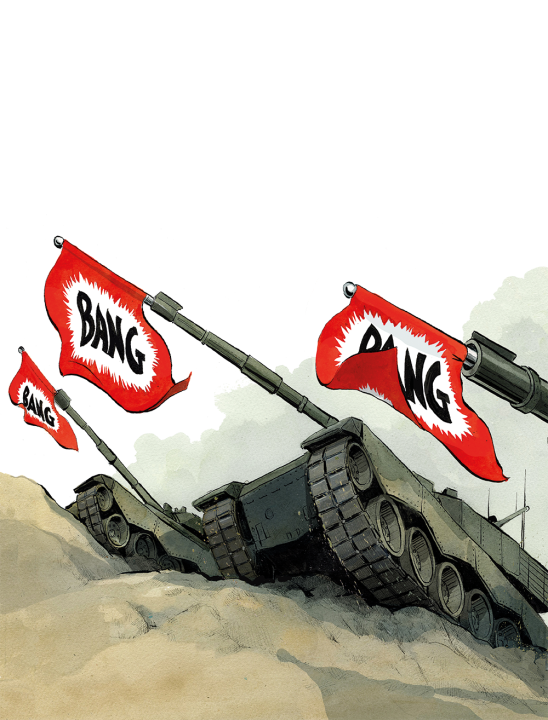
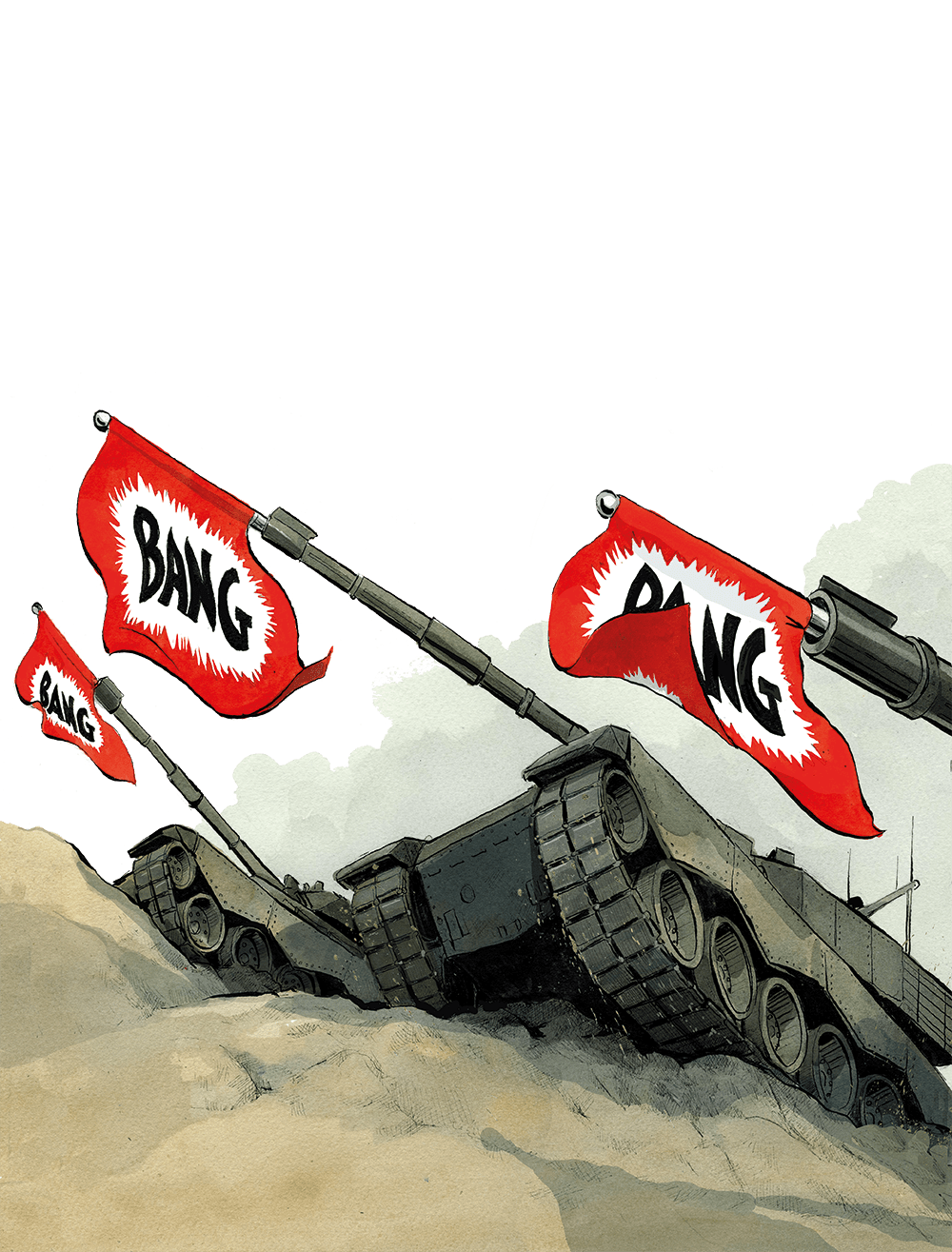
What really happened here? Was it real or theater? Or was it all an example of what the French philosopher and sociologist Jean Baudrillard called “virtual war?”
The historian Niall Ferguson is a proponent of using alternative history to explore such questions. Let’s do the same. The point of departure in our imaginary January 2026 scenario comes a little before President Trump gives the go-order for Absolute Resolve. US national security advisors explain the situation. “As you know, Mr. President, Venezuela has been under sanctions for decades. These have crippled the economy without precipitating regime change. In fact, emigration flows have acted as a force for self-selection, removing many of those who might support a new regime. You have brilliantly ramped up the pressure since returning to the White House, but even this has not worked. We both know that while we would undoubtedly win a war, it could also be messy and costly for us. Perhaps, Mr. President, it is time for you to do what you do best: make a deal.”
The only understanding of the operation comes through lurid imagery made possible by modern technology
The US would certainly have had leverage to strike a good bargain. First, the carrot. Removing the sanctions would offer Venezuela a tremendous economic boost, even accounting for the grotesque inefficiencies of Chavismo economics. Plus elites could get rich in the process. Secondly, the big stick. Even if an invasion would be costly to the US, it would be devastating for Venezuela. Senior members of the governing regime and military would be lucky to escape with their lives – and they would know it.
How does this alternative reality differ from what is happening in Venezuela? Not much. The country’s acting President, Delcy Rodríguez, has signed into law legislation to allow privately owned and foreign companies to take stakes in Venezuela’s hitherto nationalized oil industry. The law also limits the royalties Venezuela takes from its oil to 30 percent. She has also allowed Washington to take control of oil sales, while selling mostly to the US itself. Finally, Rodríguez has agreed an amnesty for political prisoners. The US, for its part, has agreed to let the regime continue to govern (minus Maduro, of course). It is also, slowly, phasing out sanctions, allowing the oil to flow from Venezuela and revenues to flow back.
What if, then, Operation Absolute Resolve was not a military operation, but a way for both sides to do a deal while saving face? For the US to remove sanctions without looking as if it was admitting failure; for Venezuela to do business with the US on Washington’s terms without appearing to cave.
This fits Baudrillard’s definition of virtual war almost perfectly. Something else masquerading as war. The US military, for the most part, not engaging directly with enemy soldiers, about whose fate almost nothing is known. No agreed figure for the number of enemy combatants killed during Absolute Resolve exists: conflicting reports suggest as many as 75 pro-Maduro soldiers died, including 32 Cubans.
Did the raid help the US to
remove sanctions without looking as if it was admitting failure?
The only understanding of the operation widely available comes through the medium of lurid, propagandistic imagery made possible by modern technology and woven together to create a simulacrum of war. Super-soldiers and secret sonic weapons; “a fighter jet for every possible situation” and viral amateur footage of every possible detonation. We were given no pause for thought before being whirled from “virtual war” to “virtual diplomacy.” On January 3, shortly after the announcement of the capture of Maduro, Katie Miller – wife of White House Deputy Chief of Staff Stephen Miller – posted on X an image of Greenland covered with an American flag, captioned “SOON.”
Between January 5 and January 7, President Trump said in interviews that acquiring Greenland was a national security priority to deter adversaries in the Arctic. White House Press Secretary Karoline Leavitt said the President had “made it well known that acquiring Greenland is a national security priority of the United States.” By January 9, Trump had explicitly threatened action: “We are going to do something on Greenland whether they like it or not.” He added: “I would like to make a deal the easy way, but if we don’t do it the easy way, we’re going to do it the hard way.”
As late as January 14, as the party started in Davos, President Trump was still refusing to rule out military action to “take” Greenland. On January 15, Denmark and Germany deployed troops to Greenland. On the island itself, Greenlanders were advised to stock up on supplies in case of a potential crisis. A pension fund in Denmark, and then one in Sweden, announced they would be divesting from US Treasury bonds. There was talk that other European funds might do the same in protest, and of the EU waging full-scale economic war against America. On January 20, US aircraft moved into the Arctic.
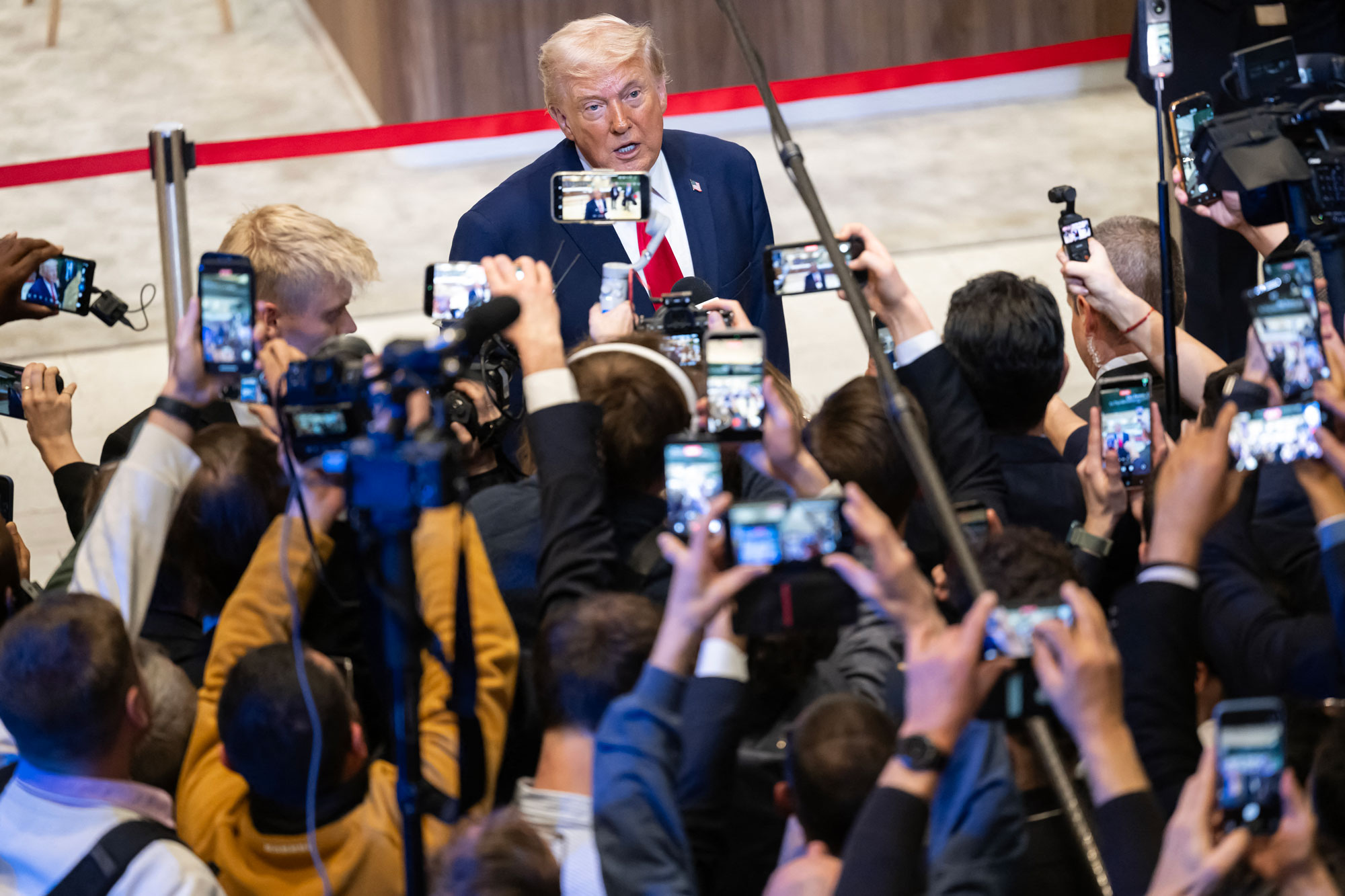
Then, just like that, the subject was dropped. On January 21, in his speech at Davos, President Trump ruled out force and tariffs. Crisis over. Apparently, peace was mediated in a single meeting between Trump and Mark Rutte, the Secretary General of NATO. There were reports of the US receiving greater basing rights and access to some of Greenland’s natural resources, but nothing confirmed. It was a “framework.” There has barely been any mention since.
At a magic show, we are delighted to be swept along by the performance: the smoke bombs and flashbangs; the glitter and lights; the misdirection and shock; the pledge, the turn and the prestige. Knowing the mechanics of the trick would spoil our enjoyment of the thing itself. Geopolitics and international relations are not shows for our entertainment and delight – no matter how they might look on social media. Seeking to understand the underlying mechanics and goals of the major players is of paramount importance.
Helpfully, in November last year, the United States published a document telling us exactly where it wants the seven of clubs to end up. The 33-page National Security Strategy (NSS) is far less exciting than daring commando raids or threatening to annex large swathes of Danish sovereign territory, but at least it is real. It tells us that a strategy must “prioritize,” and that, “not every country, region, issue, or cause – however worthy – can be the focus of American strategy.”
In fact, the word “prioritize” is mentioned another 12 times (“The world works best when nations prioritize their interests”; “To focus and prioritize is to choose.”) Indeed, much of the document is a list of American priorities, in order. First, to “reassert and enforce the Monroe Doctrine to restore American preeminence in the Western Hemisphere.” Would that, by any chance, look like reestablishing relations with Venezuela at the expense of foreign actors such as China and Russia? And maybe do the same with Cuba next?
Second on the NSS list is Asia, but really China. The overarching principle to be followed here is that, “the United States cannot allow any nation to become so dominant that it could threaten our interests. We will work with allies and partners to maintain global and regional balances of power to prevent the emergence of dominant adversaries.”
There was talk of the EU waging economic war against America over Greenland. Then it was gone…
The US also tells us that its relationship with Europe and the Middle East is going to change. It will stop having the dominant military footprint in both regions, helping allies to defend themselves instead. Yet, if it is to achieve this, it must leave behind something like a stable, lasting peace in both regions. To wit, in Europe, we are told that, “it is a core interest of the United States to negotiate an expeditious cessation of hostilities in Ukraine, in order to stabilize European economies, prevent unintended escalation or expansion of the war, and reestablish strategic stability with Russia.”
The problem that the Trump administration faces is that the Europeans, like a weird girlfriend who simply ignores you when you tell her you want to break up, are refusing to play along. They keep sabotaging President Trump’s efforts to end the war in Ukraine so that the US might draw down from a stable Europe. They continue trying to force the US to maintain a significant presence on the continent’s frontiers. They don’t want to be just friends. Instead, they appear to be holding out for the return of a Democrat who will take the relationship back to the good old days.
What leverage does President Trump have to bring the Europeans around? Greenland perhaps? As my colleague Philip Pilkington wrote in the American Conservative, the Americans used Greenland as a stick “to give the Europeans a violent and very public beating.” He added: “We should expect the humiliation rituals to get increasingly aggressive” until, essentially, the Europeans see sense.
The fact that NATO leaders have come to a very different conclusion – that Trump backed down over Greenland because his European allies opposed him in a united front – only shows the pitfalls of Trump’s approach. For virtual war and diplomacy to work in the theater of international relations, every major party must willingly suspend the same disbeliefs.




Comments