Robin Ashenden

Robin Ashenden is founder and ex-editor of the Central and Eastern European London Review. His detailed accounts of the media attacks on Lionel Shriver and Toby Young can be read on his substack ‘Letting the Child Run Riot’.

Taking my cat on holiday is like a military campaign

From our UK edition

The recent news that the EU was tightening up its rules on UK residents travelling with their animals is just the latest blow against pet-owners in search of the open road. For the past five years there has been a conspiracy, it seems – not least from their own government – to make their lives impossible. One UK pet-owner has clearly had enough and decided to take action Until 2021, British pet-owners could travel under the EU pet passport scheme. With this inexpensive document (costing around £60) you were allowed to make up to 28 trips to and from the continent, with no time limit. Since Brits lost the right to such passports, for obvious reasons, in 2021, they’ve been required instead to pay for a one-use Animal Health Certificate, an altogether more restrictive document.

The tortured life of Stalin’s daughter

From our UK edition

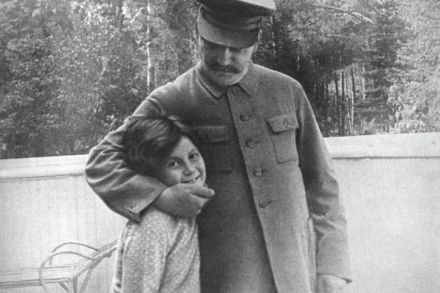
Svetlana Alliluyeva, Joseph Stalin’s daughter, would have been 100 years old today, and she is one of history’s curios worth remembering. Born when Stalin was already installed as Lenin’s successor, and dying in 2011, well into the rule of Vladimir Putin – whom she referred to as an ‘awful former KGB-SPY’ – Alliluyeva, who defected to the West in 1967, embodied all the violent ups and downs of her age. As her biographer Rosemary Sullivan put it, ‘The epoch drove right through her because she was Stalin’s daughter; all the pluses and minuses of this system went straight through her.’ ‘Something in me was destroyed’, she wrote.

The words that could – and should – doom Starmer

From our UK edition

The current Labour government, those ‘adults…back in the room,’ are now the UK’s unofficial Party of Sleaze. In the wake of lurid revelations about the Mandelson-Epstein love-in – not least that Mandy allegedly passed secret, prejudicial information to the late disgraced financier and may have been guilty of misconduct in office – Labour is under constant attack, even from within. As the Prime Minister attempts to blame the security services for Mandelson’s appointment, it’s worth remembering the way he himself spoke about such matters Dame Emily Thornberry mutters about ‘the weaknesses in our vetting process and in our due diligence process.

Lublin’s lost Jews are a warning to Europe

From our UK edition

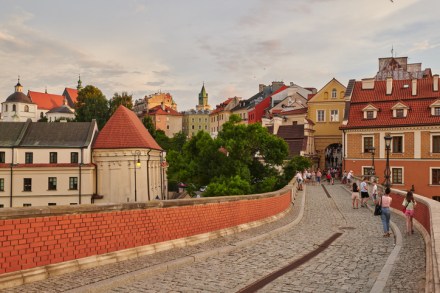
Going to Lublin in eastern Poland is a bit like visiting Pompeii. The city’s old town – compact, intricate, fetchingly tarnished – is as haunting as Krakow’s and more authentic than the reconstructed Warsaw. But something is missing, and you can feel it. Before the war, the Jewish population of Lublin stood at 43,000. Now, it is just 40. Structures remain but their purpose has gone forever, replaced by a palpable absence. Lublin was once a centre of Jewish life, the foremost in Europe. From the 16th century onwards, it teemed with yeshivas and synagogues, rabbis, philosophers and publishing houses. The Jewish ‘Council of the Four Lands’ operated from Lublin, an effective authority for all the Jews in the country.

Jenrick’s treachery has made Badenoch stronger

From our UK edition

If Kemi Badenoch needs a little relaxation from the ‘psychodrama’ of Robert Jenrick’s defection to Reform, she could do a lot worse than watch Shekhar Kapur’s 1998 Elizabeth. The historical drama, about the plots and betrayals surrounding the early days of Elizabeth I’s reign, is uncannily reminiscent of recent events in her own party. With her bitterest opponent now banished from the court – pushed before he could jump – those looming May elections hold fewer fears for the Tory leader The film (spoilers aplenty) begins as Mary I dies childless, leaving her callow and inexperienced half-sister a tattered kingdom. ‘Your majesty has inherited a most parlous and degenerate state,’ one advisor tells her.

How Badenoch bounced back

From our UK edition

One of the origin stories about Kemi Badenoch’s career as politician is that, while waiting to be interviewed as candidate for Saffron Walden, she sat alone, listening through headphones to Survivor’s ‘Eye of the Tiger’ – that pounding, sinew-stiffening theme to Rocky III. Given the ups and downs of her year as leader – not unlike a Rocky film in itself – it now seems a prescient choice of song. Kemi, in the past month, has finally come out punching. It was Badenoch’s tour de force response to Rachel Reeves’s Budget of Broken Promises, that seemed to change her fortunes Perhaps the wait was unavoidable – few newly-elected party leaders have had to face so many difficulties in their first year.

Claude Lanzmann would despair of today’s Europe

From our UK edition

The late Claude Lanzmann, director of the monumental Shoah – the nine-and-a-half hour documentary about the Holocaust, released in 1985 and widely considered the greatest cinematic work on the subject – would have turned 100 this week, a destiny he missed by only eight years, dying in 2018. What would the filmmaker – who devoted almost a decade to his masterpiece, nearly obliterating himself in the process – make of Europe in 2025, a place where idealistic crowds of the young march for Israel’s annihilation, where the words ‘Dirty Jew’ are spray-painted on Parisian walls, and where, in the first six months of 2025, there were a registered 646 anti-Semitic acts in his native France alone?

There’s no writer quite like Mariusz Szczygiel

From our UK edition

I’ve been a fan of Mariusz Szczygiel, the Polish author, investigative journalist and TV presenter, since reading his book Gottland: Mostly True Stories from Half of Czechoslovakia some ten years ago. Gottland – a series of 20th century Czech histories without the boring bits – was a knockout, winning the 2009 European Book Prize and giving an unexpected jolt to those who expected the usual stodgy travelogue on Central Europe. Victor Sebestyen described it in these pages as ‘one of the funniest books I have read – and one of the shrewdest.’ If all this sounds sombre, it’s anything but. Not There, translated once again by Lloyd-Jones, is full of weird variety and bounce Gottland’s tales were ruthlessly well chosen.

The small-town world of a Bohemian giant

From our UK edition

Nearly everywhere you go in Nymburk, a small Bohemian town an hour or so from Prague, there are reminders of its most famous son, the novelist Bohumil Hrabal. The Czech writer, who died nearly 30 years ago, grew up here, amid the coopers and maltsters at the local Postřižinské brewery, where his stepfather was manager. Beer accompanied Hrabal throughout his life – much of his adulthood was spent sinking mug after mug at the Prague tavern U Zlatého tygra (‘At the Golden Tiger’). Terror stalked him too. He lived through Hitler’s occupation, grilled and harried by the Nazis who came very close to killing him.

Why the snobs were wrong about Jilly Cooper

From our UK edition

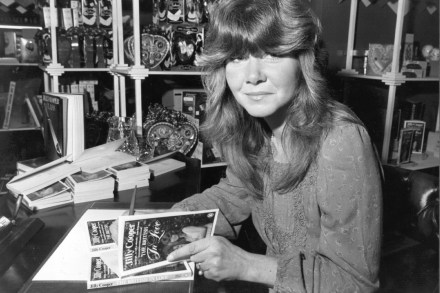
Dame Jilly Cooper, who died today, finally achieved the acceptance that she’d always deserved. She wrote numerous volumes of witty, clear-sighted journalism, London-based romances like Prudence, Bella and Octavia – and, of course, her ‘Rutshire Chronicles’ series, set in the Cotswolds and featuring the wicked homme-fatale and aristo-sexbomb Rupert Campbell Black. They were books hoovered up as much by adults as by teenage girls and – though they hid the fact – often their younger brothers.

Dylan Thomas, man of beer and brine

From our UK edition

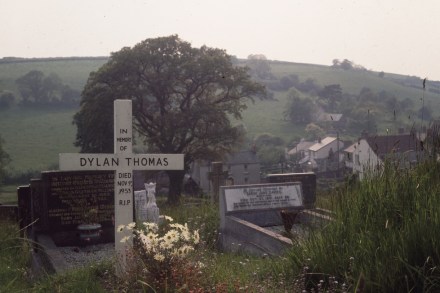
Almost anywhere you go in Cardigan Bay – that bite out of West Wales which runs a hundred miles along the Irish Sea – the spirit of Dylan Thomas seems to go with you. The Swansea-born poet may only have lived in Cardiganshire intermittently, fleeing the bohemian bedlam of Fitzrovia during the second world war, but the time he spent there produced some of his greatest poems – among them ‘The Conversation of Prayer’, ‘A Refusal to Mourn the Death, by Fire, of a Child in London’, and the beginnings of ‘Fern Hill’ – his ringing, singing recollection of a lost and longed-for childhood.

We need Brian Sewell more than ever

From our UK edition

'Rouse tempers, goad and lacerate, raise whirlwinds' were the words theatre critic Kenneth Tynan had pinned above his desk. Perhaps no writer of our times followed those instructions more obediently than the late Brian Sewell, who died ten years ago today. Called by the Guardian ‘Britain's most famous and controversial art critic’, Sewell, who wrote mainly for the Evening Standard, never seemed far away from trouble.

The greatest writer you’ve never heard of

From our UK edition

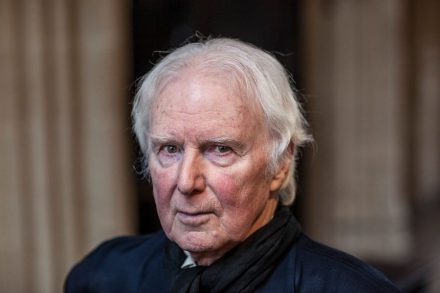
The recent commemorations surrounding the 150th anniversary of John Buchan’s birth – not least in The Spectator – have stirred up literary memories for me. Not of Buchan or his work particularly, I was a little too old for the glaring coincidences of The Thirty-Nine Steps when I read it in my twenties, but of a lifelong Buchan-admirer I knew slightly, the late author Peter Vansittart. Unlike many, Vansittart, a historical novelist among other things, took Buchan seriously, extolling ‘the romantic… the novelist, the adventurer… tolerant and humane.’ Buchan’s The Three Hostages he read every year, he said, as a kind of ritual: ‘curtains drawn, telephone unhooked, the fireside, the whisky, the old delight.

Britain needs Peter Mannion MP

From our UK edition

The current Labour government grows ever more farcical. Despite its promise to ‘tread lightly’ on people’s lives, we’ve seen war declared on farmers, private schools, pubs, humour at work and even allotment owners. This week came the news that drivers over the age of 70 must take compulsory driving tests, with a mandatory ban if they fail – presumably so that, when younger relatives start ushering them towards the ‘assisted dying’ clinic, they won’t be able to make a quick getaway. Starmer, on winning the election, promised the ‘sunlight of hope’, yet things have rarely felt gloomier. Rachel Reeves may have wept for the nation in parliament last month, but its miseries are so often of her devising. You can’t help wondering what The Thick of It would make of it all.

The death of banter and the BBC

From our UK edition

I may be the last person in the UK to have seen the 1999 film Human Traffic (rereleased last month). Justin Kerrigan’s inspired, low-budget comedy – which I watched this week – is about a group of clubbers and ecstasy-heads out for a night’s fun in Cardiff. Starring actors like John Simm, Shaun Parkes and Danny Dyer, it not only showed a reckless abandonment to hedonism now consigned to history, but also celebrates the kinds of friendships among the young which you suspect, in an age of social media, don’t even exist anymore.

Ted Heath deserves to be remembered for more than his blemishes

From our UK edition

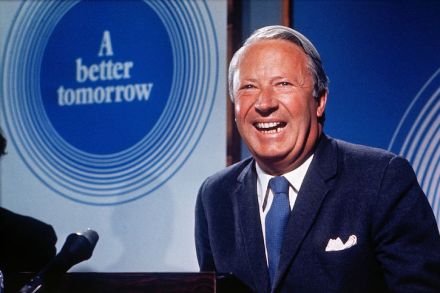
For anyone born as I was, in the seventies, Edward Heath – who died 20 years ago this week – was a frequent presence in the news, and not always for the best of reasons. He was the silver-haired, curmudgeonly ex-prime minister nursing an implacable rage against his successor Margaret Thatcher, the cabinet colleague who’d ousted, then eclipsed him. Against her monetarist policies he railed, perhaps justly, though in a way that seemed at times bitingly personal. Heath deserves more credit than he’s customarily given On global issues, with which he much concerned himself, Heath often appeared to be defending the indefensible.

Children’s TV was better in the 1970s

From our UK edition

One advantage to being born in the 1970s was the sheer abundance of good kids’ TV on offer. This was the golden age between clunky black and white offerings like Muffin the Mule, and the creeping vapidity of later shows like Teletubbies or The Care Bears. It gave us Camberwick Green, The Magic Roundabout, Captain Pugwash, Mister Benn (and the Mister Men), The Clangers, Playaway, Hector’s House, Fingerbobs, Tiswas, The Muppet Show, Ivor the Engine, and Basil Brush – not forgetting the holy trinity of Mary, Mungo and Midge. Did we hit the jackpot, or what? As my daughter, aged 11, prepares to leave her own childhood, I’ve been rewatching a few of them.

Harold Wilson was awful and brilliant

From our UK edition

Does anyone still talk about Harold Wilson, the Labour prime minister who died 30 years ago today? Though the Labour party often seems keen to forget a leader who won – almost uniquely – four out of five elections, he was, perhaps more than anyone, the prime minister who ushered in the modern age.  When he stood in the general election of 1964, he was widely billed as a moderniser. Up against Tory Alec Douglas-Home – the grouse-shooting Old Etonian Earl, who described the old age pension as ‘donations’ to the elderly and had used matchsticks to understand economics – Wilson seemed like the dawning of a new age.

Why are today’s MPs so incredibly drab?

From our UK edition

Current MPs in Britain seem, at times, a drab and depressing bunch. ‘The quality of parliamentarian,’ Ann Widdecombe said on a recent podcast, ‘is the lowest I can ever remember.’ It was not just the reluctance most sensible people feel about exposing themselves to such overwhelming and intrusive media focus, she explained, that was putting better candidates off. It was also down to the identity-driven shortlists all three main parties have embraced in the past few decades.

Are the Tories really mad enough to change their leader again?

From our UK edition

To no one's surprise, this week's election results make miserable reading for the Tories, and the attacks on Kemi Badenoch have now begun. In an article in The Spectator, William Atkinson lambasts her as ‘an active barrier to the party’s saving itself,’ adding that she ‘had her chance to prove herself and has been found wanting.’  Meanwhile, there are stories in the press of senior Tories angling for her close rival, shadow justice secretary Robert Jenrick, to take over as head of the Conservatives. Badenoch herself was prepared for this, declaring in advance that the results would be ‘challenging’ but denying they would be a comment on her leadership: ‘We had a historic defeat last year, and it’s going to take some time for us to get back on track.