Nicolás Maduro

Venezuela has become another American puppet state

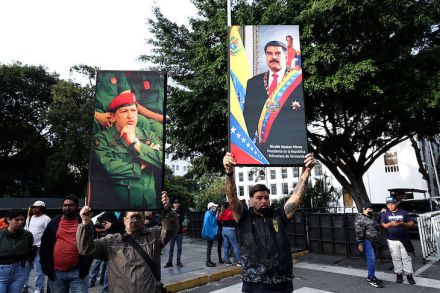
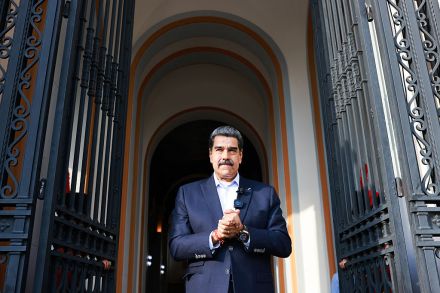
Venezuela’s deposed president, Nicolás Maduro, never enjoyed the charisma or genuine popularity of his predecessor, "El Comandante" Hugo Chávez. So all the murals, billboards and installations dotted around Caracas urging the release of the 63-year-old statesman – along with his wife Cilia Flores – from American captivity, don’t exactly feel like a grassroots effort. "Bring them home!" reads one mural, evoking the Israeli hostages kidnapped by Hamas. Meanwhile, a stopwatch installed in Caracas’s Bolivar Square counts how long it has been since the presidential couple were abducted by the US army in early January.

venezuela

Was the raid on Venezuela real?

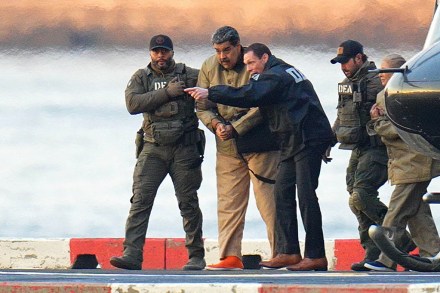
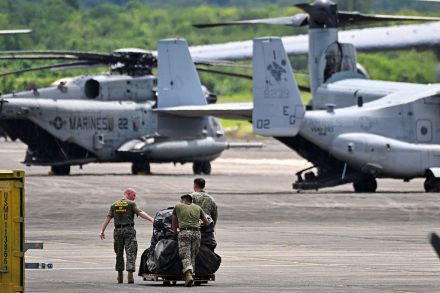
From the very start, there was something weird about Operation Absolute Resolve. The official story went something like this: after a whirlwind air attack, which included the use of suicide drones for the first time, special operators from the US Army’s renowned but shadowy SFOD-D unit (“Delta Force”) were helicoptered into the Fuerte Tiuna military complex in the south of Caracas, the capital of Venezuela. They defeated the local garrison, used “massive blowtorches” to breach heavy metal doors in a fortress-like residential site within the base, captured the President of Venezuela, Nicolás Maduro, and his wife, then spirited them back to the helicopters and flew them out to face charges in the United States.

venezuela

US special forces’ secret weapons

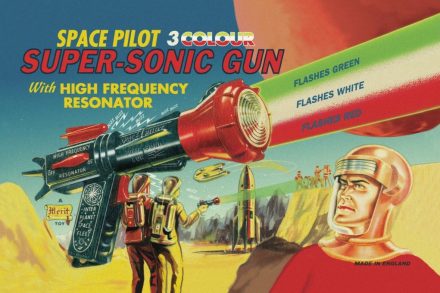
By using a sonic weapon in the mission to capture Nicolás Maduro, as Donald Trump appears to have confirmed, Delta Force commandos not only triggered a paradigm shift in warfare, but served poetic justice. When asked whether such a weapon had been used, the President replied: “It’s probably good not to talk about it.” But then added: “Nobody else has it, we have some amazing weapons that nobody knows about.” The following morning, at Davos, Trump said: “They weren’t able to fire a single shot at us. They said, ‘What happened?’ Everything was discombobulated.

sonic

Venezuela’s chavista elite is clinging on – but only just

Hugo Chávez’s eyes are everywhere across parts of Caracas, Venezuela’s capital. In stark black and white, his gaze is stamped onto government buildings, public housing blocks and murals. But if the late socialist president could truly see what has become of the movement he founded, he would likely be dismayed. Most Venezuelans have abandoned chavismo. His protégé Nicolás Maduro – who had led the government since 2013 – has been captured by the US, while many Venezuelans cheered his exit. What remains is a thin but loyal chavista base – and a leadership operating firmly in survival mode.

chavismo

The Maduro raid was a triumph of American innovation

In the early hours of Saturday, January 3, Caracas went dark. Power failed across much of the city as strikes and cyber-attacks disabled critical systems. What followed was not a conventional invasion, but one of the most audacious special forces operations in modern history. Within hours, Nicolás Maduro and his wife, Cilia Flores, had been seized from the heart of Venezuela’s largest military complex. No tanks rolled through the streets. No territory was occupied. The operation succeeded not through brute force alone, but because of something far more decisive: overwhelming American dominance of intelligence, networks, surveillance and infrastructure.

maduro american

What Trump’s coup in Venezuela means for Iran

In a city awash with visual propaganda, one mural in Caracas is especially striking for the western visitor. In it, Jesus Christ stands alongside Imam Mahdi, a prophesied messianic figure who many Muslims believe will appear with Christ during the End Times to restore peace and justice to the world. There is only one Venezuelan – the late president Hugo Chávez – among the six smaller figures on the mural. Three are Iranian, including Qasem Soleimani, commander of the Islamic Revolutionary Guard Corps elite Quds Force, killed by a US airstrike in 2020. One is an Iraqi commander killed in the same strike, and the last is Lebanese, Imad Mughniyeh, a founder of Islamic Jihad in Lebanon and number two in Hezbollah until his assassination in 2008.

Maduro’s capture is mixed news for the Kremlin

For the Kremlin, the US’s snatching of Venezuela’s President Nicolás Maduro is a humiliation with a silver lining. True, little more than a year after the precipitous fall of Syria’s Bashar al-Assad, Russia has been shown to be completely hopeless when it comes to keeping its allies in power. In Caracas, US airborne forces breezed past Russian-supplied S-300 air defense systems, which were part of a $20 billion package of maybe not-so-great Russian military equipment that Moscow sold the Venezuelans. The Kremlin has lost a strategic bridgehead in South America which it could, potentially, have used to disrupt and challenge Washington’s regional hegemony – if Moscow weren’t so committed financially and militarily to its war in Ukraine.

Immigration is foreign policy now

Invade the world, invite the world. That pithy phrase was invented in the 2000s by Steve Sailer, the right-wing writer, to mock the then bipartisan consensus which supported George W. Bush’s war on terror abroad while pushing open borders at home. Or, as Sailer also put it: "Bomb them over there and indulge them over here." Back then, such analysis was generally dismissed as the preserve of white supremacist cranks. Now, it’s fair to say that Sailerite thinking animates the spirit of the second Donald Trump administration. Disrupt the world, deport the world. That’s the order of the day. Since America’s stunning attack on Venezuela last weekend, almost everybody has had a stab at revealing Trump’s real intentions – including, naturally, Trump and his talking heads.

immigration

Nicolás Maduro’s How to Win Friends and Influence People

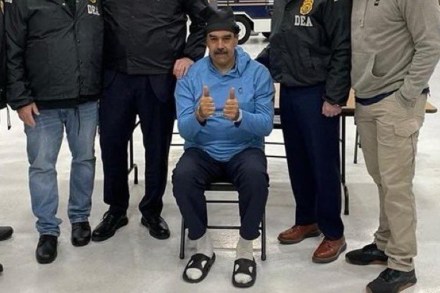
Cockburn stumbled into The Spectator’s New York office this morning afflicted with that annual January woe: the post-holiday blues. He was having a serious pout at his desk before he was chastened out of this gloom by his northern colleagues' new neighbor: Nicolás Maduro. No one had a worse Christmas season than the deposed Venezuelan presidente. First, he and his wife were woken in the middle of the night by American soldiers knocking on their door; then they were forced to move into the worst borough in New York: Brooklyn. But despite all this, Nick is holding onto a positive mental attitude. Just look at this post-capture image: Here we have a man on the verge of life in prison, and he still finds the inner strength to lift a Siskel and Ebert-certified two thumps up.

maduro

Can the ‘Donroe doctrine’ really change Venezuela?

During the early hours of Saturday January 3, an official statement from the White House, signed by President Trump, confirmed that the US had captured both President Nicolás Maduro and his wife, Cilia Flores, and taken them out of Venezuela. At 2 a.m. sharp, thunderous sounds echoed through the capital city, part of what Trump called today “an assault not seen since World War Two… one of the most stunning displays of military might and competence in American history.” It was certainly an attack unlike anything ever seen in Venezuela. Within two hours, all of Caracas looked like a massive fireball, communications were down and areas were without power.

donroe doctrine

Trump says the US has captured Venezuela’s Maduro

Donald Trump's undeclared war in Venezuela against the Marxist regime of President Nicolas Maduro has erupted into the open. Trump says the US has captured Venezuela's leader and his wife. In a statement on Truth Social, Trump wrote: The United States of America has successfully carried out a large scale strike against Venezuela and its leader, President Nicolas Maduro, who has been, along with his wife, captured and flown out of the Country. This operation was done in conjunction with U.S. Law Enforcement. Details to follow. There will be a News Conference today at 11 A.M., at Mar-a-Lago. Thank you for your attention to this matter! President DONALD J. TRUMP.

Putin moves troops into Trump’s backyard

Clandestine US military forces are not the only foreign military troops operating in Venezuela. Russia has quietly dispatched military advisors of its own to the country, moved to reinforce Venezuela’s air defenses and signaled readiness to deepen military cooperation. While Donald Trump has authorized the CIA to conduct covert ops on Venezuelan soil and just days ago approved the seizure by US troops of an oil tanker leaving Venezuela, Vladimir Putin has pledged his support for Nicolás Maduro. In a phone call with Maduro on Thursday after the tanker was captured, the Russian president “expressed solidarity with the Venezuelan people.

Why Iran needs the Maduro regime

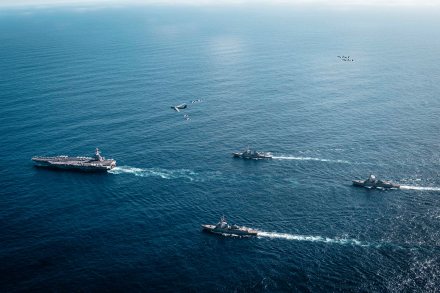
The aircraft carrier Gerald R. Ford and three warships have been sent to the Caribbean, where they are joining a dozen Navy warships already off the coast of Venezuela, in an unprecedented show of military force. President Trump and his administration are taking aim at the administration of Nicolas Maduro, over his alleged role in the drug trade which presents a national security threat to the United States. It’s clear that if the US succeeds in destabilizing and displacing President Maduro’s regime, it would be a blow to the region’s drug traffickers. What is less known is that it would also hit Iran. Venezuela has long served as a launchpad for Iranian operations to establish a foothold in South America.

How Trump could attack Venezuela

President Trump has assembled the largest naval force in the Caribbean since the Cold War. How will it be used? Is he considering an attack on Venezuela to overthrow the Maduro regime? Will he pursue the drug cartels by attacking them in Venezuela? Or will the President simply continue America’s counter-drug operations at sea? With all of these possibilities there is the hope that the Maduro regime will collapse under the pressure of America’s military might. At present, the United States is countering the flow of illegal drugs by sinking suspected drug-carrying boats off the coast of Venezuela. The effort is in its 11th week and has led to at least 21 vessels being destroyed.

Why is Trump sending an aircraft carrier to Venezuela?

Venezuela has been on tenterhooks for weeks, waiting as the United States gathers an armada of warships. The world’s largest aircraft carrier, USS Gerald R. Ford, looks likely to arrive in the Caribbean from the Mediterranean early next week to join the assortment of destroyers, frigates, amphibious assault vessels and a nuclear-powered submarine.  No one seems to know exactly what this magnificent display of American naval firepower is all about. Has it been sent to destroy the cocaine smuggling networks in Venezuela, or topple President Nicolás Maduro, the egregious leader of that poor country? Or is its purpose to remind the Latin American region that the US under Donald Trump could come in guns a-blazing whenever it wants?

Trump is being misled on Venezuela

President Trump is being misled into a regime-change war close to home. Few Americans nowadays find much to celebrate in the Iraq War or the intervention that overthrew Libya’s Muammar Gaddafi. Regimes were successfully changed both times, but what came after the dictators’ downfall was civil war, regional instability and mass-migration flows that exported many of those nations’ troubles to their neighbors. Now the Trump administration wants to do to Venezuela’s despot, Nicolás Maduro, what George W. Bush did to Saddam Hussein and Barack Obama did to Gaddafi. That will predictably do to the Americas – including the US – what the War on Terror did to the Middle East, North Africa and Europe. Why would Donald Trump make such a mistake?

venezuela

Trump, the foreign policy president?

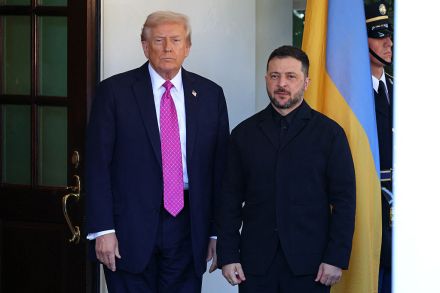
President Volodymyr Zelensky of Ukraine continued his excellent sartorial adventure at the White House, appearing in an elegantly cut black suit and shirt on Friday as he met with President Donald Trump in the Cabinet Room. But while they may have helped avoid any emanations of wrath from his host, his habiliments did not appear to prompt Trump to approve the dispatch of Tomahawk missiles to Kyiv, a coveted item indeed. “We’d much rather not need Tomahawks,” Trump said. “We’d much rather get the war over. It could mean a big escalation. It could mean a lot of bad things could happen.”  Back to square one, in other words. In August, Trump had claimed that his summit meeting with President Vladimir Putin would lead to a breakthrough. It never happened.

Trump
Venezuela

Schrödinger’s covert action

While much of the pushback from the right wing to Donald Trump’s international hawkishness has come from voices focused on the Middle East, and feared potential for wider wars prompted by support for Israel, the actual test of a break within the Republican coalition on foreign policy disputes could come over the president’s stepped up focus on Venezuela.The most recent development, with Trump issuing a rare public acknowledgement that he has authorized covert CIA actions on land. “I authorized for two reasons, really,” he explained this week. “Number one, they have emptied their prisons into the United States of America. And the other thing are drugs, we have a lot of drugs coming in from Venezuela and a lot of the Venezuelan drugs come in through the sea.

Machado deserves the Nobel

I was fourteen when I clambered onto a boulder along Caracas’s Francisco Fajardo highway – what people called Piedra de la Libertad, the Liberty Rock – and spoke out about a government that had just ignored a referendum. “Tyranny” was more than a buzzword. To my astonishment, a woman I didn’t yet know – María Corina – helped me climb it. With her megaphone, I spoke of unifying, as a sea of flags from rival parties fluttered before me.Many dismissed her then. A woman who once called Chávez a “thief” to his face – too brash, too ideological, too direct for the choreography of Venezuelan politics. The old hands said she could never reach the people; she lacked the soothing tones, the feigned humility, the convenient ambiguity that defined our politicians.

Maria Corina Machado

Shutdown siestas

Nothing beats a Jet2 holiday Washington is ten days into the government shutdown, and the Republicans and Democrats remain at loggerheads. Members are accosting each other in the corridors of power – in front of a gawking media, naturally – and challenging their adversaries to debate on TV shows. The impression our leaders are trying to give us is that they are working hard to reach a solution to the impasse. The same can’t be said for admin officials: Cockburn understands a large swathe have taken the opportunity to head off on vacation – and are doing their best to ensure they don’t post any pictures. (As ever, if you’ve spotted a secretary soaking in the sunshine, let Cockburn know at cockburn@thespectator.com.

Shutdown