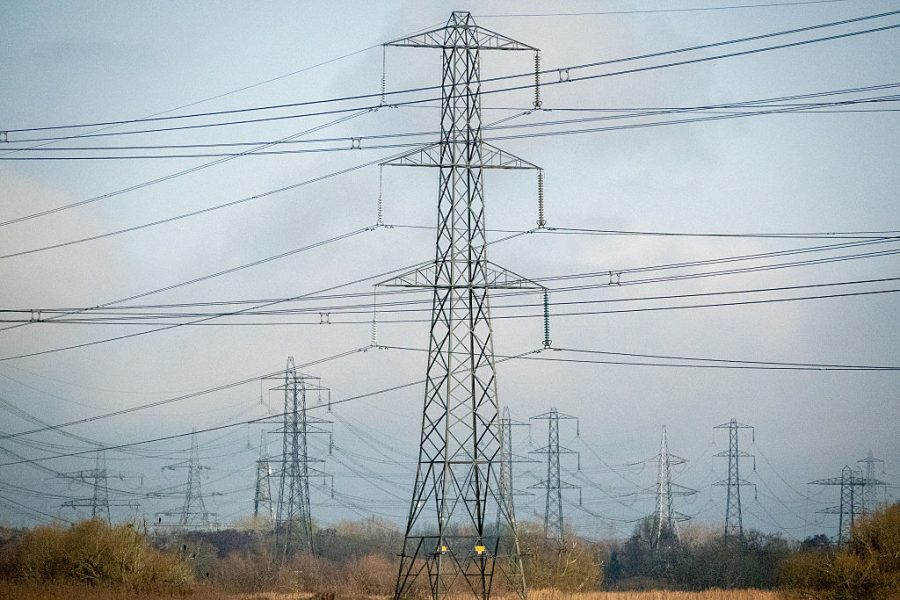
Just how close did Britain’s electricity grid come to collapse on 23 June? Allegations began circulating soon after that date of a cover-up by the National Energy Systems Operator (NESO). While external observers could see that something abnormal was happening, with the frequency of the grid falling below operational limits for several hours, NESO quickly denied that anything was wrong. They claimed that the grid was ‘not at risk’, an assertion which was repeated by energy minister Michael Shanks in the Commons.
Shadow energy secretary Claire Coutinho, meanwhile, said she had been contacted by ‘multiple whistleblowers’ within NESO, claiming that ‘the corporate affairs team had interfered with operational decisions’ and that ‘operational decisions are being recorded in live documents with no audit trail’. In other words, something rotten was happening in the running of the national grid and there was a deliberate attempt to keep it from the public.
NESO itself commissioned a report into the events of 23 June, to be conducted by the legal firm Eversheds Sutherland. The report has now been published. While it does not support some of the whistleblowers’ claims, it does not make comfortable reading for the government, especially regarding its obsessive drive to decarbonise the grid by 2030.
Few people appreciate the complexity involved in running an electricity grid
Eversheds says it can find no evidence that the corporate affairs team interfered in the running of the grid nor that documents were changed in order to prevent anyone from finding out how close the country had come to a major blackout. On the other hand, it found that some Microsoft Word-based documents ‘lack version control’ – i.e., they don’t record whether they have been changed, nor what a previous version said. We can’t really know, then, whether any of these documents were changed.
Nor could it find any evidence that NESO’s corporate affairs team had interfered in operational decisions. What it did find is that the corporate affairs team don’t really understand what went on in the Electricity National Control Centre (ENCC), where 130 staff work around the clock to balance supply and demand, second by second.
Indeed, few people, when they switch on a kettle, appreciate the complexity involved in running an electricity grid. Too much power relative to demand and the frequency of the electricity in the system can rise above safe limits; too little power and it can fall. While there is a narrow acceptable margin of error, if the frequency of the grid wanders outside the safe limits on either side, it can trip equipment, leading to a chain-reaction and collapse of the entire grid.
This is what happened in Spain in April last year when almost the entire country was without power for 10 hours. The Eversheds Report finds that people working in the ENCC think that NESO’s press office was wrong to have stated that the grid was ‘not at risk’, when frequency had fallen below acceptable limits for several hours – a result of high temperatures increasing demand for air conditioning at the same time as solar plants were forced to shut down and the system suffered an unexpected reversal of the interconnector through which Britain buys and sells electricity to and from France. Given that Shanks said much the same thing in the Commons – he said that the events did not amount to ‘any kind of emergency situation’ – will he now come back to the Commons and confess to having inadvertently misled the House?
More worryingly, the Eversheds Report finds that many people whose job it is to balance the grid are seriously worried of the effect of the target, set by former energy secretary Ed Miliband, to decarbonise it by 2030:
There are high levels of stress and concern within the ENCC as whole, as to the current state of the electricity industry generally, as well as specifically in relation to the longer-term ability of the ENCC to keep the system balanced, given the increasing demands being placed on the electricity networks and the challenges of the net zero transition.
It adds that the grid had previously been easier to manage when it was based around a small number of large and reliable coal and gas-fired power stations than it is now that it is based around intermittent and less-flexible renewables.
I have long thought that a Spanish-style meltdown could totally change the debate over net zero, coalescing growing public scepticism. It seems that we came perilously close to such an event on 23 June. It seems highly likely, if not inevitable, that another time we will not be so lucky.



Comments