

Once again the question occurs: ‘Why do they want it?’ Keir Starmer held a very important role in the legal profession before entering parliament, but for some reason he desperately wanted to be even more political. As soon as he became an MP it was plain that he was so keen to get the top job that he was even willing to go through the Jeremy Corbyn period – immiserating his reputation and presumably himself by spending years having to pretend that Corbyn was a suitable candidate for prime minister. Serving in Corbyn’s shadow cabinet was not something that any decent person would do – leading some of us to conclude either that Starmer was not a decent person or that he had such a surfeit of ambition it didn’t matter because it was a means to an end.
Now that Starmer has reached that end, and indeed the end of that end, the question returns: why did he want it? Why do any of them want it?
Before he became prime minister, David Cameron was reportedly asked why he wanted the top job. His reply: ‘Because I’d be good at it.’ Which was certainly an arrogant reason, but one not entirely without merit. If Cameron was vaguely visionless he was also at least vaguely competent. But what of all those who have followed him? Why did Theresa May want to be prime minister? She had a torrid task to perform – delivering a Brexit she didn’t believe in – and utterly failed at her task. So what was she there for? Why all the torture and intrigue to get the top job? To do what?
He’ll glide into No. 10 as Starmer did, without any interrogation over what he plans to do with the prize he seeks
Boris Johnson seems to have had a sense of destiny of some kind – albeit a Churchillian sense as related by P.G. Wodehouse. Once the Ukraine conflict started you could see that he thought he had found his moment of meaning. But in the end he fell for silly reasons. Perhaps because in the first and final analysis he was always a person in whom silliness would out.
We can pass over the peculiar case of Liz Truss. But Rishi Sunak brought the old thought to mind. He was not a bad chancellor, and he seemed to be a good man. But why did he think he should be prime minister? What were the qualities and the mission that he saw in himself? What was the deep urge of course-correction for the country that he imagined he alone would be able to deliver?
The same goes for Starmer. Why did he spend all those years machinating his way into parliament and the shadow cabinet to become leader of the opposition and then prime minister? The ‘achievements’ he listed in front of No. 10 during his resignation speech were as paltry as those of Sunak, Johnson, Truss and May before him.
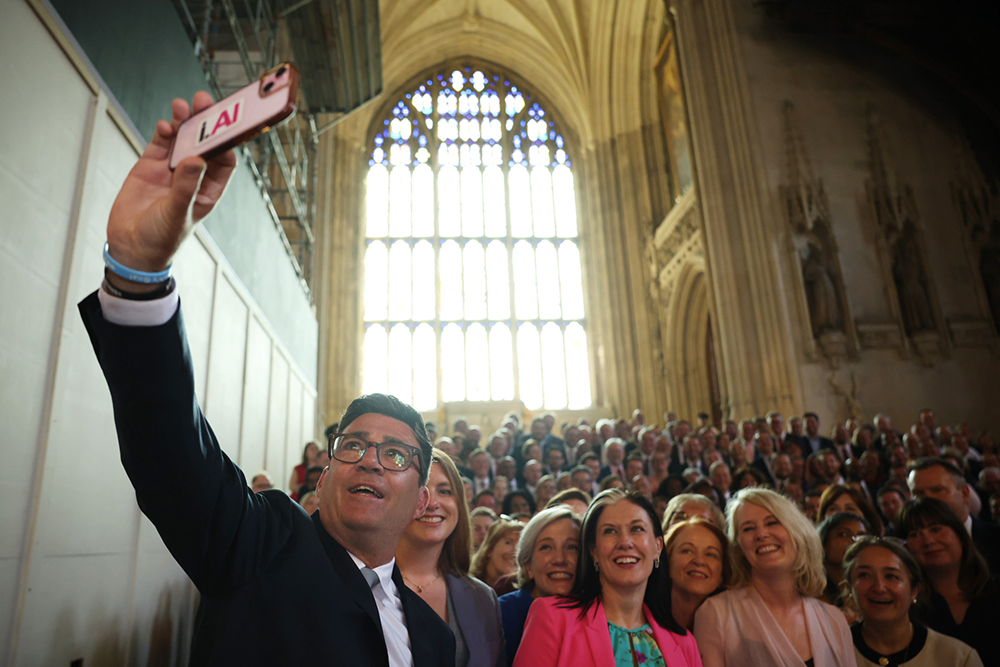
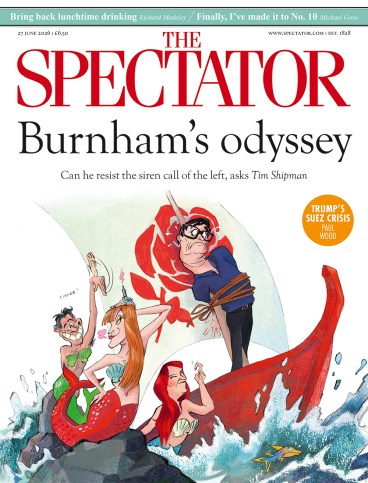
Which brings me to Andy Burnham. It seems that he will glide into No. 10 as Starmer did, without any real interrogation from the media over what he plans to do with the prize he seeks. So why is he doing it? At least he had the decency to sit out the Corbyn years in Manchester. But now he has managed to come back to parliament, and presumably seize the leadership of the Labour party, the following questions must be asked with some urgency. Why does he want to be prime minister? And what does he intend to do with the prize?
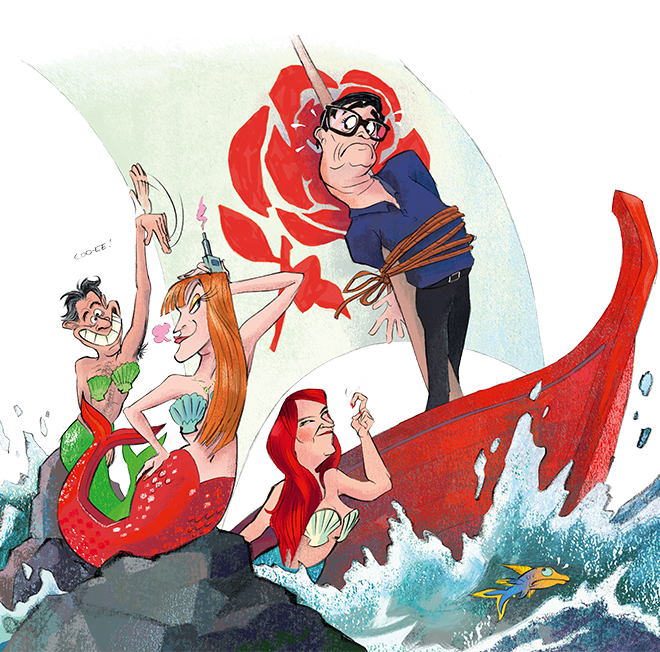
One reason why we have got here is that we have allowed our politicians to speak in such generalities for a long time. Our media seems to be content to receive answers from them along the lines of: ‘I want a fairer, kinder Britain.’ But what do such words mean? Dig beneath the generalities that a Starmer or a Burnham will utter and they flounder.
With his animalistic, savannah-like instinct, Donald Trump put his finger on this weakness this week, not least by pointing to some of the deep problems Britain faces.
The President’s comments on Starmer pointed to several of the issues that the Labour government failed to address. One of Trump’s personal bugbears is why the British government imagines it is going to lead the world by example in achieving net zero and shut down all exploration and extraction in the North Sea. Why does Britain buy oil and gas from Norway when Norway is plumbing precisely the same reserves?
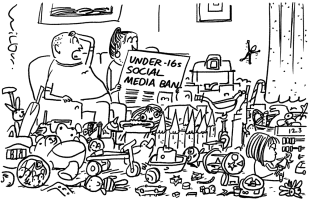
An ambition to make Britain rich would be a noble endeavour – the sort of thing that would justify someone roaring to political power. But that doesn’t seem to be on anyone’s agenda. A little bit of tinkering around social-media rules seems to be the most our politicians aspire to.
Addressing the suppurating and growing societal sores caused by mass immigration would be a noble thing to do with power. But even Nigel Farage has balked at the measures necessary to get expensive, unemployed illegal migrants out of Britain.
Bringing down the welfare bill and getting the scandalously high number of unemployed off benefits and back into work would be a task worthy of an ambitious person. But for that there needs to be some grit. And there needs to be a desire to tell the country that ‘fairness’ and ‘kindness’ apply to everyone – not just the people who complain loudest. For instance, it would be nice if someone explained how they propose to make the tax burden fair or kind for people who pay their taxes and get next to nothing in return – other than being demonised by left-wing campaigners who pretend that the people who actually pay their taxes should just pay more.
It is often said that the one thing that unites all 650 members of the House of Commons is the glimmer of hope that one day the country will call for them. By now enough MPs have had a crack at the top job that perhaps we should ask: ‘If you think the nation is calling – what exactly makes you think you are the person to answer?’



Comments