
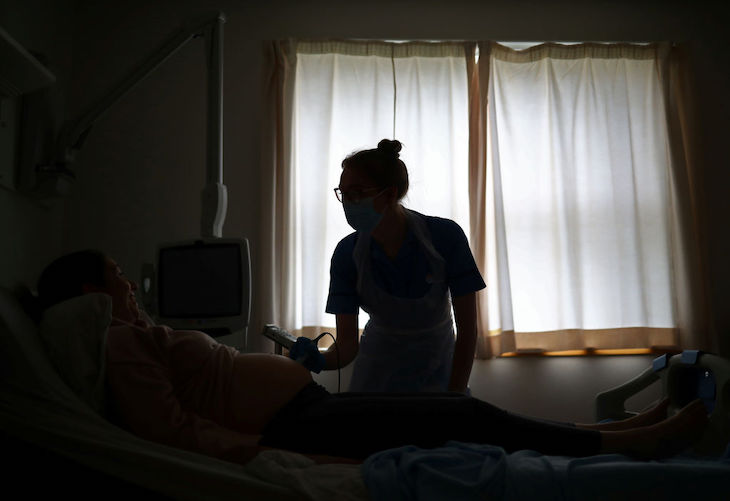
By the end of this year, Britain will have had (at least) seven prime ministers in the past decade – and more than 700 recommendations on how to stop the ongoing scandal in NHS maternity services. None of which have – as yet – been implemented. The Ockenden review into maternity services at Nottingham University Hospitals NHS Trust, which was published on Wednesday, adds nearly 100 more.
There are many harrowing stories in the report. But one of the most telling is about what was going on above the wards
Its findings are appalling and yet familiar, which Donna Ockenden, a senior midwife, knows better than most, given this is the third review she has published on NHS hospitals failing mothers and babies. And that is the most appalling thing about the NHS maternity scandal: that it is so widespread, so widely-acknowledged, and apparently so difficult to stop.
When Health Secretary James Murray gave a statement in the Commons yesterday afternoon, he was anxious to suggest – as every one of his predecessors who has had to respond to one of these reports has been – that the government really was going to do something to stop more families suffering. He told MPs:
‘I know that some people may want me to accept all the review’s recommendations today, but in the past too many recommendations have been accepted and then have sat on a shelf gathering dust, and we have seen more deaths and more suffering.
‘I do not want to let down the families I met in Nottingham, or bereaved parents anywhere else in the country. I want to use the national maternity and neonatal taskforce, which I chair, to create a comprehensive action plan to be published by the end of this year that will address all the national-level recommendations from this review and others.’
The phrase ‘by the end of this year’ sounded particularly jarring given we are about to get the next prime minister and possibly yet another health secretary.
Andy Burnham is, to be fair to him, someone who has made campaigning on these scandals one of his major themes as a politician – though of course campaigning is very different to governing. But the question that he and whoever is chairing the maternity and neonatal taskforce by the end of the year will have to answer now is this: how can government and the NHS move from accepting that there is a scandal to being able to do anything about it? Why have there not been such significant changes since the Morecambe Bay report was published by Bill Kirkup in 2015 that Ockenden’s report could point to real progress in the NHS today?
There are many harrowing stories in the report. But one of the most powerful and telling is about what was going on above the wards, in the senior levels of the Nottingham University Hospitals Trust, and in the structures that are supposed to hold the NHS and clinicians accountable.
Regulators, like the General Medical Council and the Nursing and Midwifery Council, both failed. The review reported that ‘the professional voice was believed over and above that of the families’.
The Trust’s board failed: the review identified ‘significant issues not referred to or discussed by the board, board members with insufficient curiosity to challenge’. Leaders were aware of ‘challenges and weaknesses evident throughout our review’ as far back as 2015, and, most damningly: ‘Staff all agree that senior and executive managers have either ignored or have been unable to respond to the concerns being raised over many years.’
What we have, both in Westminster and in the NHS, is a culture of leadership and governance that sees problems, but feels it cannot fix them. Ockenden spotted that the Board had commissioned reviews which it then did nothing about. This is a familiar experience in Westminster too. So long as a Taskforce is meeting, or someone else is writing a review, there is enough of a sensation of motion for those politicians and board members to feel they are doing something about a problem – even though they know it’s not actually tackling it.
With British politics now in perpetual motion, there is even less of an opportunity for anyone to sit down at their desk and have the time to stop Donna Ockenden from having years more reviews to write.






Comments