Andy burnham

Hope again: do you buy Burnham’s big pitch?

From our UK edition

22 min listen

Andy Burnham has used his Labour conference speech to set out his clearest vision yet for the country and it was a strikingly ambitious one. Noa Hoffman is joined in Liverpool by Tim Shipman and Michael Simmons to unpack a speech that ranged from a new National Care Service and reform of the pension triple lock to electoral reform, water and Britain’s future relationship with the European Union. How radical is Burnham’s programme in practice and is the ambition matched in the detail? And what was missing from the speech? Produced by Patrick Gibbons.
Can Labour really reindustrialise Britain?

From our UK edition

15 min listen

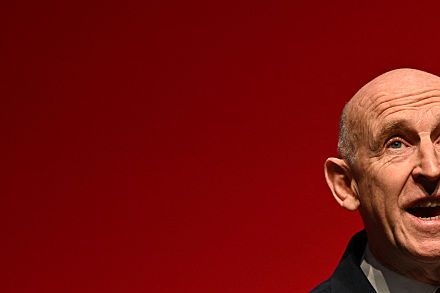
Noa Hoffman is joined from Labour conference in Liverpool by James Heale and economics editor Michael Simmons to discuss Chancellor John Healey’s keynote speech. They discuss his attempt to sell fiscal discipline in distinctly Labour language, whether the government’s reindustrialisation plans add up and what the speech tells us about the economic argument Andy Burnham wants to make. Plus, as the bars begin to swell on day two of the conference, can Labour's united front continue for Shabana Mahmood's speech? Produced by Patrick Gibbons.
Sunday shows round-up: Burnham pushes for a national care service

From our UK edition

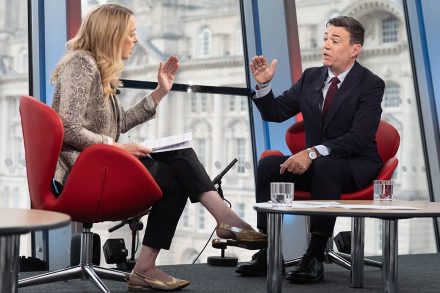
Andy Burnham: ‘I am talking about a system that works on NHS principles’ Speaking to the BBC from Labour's conference this morning, the Prime Minister proposed a free national care service, and hinted that he would outline some sort of tax rise to pay for it at the next general election. Andy Burnham said he would be the one to ‘grasp the nettle’ on social care reform, even if it meant spending ‘political capital’. The PM argued that the care and health systems ‘just don’t connect’, leaving thousands of people arriving in A&E every day, the most expensive part of the system. He said he would propose a national care service that works on NHS principles and is ‘universal’.

Burnham delays social care reform this parliament

From our UK edition

The Labour Party conference gets underway in Liverpool today, with Andy Burnham giving his big sit-down interview to Laura Kuenssberg of the BBC. The key exchange focused on social care: a topic about which the Prime Minister has spoken constantly in recent weeks. His father, Roy, died a fortnight ago, suffering from Alzheimer’s, and Burnham spoke with feeling about his own family’s personal struggles with care. His criticisms of the existing system will strike a chord with many. ‘Social cost in England is as unfair as healthcare cost in America,’ he said. ‘There is a cost, people are paying care charges now.’ The Prime Minister seems to have a clear sense of what he believes is the promised land Few would defend the existing system as either functional or fair.

Tactical voting is Burnham’s secret weapon

From our UK edition

For Andy Burnham the biggest challenge is to avoid going down like Gordon Brown, who passed up the chance of calling an election in autumn 2007, when he was newly in office and public opinion of him was still quite high, only to crash to defeat two and a half years later. The memory of that time, when Burnham himself was health secretary, has no doubt fed into the reports that Downing Street advisers are considering the case for an election next spring. Has the moment of the progressive alliance finally arrived? The bad news for Burnham is that the decision is even more difficult for him than it was for Brown. He would be giving up a massive majority, and for what? Almost no one thinks that he can win any kind of majority.

Burnham wins over Trump – but can it last?

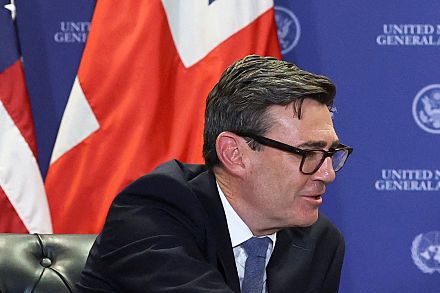
Britain’s new Prime Minister Andy Burnham yesterday cleared his first major diplomatic hurdle as his meeting with Donald Trump in Manhattan passed without serious incident. During a 30-minute encounter on the sidelines of the United Nations General Assembly, the President bestowed on Burnham two of his highest compliments, calling him a “natural businessman” and a “great prime minister.” Trump dialed up the niceties further by describing UK-US relations as “more up now than they were with your last prime minister.” Indicating that Burnham had impressed him personally behind closed doors, the President explained that “based on my relationship with your prime minister Andy, I think that we’re doing very well.

Is Burnham ready to talk about war?

From our UK edition

16 min listen

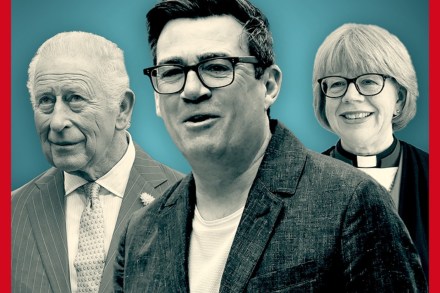
Military and intelligence chiefs across Europe are sounding increasingly stark warnings about the threat posed by Russia, from cyber attacks and sabotage to drones and hybrid warfare. But is Britain taking the danger seriously enough – and are the armed forces actually ready for what might come next? Patrick Gibbons is joined by Tim Shipman and Noa Hoffman to discuss Britain’s military preparedness, Andy Burnham’s approach to foreign policy and what to expect when the Prime Minister comes face-to-face with Donald Trump in New York next week. Produced by Patrick Gibbons.
Is Burnham ready to talk about war?

Where are my reparations?

The natural coalition of rural people which was forged 25 years ago, before the hunting ban, is forming once more. On Monday in Westminster, we gathered under the Countryside Alliance banner to hear David Blunkett, David Cameron and others set out the issues. Poor Andy Burnham had inadvertently stoked our feelings by joking feebly about how he hardly ever visits farms and considers Defra the least important government department (would it were so!). There are strong current individual issues – the proposed trail-hunting ban being the most egregious and the inheritance taxes for farms the most economically damaging – but the sheer number of government-inspired rural harms is astonishing. The Alliance counts 27 of them.

Why can’t the Financial Times correctly name peers?

From our UK edition

The present Lord Howard de Walden’s first name is not Howard. It’s Peter, for the 11th Baron is the film-maker Peter Czernin. In 2004, the barony of Howard de Walden was called out of abeyance in favour of the 9th Baron’s eldest daughter, who married Joseph Czernin. All this spoils it for the Financial Times, which refers to peers according to this pattern: Lord Peter Mandelson. That is not English. Lord Peter Mandelson would be the son of a duke or marquess, like Lord Peter Wimsey, the younger son of the Duke of Denver. My husband has been driven to incoherent rage by wireless announcers talking of Lady Victoria Starmer, the wife of the former PM, and making things worse by referring to her as the First Lady. In America the First Lady is the wife of the head of state.

Which prime ministers have sporting achievements?

From our UK edition

Premier sports Andy Burnham took part in the Great North Run, a half marathon, finishing in 1 hour 57 minutes. Some other prime ministers who competed in office: – Edward Heath captained his sailing boat, Morning Cloud, on the 600-mile Fastnet Yacht Race, finishing in 14th place but helping Great Britain to regain the Admiral’s Cup. – Alec Douglas-Home took part in charity cricket matches while PM, having played first-class cricket for Oxford University and Middlesex in his younger days. – Keir Starmer continued to put in the occasional match for a five-a-side football team in Kentish Town. Party favours Reform received two record-breaking donations totalling £72 million in 48 hours.

Holy Smoke: Catholic Burnham barred – should the law change?

From our UK edition

15 min listen

Andy Burnham has announced his intention to change a law which bars him from advising the King on appointments to the Church of England. The Victorian-era law explicitly bars Catholics like Burnham, as well as Jews – but doesn't prevent those of other Christian denominations, other faiths – like Hindu Rishi Sunak, or atheists like Keir Starmer. So, if the law is going to be changed to address this anomaly, should it allow all Prime Ministers of any faith to provide advice – or should all non-Anglicans be barred? And what does Burnham's interest in the power tell us about his relationship with his faith – and his approach to the job? The Spectator's James Heale and William Moore join Damian Thompson to discuss. This was originally broadcast on the Spectator's Holy Smoke channel.

Holy Smoke: Catholic Burnham barred – should the law change?

Catholic Burnham barred: should the law change?

From our UK edition

15 min listen

Andy Burnham has announced his intention to change a law which bars him from advising the King on appointments to the Church of England. The Victorian-era law explicitly bars Catholics like Burnham, as well as Jews – but doesn't prevent those of other Christian denominations, other faiths – like Hindu Rishi Sunak, or atheists like Keir Starmer. So, if the law is going to be changed to address this anomaly, should it allow all Prime Ministers of any faith to provide advice – or should all non-Anglicans be barred? And what does Burnham's interest in the power tell us about his relationship with his faith – and his approach to the job? The Spectator's James Heale and William Moore join Damian Thompson to discuss. Produced by Patrick Gibbons.

Catholic Burnham barred: should the law change?

Meet the most powerful woman in Britain

From our UK edition

Some years ago Antonia Romeo, now the Cabinet Secretary, was stuck in a boring meeting about civil service reform. She regarded the plan as inadequate to create the leaner, meaner machine she hoped to see. ‘Basically you’ve given me a Ford, when I’m more of a Ferrari girl.’ It was a moment which summed up the official who is now accruing arguably more power than any of her predecessors. Romeo is glamorous, suspiciously racy and likes to move fast towards her goals. When Andy Burnham became Prime Minister she secured a seat in the Prime Minister’s outer office, the first time a cabinet secretary has ever sat there. She has written her own job description (signed off by Keir Starmer and now Burnham).

Britain Israel

Britain’s sanctions against Israel will backfire

The historian Niall Ferguson, sometimes of this parish, said: “The law of unintended consequences is the only real law of history.” The new British Prime Minister Andy Burnham’s government is getting a lesson in that with its new sanctions on goods from Israeli settlements. The sanctions are meant to help the cause of a Palestinian state but may have the opposite effect. As an added bonus, they could hit British exports to the US. Ben-Gvir demanded international sanctions against Britain as long as we remain in possession of territory ‘violently stolen from the Argentine people’ The “comprehensive reset” of British policy towards Israel comes in the middle of a rancorous Israeli general election campaign.

Why Britain’s West Bank sanctions are savvy politics

British PM Andy Burnham’s move to impose sanctions on West Bank settlements is politically savvy – but not because it will achieve his purported aim of advancing a two-state solution. For one thing, the impact in Israel will be minimal. Ed Miliband was clear that the new sanctions regime will target those “providing services such as construction or financing for Israeli settlements,” while trade within the Green Line will continue. Yet the principal providers of such services to the settlements are Israeli banks, major companies and the Israeli government itself. Short of Miliband sanctioning them, the policy is unlikely to achieve much. The economies of the West Bank and Green Line Israel are completely intertwined.

west bank sanctions

Why is there so little protest about Russia’s brutality toward Ukraine?

Reporting of the war in Ukraine suffers from the tendency of journalism to exaggerate a trend. The most recent one has been Ukraine’s success in drone attacks on key energy and strategic sites deep inside Russia. These are indeed innovative and prodigious. The Russian summer offensive has also failed to break through. This leaves too little room, however, to cover fully the dramatically worsening plight of Ukrainian civilians. Olga Rudenko, editor-in-chief of the Kyiv Independent, said this week: “Even if you think you’re used to everything, you are not.” Russia has switched tactics from big, one-off aerial bombardments to almost continuous drones. In Kyiv one day last week, the air-raid sirens signaled 13 different attacks.

ukraine

Mark Carney is the true King of the North

From our UK edition

Mark Carney never much liked Brexit. As the Bank of England’s governor during the 2016 referendum, Carney was limited in how political he could be but he still managed to brand a Leave vote the ‘biggest domestic risk to financial stability’ Britain faced, one that would leave us relying on the ‘kindness of strangers’. Since returning to Canada as its Prime Minister, he has not become more complimentary. The referendum, he said in May, had been a ‘dangerous bluff’; the UK was still trying to undo what people didn’t think they were voting for, but which they ended up having. Yet for someone so antipathetic, Carney is performing a remarkable Brexiteer tribute act.

Augustus’s plans for poverty

From our UK edition

A Mr A.M. Burnham has introduced a clear blueprint and legislative goals intended to lift hundreds of thousands of children out of hardship. One can hardly wait – but for the record, in ad 101 the emperor Trajan reintroduced a system invented by Augustus, of alimenta (‘maintenance, means of livelihood’) for poor children. Perhaps this could hold the fort while Burnham’s legislation for the blueprint, or vice versa, is clarified. Alimenta worked as follows. The imperial treasury offered loans to farmers against the security of a proportion of their land. These loans were not repayable, but interest on them was charged, though at a lower than usual rate. That interest was diverted into the local community to support poor children.

Time’s up for Burnham’s happy thoughts

From our UK edition

Kemi Badenoch, headlines my newspaper, ‘prepares Tories for early general election’ with her big reshuffle this week. I do not myself think an early election is the probability. It would be hugely risky. Labour would certainly lose scores of seats to Reform; and the requirement for Andy Burnham to produce an actual manifesto rather than – as at present – a distracting sprinkle of happy thoughts would make his government an easy target for a dangerous Conservative ‘They’re coming for your money’ campaign. Reform are still strong. Better, perhaps, to wait until (as I expect) Nigel Farage loses his mojo, the Greens fail to recover theirs, and Britain begins a slow return to something like the two-party system that first-past-the-post tends to encourage.

Now we need to see your economic plans, Prime Minister

From our UK edition

Keir Starmer once promised to ‘tread more lightly’ on voters’ lives. Yet he presided over a government that raised taxes faster than at any point since 1970. The bill has risen by £74.6 billion since the 2024 general election and there are still three years left of this parliament. Upon entering Downing Street, Andy Burnham promised to do politics differently and ‘bring back hope’. Yet no amount of social media spin can wish away the constraints of the market. The new prime minister has so far avoided Liz Truss’s fate of a bond market panic but parliament has been in recess and Burnham’s plans remain vague. When MPs return on 1 September, he will face scrutiny; the countdown to John Healey’s first Budget, on 28 October, has begun.