Hollywood

The movie industry is broken

A massive sinkhole recently opened up on Sunset Boulevard at Holloway Drive, just down the street from the heart of Hollywood itself. It’s a fitting metaphor for the financial and creative sinkhole that’s busy hollowing out the entertainment industry. “There’s sheer panic in the ranks. And it’s only going to get worse,” a longtime representative at a major talent agency told me. “We talk about it on an internal Signal chat at work. We can’t even believe how bad things are.” A lot is going wrong all at once, and a huge transition is not-so-quietly under way “The meteor has hit and the dinosaurs don’t know it yet,” according to a director and producer who has spent two decades making movies in Hollywood.
hollywood

The cinema is back

From our UK edition

The hottest car I ever owned was a 1982 Volkswagen Scirocco GTI in metallic dark green. I once drove it overnight from London to Tuscany with a blind date who never spoke to me again, but that’s another story. My point is that VW built my generation’s chariots of fire and some of us feel more sadness than schadenfreude at what the Telegraph calls ‘the downfall of a German giant’, as the flagship of its nation’s industrial armada contends with multiple impacts of geopolitical and technological change. But I’d say the image of VW ‘speeding towards a precipice as the Chinese move in’ is more than a touch overhyped. It’s a narrative of our era that the West collectively must always challenge.

A century of movie magic: how cinema has changed the way we think

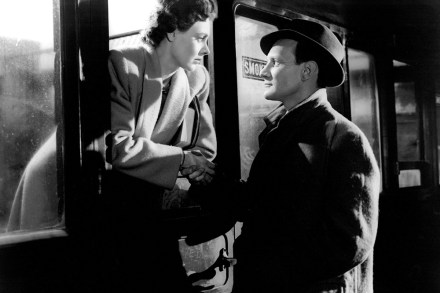
The making of films is a process often on an industrial scale, and among the thousands of professionals contributing there are dozens whose practice might constitute a solid history of the artform. The great stars and directors are the usual routes into the history of film; but the roles of studio executives, producers, costume designers (Edith Head! Givenchy!), composers of scores, cinematographers and editors would make compelling narratives, too. A history of cinema audiences could also be interesting – ranging from those who are supposed to have fled in terror as a filmed express train came hurtling towards them in the 1890s; to the yobs who slashed the seats in cinemas showing 1950s rock’n’roll movies (but why?

movie movies

What Odysseus taught me about spying

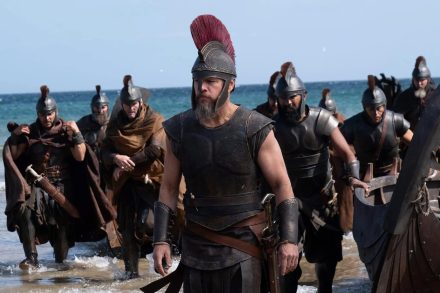
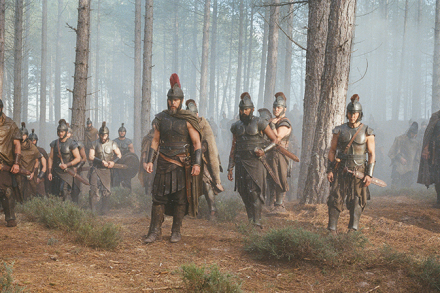
Homer’s Odyssey is a sweeping, layered epic. It reflects the legacy of an oral tradition of singers and storytellers from across the Greek-speaking world, who weaved together elements of myth and half-remembered idealized histories. Its hero, Odysseus, is among the most enduring and complicated figures in literature. Retellings of his journey home to Ithaca after the fall of Troy cast him both as noble hero and manipulative anti-hero. His latest incarnation will soon journey across the screen in Christopher Nolan’s film version, which is released Friday. To navigate this world, 'cunning' Odysseus displays the characteristics of a good intelligence officer I feel a connection to Odysseus. Like him, I have lied, deceived, and manipulated.

odysseus

Buckle up for the smack-downs: the media behemoth that is modern wrestling

From our UK edition

For British readers of a certain age, wrestling occupies a very particular place in the collective memory. Long before the triumph of World Wrestling Entertainment (WWE), long before the pyrotechnics and the Trump-adjacent billionaire promoters, there were those long-lost innocent Saturday afternoons watching World of Sport with your nan, as men with cauliflower ears, wearing improbable hand-stitched trunks, wrestled in grim, determined, municipal fashion in local leisure centres and town halls up and down the land. If your last points of wrestling reference are those great monoliths Big Daddy and Giant Haystacks lumbering around like coal-fired power stations, today’s wrestling world is almost unrecognisable.

Life is a Cabaret: inside Liza Minnelli’s memoir

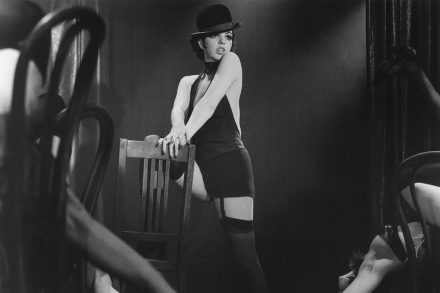
Though she may well have been “one of the world’s most celebrated, beloved and iconic performers,” who’d have wanted Judy Garland as a mother? When not remaining in bed “for days at a time, heavily drugged and in a deep state of depression,” she was, according to her daughter Liza Minnelli, slashing her neck with a razor blade because “she loved playing the victim… Hospitals are a way of life for her.” Judy died of a (possibly accidental) drugs overdose in 1969, aged 47. At the Frank E. Campbell Funeral Chapel on the Upper East Side, her corpse was prepared for public view by the very same make-up expert who’d worked years previously on The Wizard of Oz. Twenty thousand people filed past the open coffin – more than had come to gawp at Valentino.

liza minnelli

Harry Potter is for infantilized millennials

Nostalgia is often seen as a positive emotion, but the word actually derives from the Greek nostos, meaning "homecoming," and algos, meaning "pain." Nostalgia is really a type of homesickness, an ache for something lost. As audiences watch the new trailer for the HBO Harry Potter television series, the algos may hit pretty hard: those tantalizing two minutes are the reminder we need that you can’t catch lightning in a bottle twice.  The first thing you notice is simply how bad everything looks. Shows seem to have an obsession nowadays with making everything as dark as possible, so that you are constantly trying to adjust the light settings of your screen to see what’s actually happening.

harry potter

Marilyn Monroe, poetic muse

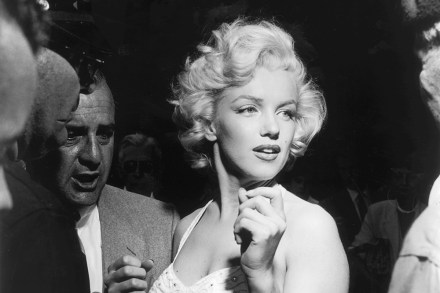
The year 1959 was a particularly productive but especially depressing year for Sylvia Plath. She toured the length of America, attended a series of stimulating literary seminars and wrote some of her most beloved verse. While outwardly active and energetic, her diary reveals she was struggling all the time to sustain her few fleeting fits of happiness. One entry in October describes a vivid dream she had, in which Marilyn Monroe appeared as a kind of fairy godmother. Monroe gave Plath a manicure and promised her a “new, flowering life,” before wishing her well and inviting the troubled poet over for Christmas. The image of Monroe clearly consoled her. Plath was hardly the only poet to be mesmerized by Monroe’s outward magnificence and fascinated by her perturbing private tragedies.

Coppola, Lucas and Spielberg’s outsized impact on 1970s cinema

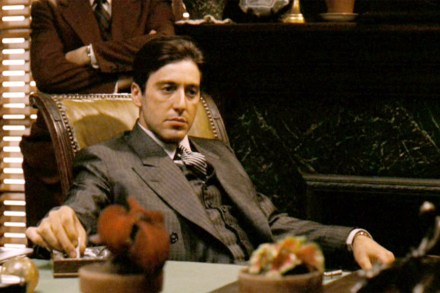
For any serious lover of cinema, the 1970s were both a golden decade and the beginning of the end of film as an art form. After the permissiveness and countercultural impact of the 1960s, a whole generation of new filmmakers emerged, many of whom remain household names. These men – and they were almost exclusively men – produced work that shook up expected norms and took the medium in new, thrilling directions. It is impossible to list all the pictures and their directors who made this difference, but there are good reasons why they remain celebrated today. And then Star Wars came along in 1977 and changed the trajectory of the industry forever.

coppola

The predictable politics of the 2026 Grammys

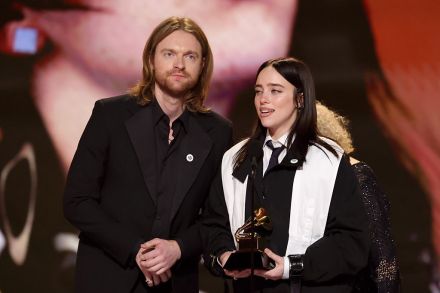
When Billie Eilish declared, during her acceptance speech for song of the year with “Wildflower” at last night’s Grammy awards, that “I feel like we just need to keep fighting and speaking up and protesting, and our voices really do matter,” she was speaking in the approved register. "Fuck ICE," she added but it was more of the same. In contrast to the Golden Globes, where the neutral tenor of the event was made up of tame jokes about the age of Leonardo DiCaprio’s girlfriends, the Grammys have turned into an opportunity for musicians to express political outrage. The awards themselves went as expected last night. Kendrick Lamar and Bad Bunny were the big winners of the night along with Eilish.

What is Travis Scott doing in The Odyssey?

As far as teaser trailers for summer blockbusters go, it takes quite a lot to make jaded audiences – or cynical critics – sit up and say, “What the hell?” But what’s exactly what the latest trailer for Christopher Nolan’s eagerly awaited The Odyssey has done. Not because it has featured a couple of new shots of Tom Holland’s Telemachus squaring off with Robert Pattinson’s villainous Antinous, or Matt Damon’s Odysseus participating in the bloody sack of Troy with his fellow Greeks, but because it introduces the most unexpected cameo of the year, possibly of the decade. Ladies and gentlemen, enter the latest feature of Nolan’s all-star cast: the hip-hop artiste Travis Scott, appearing in the somewhat unlikely role of a staff-beating herald.

travis scott

Is an Oscars upset around the corner?

Can Sinners pull off the biggest Oscars upset in recent times? That’s the question that many in Hollywood will be asking after Ryan Coogler’s genre-bending period-musical-horror picture has been nominated for a mighty 16 Academy Awards, including Best Picture, Director, Actor, Supporting Actor and Actress, and more. While it has been looking like a done deal that Paul Thomas Anderson’s Pynchon adaptation One Battle After Another will be sweeping to victory – and with a far from inconsiderable 13 nominations, it still could – the fact that Sinners is now the most nominated film of all time means that, on paper at least, it’s a serious challenger.

oscars

Good riddance, Kathleen Kennedy

The news that the producer Kathleen Kennedy is stepping down with immediate effect as president of Lucasfilm, to be replaced by Dave Filoni and Lynwen Brennan, may not sound especially consequential; film executives come and go all the time, and their arrival and departure is normally only of interest to those in the movie business. Yet Kennedy, who has run Lucasfilm – home of Star Wars, Indiana Jones and a great deal more – since 2012, and been in sole charge after the departure of the company’s founder George Lucas the same year, is the most consequential Hollywood studio head of the past couple of decades. And, her millions of detractors would argue, the most destructive, too.

kathleen kennedy

Why can’t Democrats speak frankly about Iran?

The manicured grounds of Harvard University are tranquil. Ditto the expensive quads of Yale, Princeton, Columbia and Stanford. All across the fruited plain, the self-denominated paragons of virtue who just yesterday sported “Free Palestine” buttons and joined in “No Kings” rallies are greeting today’s greatest enormity – the slaughter of tens of thousands of Iranian citizens by their insane Islamicist government – with the repetition of that hit by Simon and Garfunkel: "The Sounds of Silence." Or, as the headline of a story in National Review put it: "Iranian Civilians Are Being Massacred to the Sound of Progressive Silence." Accurate numbers are hard to come by since the murderous Islamic regime in Iran has shut down public access to the internet.

iranians

Take a trip to the bone temple

28 Years Later, Danny Boyle’s ace return to the 28 Days later series, was one of last year’s most pleasant cinematic surprises. Combining serious thrills with creeping suspense and a light dusting of social commentary, it also ended with one hell of a cliffhanger, as its protagonist, Alfie Williams’s young Spike, found himself in the hands of a gang of psychotic Jimmy Savile-styled desperadoes, led by Jack O’Connell’s sinister Lord Jimmy Crystal. Audiences were keen to see how Candyman and Hedda director Nia DaCosta could pick up the pieces in the next installment, The Bone Temple – once again scripted by Alex Garland – and how the narrative threads sewn into the first picture might continue.

Claire Foy and the future of celebrity activism

When the actress Claire Foy – still best known for her deservedly award-winning performance in The Crown – was interviewed recently by Harper’s Bazaar to promote her new film H is for Hawk, an adaptation of the Helen MacDonald memoir, she must have expected an easy ride. Estimable title though Harper’s Bazaar undoubtedly is, few would confuse it with a hard-hitting investigative magazine. Yet Foy made some remarks that have blown open the whole vexed question of what the point is of actors getting involved in public discourse, and whether they should, instead, stick to reading other people’s lines. Foy said, when asked about her public opinions, that it was not her place to sound off on social or wider issues.

claire foy

The steady-as-she-goes Golden Globes

So, One Battle After Another is going to sweep the Oscars. That was fairly certain before last night’s Golden Globe awards, but it is now essentially guaranteed. Paul Thomas Anderson’s loose Thomas Pynchon adaptation won best film in the musical/comedy category, as well as Best Director, Best Screenplay – over the hotly tipped Sinners, which had been expected to win the award as a consolation prize – and Best Supporting Actress for the scene-stealing Teyana Taylor as the superbly named Perfidia Beverly Hills. Those of us who would have liked to see Amy Madigan take that award for her indelibly creepy performance in Weapons will have been disappointed, but in truth the Globes threw up a modest number of surprises.

golden globes
hollywood

Why has Hollywood got so little to say about Iran?

It was the Golden Globes last night in Tinseltown and as per usual Hollywood’s finest strutted and peacocked on the red carpet to the click and flash of the massed paparazzi cameras. Images of their 1,000-watt smiles and 10,000-dollar couture outfits were beamed around the world to a million Instagram and X feeds. And yet, something was missing. These days a celebrity glamfest is not complete without a healthy dose of woke posturing on the issue du jour, whether it be underrepresentation of black people ("#OscarsSoWhite" or Black Lives Matter), women’s empowerment, climate change, or most recently of course, the plight of the Palestinians. This time, not so much.

Does Spielberg’s new movie have real UFOs?

Steven Spielberg might be the most beloved and popular American director of the 20th century, but it is also unavoidably the case that, since 2005’s Munich, he has been on something of a disappointing run. While many of his films, not least The Fabelmans and West Side Story, have been critically acclaimed and Oscar-nominated, there is a growing sense that he has not made a really interesting or worthwhile picture in 20 years, with the partial exception of the enjoyable, quirky, Coen Brothers-scripted Bridge of Spies.

Why are Lawrence Osborne’s novels suddenly popular in Hollywood?

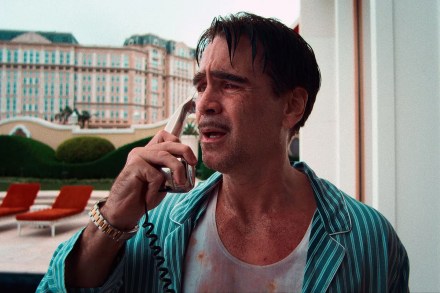
The film Ballad of a Small Player opens with a blast of classical music, a shot of the Macau skyline and Lord Doyle (Colin Farrell) waking up in a hotel suite littered with Champagne bottles, cigarette butts and designer loafers that are starting to show their wear. While he dresses and shaves, a voice-over informs us he has three days to live. A sharp observer might notice he seems to have considerably less than that. Either way, for the next 100 minutes, director Edward Berger (All Quiet on the Western Front and Conclave) treats us to a sumptuous vision of one English con man’s final spree before oblivion. It will take an even sharper-eyed observer to catch, as the final credits snap past, that they have just watched an adaptation of a Lawrence Osborne novel.