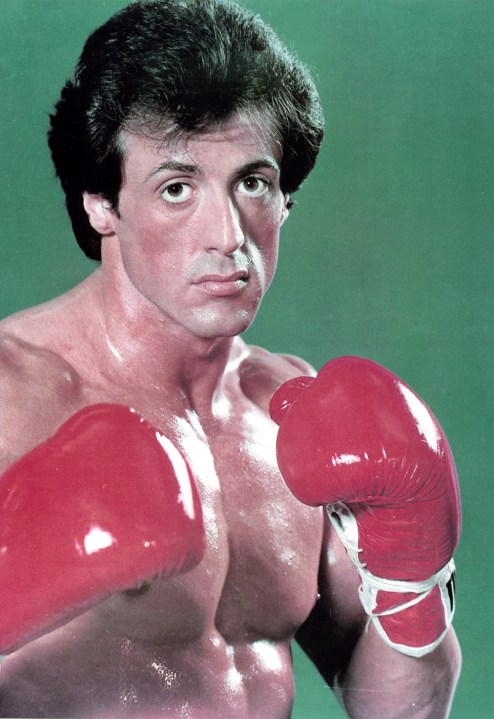
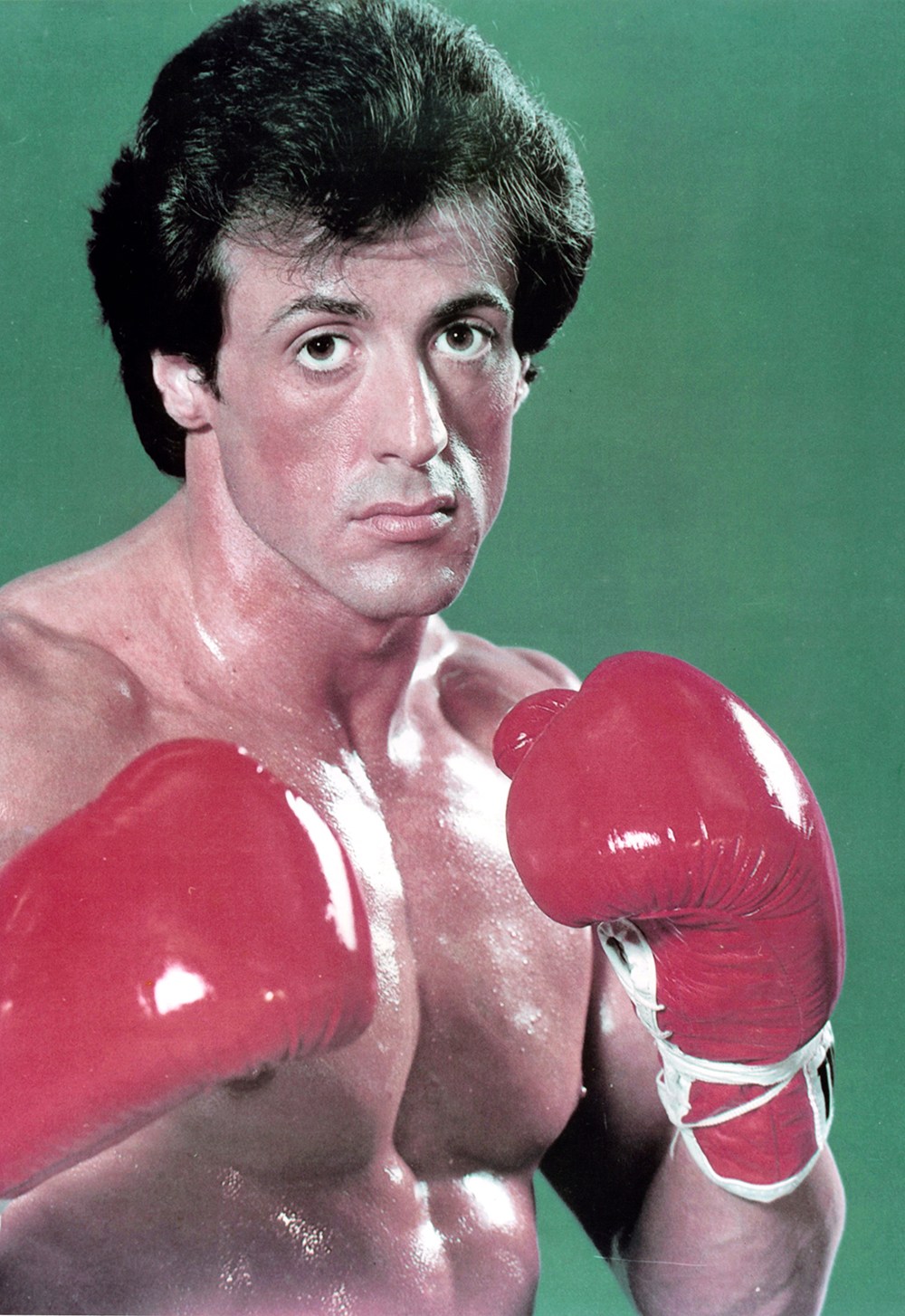
If you think that Rocky is the greatest movie ever made, and Sly Stallone the finest actor, you will love this book. Otherwise, not so much. I find it easier to diagnose than to review: it suffers from ADHD, extreme narcissism and fathomless self-pity.
Stallone was born in New York in 1946 ‘to the surprise of my mother, who never wanted to have kids’. Jackie was on a bus when she went into labour and a kind passenger took her to hospital. The baby had to be delivered by forceps, which damaged a nerve in his cheek, leaving him with a crooked smile and slurred speech. In fact Jackie had had a baby four years earlier, Sly’s older brother Frank, but she always denied giving birth to him. She was ‘very peculiar’, we are told. (Readers with long memories might recall seeing her on Celebrity Big Brother in 2005, where she was indeed very peculiar and the first participant to be voted out. She died in 2020.)
Stallone’s father, Frank Snr, was a hairdresser and he and Jackie had ‘a ferocious marriage’. They lived in a cold-water flat in Hell’s Kitchen; but they put Sly in a boarding house in Queen’s for three years, from the age of two, and only visited him once a month. He had been to 12 schools by the time he was l6, because he says he ‘couldn’t focus on anything’. But then he spent two years at Devereux Manor High for troubled teenagers in Pennsylvania and somehow got into the University of Miami to study drama. He wanted to be an actor but was never given leading roles. So he moved back to New York and lived on cottage cheese and raw eggs. He spent all day going to auditions and all night working as a cinema usher, watching and tape recording films to teach himself how to write scripts.
He showed the scripts to a friend, who said they were too autobiographical. So then he wrote one about Edgar Allan Poe, with whom he was obsessed (mainly because he thought Poe was just like him), and a literary agent agreed to represent him. He also suddenly got lucky as an actor and won a part in The Lords of Flatbush (1974), which earned good reviews. Another actor introduced him to his manager, Jane Oliver, who told him he had ‘presence’ and would be very successful.
So things were looking up, and he decided to move to Los Angeles, along with his girlfriend, Sasha Czack, who typed his scripts. He got a part in Death Race 2000 that paid $340 a week, which seemed a fortune, but he refused to do a nude scene and expected to be fired. On the contrary, Roger Corman, the producer, gave him a bigger part in his next movie, Capone, playing Al Capone’s bodyguard. He decided to marry Sasha and borrowed his Capone gangster suit for the wedding.
Sasha was already pregnant when he got the idea for Rocky. He wrote the first draft in three-and-a-half days, but Sasha said Rocky just seemed to be a thug, so he rewrote and rewrote it to make it less of a fight film and more of a love story. Everyone he showed it to thought it was good and wanted to buy it. The first offer was for $60,000, then $75,000, then $100,000. Eventually the bidding went to $360,000. But the sticking point was that Stallone wouldn’t accept any of them unless he could play Rocky himself. Nobody wanted him; he was an unknown. The studios all wanted a star, and James Caan, Nick Nolte, Ryan O’Neal and Burt Reynolds were interested, but still Stallone said no. Eventually a little-known director called John Avildsen said he could play Rocky, and United Artists backed the film for just under $1 million. They had to make it in 28 days and only pay scale. Stallone was paid $320 a week.
The first test screening was at the Baronet cinema where he had worked as an usher. It was a disaster. Of the 25 people who turned up only eight stayed to the end. But another screening for film students was greeted with cheers, and the eventual opening in New York in November 1976 got a standing ovation. It was nominated for ten Oscars and Stallone invited his mother to the ceremony, but she refused because she couldn’t bring her hairdresser. She hadn’t even seen the film. Anyway it won Best Picture and became the highest grossing film of 1976.
This is where the book ends. In the Epilogue, Stallone thanks his ‘beautiful wife Jennifer’ and their three wonderful daughters. So we will never know what happened to Sasha, who stuck with him through all the years of struggle. Unless, of course, he is planning to write a second volume, which heaven forfend.




Comments