Hollywood

Save us from the Lime bike invasion

From our UK edition

I’m a Londoner born and bred, and I love this city, even though it’s slowly being destroyed by the insidious antics of Sadiq Khan. Do his repeated failures explain why his hair is going prematurely white? Why are the roads closed all the time, for no apparent reason? Why are there endless roadworks, yet no men working on them? Why do we have filthy streets and graffiti everywhere? Visiting Majorca, I was impressed by the pristine streets and pavements of Palma. ‘How come you have no litter or graffiti?’ I asked the driver. ‘Everyone is very proud of our city, and we respect it,’ he replied. ‘No one is allowed to litter or paint graffiti – it is considered a crime – and our citizens shame anyone who does it.’ Are you listening, Sadiq?

Ambition and delusion: The Director, by Daniel Kehlmann, reviewed

From our UK edition

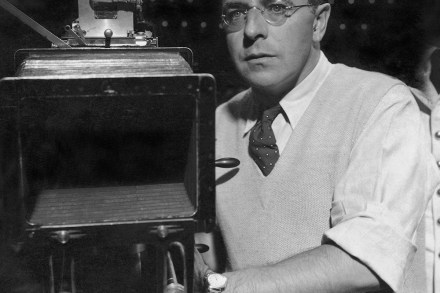
As bombs rain down on Nazi-occupied Prague, Georg Wilhelm Pabst shoots a film – a romantic courtroom drama adapted from a pulp novel by a creepy Third Reich hack, Alfred Karrasch. Although the leading man finds it strange to make any movie ‘in the middle of the apocalypse’, his director insists that ‘art is always out of place’. In retrospect, Pabst assures the star, it will look like ‘the only thing that mattered’. The discoverer of Greta Garbo and Louise Brooks, and the director of The Joyless Street, Lulu, Westfront 1918 and other prewar masterpieces, Pabst really did attempt to film The Molander Case in Prague in 1944-45. The bizarre, chaotic shoot furnishes Daniel Kehlmann with the climactic scenes of this novel, inspired by the great director’s compromised career.

Texas

Inside Texas’s bold takeover of the American film industry

When Dennis Quaid dropped out of the University of Houston to pursue his acting dreams, there was nowhere to go but Hollywood. Coming off a decade of its biggest hits and at the height of critical acclaim for the movies of the 1970s, California dominated the culture of the United States, and therefore the world. “It was a paradise,” Quaid says. “Creativity, community, the greatest films were made there, a vibrancy of the new wave, Bonnie and Clyde, The Conversation, The Right Stuff, it was an incredible place of palm trees and a real atmosphere of creativity and inspiration where we were making great films with great people we knew and loved… and now all that is gone.” ‘California really is insanely expensive. Rarely did we shoot anything there.

The resistible rise of Pedro Pascal

A British film fan recently took to social media to share an unusual experience that had happened to her while visiting the Picturehouse cinema in central London. She was standing in the foyer, watching the trailer for the forthcoming superhero picture The Fantastic Four: First Steps, when she became aware of a middle-aged man standing next to her, enjoying the same preview. He then said, in apparent surprise, “Look! I’m in that!” She turned to him, expecting to see some character actor with a one-line role, and it was none other than Pedro Pascal: film and television star, self-appointed nemesis to J.K. Rowling and “the internet’s daddy.

What’s the matter with Los Angeles?

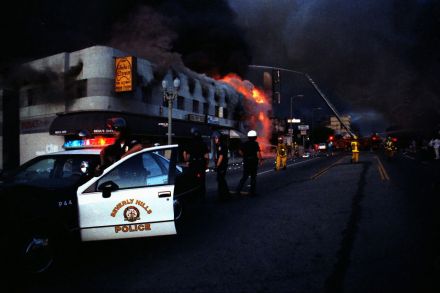
Los Angeles is reeling once again from urban disturbances, as it did in 1965, 1992 and 2020. After each outbreak the city is widely seen as a hopeless disaster that epitomizes everything wrong with American cities. That’s ironic because since its infancy Los Angeles sought to develop a new model of post-Dickensian urbanity – what the early 20th century minister and writer Dana Bartlett called “the better city” – one dominated by middle class single family homes. At the time, the city that was among the whitest, and most protestant in the nation. Bartlett predicted it would become “a place of inspiration for nobler living.”The strategy, a combination of vaulting ambition and careful planning, worked brilliantly.

LA Riots

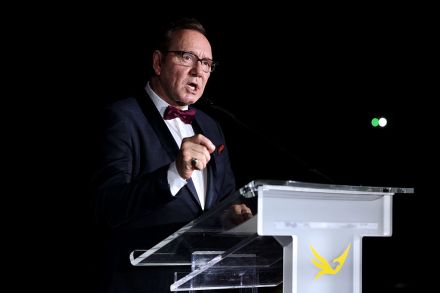
Kevin Spacey’s #MeToo revenge

In the 1950s, witch hunts were stoked by pamphlets identifying supposed communists in the media. Screenwriter Dalton Trumbo fell victim to this vicious whispering campaign. He was blacklisted by Hollywood and only given full credit for his work after his death. Today, witch hunts happen on Twitter – with the speed and ferocity of lightning. Kevin Spacey was struck by just such a bolt when he was accused of various sexual assaults on social media and then formally accused in courts in the US and UK – where he was cleared. And now, in trying to recover his life and his reputation after being scorched by the #MeToo movement, the double Oscar-winner has recognized that there is nothing new about his experience.

Kevin Spacey

Foreign governments have themselves to blame for Trump’s movie tariffs

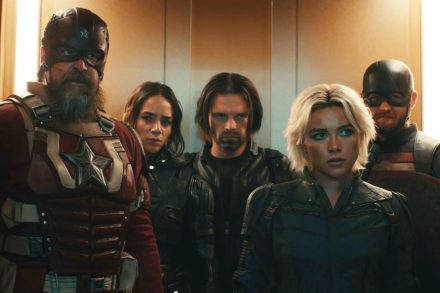
Donald Trump has thrown another trade grenade. His latest idea – a 100 percent tariff on all foreign-made films – is crude, impractical and potentially disastrous for his frenemies in the Hollywood industry that he has suddenly decided to champion. Announcing the tariffs via Truth Social, Trump tried to paint movies produced overseas as a danger: not just to America’s film production industry, but national security too. “WE WANT MOVIES MADE IN AMERICA, AGAIN!" he thundered. Invoking national security to justify these tariffs is legally shaky. Practically, it’s not clear how you even impose tariffs on a complex, multi-national production like a modern movie. Films shot in Croatia, edited in the UK and funded by America pose an administrative nightmare.

marvel movie
jon voight movies

The problem with Trump’s plan to make American movies great again

Donald Trump is a cinephile, of sorts. Not since Ronald Reagan has there been a US President so visible in theater, with Trump making cameos in everything from Home Alone 2 to Zoolander. Yet just as Trump has been steadfast in his determination to Make America Great Again, so he has been equally keen to Make Hollywood Great Again, too. Initially, he appointed Sylvester Stallone, Mel Gibson and Jon Voight as “Special Ambassadors” to “a great but very troubled place.” Gibson and Stallone appear to have taken the honor on the chin, but Voight has been diligently organizing meetings and has now fed back his thoughts to the President. As a result, Trump has declared that he has his own, unorthodox plans to save the American motion-picture industry.

The genius of Gene Hackman

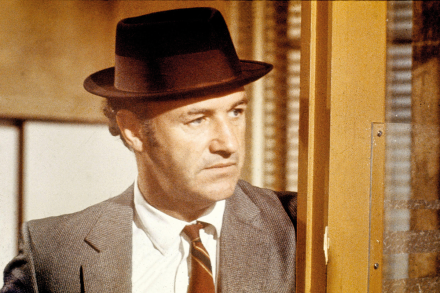
When the news of Gene Hackman’s death at the age of 95 was initially reported, ghoulishness quickly overtook sorrow. The unsolved-crime aspects of his death dominated the coverage. The actor, his wife Betsy Arakawa and one of their pet dogs were found dead in their New Mexico home in February. They were likely to have died as many as ten days beforehand. The police were swift to suggest that, while initially unfathomable, there were no signs of foul play. Still, this did not stop the usual conspiracy theories, including the indomitable Randy Quaid declaring that Hackman was murdered by the “Hollywood Star Whackers,” who also “got” Heath Ledger and David Carradine.

gene hackman

Val Kilmer should be more appreciated in death than he was in life

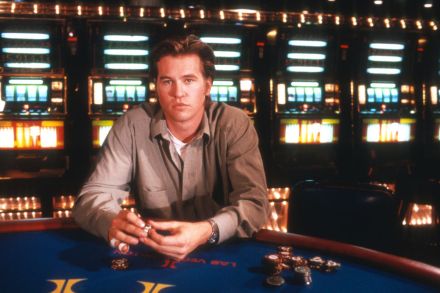
The late Val Kilmer was difficult. That word is a kiss of death in Hollywood, because as soon as it’s murmured that you are hard to work with, your career declines inexorably. Kilmer had directors lining up to say how impossible he was. Joel Schumacher, who made Batman Forever with him, barely stopped kvetching about the actor, calling him “overpaid, overprivileged and psychotic.” Shortly after the film’s release, Schumacher said “He was badly behaved, he was rude and inappropriate. I was forced to tell him that this would not be tolerated for one more second. Then we had two weeks where he did not speak to me, but it was bliss.

Kilmer

Gene Hackman was never, ever bad, whatever the role

Somehow the strange circumstances of the death of Gene Hackman, found dead in his New Mexico home with his wife Betsy and their dog, make the end of one of America’s finest actors all the more poignant. The full details will presumably become clear soon — but whatever happened, it is more important to remember Hackman’s legendary on-screen career than to waste time fixating on his final moments. He was an actor without sentiment, but with enormous amounts of fierce compassion — even when playing villains — and it is those qualities that should be celebrated. Hackman began his life in the Marine Corps before he became an actor, and many of his best performances have the tough, unbending quality that he developed in the military.

The 2025 Oscars is the hardest to predict in a long time

Usually, by the time the BAFTAs — now comfortably established, along with the Golden Globes, as a dress rehearsal for the Oscars — roll around, it is fairly clear which film or films are likely to be taking gold at the Academy Awards next month. Thanks to the often frenzied behind-the-scenes lobbying and intriguing of various well-paid publicists, a storyline will emerge, and it is only in relatively rare cases that there will be a genuine surprise on the night. After all, nobody wants to spend a fortune on promoting (or celebrating) a lost cause. This year, however, is wildly unpredictable, and in fact is the first occasion since 2019 that it’s genuinely difficult to know which film is going to be triumphant.

anora oscars

The hits and misses of the Super Bowl trailers

Traditionally, the Super Bowl advertising spots are not only the most prestigious and expensive of the year, but also serve to showcase the movies that will be the biggest and most thrilling blockbusters of the coming summer. Since the advent of social media and streaming, there is no longer the same giddy thrill at watching a few seconds’ footage, which is usually taken from a more expansive and detailed trailer, but it’s still a clear calling card for studios to suggest which of their forthcoming films they’re most excited by, and which have been quietly set aside. (Awful though I think it looks, however, James Gunn’s Superman, which lacked a new spot, did at least have a short clip with the hoped-for breakout star Krypto the Superdog.

trailers

The shockingly earnest anti-comeback of Tom Green

If you grew up in the 1990s and early 2000s as a Generation Xer, you either loved or hated Tom Green. You saw him as either some pioneering prankster and innovator of the cable-news troll or an obnoxious man-child desperate for attention. The truth lies somewhere in the middle, but Green’s influence on internet culture and podcasts such as Joe Rogan’s is undeniable. But then one day it just felt like he went away, much in the same way Dave Chappelle did. And just as online streaming platforms such as Netflix threw a ton of money at Chappelle, Amazon has now done the same with Tom Green. This doesn’t, however, feel like a Tom Green comeback.

emilia pérez

Emilia Pérez and the Oscars double blind

Of the many inevitables of Oscar season, one certainty is that the film or filmmakers perceived to be the front-runner will find themselves in a spot of difficulty before the awards ceremony. There is a legion of highly paid, aggressive publicists whose job is not only to promote their clients’ interests, but also to rubbish the competition. Granted, an Oscar is no longer the path to box-office success it once was — I’m not sure that anyone was rushing out to see CODA or Nomadland after their awards, not least because there was so little competition in the pandemic era — but it will add millions to an asking rate, instill lasting gravitas and ensure a movie’s lasting reputation. Many people really, really want to win an Oscar.

Flight Risk proves Mel Gibson is still too toxic for mainstream audiences

Had the Mark Wahlberg vehicle Flight Risk, which topped the US box office last weekend with a modest but far from disastrous $12 million gross, been directed by most competent journeymen filmmakers, then it would have been a case of job done, box ticked and onto the next project. If you were told, however, that it was made by an Oscar-winning filmmaker whose previous movies have been large-scale dramatic epics — and who, frankly, would have done a far more interesting job with The Brutalist, although its overtly Jewish themes may have given him considerable difficulty — then the first question most people would ask is “Why?” And then when you’re told the director in question is Mel Gibson, the response is usually “Ah” and “Oh.

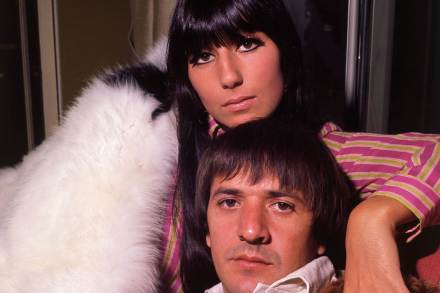
Cher should stick to what she knows best

The worst celebrity memoirists write first-person Wikipedia pages. Like Michelangelo carving a beautiful posterior out of Italian Carrara marble, the best celebrity memoirists edit their lives into tawdry yet moving epics. When they work, celebrity memoirs are the Warhols of American literature. When they fail, they’re the literary equivalent of a CVS receipt: boring and destined for the trash. Cher: The Memoir, Part One falls somewhere in between. It takes a miracle to reach Cher’s narrative peak. For more than a hundred pages, she details her childhood criss-crossing America as her mom marries and divorces man after man. I lost track of how many jerks Cher’s mother married, but according to Google, she married six different men (Cher’s heroin-addict biological father twice).

Cher
history

Why we dramatize history — and why we should stop

A few weeks ago, a friend asked if I had watched the Newsnight interview with Prince Andrew. That interview, yes — the one with all the sweating and the pizza in Woking, in which he definitely didn’t meet Virginia Roberts Giuffre but he did single-handedly crash his reputation, and Emily Maitlis, like the Medusa of journalism she has since become, just let him tie his own noose. Of course I’ve watched it. I’m a journalist. And a twenty-first-century citizen. Who hasn’t? My friend, for one, though she pointed out that she can just watch the three-part Amazon dramatization of the whole affair, A Very Royal Scandal, which is even juicier than the interview. (“I’m the son of the sovereign,” bellows the Duke of York, played by a soapy Michael Sheen.

The best film, TV and music of 2024

Film The Substance Seeing Dune: Part Two in IMAX, with the floor shaking as Paul Atreides’s forces charged the palace was my second-best cinema-going experience of the year. Trumping it was watching a DC audience recoil every other minute at Coralie Fargeat’s body-horror The Substance, a film that nods to Stanley Kubrick and David Cronenberg while declaring itself the most original of 2024. Two-thirds of the way through, I stopped wincing and started laughing, probably because my body didn’t know how to react. The film is a brutal parable of female self-loathing and insecurity — exacerbated, of course, by a venal male-led system, which Dennis Quaid’s producer Harvey personifies in a manner as grotesque as any of the movie’s gross-out special effects.

2024

What’s up with Jim Carrey?

You may, or may not, be planning on seeing the third film in the Sonic the Hedgehog franchise when it is released this Christmas, but whether or not your taste for CGI pugnacious animals encompasses this latest cash-in for the Nintendo character, the presence of Jim Carrey should provide some distraction. Carrey is playing the villainous Dr. Robotnik for the third time, and has been offering some amusingly candid comments in interviews about his decision to return to the role. He announced that he came back to this film’s universe for two reasons, “first of all, I get to play a genius, which is a bit of a stretch” and “I bought a lot of stuff, and I need the money, frankly.

jim carrey