Lynn Barber

Lynn Barber is a former Sunday Times journalist and author of An Education and A Curious Career.

Was Marcel Duchamp’s notorious ‘Fountain’ even his own work?

From our UK edition

This slim volume has only one fault. It has no illustrations. So you’ll have to do some Googling or visit the current Duchamp exhibition at MoMA (until 22 August) if you want to know what ‘The Bride Stripped Bare by Her Bachelors, Even’ looks like. Otherwise it’s perfect – wittily written and packed with many fascinating characters besides the ever intriguing Marcel Duchamp. He didn’t actually arrive in New York until 1915, but when he did he found himself already famous. His ‘Nude Descending a Staircase, No. 2’ had been included in the 1913 International Exhibition of Modern Art, alongside works by Picasso, Van Gogh, Gauguin, Matisse and Braque, and completely stole the show. Duchamp didn’t even know the painting was being exhibited.

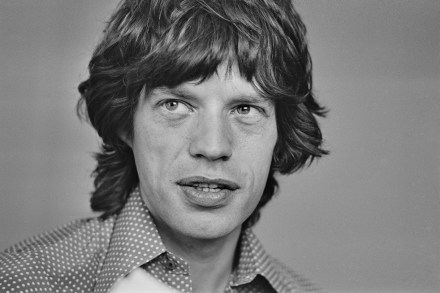
Lean and mean: Mick Jagger was always a tightwad

From our UK edition

This book got glowing reviews when it was published in the US a few months ago: ‘Irresistible’ (New York Times); ‘Riveting’ (Boston Globe); ‘Energetic and engaging’ (Washington Post). I kept wondering if I was reading the same book. You wouldn’t have thought it possible to make the Rolling Stones boring, but Bob Spitz somehow manages to. Let me count the ways. By giving his own programme notes on every Stones record; by paying far too much attention to the actual recording process and crediting every new sound engineer; and by totally missing the point that it is the Stones themselves we are interested in. I’m fairly typical of diehard Stones fans in that I got hooked in the 1960s and have stayed with them ever since. I am now 82.

Rupert Murdoch’s warped vision of family

From our UK edition

When Rupert Murdoch divorced his fourth wife, Jerry Hall, in August 2022 he made her sign an agreement that she would not give any story ideas to the writers of Succession. Frankly he need not have bothered, because it’s all here in this utterly gripping book. The award-winning journalist Gabriel Sherman has been reporting on the Murdochs since 2008 and has interviewed them all at one time or another, so he really knows his stuff. He briskly covers Rupert’s entire career but concentrates on the man’s relationships with his children and the war of succession. Rupert was always an absentee father who put business before family. He divorced his first wife, Patricia Booker, when their daughter Prudence was only nine, and she rarely saw him.

A young Englishwoman is caught up in the Russian Revolution

From our UK edition

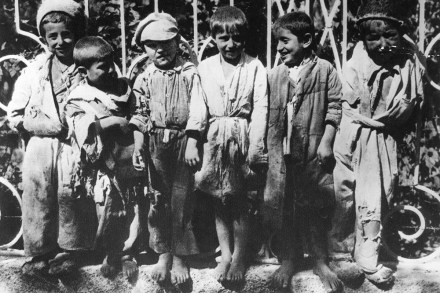
This vivid account of a young English-woman caught up in the Russian Revolution was first published in 1919 as Under Cossack and Bolshevik, but it’s possibly even more gripping today. Rhoda Power, a political science graduate, was 26 when she was hired as a tutor to a 16-year-old Russian girl, Natasha Sabaroff, living in Rostov-on-Don. Going to Russia had for years been one of her dreams, so off she sailed from Newcastle to Bergen through U-boat-infested seas; and, indeed, future sailings were cancelled after four ships were torpedoed. But she arrived safely in Bergen, where the Cook’s man put her on a train to Petrograd (St Petersburg), which she spent four happy days exploring before taking the three-day train journey on to Rostov.

‘This sweet, delightful book’: The Natural History of Selborne revisited

From our UK edition

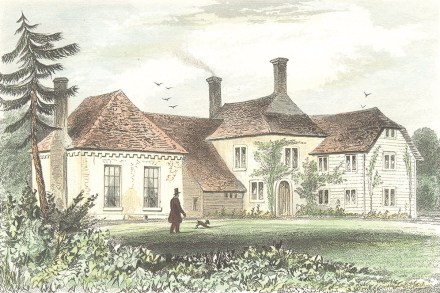
Gilbert White’s Natural History of Selborne is a true classic in that it has never been out of print since its first publication in 1789. It was based on the daily journals White kept for years in which he noted first the weather (‘Rain. Rain. Rain’) and wind direction, then the progress of his garden (he was very proud of his cucumbers) and occasional nature notes, usually about birds. Jenny Uglow has chosen to concentrate on one year of these journals, 1781, when he was 60 years old and halfway through writing his Natural History, and to interpolate it with her own observations.

Was Cat Stevens the inspiration for Carly Simon’s ‘You’re So Vain’?

From our UK edition

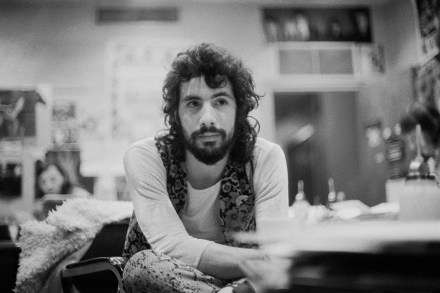
Essentially this is a book of two halves –before and after Cat’s conversion to Islam in 1977 – and the first half is immeasurably the more engaging. He was born Steven Georgiou in 1948, the youngest of three children, to a Greek-Cypriot father and a Swedish mother, with a much older brother and sister. His parents ran a café, Moulin Rouge, on Shaftesbury Avenue, in the heart of London’s West End, and the family lived above it. He went to a Catholic primary school near Drury Lane and then, having failed the 11 plus exam, to a secondary modern in the City. But he left school at 16 with only one O-level, in art. It was enough to get him into Hammersmith Art School, but he was already more interested in writing songs.

The trials of ‘the sexiest man alive’

From our UK edition

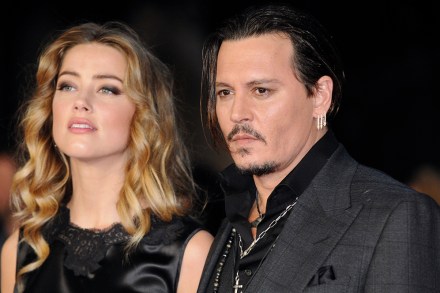
This is an account of the Johnny Depp/Amber Heard court cases with a top-dressing of pretentious tosh about the meaning of celebrity, etc – but you can easily ignore the tosh because the basic story is so gripping. Depp was 46 and already a global superstar when he met Amber Heard in 2009. She was a relatively unknown 22-year-old actress, but he auditioned her for the female lead in a film he was making of Hunter S. Thompson’s The Rum Diary. Keira Knightley and Scarlett Johansson were also up for the role, but as soon as he saw Heard he decided ‘Yep... That’s the one.’ Amber arrived for filming with her girlfriend Tasya van Ree, whom she introduced as her wife. The director Bruce Robinson panicked: ‘She’s gay?!

Magnetic and manipulative – the enigma of Gala Dali

From our UK edition

Salvador Dali’s wife Gala was born Elena Ivanova Diakonova in 1894 in Kazan, on the banks of the Volga. Her father was an abusive alcoholic who vanished when she was ten. Her mother, a midwife, moved the family to Moscow where Elena attended an exclusive school. But in 1913 she started coughing, so was sent to a Swiss sanatorium, Clavadel. There she fell in love with a fellow patient, Paul Éluard, who had just published his Premiers poèmes. They got engaged but had to wait until he turned 21 (she was 22) to marry – by which time she had adopted the name Gala. They had a daughter, Cécile, but they left her with his parents. Éluard was one of the Dadaist circle around André Breton. The big event in spring 1921 was the debut show of a German artist, Max Ernst.

Poor little rich girl: the extraordinary life of Yoko Ono

From our UK edition

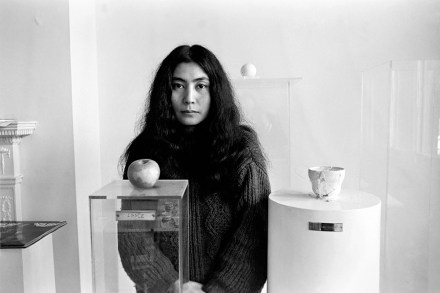
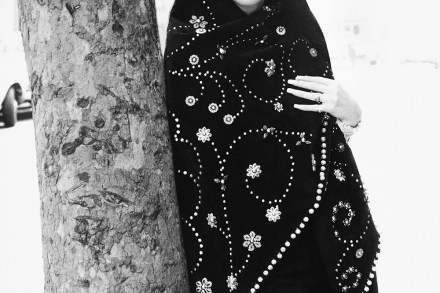
David Sheff first met Yoko Ono in 1980 when Playboy commissioned him, then aged 24, to interview her and John Lennon. She asked him to send her his astrological and numerological charts before summoning him to the Dakota, where she and John occupied six apartments. (Elton John, a friend of theirs, wrote an excellent spoof: ‘Imagine six apartments/ It isn’t hard to do./ One is full of fur coats/ Another’s full of shoes.’) Yoko told him that his charts were good – ‘these are strong numbers’ – and that he would get on well with John. So they fixed a time to meet the next day. The interview lasted three weeks, during which Sheff went everywhere with the Lennons and got to know them and baby Sean well.

How can a biography of Woody Allen be so unbearably dull?

From our UK edition

How do you make the life of Woody Allen unbearably dull? Mainly by retelling the plots of every one of his movies, along with lists of cast and crew, box-office receipts and critical reactions. And there are so many movies – 50 so far, but there’ll probably be another by the time you read this. Long ago, Allen got into the habit of making a film a year, and so he goes on. He once said he was ‘like an institutionalised person who basket-weaves’ – he couldn’t stop. So we have to wade through an awful lot of filmography before the juicy stuff – the scandal – begins. Mia Farrow doesn’t even appear until page 313. In 1979, when she first met Woody, she was divorced from Frank Sinatra and André Previn and had recently adopted her seventh child.

Red-letter days for Gilbert & George

From our UK edition

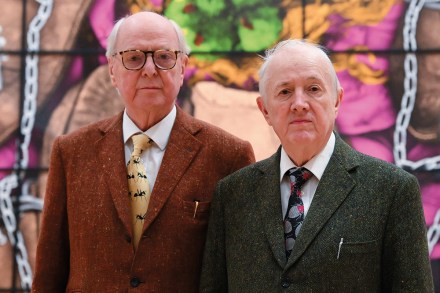
James Birch is a somewhat mysterious art dealer and curator, whose first great triumph was mounting a Francis Bacon exhibition in Moscow in 1988. He wrote a gripping book about that adventure, Bacon in Moscow, and has now written an even more gripping follow-up, about taking Gilbert and George to Moscow, Beijing and Shanghai. Mounting the Moscow exhibition meant getting drunk every night, but Birch carried it off with aplomb Birch was born ‘circa 1956’, according to Wikipedia, and grew up in Primrose Hill, London. Both his parents were artists and also communists, which he claims was not unusual in the 1960s (though I’d say it was, quite).

‘You can really sing!’ – Sonny discovers the teenage Cher

From our UK edition

This is a very odd book. Where you’d expect to find an author’s photo inside the dust-jacket it just says: ‘Cher is a global icon.’ As for the ending – there isn’t one. It feels as though the publishers snatched the manuscript out of Cher’s hands almost mid-sentence, saying: ‘Keep the rest for Part Two.’ Still, it’s a breathlessly exciting story. With 5,000 screaming fans at the airport, success had arrived. And Cher was still only 19 ‘I mean, jeez, my family,’ Cher exclaims at one point, ‘you couldn’t make it up.’ Her mother Jackie Jean, a dazzling beauty from a dirt-poor Arkansas background, had been taught not to sleep with anyone before marriage.

Truly inspirational: the hospital diary of Hanif Kureishi

From our UK edition

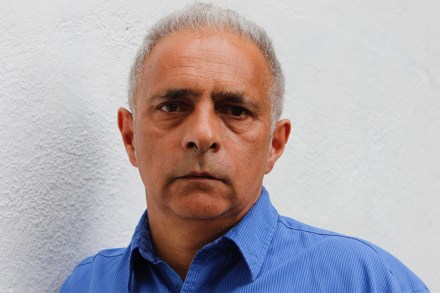
You’d think a book about a paralysed man lying in hospital for a year would be bound to be depressing. It never is. Hanif Kureishi is such an exhilarating writer that you read agog even when he’s describing having his nappies changed or fingers stuck up his bottom. It all started on Boxing Day 2022 when he was sitting watching television in his girlfriend Isabella’s flat in Rome. He wasn’t drunk, he wasn’t stoned, but suddenly he felt a bit dizzy, put his head between his knees and fell off the sofa. In doing so, he somehow broke his neck and became tetraplegic. As a result, he cannot move his arms or legs, he cannot feed himself or scratch his nose or hold a pen. If he cries, he cannot wipe away his tears.

The ordeal of sitting for my father Lucian Freud

From our UK edition

The frontispiece of this book is Lucian Freud’s portrait of his daughter Rose naked on a bed. Rose says that when her father asked her to sit, which she had long hoped he would do, she naturally assumed he would want her naked, but asked him not to paint her hairy legs. He, in turn, asked her to remove her mascara, but she refused. When she saw the canvas she was shocked at how much it focused on her vulva, but she did not object. She sat for him at night – he had other sitters during the day – and he sometimes gave her purple hearts to keep awake. When the portrait was finished, she took on the task of cleaning Freud’s studio, which ‘made me feel special, downtrodden, and loved for all the wrong reasons’. Rose was born in 1958, 18 months after her brother, Ali.

Frank Field: 1942-2024

From our UK edition

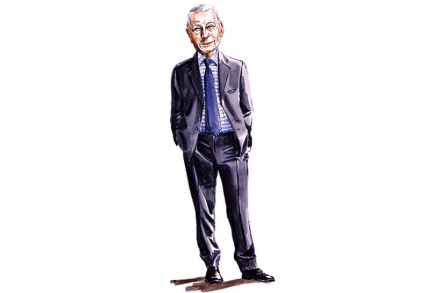
Frank Field, the former Labour minister and crossbench peer, died today aged 81. Below is an interview he did with Lynn Barber in 2018. Frank Field was given a standing ovation when he won The Spectator’s Parliamentarian of the Year award two weeks ago. Normally there’s polite applause, but he is the hero of the current clash between the Corbynistas and what used to be the Labour party. His local party in Birkenhead has threatened to deselect him so he plans to stand as an Independent next time, and he said in his acceptance speech: ‘If I’m successful in winning the seat again, then in some small way, as with Brexit, we will begin to change British politics.

What we owe to the self-taught genius Carl Linnaeus

From our UK edition

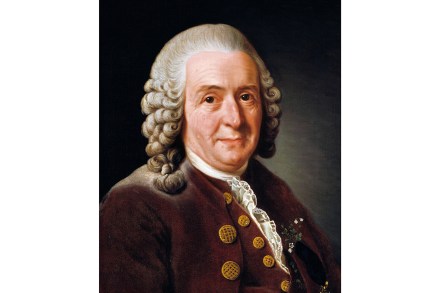
Carl Linnaeus and Georges-Louis Leclerc, Comte de Buffon were both taxonomists, born in the same year (1707), but apart from that they had little in common and never met. Buffon was French, Linnaeus Swedish. Buffon was suave, elegant, tall and handsome (Voltaire said he had ‘the body of an athlete and the soul of a sage’), whereas Linnaeus was a bumptious little man (under 5ft), who was widely regarded as uncouth. Buffon’s funeral was attended by 20,000 mourners but Linnaeus died almost forgotten, after suffering from a brain disease for 15 years. Yet the Linnaean system of taxonomy has survived much better than Buffon’s, which was hardly a system at all.

Will Keir Starmer ever learn to loosen up?

From our UK edition

Tom Baldwin declares at the outset: ‘It’s only fair to warn those hoping to find these pages spattered with blood that they will be disappointed.’ Fair enough. This is not an authorised biography, but it is a friendly one, written with Keir Starmer’s co-operation. Baldwin briefly worked as Labour’s communications director, and then was asked to help Starmer with his autobiography. They did several interviews, but Starmer always had reservations and finally pulled the plug last spring. Instead, he agreed that Baldwin could write this book, using some of the material he had already gathered, and that he would assist him with contacts.

Nothing satisfies Madonna for very long

From our UK edition

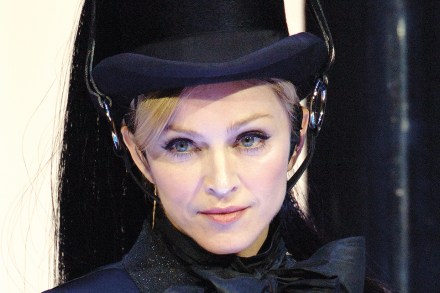
In 1994, Norman Mailer called Madonna ‘our greatest living female artist’. She was huge in those days. I remember teenagers like my daughters constantly asking ‘What would Madonna do?’ But my grandchildren haven’t even heard of her. She seems to have faded faster than most. Why? Perhaps it’s because, as often claimed, she’s the ‘queen of reinvention’. But people who reinvent themselves every few months, as Madonna always did, tend to leave other people behind. Her ‘rebel life’, as told here by Mary Gabriel, is a frenzied churn of friends, lovers, mentors and collaborators who were vital to her for a year or two and then discarded.

The horrors of the ‘Upskirt Decade’

From our UK edition

The subject that Sarah Ditum addresses in Toxic is why the early part of this century was ‘such a monstrous time to be famous and female. It’s about how the concept of privacy came undone and why that was a catastrophe for women’. The concept of privacy was actually undone by a judge in Tulsa, Oklahoma in 2006. A 16-year-old girl was browsing through greetings cards in a shop when a man crouched down beside her and took photographs up her skirt. A security guard saw him and called the police. The whole scene was captured on CCTV, so there was no shortage of evidence. But the judge ruled that ‘the person photographed was not in a place where she had a reasonable expectation of privacy’ and an appeals court concurred.

Joan Didion deserves better 

From our UK edition

This book is an example of a regrettable new trend – the solipsistic biography. I mean lives of famous people written by unfamous people (usually women) who want to tell you a LOT about themselves. This one is about the writer Joan Didion by an academic called Evelyn McDonnell who never met Didion but believes that they had much in common. Here is her evidence. ‘She was born within one year of my mother; I was born within two years of her daughter. We are both native daughters of California. We lived in New York at the same time, though she was an Upper East Side celebrity and I was a Lower East Side punkette. We both wrote in order to live. We both thought about the sea whenever we felt troubled.’ Soul sisters, right?