Tim Shipman

Tim Shipman

Tim Shipman is political editor of The Spectator.

Starmer should pick a UN ambassador who knows Trump

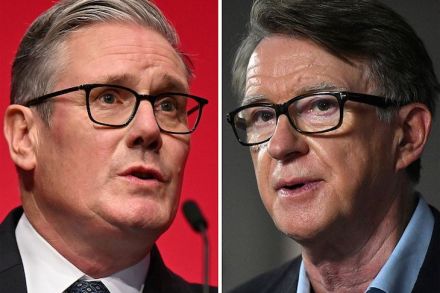
After three months of speculation, Keir Starmer has appointed a replacement for Peter Mandelson as ambassador to Washington. The winner is career diplomat Christian Turner, who has, for the last couple of years, been the political director at the Foreign Office. Turner is considered a high-flyer and has been tipped for big roles like this for years, but it certainly won’t have done him any harm to have been one of the key link men with the incoming Labour administration a year ago. He and Oliver Robbins, the permanent secretary, have been presiding over a difficult reduction in headcount and awkward internal politics over both Gaza and Trump. He is just the sort of official who impresses the Prime Minister.

Daniel Finkelstein on anti-Semitism, Nick Fuentes & viral hate

33 min listen

Nick Fuentes is a 27-year-old American influencer with a growing following. He believes America has been subverted by rich, powerful Jews. He was recently interviewed by Piers Morgan, where these views were put to him directly. During the exchange, Morgan referenced a video made by Times columnist Danny Finkelstein about his parents – a clip that has since led to Finkelstein being inundated with thousands of antisemitic messages. Danny Finkelstein joins The Spectator’s political editor Tim Shipman to discuss the growth of antisemitism, and what it reveals about modern Britain, America and the internet. They explore the pressures of multiculturalism, what this all means for liberal democracy, and the fragility of the political and media ‘mainstream’.

A ‘classically awful’ PMQs to round out the year

10 min listen

Today was the final PMQs of the year – and it was certainly not a classic. It is customary for the Prime Minister and the leader of the opposition to make some attempt at Christmas cheer by telling jokes at the despatch box, but this year’s zingers were awful. Despite a promising start from Keir Starmer, it soon degenerated into quips about whether the Prime Minister has ‘the baubles’ and whether Kemi Badenoch will be ‘Home Alone’. None of the jokes were delivered with any aplomb. Is this parliament at its worst? Also today, Wes Streeting is under pressure as the junior doctors’ strike begins – how is he dealing with the walkout? James Heale speaks to Isabel Hardman and Tim Shipman. Produced by Oscar Edmondson.

Why Britain needs to wake up to extremism

16 min listen

As the world reacts to the attacks on Bondi Beach in Australia, Conservative peer Paul Goodman joins Tim Shipman and James Heale to discuss the failure of successive British governments to properly tackle extremism – especially Islamist extremism – over the past two decades. In the post 'War On Terror' era, there was a reluctance by some to discuss the problem openly as it got tied up in other polarising topics like immigration. Though that reluctance appears to be fading, Paul argues that there is a 'communalist air of voting' in British politics now, and he warns of the dangers that face British politics if fragmentation becomes entrenched in party politics. Plus – Trump is suing the BBC for $5 billion. What's his motivation? Produced by Patrick Gibbons.

The 12 things that mattered in politics in 2025

We are in the pre-Christmas dog days and politics has, finally, slowed down a bit. Reflecting on 2025, here are my top 12 key moments which tell us the most about where we are in politics and how things might pan out in 2026. Keir Starmer had a decent start to the year, while Nigel Farage ‘won’ from May to September. The final quarter saw the emergence of Kemi Badenoch and Zack Polanski: Starmer produces letter from the King inviting Donald Trump on his second state visit, 27 February This might have been the high point of the Prime Minister’s year. He and then foreign secretary David Lammy worked out that Trump was likely to win the presidential election a year earlier and got alongside his team.

‘Growth is not Labour’s priority, it’s hilarious’

13 min listen

The British economy is shrinking. Figures just released by the Office for National Statistics (ONS) show that GDP fell by 0.1 per cent in the three months to October. The contraction came after growth of 0.1 per cent in the three months to September. On a monthly basis, the economy shrank by 0.1 per cent in both September and October after remaining flat in August. Is growth really Labour’s priority? And what impact is all this doom and gloom having inside the party? Lucy Dunn speaks to James Heale and Tim Shipman. Produced by Oscar Edmondson.

Does Farage really want to be Prime Minister?

25 min listen

How does Reform go from political insurgents to a government in waiting? Political editor Tim Shipman gives an insight into his interview with Nigel Farage, which you can read in The Spectator’s Christmas edition. In the background at party headquarters, discussions are under way to work out how Reform would bring sweeping changes to the British state, looking at the model of the American system of executive power. But once handed the reins of power, would Farage actually enjoy the day-to-day business of being prime minister? In the meantime, how are Reform MPs finding Westminster? Tim reveals the unlikely relationship between Reform and the SNP, and how respect shown to the Lib Dems is not reciprocated. Plus, would the Conservatives ever work with Reform?

‘We must not be the Tory party 2.0’: Nigel Farage on his plans for power

Nigel Farage is signing football shirts when I arrive at Reform’s campaign headquarters in Millbank Tower, the building where New Labour prepared for power before 1997. The black shirts are emblazoned with ‘Farage 10’ in gold. ‘Someone called them Nazi colours,’ the leader complains. ‘This always happens when we do well.’ As favourite to be the next prime minister, Farage is sanguine. ‘They’re a special edition, £350 each.’ How many is he signing? ‘—king hundreds,’ he says, pulling his punches on the profanity. Seven hundred to be precise, a cool £245,000 for party coffers. This is the same week the party registers a £9 million donation from the crypto millionaire Christopher Harborne, the largest single donation in British political history.

Kemi wins PMQs

12 min listen

Kemi Badenoch’s good form continues at Prime Minister’s Questions. The Tory leader was once more visibly enjoying herself today as she feasted on Labour misfortune, and she did a good job in covering the breadth of problems in the government. She used her six questions to ask about different departments and how they were faring: an approach that can often risk diluting the overall attack. But today, Badenoch had an overarching theme to those questions, which was that the Prime Minister and his colleagues are failing to meet their own promises.  To discuss, James Heale is joined by Tim Shipman and Michael Simmons.

Is a Ukraine peace deal inching closer?

13 min listen

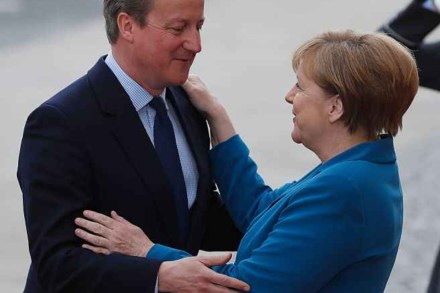
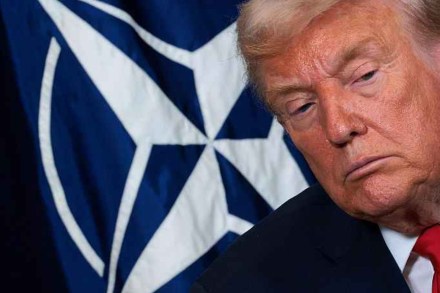
This week Keir Starmer hosted the French President and the German Chancellor in Downing Street as the E3 moved closer to a landmark agreement: seizing around €100 billion in frozen Russian assets to fund Ukraine’s war effort. It’s a dramatic shift that has soothed some fears in Kyiv – but it has also reopened long-running arguments in Europe about property rights, sanctions and how far the West is willing to go. What does this bold move mean for the conflict, for Ukraine’s future and for Europe’s relationship with Washington? Meanwhile, as US–Russia shuttle diplomacy intensifies, Donald Trump’s oscillating positions continue to unsettle allies. Are we inching closer to a peace deal – or stuck in yet another cycle of drafts, red lines and diplomatic back-tracking?

Why Kemi is safer than Keir

12 min listen

This morning Kemi Badenoch has staged a presser setting out the terms for a new (alternative) national grooming gangs inquiry – a move that has reopened wounds for many survivors and intensified criticism of Labour’s handling of the existing process. What will this mean for the government, for survivors, and for the political fight ahead? Meanwhile in Scotland, the defection of former Scotland Office minister Lord Offord to Reform UK has sent shockwaves through the Scottish Conservatives – and raised fresh questions about the balance of power ahead of the Holyrood elections. Could Reform genuinely challenge Labour for second place? And how worried should Scottish Labour be as scandals continue to mount?

‘Superadvisers’ and the Starmer paradox: who really runs No. 10?

25 min listen

This weekend’s Coffee House Shots digs into the growing debate over whether Keir Starmer should tack left on the economy as voters peel away to the Greens and Lib Dems – and why some in Labour think its migration stance is now more popular with their own voters than ever. Are Labour tacking left? But beyond policy, a deeper question looms: is Westminster’s obsession with ‘super-advisers’ drowning out the government’s message? Tom Baldwin argues that leaks, briefing wars and the hunt for the next ‘power-behind-the-throne’ are undermining Labour’s ability to tell a coherent story, while Tim Shipman asks why Starmer still struggles to communicate the values that drive him. James Heale speaks to Tim Shipman and Tom Baldwin, Keir Starmer's biographer.

Has Reform peaked?

The week ends as it began, with Keir Starmer outlining plans to curb child poverty, news that Rachel Reeves won’t face a formal investigation into whether she misled the markets over her Budget, ministers growing bolder about opposing Brexit and questions about the future of the war in Ukraine. For me the most interesting question of the week is whether we can credibly ask for the first time: has Reform peaked? Public anger at both Labour and the Tories remains palpable and Farage remains overwhelmingly the greatest beneficiary of the protest vote I interviewed Nigel Farage earlier this week for the Christmas double issue of the magazine so keep your eyes peeled for that. Reform’s leader knows that if he is to win the next election it will be a rollercoaster ride.

The murky world of political donations

15 min listen

Reform are in the money. This morning the Electoral Commission has dropped the latest figures on political donations, and Reform are streets ahead. Former Tory donor Christopher Harborne has handed Nigel Farage £9 million, what we believe to be a record amount from a single donor. How much impact will this have on Reform’s chances of electoral success? How much influence do political donors have over how their money is spent? Elsewhere, Reform are conducting a press conference later this afternoon where they will be sticking it to Labour over its decision to postpone more local elections. Without new mayoral elections in four more areas, where are Reform going to spend their new cash? Oscar Edmondson speaks to Tim Shipman and James Heale. Produced by Oscar Edmondson.

Labour’s plan to unite the left

It is easy to criticise the Budget. The process was a chaotic mess. For many on the right, Rachel Reeves’s £26 billion tax raid to placate Labour MPs was a form of madness as well as badness. But good politics means understanding your opponents. One former No. 10 Tory thinks there was method in the madness: ‘It totally makes sense for Labour to move to the left.’ Nearly half of those who voted Labour last year would not vote for the party today. The number of voters fleeing Labour to the right – to Reform or the Tories – has remained steady since January at between 13 and 16 per cent, or one in seven of their 2024 voter base. Two-thirds of those votes have been lost to Reform.

PMQs: at least Kemi is enjoying herself

15 min listen

It was PMQs today and it is clear to see that Kemi Badenoch is starting to enjoy herself. She opened with the departure of the head of the Office for Budget Responsibility (OBR), as it allowed her to suggest that Starmer was dodging taking responsibility himself. She asked: ‘Does the Prime Minister believe that when an organisation descends into total shambles, the person at the top should resign?’ To be fair, she has lots of ammunition between the leaks, botched Budgets and Cabinet discontent – however, the leader of the opposition does seem to be hitting her stride just at the moment when the Tories are enjoying a modest bump in the polls. Can she keep it up?

Did Rachel Reeves lie?

15 min listen

Lots has happened over the weekend – Your Party (as they are now actually called) have proven to be the gift that keeps on giving, there been another defection to Reform and Rachel Reeves stands accused of lying about the extent of the fiscal blackhole in her pre-Budget briefings. Some within Labour see it as a victory of sorts for Rachel Reeves that, so far, the post-Budget debate has focused mostly on the run-up to her statement rather than the measures it contained. However Keir Starmer has been mobilised this morning to give an 'everything is fine' speech in support of the Chancellor, with whom his fate is intertwined. Could she be forced to go? How serious is this? Lucy Dunn speaks to James Heale and Tim Shipman. Produced by Oscar Edmondson.

Rachel Reeves’s Budget was based on fiction

I think we will look back on this week as one of the most pivotal of this government. It was the moment when Keir Starmer and Rachel Reeves revealed themselves. This week’s Budget showed clearly what Reeves’s revealed preferences are – and what they are not When we were all trying to work out what Theresa May really thought about Brexit, her chief negotiator Oliver Robbins privately told his team they should be guided by her ‘revealed preferences’. This week’s Budget showed clearly what Reeves’s revealed preferences are – and what they are not. Growth is not, as the government keeps claiming, its top priority. Growth was downgraded for every year after this one, and the Chancellor made almost no mention of it in her speech on Wednesday.

The black hole myth & the brain drain conundrum

16 min listen

With Budget week finally at an end, certain mysteries remain. Chief among them is why the Chancellor decided to give an emergency speech preparing the public for a rise in income tax. On 4 November, Rachel Reeves summoned journalists to Downing Street early in the morning to warn that ‘the productivity performance we inherited is weaker than previously thought’. She then refused to rule out hiking income tax rates – sending a clear signal to markets that rises were coming. Nine days later, however, the Treasury let it be known via the FT that income tax increases would not be needed after all.

Defending marriage, broken Budgets & the ‘original sin’ of industrialisation

38 min listen

'Marriage is the real rebellion’ argues Madeline Grant in the Spectator’s cover article this week. The Office for National Statistics predicts that by 2050 only 30 per cent of adults will be married. This amounts to a ‘relationship recession’ where singleness is ‘more in vogue now than it has been since the dissolution of the monastries’. With a rising division between the sexes, and many resorting to alternative relationships like polyamory, how can we defend marriage? For this week’s Edition, host William Moore is joined by political editor Tim Shipman, assistant editor – and parliamentary sketchwriter – Madeline Grant and the Spectator’s diary writer this week, former Chancellor and Conservative MP Kwasi Kwarteng.