Tim Shipman

Tim Shipman

Tim Shipman is political editor of The Spectator.

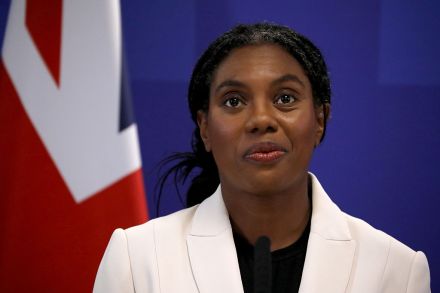
Fourteen things we learned from Kemi Badenoch’s Tory conference speech

From our UK edition

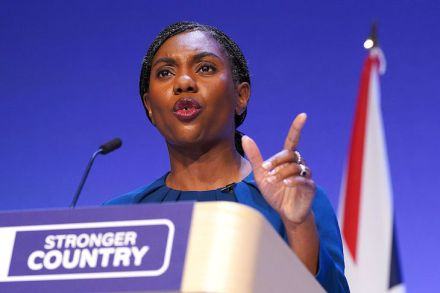
Kemi Badenoch delivered her Conservative party conference speech in Birmingham this afternoon. Here are fourteen things we learned from her speech: 1) Kemi Badenoch has her tail up Anyone who read my interview with the Conservative leader last week, where she claimed: ‘I get better every day,’ knows that Badenoch is not lacking for confidence, having turned her personal prospects around with a barnstorming speech to the party faithful at last year’s annual conference. Today she seemed confident in herself, her views and the arguments she wants to make — though the delivery was a little less urgent than last year, the pauses too prevalent and the energy a little thin until the final ten minutes. Badenoch’s plan is to remind people of how toxic that 2016-19 period was.
Kemi Badenoch has given the Tories cause for hope

From our UK edition

The old jokes are the best. When I arrived in Birmingham on Sunday evening for the Tory party conference, I immediately ran into a former Downing Street bigwig. ‘The Conservative party has two modes – panic and complacency,’ he noted. ‘Last year was panic. This year it’s complacency.’ Twelve months ago, everyone was miserable. Kemi Badenoch’s leadership was on the line and the Tories were on between 17  and 22 per cent in the polls. This year, everyone was delirious at having survived and congratulating themselves on having located a vast political battleground vacated by the leftward-lurching Andy Burnham and the rightward-lurching Reform UK. Badenoch’s personal ratings have soared and the Tories poll… er, between 17 and 22 per cent.

Is Badenoch cutting through?

From our UK edition

We are on the home stretch of the party conference season. It’s the turn of the Greens this weekend and Zack Polanski – now a distant 6-1 shot to win the Holborn and St Pancras by-election next week – has given his big speech, promising to keep Andy Burnham’s Labour honest. ‘Vote Green and watch Labour move,’ he cried, citing the government’s shifts on Israel and fossil fuels. Polanski is now the one in the hotseat with the regional broadcast political editors. James Heale is down in Brighton keeping an eye on things and rounds up the best of it here. The Greens, somewhat bizarrely, seem to have briefed that if they can turn 30 per cent of the 2024 Labour vote in the by-election, they would then be just four points behind. ‘This is on a knife edge,’ a source says.

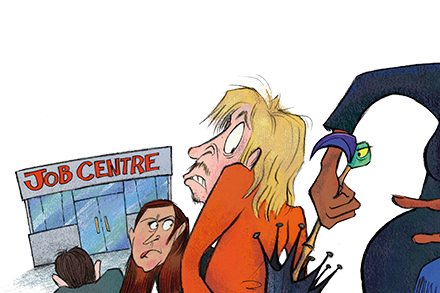
Exclusive: work or face benefits ban, Tories tell under-25s

From our UK edition

Kemi Badenoch, like many in the Labour party, is not sorry to see the back of Keir Starmer. ‘I did not find Starmer an interesting person,’ she says. ‘He never said anything interesting.’ Andy Burnham is a different proposition. ‘Quite interesting,’ she thinks. ‘He has more of a clear sense of who he is politically, which makes him more confident in terms of what he wants to do. But who he is politically is so far removed from who I am politically that I think that there’s a sharper contrast between us.’ We speak in her office in Portcullis House with the Labour conference in full cry in Liverpool. ‘It feels very much like student union people who’ve got older, but they still want to do the stuff that they did in the student union,’ Badenoch says.

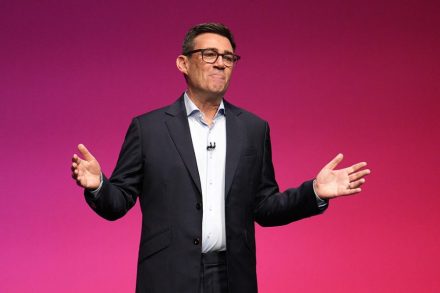
14 things we learned from Andy Burnham’s speech

From our UK edition

1) He’s the most effective speaker we’ve had in a PM for years I’ve been attending party conferences since 2001 and in that time I’ve heard around 70 leaders’ speeches from all the parties. This was one of the most important and defining – I expect it will remain among the half-dozen most memorable. It was big on heart, rather than brain, at times hugely emotional and strangely moving as Burnham became overcome when discussing the recent death of his father. This was both big and bold and nostalgic but also intimate, quiet, drawing you in, gently elegiac for what has been lost in a way you could appreciate (even if you don’t accept Burnham’s diagnosis of what has gone wrong). I judge speeches on ‘the tingle factor’, whether I get that prickle up my spine.

Burnham pours cold water on a snap election

From our UK edition

Andy Burnham has just ruled out a general election next May. As I wrote in my cover story this week, there are a lot of people at the top of Labour thinking about going to the country but – as I and most of my sources concluded – the polling numbers are just not there and the only meaningful policy freedom the PM would gain would be the ability to put up personal taxation. ‘He’ll raise your taxes to pay for migrants and benefit claimants’ looks like the easiest ‘No’ campaign slogan since ‘Take Back Control’. The Prime Minister argued that calling a snap election would leave the country ‘arguing again amongst ourselves’ Party conferences are never much fun for prime ministers.

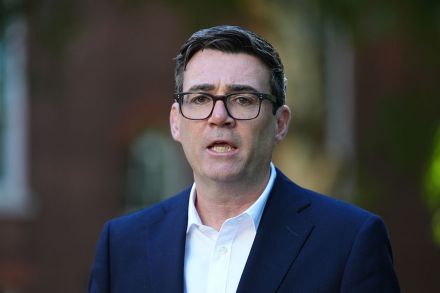
Burnham’s bet: is the Prime Minister planning to call an election?

From our UK edition

On 1 September, Andy Burnham gathered Labour MPs in No. 10 for a rousing speech. ‘We are a fighting force,’ he said. ‘We can win the next election. We have an opportunity now. We’ve got the initiative.’ Some of those present wondered if this was the Prime Minister rolling the pitch for an early election. One MP recalls a comment by Burnham in a smaller group that night: ‘We’ll hopefully see some of you back after the election. Er, most of you!’ Downing Street is adamant the PM would say no such thing, even as a joke. A party adviser accused the source of ‘trouble making’. Burnham’s senior aides deny there is any prospect of an early election. ‘Not going to happen,’ says one. A senior figure in No.

Andy Burnham’s deafening silence on the Russian threat isn’t sustainable

From our UK edition

It’s hard to keep up with what might kill us first. A week ago, the tech-bros were competing to tell us that AI might wipe out humanity within a decade. This week, most of Europe seems to be warning about a Russian unconventional attack on the West. French President Emmanuel Macron today called a meeting of all the political leaders in France to share intelligence assessments of Vladimir Putin’s posture and what appear to be growing aggression from the Moscow machine. Burnham may not be interested in foreign policy, but as legions of previous prime ministers have discovered, it has a way of becoming interested in them 'In recent weeks, the Russian hybrid threat against Europeans and against France has intensified,' he said.

Revealed: Ed Miliband ignored MI6’s warnings over Israel sanctions

From our UK edition

When Andy Burnham was quizzed at PMQs last week about his and Ed Miliband’s decision to sanction the Israeli government over its handling of Gaza, the Prime Minister was surprisingly frank about the trade-offs. He presented it as a decision to prevent ‘the collapse of the two-state solution’ for a peace deal in the Middle East, which he claimed was ‘dying before our eyes’. In his statement to the Commons, Miliband referred to ‘ethnic cleansing’. But Burnham also admitted: ‘We gave the most careful consideration to… all of the risks. The Foreign Secretary and I took close advice from the security services and, of course, officials in the Foreign Office and in our embassies.

How real is the ‘Burnham bounce’?

From our UK edition

We’re still in the dead zone between Reform UK’s conference and the TUC and Lib Dems' next week, with Labour and the Tories to follow. The main government announcement of the week, the decision by Andy Burnham and Ed Miliband to impose sanctions on Israel, seems demonstrably more likely – to put it politely – to deliver victory in the Holborn and St Pancras by-election than it is to deliver a two-state solution to the Middle East wars. It’s worth taking stock at the end of the week about where British politics stands now. I’m grateful to Luke Tryl of More in Common for insights into his latest polling and focus grouping (none of which, he assures me, was paid for by a secret donor).

Meet the most powerful woman in Britain

From our UK edition

Some years ago Antonia Romeo, now the Cabinet Secretary, was stuck in a boring meeting about civil service reform. She regarded the plan as inadequate to create the leaner, meaner machine she hoped to see. ‘Basically you’ve given me a Ford, when I’m more of a Ferrari girl.’ It was a moment which summed up the official who is now accruing arguably more power than any of her predecessors. Romeo is glamorous, suspiciously racy and likes to move fast towards her goals. When Andy Burnham became Prime Minister she secured a seat in the Prime Minister’s outer office, the first time a cabinet secretary has ever sat there. She has written her own job description (signed off by Keir Starmer and now Burnham).

The five takeaways from Reform’s conference

From our UK edition

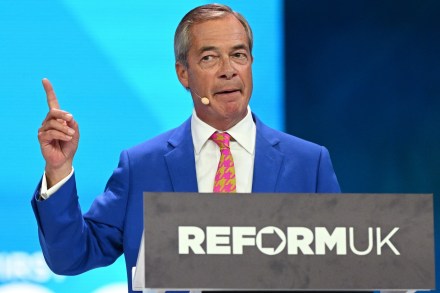
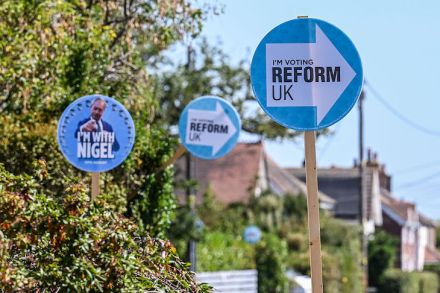
1) THE SPEECH Nigel Farage has made his big speech to Reform’s party conference in Birmingham this evening. It was a bravura display which had his army of supporters in raptures. ‘I believe there will be an election next year’, Farage said, demanding a vote and branding Burnham ‘the Messiah without a mandate’. ‘We will fight to win,’ he said. If he wins power, Farage pledged: ‘We will stop the boats within 100 days of a Reform government. End of.’ Slash benefits spending by £50 billion. Cut taxes on working people ‘in a radical way’. Cut energy bills by £250 ‘and end the net zero lunacy’. Stop judges leaning on the European Convention on Human Rights. Boost NHS training to produce more home-grown nurses and doctors.

Reform is a party in crisis

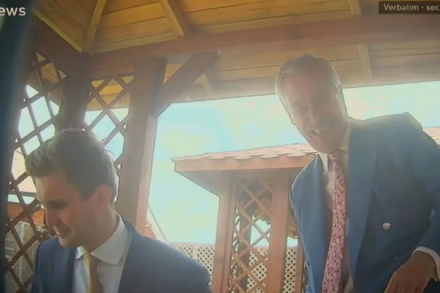
Deputy heads have rolled. Reform UK, in the person of chairman Lee Anderson, announced this morning that Dan Jukes, Nigel Farage’s right hand man, and James Orr, the party’s head of strategy, have stood down and abandoned the party conference. ‘They have left the building and they won’t be coming back,’ Anderson said. Footage screened by Channel 4 on Thursday night showed Jukes appearing to suggest a way to get around electoral law to secure a foreign donation of £500,000. A reporter posed as a UK-based son of an American father, who was to give money to the son to give to Reform after being wooed by both Orr and Jukes. Electoral law sets out that to be a permissible donor to a UK political party you must be a UK registered voter, or a company registered in the UK.

This year’s silly season has turned sinister

From our UK edition

There’s a great scene in The West Wing where the White House is engulfed by a crisis in the Middle East and President Bartlet’s daughter, Ellie, is learning about the region at school. Her teacher, Mr Pordy, asks why there has always been conflict in the Middle East and she gives a response stressing the centuries-old conflicts over land and culture. Bartlet quotes her teacher as telling the class: ‘No. It’s because it’s incredibly hot and there’s no water.’ August is always the silly season, but this one has been sinister too At times over the past few weeks it has seemed as if the best explanation for the heated exchanges raging across the political spectrum is the historic heatwave.

Revealed: the feuding at the heart of Reform

If Tolstoy had written about British politics, he might have noted: ‘Happy parties are all alike; every unhappy party is unhappy in its own way.’ Reform UK is beginning to resemble a laboratory test for the idea that every party run by Nigel Farage is unhappy in the same way. Just as in Ukip and the Brexit party, a highly dominant leader exists at the centre of a court, with extreme tensions between loyalist long marchers and arrivistes, between insurgency and respectability, between campaigning and preparing for government. On Monday a new round of bloodletting erupted, when the founder of ConservativeHome, Tim Montgomerie, who defected to Reform two years ago, was suspended following his public criticism of Farage and the home affairs spokesman Zia Yusuf.

Five things we learned from the Clacton by-election

From our UK edition

1) Nigel Farage is king of Clacton The Reform UK leader won the oddest by-election in UK political history. His margin of victory was that usually secured by an Iranian hardliner – 63 per cent of the vote – rather than the full North Korean or Saddam Hussein 99 per cent. Reform will be pretty happy with that as anything over 60 per cent was going to be a very healthy margin of victory.  The turnout also shows this was not a trick of the light. Forty-four per cent is very healthy in a by-election, particularly one which was not a contest, since it can easily fall to 25-30 per cent away from a general election.  Farage’s team is also pleased that his total number of votes, 22,239, was 1,014 more than he secured at the general election in 2024.

Politicians’ contempt for the press is contempt for the public

From our UK edition

I was hacked by the Chinese a few years ago. Security at News UK, where I was employed on the Sunday Times, told around 20 journalists that our emails had been compromised. An agency of the Chinese state was searching for information on our coverage of Chinese issues, including Beijing’s crushing of Hong Kong and the decision to sanction members of parliament. To be honest, I’d have been pretty offended if I hadn’t been on the list. Frankly, if the Chinese want to know what I know, they can take out a subscription to The Spectator, just as they could have bought a copy of the Sunday Times. But this is what you expect from the Chinese, isn’t it?

Rod Liddle was one of the finest journalists of his generation

From our UK edition

I only met Rod Liddle a few times, though at The Spectator and the Sunday Times I worked alongside him and to a large degree in his shadow. He was irascible and lugubrious and bloody funny, both in person and in print. Like a lot of bogeymen, in person he was a delight and nothing like his image. He was humble and polite and faintly decorous, keen to know what you thought and to know what you knew – even though he was clear about what he knew and generally put it better than anyone else, week in and week out. At first he was a guilty pleasure, someone who would write down what the rest of us were thinking, often without the decorous need in speech to acknowledge the validity of views of those who differ.

No election? Don’t bet on it

From our UK edition

When Dwight D. Eisenhower had to decide whether to launch the D-Day armada he kept a close eye on the weather. Pick the wrong moment and the entire cause of winning the war would have been set back and the lives of 135,000 soldiers imperilled. The supreme allied commander, head of a fractious coalition riven by egos and infighting (you see where I’m going here), had plenty of expert advice, as is made clear in David Haig’s play Pressure. The British meteorologist, James Stagg, warned that the original date for D-Day, 5 June 1944, would be storm-ridden, but saw a window of opportunity the next day. The American meteorologist Irving P. Krick was more gung-ho and urged Eisenhower not to postpone. Ultimately, the decision was Eisenhower’s alone.

Voters are buying what Burnham is selling

From our UK edition

We are approaching the end of Andy Burnham’s first week in power. There are as many questions as answers about where he will ultimately plant his flag on the big macro-economic stuff and on policies which make for difficult politics. But his Downing Street team will be pretty happy with how things have gone for the first few days. Burnham understands that a large part of the premiership is about communicating and that policy can be a form of communication – something Keir Starmer, Rishi Sunak and Theresa May, of our recent premiers, either denied or deplored I doubt many ordinary folk will quite grasp why he has proclaimed the opening of No.