Tim Shipman

Tim Shipman

Tim Shipman is political editor of The Spectator.

Has Reform peaked?

From our UK edition

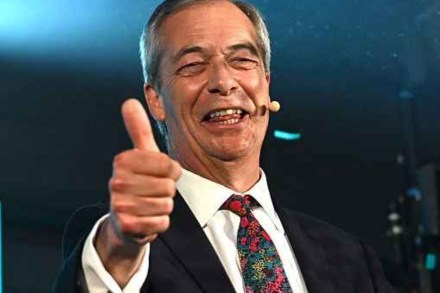
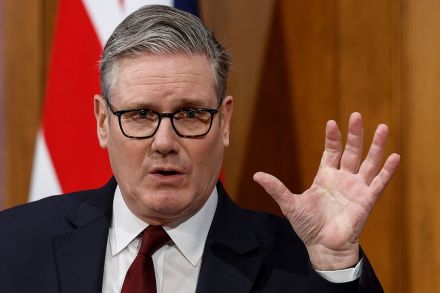
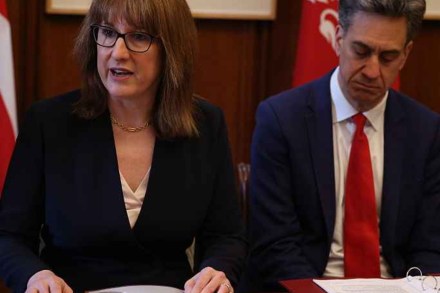
The week ends as it began, with Keir Starmer outlining plans to curb child poverty, news that Rachel Reeves won’t face a formal investigation into whether she misled the markets over her Budget, ministers growing bolder about opposing Brexit and questions about the future of the war in Ukraine. For me the most interesting question of the week is whether we can credibly ask for the first time: has Reform peaked? Public anger at both Labour and the Tories remains palpable and Farage remains overwhelmingly the greatest beneficiary of the protest vote I interviewed Nigel Farage earlier this week for the Christmas double issue of the magazine so keep your eyes peeled for that. Reform’s leader knows that if he is to win the next election it will be a rollercoaster ride.

The murky world of political donations

From our UK edition

15 min listen

Reform are in the money. This morning the Electoral Commission has dropped the latest figures on political donations, and Reform are streets ahead. Former Tory donor Christopher Harborne has handed Nigel Farage £9 million, what we believe to be a record amount from a single donor. How much impact will this have on Reform’s chances of electoral success? How much influence do political donors have over how their money is spent? Elsewhere, Reform are conducting a press conference later this afternoon where they will be sticking it to Labour over its decision to postpone more local elections. Without new mayoral elections in four more areas, where are Reform going to spend their new cash? Oscar Edmondson speaks to Tim Shipman and James Heale. Produced by Oscar Edmondson.

Labour’s plan to unite the left

From our UK edition

It is easy to criticise the Budget. The process was a chaotic mess. For many on the right, Rachel Reeves’s £26 billion tax raid to placate Labour MPs was a form of madness as well as badness. But good politics means understanding your opponents. One former No. 10 Tory thinks there was method in the madness: ‘It totally makes sense for Labour to move to the left.’ Nearly half of those who voted Labour last year would not vote for the party today. The number of voters fleeing Labour to the right – to Reform or the Tories – has remained steady since January at between 13 and 16 per cent, or one in seven of their 2024 voter base. Two-thirds of those votes have been lost to Reform.

PMQs: at least Kemi is enjoying herself

From our UK edition

15 min listen

It was PMQs today and it is clear to see that Kemi Badenoch is starting to enjoy herself. She opened with the departure of the head of the Office for Budget Responsibility (OBR), as it allowed her to suggest that Starmer was dodging taking responsibility himself. She asked: ‘Does the Prime Minister believe that when an organisation descends into total shambles, the person at the top should resign?’ To be fair, she has lots of ammunition between the leaks, botched Budgets and Cabinet discontent – however, the leader of the opposition does seem to be hitting her stride just at the moment when the Tories are enjoying a modest bump in the polls. Can she keep it up?

Did Rachel Reeves lie?

From our UK edition

15 min listen

Lots has happened over the weekend – Your Party (as they are now actually called) have proven to be the gift that keeps on giving, there been another defection to Reform and Rachel Reeves stands accused of lying about the extent of the fiscal blackhole in her pre-Budget briefings. Some within Labour see it as a victory of sorts for Rachel Reeves that, so far, the post-Budget debate has focused mostly on the run-up to her statement rather than the measures it contained. However Keir Starmer has been mobilised this morning to give an 'everything is fine' speech in support of the Chancellor, with whom his fate is intertwined. Could she be forced to go? How serious is this? Lucy Dunn speaks to James Heale and Tim Shipman. Produced by Oscar Edmondson.

Rachel Reeves’s Budget was based on fiction

From our UK edition

I think we will look back on this week as one of the most pivotal of this government. It was the moment when Keir Starmer and Rachel Reeves revealed themselves. This week’s Budget showed clearly what Reeves’s revealed preferences are – and what they are not When we were all trying to work out what Theresa May really thought about Brexit, her chief negotiator Oliver Robbins privately told his team they should be guided by her ‘revealed preferences’. This week’s Budget showed clearly what Reeves’s revealed preferences are – and what they are not. Growth is not, as the government keeps claiming, its top priority. Growth was downgraded for every year after this one, and the Chancellor made almost no mention of it in her speech on Wednesday.

The black hole myth & the brain drain conundrum

From our UK edition

16 min listen

With Budget week finally at an end, certain mysteries remain. Chief among them is why the Chancellor decided to give an emergency speech preparing the public for a rise in income tax. On 4 November, Rachel Reeves summoned journalists to Downing Street early in the morning to warn that ‘the productivity performance we inherited is weaker than previously thought’. She then refused to rule out hiking income tax rates – sending a clear signal to markets that rises were coming. Nine days later, however, the Treasury let it be known via the FT that income tax increases would not be needed after all.

Defending marriage, broken Budgets & the ‘original sin’ of industrialisation

From our UK edition

38 min listen

'Marriage is the real rebellion’ argues Madeline Grant in the Spectator’s cover article this week. The Office for National Statistics predicts that by 2050 only 30 per cent of adults will be married. This amounts to a ‘relationship recession’ where singleness is ‘more in vogue now than it has been since the dissolution of the monastries’. With a rising division between the sexes, and many resorting to alternative relationships like polyamory, how can we defend marriage? For this week’s Edition, host William Moore is joined by political editor Tim Shipman, assistant editor – and parliamentary sketchwriter – Madeline Grant and the Spectator’s diary writer this week, former Chancellor and Conservative MP Kwasi Kwarteng.

The OBR on the Budget leak & why they’re always wrong

From our UK edition

30 min listen

Tim Shipman sits down with Professor David Miles of the Office for Budget Responsibility the day after a Budget overshadowed by an extraordinary leak. David sets out what the OBR now believes about growth, headroom and productivity — and why the UK’s long-term prospects look weaker than hoped. He discusses the political choices behind back-loaded tax rises, the decision not to score the workers’ rights reforms, and why Britain is so slow to adopt its own inventions. Plus: what the OBR’s new leak investigation will look like, and how confident we should really be in those fiscal forecasts. Produced by Oscar Edmondson.

Nick Thomas-Symonds: ‘The Brexit architects essentially ran away’

From our UK edition

With his owlish expression and affable manner, Nick Thomas-Symonds looks more like the academic that he was, rather than the political bomb disposal expert he has become. Brexit is the greatest political issue for a generation, yet Keir Starmer has chosen to put this softly spoken Welshman in charge of defusing it. The Cabinet Office minister, responsible for post-Brexit negotiations with the EU, is following in the footsteps of Olly Robbins and David Frost, but his lack of public notoriety says much about how things have changed as we approach the tenth anniversary next year of the vote to Leave.

Rachel Reeves’s road to ruin

From our UK edition

Rachel Reeves is lucky that the name ‘omnishambles Budget’ has already been taken. When the entire document was published long before she got to her feet in the Commons, the only thing that would have made this most chaotic pre-Budget period more shambolic would have been if the Deputy Speaker had banned her from making her statement at all. Reeves described her second Budget as an expression of ‘Labour values’ but really it is a manifestation of Labour foibles.

Rachel Reeves’s farcical Budget

From our UK edition

15 min listen

As Budget days go, today was unprecedented. The complete list of measures announced by Rachel Reeves – along with their costings and economic impacts – was leaked by the Office for Budget Responsibility (OBR) an hour before the Chancellor took to her feet. The OBR apologised and called it a ‘technical error’. The headline is tax hikes to the tune of £26 billion, income tax thresholds will be frozen again and the tax burden will hit a record high at 38 per cent of GDP. Was this the most farcical Budget in history? Michael Simmons speaks to James Heale and Tim Shipman.

Exclusive: Military chiefs go to war with Labour

From our UK edition

While Westminster is consumed by the fallout from the Budget, I can reveal there is another major headache on the horizon for Keir Starmer – a new confrontation with the armed forces over defence spending. I’m told there was an extraordinary meeting on Tuesday in the Ministry of Defence (MoD) in which the Chief of the Defence Staff, Air Chief Marshal Sir Richard Knighton, and the three heads of the services sat down to discuss the defence investment plan, which governs day-to-day budgets after the recent Strategic Defence and Security Review (SDSR). At one point the chiefs threw out all the civil servants and their military aides.

Britain’s expensive energy problem – with Claire Coutinho

From our UK edition

16 min listen

Britain has an energy problem – while we produce some of the cleanest in the world, it's also the most expensive, and that's the case for almost every avenue of energy. On the day the Spectator hosts its Energy Summit in Westminster, a report commissioned by the Prime Minister has found that the UK is the most expensive place to produce nuclear energy. This is important for so many avenues of government – from future proofing for climate change, to reducing the burden households are facing through the cost-of-living crisis. Claire Coutinho, shadow secretary of state for energy, and political editor Tim Shipman join economics editor Michael Simmons to talk about tackling Britain's energy crisis and how energy policy could feed into Labour's budget in two days time.

It’s time to dispose of the Budget

From our UK edition

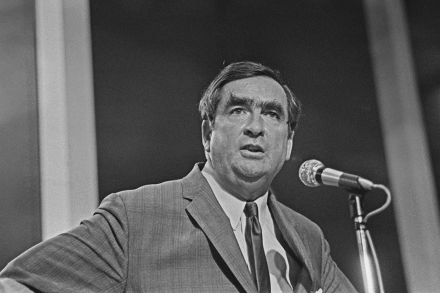
Denis Healey’s ‘caretaker Budget’ on 3 April 1979 is an odd focus for Labour nostalgia. It came a week after Jim Callaghan’s government had lost a vote of no confidence, paving the way for Margaret Thatcher’s arrival in No. 10. Healey was reduced to merely introducing the finance bill to maintain normal tax collection functions, and made no other announcements at all. But as chaos surrounds Rachel Reeves’s second Budget next week, one senior figure fondly recalled that simpler time. Healey began his 27-minute ‘non-Budget’ (as Geoffrey Howe called it) speech by confessing: ‘I feel a little bit like a man who turns up to play the leading role in the opera and all they want him to do is to help them hold the scenery together.

Shabana Mahmood vs the asylum system

From our UK edition

15 min listen

This afternoon, the Home Secretary will set out in the House of Commons her proposed reforms to the asylum system. The headline changes proposed by Shabana Mahmood have been well briefed in the weekend press: refugees will have temporary status and be required to reapply to remain in Britain every two-and-a-half years; those arriving would have to wait 20 years before they can apply for permanent settlement; and countries that refuse to take back migrants will be threatened with visa bans – Angola, Namibia and the Democratic Republic of Congo are among those likely to be initially punished. Is she the one to finally take on the migration crisis? Lucy Dunn speaks to Tim Shipman and James Heale.

Keir Starmer’s omnishambles government

From our UK edition

What a week. Seven days ago, we were wondering what Rachel Reeves was up to with her pre-Budget messaging. At the start of this week the future of the Prime Minister was seriously called into doubt with a bunch of calamitous late-night briefings to the media. At the end of the daftest seven days in British politics since 2022, it’s as if the Chancellor called up No. 10 and said: ‘Hold my beer.’ At 10 p.m. yesterday, the FT – the constitutionally expected route through which the Treasury leaks – revealed that Labour is ditching plans to raise income tax by 2p in the pound. One Labour MP noted: ‘We rolled the pitch all right, but we’ve rolled the wrong pitch.

What is going on in the Treasury!?

From our UK edition

15 min listen

With less than a fortnight to go until the Budget, it seems Rachel Reeves has performed an almighty U-turn. At the beginning of the week, the established consensus in Westminster was that the base rate of income tax would rise, breaking Labour’s flagship manifesto pledge. The Chancellor had already rolled the pitch, holding a press conference at which she warned ‘each of us must do our bit’. But the Financial Times – Reeves’ newspaper of choice – reports today that she has ‘ripped up’ her plans. Why the sudden change of heart? Oscar Edmondson speaks to James Heale and Tim Shipman. Produced by Oscar Edmondson.

Politics or economics – which is Labour worst at?

From our UK edition

11 min listen

It’s been another bruising week for the British economy. New GDP figures reveal that growth has almost flatlined, inching up by just 0.1 per cent between July and August – a sign, many fear, that the UK is drifting into deeper malaise. With the budget less than a fortnight away, can the Chancellor square the circle of sluggish growth, tax pressures and a restless Labour party? James Heale speaks to Tim Shipman and Paul Johnson about the mounting economic uncertainties, the Treasury’s lack of a clear tax strategy, and the political doom loop the government now finds itself in. Are Labour’s early missteps catching up with them – and will the coming budget steady the ship or spark a fresh crisis? Produced by Oscar Edmondson and Megan McElroy.

Inside the Wes Streeting plot

From our UK edition

Keir Starmer is stuck in a catch-22. If he is to avoid the threat of continual leadership challenges, the Prime Minister will need to deal with what every poll shows are the public’s three overriding concerns: the cost of living, rampant illegal immigration and the state of the NHS. But if serious progress is made in any of these areas, it is likely to turn the minister responsible into a viable leadership candidate. Let’s call it catch-25. Rachel Reeves at the Treasury has a monumental task and is politically tied to the Starmer project, so she can be ruled out. Of the other two key issues, most progress has been made in reducing NHS waiting lists, the task of Wes Streeting.