Tim Shipman

Tim Shipman

Tim Shipman is political editor of The Spectator.

Keir Starmer, pub harmer

11 min listen

Another year, another U-turn. We expect that the Labour government will be forced to climb down on forthcoming increases to the business rates bills faced by pubs in England. This comes after ferocious industry backlash, spearheaded by figures such as Tom Kerridge, who has been out in the media this week drawing attention to the more than 100 per cent increase in costs some of his establishments are facing. Some are pointing to the slow unravelling of Rachel Reeves’s Budget but – perhaps more damaging – is the optics of this: surely nothing mobilises deep England more than coming for our pubs. What impact will this have on Labour’s credibility? And what impact will it have on Rachel Reeves’s headroom? Oscar Edmondson speaks to Michael Simmons and Tim Shipman.

Stormy seas, Trump’s revolution & Gen Z’s sex recession

43 min listen

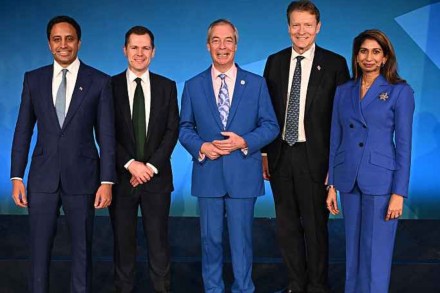
Can Farage plot a route to Number 10, asks Tim Shipman in our cover article this week. He might be flanked by heavyweights – such as his head of policy Zia Yusuf and Conservative Party defector Danny Kruger MP – but he will need a lot more people to pull off his biggest upset for British politics yet. Where will they come from? And what’s the balance he needs to strike between being radical enough to win power but also without alienating significant chunks of the electorate? Plus, as former UK ambassador to the US Peter Mandelson breaks his silence – in this week's Spectator – to argue that Europe needs to adapt to a new reality, Freddy Gray ponders what Trump’s ‘Donroe Doctrine’ is actually all about. Immigration? Drugs? Oil? Or just plain chaos?

How Reform plans to govern

18 min listen

2025 was the easy part for Reform. If they win the election, however, how do they actually govern? In The Spectator this week, Tim Shipman writes about the party’s plans to tackle Whitehall bloat, bypass the Lords and restore the authority of the Prime Minister over the various institutions of state. The man tasked with working this out is Danny Kruger, who is working up plans to push change through using Orders in Council – a device in the Privy Council – as well as statutory instruments and ministerial guidance to avoid the need for primary legislation. But the party is only in the foothills, and one source warns that ‘Nigel doesn’t trust other politicians’: can he build a winning team? Who has his ear? And does he actually want to be Prime Minister?

Why is Keir Starmer so irritable?

16 min listen

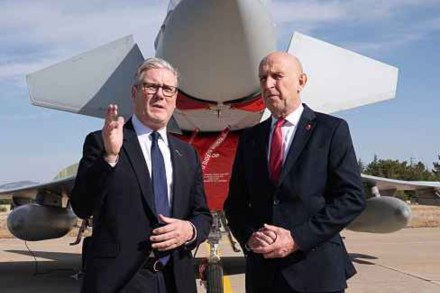
It is the first Prime Minister’s Questions of the new year – and Keir Starmer returns to the Commons already under pressure. With major international crises unfolding, Kemi Badenoch used PMQs to question whether the Prime Minister is present, engaged or in control. In response, Starmer just seemed narky. As the exchange descended into rows over Ukraine, Venezuela and the role of government lawyers, the issue of the armed forces – how they are supported and resourced – came up once again. With global events dominating the news agenda, are British forces prepared to be deployed – and does the Labour party really grasp the political danger of that debate? Oscar Edmondson speaks to Tim Shipman and Isabel Hardman. Produced by Oscar Edmondson.

‘We will use the power of democracy to blow you away’: Reform plots a path to No. 10

As he made his way to lunch on Monday, Danny Kruger, the former Tory MP who defected to Reform last year, could be seen clutching a well-thumbed copy of John Campbell’s biography of Lord Haldane, one of the forgotten heroes of British politics. Most British politicians in search of heroes look to Churchill or Attlee for inspiration. But as a reforming secretary of state for war and lord chancellor in the Liberal government before the first world war, Haldane ‘basically modernised the British state’, says Kruger. ‘He created the War Office and the Imperial Defence Committee, the Admiralty, the modern navy, the LSE and the RAF.’ Add to that the intelligence agencies, Imperial College London and the Territorial Army.

International statesman or ‘never here Keir’?

18 min listen

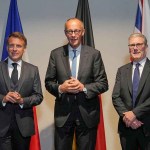
From 'regime change' in Venezuela to Russia's war in Ukraine, the Labour government is trying to navigate complicated situations across foreign affairs. Having appeared to weather the domestic reaction to the situation in Venezuela, Keir Starmer is in Paris today to discuss Ukraine alongside Chancellor Merz and Presidents Macron and Zelensky. This is undoubtably important – but to what extent will this fuel the criticism that the Prime Minister spends too much time abroad? And how can Starmer reconcile the demands of foreign affairs with his domestic priorities? James Heale and Tim Shipman join Patrick Gibbons to discuss. Produced by Patrick Gibbons.

Regime change in Caracas … but not Westminster

20 min listen

It’s our first podcast back in the office of 2026 – and the year has started with a bang, of course, after the successful US operation to remove Nicolas Maduro from Venezuela. He will appear in a Manhattan court later today. This throws up all sorts of problems for Labour and the left more broadly – they seem to be hedging their bets on whether to condemn this as a breach of, if not international law, then certainly international norms, or to celebrate the removal of a corrupt regime. Could this be a dividing line for the Labour party? Elsewhere, the battle that Labour want to focus on is the cost of living crisis.

The 14 questions that will define British politics in 2026

Contemplating a new year always raises questions. Was there a Third Protocol? What was wrong with Oral-A? Can Keir Starmer survive 2026 as prime minister? It is the biggest question in politics this year and the fact that it does not have an easy answer illustrates the mess Starmer has got himself into over the past 18 months. A few days before Christmas, a senior figure in No. 10 outlined how Labour’s high command still believes the winds will change for the party in 2026: a ‘virtuous circle’ of falling interest rates and inflation, more investment, growth, and rising confidence in the government among the public and the Parliamentary Labour Party. Another Starmer loyalist noted the old adage: ‘It’s always darkest before the dawn.

Year in Review 2025 – Live

32 min listen

From scandals and cabinet chaos to Trumpian antics and the ‘special’ relationship that some say is anything but, The Spectator presents The Year in Review – a look back at the funniest and most tragic political moments of 2025. Join The Spectator’s editor Michael Gove, deputy editor Freddy Gray, political editor Tim Shipman, deputy political editor James Heale and parliamentary sketch-writer Madeline Grant, along with special guests, who’ll all share their favourite moments from the past 12 months.

Starmer caves to the farmers

The government has delivered an early Christmas present to farmers by modifying the new rules on inheritance tax. Or that’s one way of looking at it. The other is that it’s a huge political U-turn, the latest of many, after months of digging in and insisting there was nothing to see here. Following talks last week between Keir Starmer and Tom Bradshaw, the president of the National Farmers Union, the government has increased the threshold at which IHT will apply from £1 million to £2.5 million. It allows spouses to pass on £5 million worth of assets between them before being hit by inheritance tax. The number of estates affected will fall from 375 to 185, so while it’s not a total solution, but farmers regard it as a step in the right direction.

Is Starmer finally learning the art of politics?

The theme of British politics in 2025 has been the assertion of the fun fringe over the staid centre. Nigel Farage and Reform have led all year in the polls and maintain a healthy lead over Labour and the Tories as the year comes to a close. In the final quarter of the year, the big story has been the emergence of the Green party, under Zack Polanski’s leadership. Both he and Farage know what they think and say it with gusto – little quarter is asked or given. We are at the stage where populists have captured the imagination and are also popular. Reform now has more members than any other political party and the Greens are hunting down Labour for the silver medal spot.

Who won 2025? with Quentin Letts

25 min listen

As is fast becoming a tradition on Coffee House Shots at this time of year, James Heale and Tim Shipman are joined by sketch writer Quentin Letts to go through the events of the past 12 months. From sackings to resignations, and Farage to Polanski, it is a year in which the centuries-old consensus has been challenged and Westminster is delicately poised ahead of a 2026 which will define politics for the remainder of this parliamentary term. On the podcast, they discuss who is up and who is down, why Farage might be running out of steam and who is the most insufferable MP? Produced by Oscar Edmondson and Megan McElroy.

Starmer should pick a UN ambassador who knows Trump

After three months of speculation, Keir Starmer has appointed a replacement for Peter Mandelson as ambassador to Washington. The winner is career diplomat Christian Turner, who has, for the last couple of years, been the political director at the Foreign Office. Turner is considered a high-flyer and has been tipped for big roles like this for years, but it certainly won’t have done him any harm to have been one of the key link men with the incoming Labour administration a year ago. He and Oliver Robbins, the permanent secretary, have been presiding over a difficult reduction in headcount and awkward internal politics over both Gaza and Trump. He is just the sort of official who impresses the Prime Minister.

Daniel Finkelstein on anti-Semitism, Nick Fuentes & viral hate

33 min listen

Nick Fuentes is a 27-year-old American influencer with a growing following. He believes America has been subverted by rich, powerful Jews. He was recently interviewed by Piers Morgan, where these views were put to him directly. During the exchange, Morgan referenced a video made by Times columnist Danny Finkelstein about his parents – a clip that has since led to Finkelstein being inundated with thousands of antisemitic messages. Danny Finkelstein joins The Spectator’s political editor Tim Shipman to discuss the growth of antisemitism, and what it reveals about modern Britain, America and the internet. They explore the pressures of multiculturalism, what this all means for liberal democracy, and the fragility of the political and media ‘mainstream’.

A ‘classically awful’ PMQs to round out the year

10 min listen

Today was the final PMQs of the year – and it was certainly not a classic. It is customary for the Prime Minister and the leader of the opposition to make some attempt at Christmas cheer by telling jokes at the despatch box, but this year’s zingers were awful. Despite a promising start from Keir Starmer, it soon degenerated into quips about whether the Prime Minister has ‘the baubles’ and whether Kemi Badenoch will be ‘Home Alone’. None of the jokes were delivered with any aplomb. Is this parliament at its worst? Also today, Wes Streeting is under pressure as the junior doctors’ strike begins – how is he dealing with the walkout? James Heale speaks to Isabel Hardman and Tim Shipman. Produced by Oscar Edmondson.

Why Britain needs to wake up to extremism

16 min listen

As the world reacts to the attacks on Bondi Beach in Australia, Conservative peer Paul Goodman joins Tim Shipman and James Heale to discuss the failure of successive British governments to properly tackle extremism – especially Islamist extremism – over the past two decades. In the post 'War On Terror' era, there was a reluctance by some to discuss the problem openly as it got tied up in other polarising topics like immigration. Though that reluctance appears to be fading, Paul argues that there is a 'communalist air of voting' in British politics now, and he warns of the dangers that face British politics if fragmentation becomes entrenched in party politics. Plus – Trump is suing the BBC for $5 billion. What's his motivation? Produced by Patrick Gibbons.

The 12 things that mattered in politics in 2025

We are in the pre-Christmas dog days and politics has, finally, slowed down a bit. Reflecting on 2025, here are my top 12 key moments which tell us the most about where we are in politics and how things might pan out in 2026. Keir Starmer had a decent start to the year, while Nigel Farage ‘won’ from May to September. The final quarter saw the emergence of Kemi Badenoch and Zack Polanski: Starmer produces letter from the King inviting Donald Trump on his second state visit, 27 February This might have been the high point of the Prime Minister’s year. He and then foreign secretary David Lammy worked out that Trump was likely to win the presidential election a year earlier and got alongside his team.

‘Growth is not Labour’s priority, it’s hilarious’

13 min listen

The British economy is shrinking. Figures just released by the Office for National Statistics (ONS) show that GDP fell by 0.1 per cent in the three months to October. The contraction came after growth of 0.1 per cent in the three months to September. On a monthly basis, the economy shrank by 0.1 per cent in both September and October after remaining flat in August. Is growth really Labour’s priority? And what impact is all this doom and gloom having inside the party? Lucy Dunn speaks to James Heale and Tim Shipman. Produced by Oscar Edmondson.

Does Farage really want to be Prime Minister?

25 min listen

How does Reform go from political insurgents to a government in waiting? Political editor Tim Shipman gives an insight into his interview with Nigel Farage, which you can read in The Spectator’s Christmas edition. In the background at party headquarters, discussions are under way to work out how Reform would bring sweeping changes to the British state, looking at the model of the American system of executive power. But once handed the reins of power, would Farage actually enjoy the day-to-day business of being prime minister? In the meantime, how are Reform MPs finding Westminster? Tim reveals the unlikely relationship between Reform and the SNP, and how respect shown to the Lib Dems is not reciprocated. Plus, would the Conservatives ever work with Reform?

‘We must not be the Tory party 2.0’: Nigel Farage on his plans for power

Nigel Farage is signing football shirts when I arrive at Reform’s campaign headquarters in Millbank Tower, the building where New Labour prepared for power before 1997. The black shirts are emblazoned with ‘Farage 10’ in gold. ‘Someone called them Nazi colours,’ the leader complains. ‘This always happens when we do well.’ As favourite to be the next prime minister, Farage is sanguine. ‘They’re a special edition, £350 each.’ How many is he signing? ‘—king hundreds,’ he says, pulling his punches on the profanity. Seven hundred to be precise, a cool £245,000 for party coffers. This is the same week the party registers a £9 million donation from the crypto millionaire Christopher Harborne, the largest single donation in British political history.