
These feel like the most significant local elections for a generation. It was a potentially historic day for Reform and Plaid Cymru, with a few caveats. It was a good day for the Greens and the SNP, but not as good as it might have been. It was a disastrous day for Labour, without caveats; a pretty bad day for the Tories, but with some caveats; and a low-key day for the Lib Dems, which will both encourage and infuriate them.
Here’s what we have learned:
1. Reform is in pole position to form the next government
Nigel Farage saw last year’s local elections as proof of concept that he could build a credible electoral force. He saw this year’s as a way of emerging as a national party. By any measure he cleared the hurdle. Nigel Farage has described the results as a ‘historic shift’, with Reform UK on course to win 1,500 seats, double their gains last year, and seizing vast swathes of the Red Wall, which backed Brexit in 2016, Boris Johnson in 2019 and Labour in 2024. Reform won 24 of the 25 seats up for election in Wigan, where Labour lost all 22 seats it was defending; in Halton, Reform won 16 of the 19 seats being contested; and in Salford, Reform won 13 of the 21 contested seats. Havering became Reform’s first London borough. The party also made significant advances in Tory heartlands like Essex and Hampshire. The results also suggest Reform is no longer just a Brexit aftershock. While Farage’s party performed much better in Leave seats than Remain seats, its coalition now appears to combine older Leave voters, anti-immigration voters, culturally conservative working-class Labour defectors and disillusioned ex-Tories. Havering in particular underlined Reform’s ability to turn outer-London grievance politics into real representation.
The results suggest Reform is no longer just a Brexit aftershock
2. Farage has three minor concerns
There are two small caveats. Reform’s overall national vote share seems to be down on last year. In some parts of the affluent South, they lost seats because of anti-Reform tactical voting by Labour and Lib Dem supporters who voted Tory to ‘stop Farage’. The third issue is that in Great Yarmouth, home of Rupert Lowe, who left Reform after a spectacular row with Farage, Lowe’s Restore Britain won all 11 seats in the town, running under the banner of Great Yarmouth First. Many in Reform fear being outflanked to their right by Restore Britain. This could be the least significant issue, a minor local squall, or it could yet be the most impactful trend, if Lowe’s people can fight nationally in elections to come.

3. What does Reform do next?
The challenge this result presents is that it will create new tension between the insurgent wing of Reform – who believe that ever more extreme statements on deportations will lead to populist success with working-class voters – and those in the party, such as Danny Kruger and Robert Jenrick, who think the scale of their success means the party has a duty to not just look like, but actually become, a government-in-waiting, with a serious plan to run the country. Farage understands both sides and will try to ride both horses.
4. Labour is leeching votes to everyone, everywhere
In the North and Midlands, Labour lost heavily to Reform among culturally conservative and economically pessimistic voters. In metropolitan and university-heavy areas, Labour bled support to the Greens, and, in some areas, to pro-Gaza independents. The Liberal Democrats also continued to nibble away at Labour in affluent Remain-oriented suburbs and southern commuter territory. The most significant defeats, in terms of a general election, came with defeat to Reform in strongholds like Hartlepool, Tameside, and Redditch.
5. Labour is split on whether the Greens or Reform present the bigger threat
The data emerging from ward-level analysis suggests Labour is simultaneously losing its older patriotic working-class bloc and parts of its younger progressive metropolitan coalition. That is the nightmare scenario for governing parties because the electoral remedies for each loss often contradict each other politically. Many MPs want to move left, while Red Wall MPs and those in the Blue Labour camp caution against abandoning Shabana Mahmood’s migration reforms, which are backed by 70 per cent of Labour’s own voters, but a minority of its MPs. John Curtice, the veteran psephologist, calculated that Labour is losing far more votes directly to the Greens than to Reform, and that this had also helped Reform win seats where Labour’s vote was eroded. In the battle for the Croydon mayoralty the Tories clung on by just one percentage point over Labour’s Rowenna Davis, who fought a brilliant individual campaign, because the Greens seized nearly 17 per cent of the vote, five points more than Reform. Left-wingers seized on this as evidence that the party should swing left. But politics is about seats, not votes, and Reform is demonstrably the bigger threat to form a government than the Greens.
6. Starmer’s response has hastened his demise
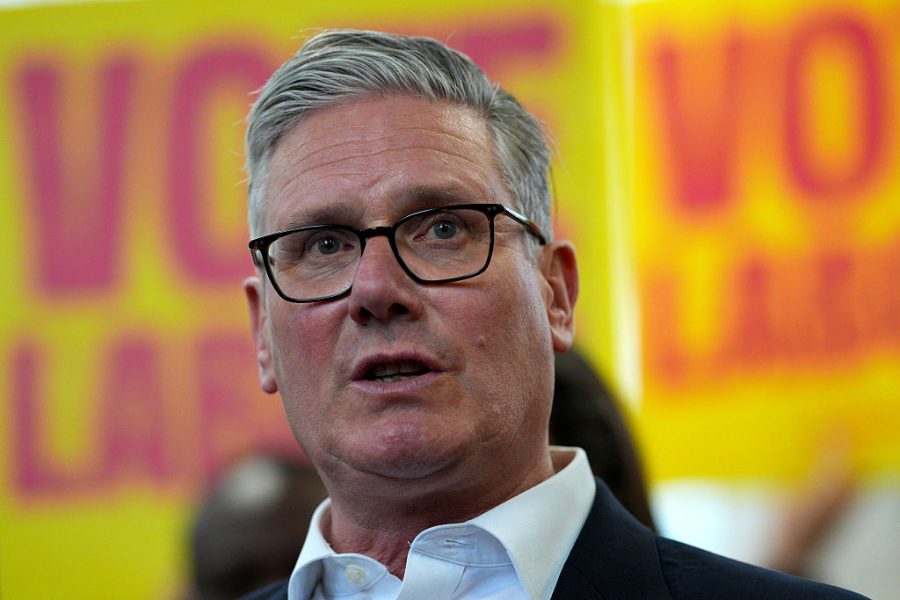
The Prime Minister was out early this morning expressing his regrets about the results but without acknowledging what most Labour campaigners have discovered: that Starmer is personally toxic to a degree scarcely seen in British politics. ‘There is no sugarcoating this,’ he told a room full of depressed-looking activists, before proceeding to spray the sugar around as best as he could. Having effectively been told by the electorate that they were rejecting him and his programme, Starmer muttered the same bromides about ‘tough decisions’ and the need to go further and faster. Ministers were quickly asking each other why he still seemed so tin-eared and, from mid-afternoon, a succession of MPs began going public to say he should provide the date when he plans to leave Downing Street. The most significant of these was Louise Haigh, the former transport secretary who now leads the 80-strong Tribune group of MPs on the left of the party. Others followed at sufficiently similar intervals and using sufficiently similar rhetoric that it looked like an organised effort to force him out. Most don’t want an immediate contest, not least because Andy Burnham is not in parliament – but many want, at a bare minimum, for Starmer to acknowledge he cannot take his party into battle with Farage at the next election.
Manchester is now a sea of teal after huge Reform advances in Burnhamland
7. Andy Burnham might struggle to find a winnable seat
The leading pretender to the Starmer throne is building a campaign on his ‘Manchesterism’ creed, and Labour’s dire performance strengthens the case for someone who can speak to voters there more effectively than Starmer. But Manchester is now a sea of teal after huge Reform advances in Burnhamland. To become Labour leader, Burnham will have to fight a by-election and precious few corners of the North West now look like safe Labour seats. Allies and pollsters say his personal popularity could still take Burnham to victory but he will have to be brave, organised and choose his battlefield carefully. One place he certainly won’t be trying is his old seat of Leigh, which Reform won at a canter.
8. Plaid Cymru has won Wales
For the first time in more than the quarter-century since devolution, Labour is no longer in charge in Wales. Labour’s outgoing First Minister, Eluned Morgan, finished fourth in her seat with just 7.3 per cent of the vote and was only 0.2 per cent ahead of the fifth-placed Greens. But at least she will become a future Trivial Pursuit question: Morgan became the first sitting head of government in the UK to lose her seat at an election. Plaid Cymru has come top in the Senedd elections, with 43 of the 96 seats. Reform took 34 seats and Welsh Labour just 9.
9. The SNP is back, but not as dominant as it hoped
John Swinney, the current SNP leader, will become First Minister again in Scotland, but the party did not get close to a majority and in several instances narrowly avoided serious setbacks. Stephen Flynn, the leader of the party in Westminster who is returning home with an eye on the leadership only narrowly won his seat, aided by a surge in support for Reform, which took votes from his Tory challengers. Angus Robertson, the former Westminster leader, was trounced in Edinburgh Central by the Greens, who won their first seat in Holyrood. If Unionists vote more tactically in the general election, it could spell trouble for the Nationalists.
10. Kemi Badenoch might save the Tories and lose her seat
The Tories look set to mirror last year’s losses of around 600 council seats, but there were pockets of resistance that will give optimistic Conservatives some heart. Just as bad local elections in 1990 were tempered by winning Westminster and Wandsworth councils. This time they gained Westminster from Labour, taking 32 seats to Labour’s 22, became the biggest party in Wandsworth, and held on in Bexley, which was a target for Reform. The Conservatives also held Harlow, gaining five seats, with Labour losing five, and held Broxbourne and Fareham – which suggest some Reform-curious 2024 Labour voters have, in specific seats, gone Tory rather than Reform to register a protest. However, Reform has a two-thirds majority in Essex, the heartland of modern Conservatism – the bellwether which delivered victory to Margaret Thatcher and John Major – and is home to the parliamentary seats of Badenoch, James Cleverly, Priti Patel, Alex Burghart and Mark Francois. Badenoch’s improved performance over the last year may have saved her party from the total wipeout that Farage predicted, but there is every chance she could pay the ultimate price at the next election.
11. The Conservatives could reclaim the London mayoralty
The combination of the results in Essex and London could now convince one of the big guns to run as Tory candidate for London mayor. In Bexley, part of the ‘doughnut’ of leafy outer London boroughs which propelled Boris Johnson to mayoral victory, the Tory vote held up well thanks to some tactical voting by opponents of Reform. They also held Bromley, but Havering went to Reform, and the Tory recovery in Hillingdon and Croydon looks soft. Nonetheless, one pollster, who had thought the contest would come down to a battle between Reform and the Greens in 2027 now thinks it will be a battle between Labour and Tories. If Sadiq Khan runs again, he could hold together the coalition of Labour traditionalists, young progressives and sectarians which has seen him over the line twice. But Seb Coe, the former athlete and London 2012 chief is already preparing to stand and he could well now face a challenge from Cleverly, who lives in Southeast London and is a good enough communicator to reconstruct the Johnson coalition. Cleverly, who fancied the job but was put off by Reform’s surge and his return to the shadow cabinet, was getting calls from people today urging him to have a go.
12. Anti-Semitism capped the Green advance
The Greens advanced significantly in several affluent metropolitan and progressive areas and won the Hackney mayoralty – a psychologically important breakthrough. Elsewhere in London (five up in Ealing) and areas of progressive affluence they made gains (four in Southampton, three in Salford, four in Oxford). But in Richmond, one of the most heavily Jewish boroughs in outer London, they lost all 5 seats they held to the Liberal Democrats. The Greens went into election day with more than 30 candidates being investigated over anti-Semitism in an internal party probe, two London candidates arrested for ‘stirring up racial hatred online’, and Polanski under sustained pressure for failing to act decisively.
13. The Lib Dems shuffle forwards
The Lib Dems continued to make some progress, on course to pick up a decent haul of council seats, but while other protest vote parties are romping along, gathering momentum and publicity, MPs are growing increasingly frustrated that Ed Davey’s lacklustre leadership means they are not winning the spoils they feel they deserve. This result is neither good enough to allay concerns about his leadership or bad enough to warrant a challenge to it. Dave McCobb, their campaign director, will probably be quietly satisfied that he’s winning more ground troops for the general election and solidifying his key castles, sweeping the board in Richmond and advancing in Sutton.
There are still more results to come and within Labour much to play out over the weekend, but this was a seismic day for the reorientation of British politics, echoes of which are likely to still be reverberating in 2029.
Democracy is a wonderful thing.
Have a good weekend,
Tim





Comments