Peter Hoskin

The government’s transparent approach to worklessness

Sometimes hope lies in the details. Take this morning's press release from the DWP, for instance. On the surface, it is a response to today's encouraging employment figures. But what it really is is a new way of approaching the problem of worklessness in this country. And all because of its headline: "Figures reveal five million on out of work benefits as Grayling pledges to make work pay." This is, as far as I can remember, the first time that the total out-of-work claimant count has reached the summit of an official release. The last government always knew what the figure was, of course, but never drew much attention to it. Instead, we heard Brown mumbling on about "3 million new jobs," while wilfully ignoring the millions who had been overtaken by globalisation.

Ominous signs in the housing market – but Osborne must remain undaunted

Are we on the verge of a double-dip in housing? The graph above, courtesy of Citi, certainly looks ominous enough. The blue line is a Royal Institute of Chartered Surveyors metric for the balance of surveyors reporting rising house prices - and, last month, it slipped into negative territory for the first time since July 2009. The pink line is the rise in house prices, year on year - and it's heading downwards too. At first glance, the picture looks a lot like the peak which preceded the crash in 2008. The question is whether we're going to plumb a similar trough. Citi, it must be said, are fairly sanguine about our prospects.

The questions surrounding Cameron’s benefit crackdown

There were hints of toughness in his article at the weekend, but now David Cameron has rolled up his shirt sleeves and pulled out the baseball bat. In a combative piece for the Manchester Evening News the PM outlines out a zero tolerance approach to welfare fraud and administrative error. The two problems "cost the taxpayer £5.2 billion a year," he says, "that's the cost of more than 200 secondary schools or over 150,000 nurses. It's absolutely outrageous and we can not stand for it." And so IDS is going to prepare "an uncompromising strategy for tackling fraud and error," which will be published this autumn.    Two things are worth keeping a close eye on. First, the Lib Dem reaction to all this.

Huhne backs nuclear energy through gritted teeth

You could almost hear the thumbscrews being tightened as Chris Huhne appeared on Today this morning to back nuclear power. The Energy Secretary has an, erm, patchy history when it comes to supporting nuclear – and that fact, coupled with his less than evangelical rhetoric on the matter in government, has got plenty of industry professionals worried. So there he was reassuring us that, actually, the first new nuclear power station is still on course for 2018. And he added, gritting his teeth no doubt, that "providing there is no public money involved, there will be a majority in the House of Commons favour of nuclear power stations.

Disquiet at the Beeb

Well, well, it seems like there's some internal disgruntlement about the changes at the Beeb. We've been forwarded this image of a message which has appeared on screens across Television Centre today.

Cable’s 50-50 warning

As compliments go, there's something slightly backhanded about Vince Cable's claim that, "Having worked with [the Tories] at close quarters, I've been pleasantly surprised that they're not as I'd envisaged them." And that's just one of the little nuggets embedded within his interview with Decca Aitkenhead this morning. The Business Secretary touches on everything from what he thinks of George Osborne ("he's clearly able") to his own ability to craft a joke ("I'm actually quite good at one-liners"). If you want a sense of where Cable is at, then Aitkenhead's piece is worth a quick read.

Maintaining the private sector motor

There's a lot of economic speculation swirling around the Westminster washbowl at the momment, but little of it is as eyecatching as today's report from the Chartered Institute of Personnel and Development. Its finding that a third of employers are expecting to cut jobs in the next quarter is bound to spark double-dip fears, even if that expectation is more keenly felt in the public sector than in the private. 36 percent of public sector employers foresee job losses, against 30 percent in the private sector. Perhaps more worryingly, both sectors are expecting more redundancies than they did in last quarter's report. Look below the headline figures, though, and there are signs that the private sector is driving on ahead regardless.

Cameron makes the cuts more presentable

David Cameron's neatly-constructed article in the Sunday Times (£) perfectly typifies the balancing act he is performing ahead of this autumn's Spending Review. The Prime Minister has to sound tough on the deficit because, thanks to the fiscal brinksmanship of one G. Brown, that's the job he has been appointed to do. But he doesn't want to come across as sadistic or gloomy, lest it alienate voters and coalition partners alike. The edges of the cuts need to be rounded off, made more presentable. To that end, Cameron suggests first that the cuts aren't ideological. There are, he says, items of spending that he'd like to keep – but wider budget constraints mean that he can't.

The Treasury’s cutting difficulty

Among the most eyecatching, and potentially important, stories of the day is this one in the Telegraph. It suggests that various departments have "failed" to outline a "worst case scenario" of 40 percent cuts that was demanded by the Treasury. And it even names and shames Caroline Spelman's Department for Environment, Farming and Rural Affairs as one of the offenders. Mrs Spelman, we're told, has now "been forced to use the time before her holiday to work up the projections with her officials and permanent secretary." Nothing like a last minute job, then. To be fair to Whitehall civil servants, there is a general sense that they have set about identifying cuts with some flair – although, obviously, the process won't go entirely smoothly.

Alan Johnson, summarised

What became of the likeable lads, that group of New Labour politicians who seemed more decent than the government in which they served? Alistair Darling was one, and he has effectively retired from the frontline of British politics. Alan Johnson was another, and today he gives a frank and wide-ranging interview to Rachel Sylvester. In it, Johnson spends much time cheerleading for David Miliband, and criticising Ed Miliband quite harshly, but there are some points which are worth recording. So here goes: 1) What a drag. As Sylvester puts it, "The [leadership] contest has, in [Johnson's] view, already gone on too long and should not have been extended until September." This is an opinion which many Labour types seem to share.

Will Hughes succeed in stirring up trouble over Right to Buy?

Simon Hughes led the angry response to David Cameron's thoughts on social housing, and now he's stirring it up again. In an interview with the South London Press – picked up by Sunder Katwala over at Next Left – the Lib Dem deputy leader has attacked the Right to Buy, saying that local councils should decide whether to offer it or not. Given the Thatcherite roots of the policy, there's a firecracker quality to Hughes's comments: lobbed into the debate, and designed to provoke the Tories. I'm not sure the Tories will be too perturbed by Hughes's intervention, though. Of course many of them are proud and supportive of Thatcher's Right to Buy policy – and rightly so.

The politics of the Lib Dem conference

It's only gesture politics, but sometimes gestures matter – which is why the Tories are thinking seriously about dispatching a party envoy to the Lib Dem conference in September. The idea, naturally, is to cement the bonds of friendship between the two sides, as well as to suggest that the Tories are happy to mix it with the wider Lib Dem party. But there's a problem: that wider party doesn't seem eager to play along. As soon as there were rumblings that Cameron might speak at their conference, they slapped the idea down with the unswerving efficiency of an executioner. And they've done similar today in response to reports that William Hague is being lined to up deliver a "witty" address in Cameron's stead.

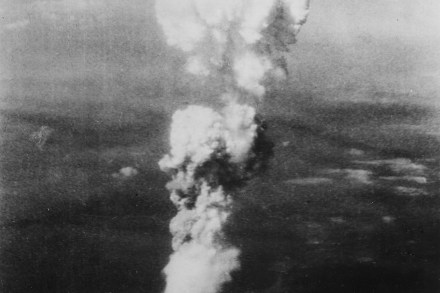
“Henceforward all men everywhere will be living on the edge of a volcano”

With today being the 65th anniversary of the bombing of Hiroshima, I thought I'd excavate The Spectator's leading article from the time:    A Crisis of Civilisation, The Spectator, 10 August, 1945 In Mr Churchill's statement about the atomic bomb issued by Mr Attlee on Sunday exultation at having anticipated the enemy gave way to awe. Mr Churchill spoke of this "revelation of the secrets of Nature" as one "long mercifully withheld from man." So terrific a power of destruction is now known to be in the hands of the Allies that in retrospect we can see that the race between the scientists threatened to be the decisive factor in the war against Germany.

The unions up the ante

The front cover of the Times (£) provides a dreary snapshot of what the coalition can expect once the cuts start to bite. Unison have responded to job losses in the NHS by arguing that the government is "conning" the public over the impact on frontline services. And they're threatening to all get all litigious about it. As one of the union's spokeswomen tells the paper, "If we are not happy with the [government's reply], we are reserving the right to issue urgent judicial review proceedings." You wonder whether they'd have done the same against Labour's proposed 20 percent cuts. And this will be just the start of it.

Miliband’s Big Society

Paul Waugh has already noted David Miliband and Tessa Jowell's proposal to turn the BBC into a co-op. But the language they use to outline the idea is striking in itself. Here's an excerpt: "In confronting the big challenges ahead of us, whether it's rebuilding our economy, tackling climate change or protecting frontline public services – the need for collective action is greater than ever. This is a moment for mutualism, which offers us the opportunity to take collective action in step with individual aspiration, drawing on the values and practices of the cooperative movement and today's Coop party.

Why Gove’s school reforms could go further

The latest issue of the magazine is out today and, with it, all of the articles from last week’s edition have been made available online to non-subscribers. Among them is Toby Young’s column which raises some important points about, and criticisms of, Michael Gove’s school reforms. Toby, if you hadn’t heard, is working to set-up a free school himself – so he’s very much operating at the coalface on this, and his thoughts deserve attention. In which case, here’s the entire article for CoffeeHousers’ benefit: It has been described as the most radical overhaul of the school system since the introduction of comprehensives.

The battle over IPSA enters a new phase

MPs have never really got along with the new expenses body, the Independent Parliamentary Standards Authority. But now their mood towards it seems to have become even frostier. I imagine that IPSA's three-month anniversary, and the rather complacent-sounding celebrations that accompanied it, are something to do with that. Tom Harris's wonderfully acerbic Birthday message, from a couple of days ago, captures how many MPs feel about the whole affair. In letters to the Telegraph today, Michael Fabricant and Denis MacShane ratchet up the attacks on IPSA. And while many will not see them as the ideal poster boys for a rebellion against an expenses watchdog, it's worth remembering that they are far from alone.