Peter Hoskin

Tony Blair’s advice for Labour: be more like the coalition

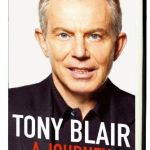
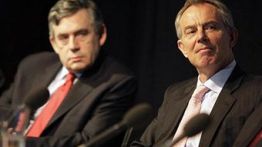
There's a remarkable self-certainty about what we've seen of Tony Blair's book so far. Sure, there are the fleeting moments of doubt and insecurity: the drinking that was becoming less a pleasure and more a habit, for instance.  But, apart from that, the dominant motif is how His Way was the Right Way. And so, he was right to keep Brown on as Chancellor. He was, it seems, right to prosecute war in Iraq – even if the WMD intelligence was "mistaken". And his chapter on Northern Ireland is written up as a ten-point action plan for future peace processes after future conflicts. Make no mistake, this isn't a bad thing in itself.

Tony Blair’s memoirs: the first extracts

Even the literary critics have to wait until tomorrow for the Blair memoirs – but the book's contents are slowing spilling out onto the Internet this evening. A series of extracts has just been published on the official website, and the Guardian has extensive coverage, including an interview with the man himself. So far, there's nothing too surprising. Blair, for instance, lays into Brown – but adds that it would have been wrong to sack him as Chancellor. And he declines to endorse a candidate for the Labour leadership, beyond offering a handful of veiled criticisms of Ed Miliband. Coffee House will have more tomorrow.

Labour needs a Byrne rather than a Balls

And Westminster's Idle Question of the Day is: will Ed Balls be made shadow chancellor under a Miliband leadership? There are good arguments both for and against the proposition – and most of them are made in this blog post by the Guardian's Nicholas Watt. Even Blairites, he says, are warming to the idea of Balls running Labour's economic policy. But if it's to happen under David Miliband, then the two men would have to reconcile their different views on tackling the deficit. Under Ed Miliband, the reconciliation would have to be more personal than economic. Neither, I suppose, is impossible. But as all this speculation whirls around Balls, I do wonder why Liam Byrne's name hasn't been mentioned more often in connection with the role.

The Blair memoirs loom over Labour’s leadership struggle

A day before the ballot papers get sent out, and the grey corpse that was the Labour leadership contest has suddenly leapt into a crazy jig. Ed Balls is slamming the "soap opera" of the Mili-rivalry, while calling for more social housing. Andy Burnham is insisting that he's still in with a chance of winning. Alan Johnson has - with a nod to Jose Mourinho, of all people - labelled David Miliband as "the special one". And as part of his rebranding exercise the former Foreign Secretary has even starting making fairly amusing gags. Welcome to the Twilight Zone. But it's not just the prospect of imminent voting that is animating the contenders.

The stars of the spending review

Insightful work by the FT's George Parker, who traces the choreography of the spending review in an article for the paper today. What's striking is how much the coalition expects to achieve by what Parker calls "peer pressure". Ministers who get through their spending settlement quickly and successfully will be held up as examples to their colleagues, and will be drafted into the the "star chamber" to cast an axeman's eye over other departments' plans. Ken Clarke, we are told, "can hardly wait". According to Parker, the process is already producing its darlings. Jeremy Hunt has exceeded the Treasury's demands by identifying 50 percent cuts in the budget for running his department.

A totemic austerity measure

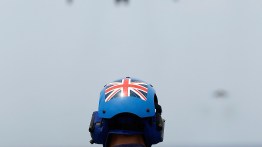
As austerity measures go, the plan to share aircraft carriers with France is totemic stuff. Not only could it save the Exchequer a heap of cash – by reducing the need for two replacement carriers – but it also says a lot about how our government wants to operate in the world: multilaterally, flexibly and, perhaps, with less emphasis on military force. Divvying up one's navy with another country does not suggest a strident foreign policy. Indeed, future operations would have to be planned and conducted with the aid of phonecalls to Paris. Of course, this will likely be a controversial move.

Darling exhumes Cameron’s Big Mistake

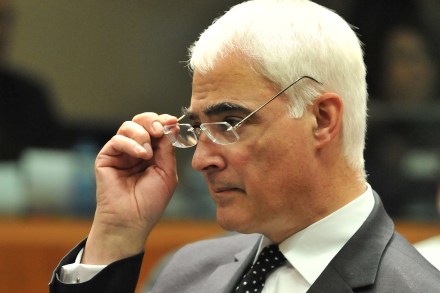
Amid all the feverish commotion about cuts, it's easy to forget that it took the Tories until November 2008 to ditch Labour's spending plans - and, indeed, that it was barely a year ago when George Osborne first mentioned the c-word in public. Even David Cameron admits that this delay was his biggest mistake. It weakened his party's claim to foresight, and gave them less time to embed a new narrative about the economy before the election. So it's noteworthy that Alistair Darling exhumed this mistake on the airwaves earlier, telling the Beeb that "the Tories supported [our spending plans] until the end of 2008." This may sound like a cheap shot at Cameron and Osborne, but I expect we'll hear more of it in coming months.

Old Labour, New Labour – or just Same Labour?

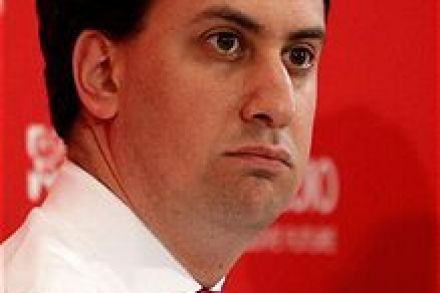
Whatever happened to Peter Mandelson's regard for Ed Miliband? A year-and-a-half ago, the Ennobled One was thought to have marked out MiliE as a future Labour leader. But, today, he pulls out the verbal chainsaw and sets about tearing him down. The younger Miliband, Mandelson implies in an interview with the Times (£), would lead Labour into an "electoral cul-de-sac," because, "to suggest that we should be concentrating on our core current voters … is by way of saying that we want to remain a minority party." And, just in case we didn't get the message, he adds: "we're not looking for a preacher as our leader." Although Mandelson doesn't say as much, it all adds up to an endorsement for the other Miliband brother.

The Milibands, Balls and Attlee

I know, I know – there's only so much information about the Labour leadership contest that a sane person can take. But as an addendum to Ed Balls' pugnacious speech earlier, it's worth noting that Ed Miliband has since deployed exactly the same argument about deficits and the Attlee era: "We do need to reduce the deficit but politics must be bigger than that. Remember our history. After 1945, with the biggest deficit in our history, that Labour government set out the vision of a good society - for a new welfare state and a new economy." To be fair to MiliE, he's made the same point before now. But its reappearance is a reminder that he has more in common with Ed Balls on the economy than his brother does.

Cameron’s close shave

As Paul Goodman notes, being Prime Minister means taking risks. So perhaps we shouldn't be surprised to read in the Times (£) that, during his recent trip to Afghanistan, the security threat to David Cameron was more urgent than previously thought: "At the time Downing Street played down the incident, saying that it should not be seen as a huge security issue. But The Times can reveal that senior military figures are demanding changes to the way in which future visits to war zones by Mr Cameron and other senior Whitehall figures are conducted. They believe that the Taleban knew which helicopter was carrying Mr Cameron and are deeply concerned over the increasingly sophisticated nature of the enemy’s intelligence operation.

Balls’ pitch for the shadow chancellorship

If there's one observation to make about Ed Balls's speech this morning it's that it's punchy stuff. His main point is that the coalition are "growth deniers" – not only do their "austerity and cuts" risk a slide back into recession, but they're also unnecessary. He explains: Attlee didn't make his "first priority ... to reduce the debts built up during second world war," and he left us with the welfare state – so why should we cut spending now? Et cetera, et cetera. These are, more or less, all arguments that we've heard from Balls before. But this is definitely the most concentrated form they have ever taken. It's an unrelenting barrage of Brownite economics. As always with Balls, there are exaggerations, inconsistencies and half-truths aplenty.

Labour’s 50p tax equation

Here's one aspect of the Labour leadership contest that has passed without much comment: how many of the contenders want to extend the 50p tax rate from those earning over £150,000 to those earning over £100,000. Ed Miliband's one of them; so is Diane Abbott; and so too – as he reminds us in interview with Left Forward Forward today – is Ed Balls. Sure, only one of these candidates has a realistic chance of becoming leader – but another could easily end up as shadow chancellor. So it’s fairly probable that this will be official Labour policy in the not-too-distant.

Clegg leads the fightback

On Monday, I wrote that the question of whether the Budget is fair or not will "pursue the coalition more doggedly than any other". Yesterday, we saw just how dogged that pursuit will be. But there's no need for the coalition to panic as Mark Hoban did on the Today Programme yesterday. Instead, with policies from welfare reform to low taxes for low-income earners, they have built a firm redoubt from which to stage a counterattack. They can put the chase to their opponents. It is encouraging to see Nick Clegg do just that with an effective article in the FT today. He was bluntly dismissive of the IFS report yesterday, calling the organisation's work "partial".

Congratulations to Samantha and David Cameron

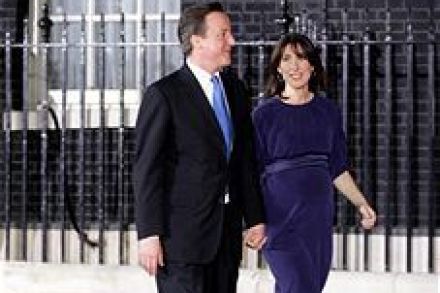
Coffee House congratulations to Samantha and David Cameron on the birth of their baby daughter. Here's the Downing Street statement: "The Prime Minister and Mrs Cameron are delighted to announce the birth of their fourth child, a baby girl. Both the baby – who was born weighing 6lbs 1oz – and Mrs Cameron are doing very well. The PM and Mrs Cameron would like to thank the doctors and nurses at the hospital for their help and kindness." No name, as yet – any guesses?

The double dip predictions

Hark, there seems to be a lot of noise about a double dip recession at the moment – added to, yesterday, by Dr Martin Weale of the Bank of England. So I thought I'd collect some of the more recent, more prominent warnings and predictions for posterity's sake. Do let me know (either in the comments or on phoskin @ spectator.co.uk) if there are any that are worth adding: Sir Alan Budd, 16 August Sir Alan was asked on BBC Radio 4's Today programme whether he believed Britain would avoid slipping back into negative growth. "I'm not confident of it," he said. "Our fan charts show that it is a possibility, just as much stronger growth is a possibility. It's not the most likely outcome.

How the coalition can develop its case for fairness

The coverage in today's FT is a reminder that one question will pursue the coalition more doggedly than any other: are the cuts fair and "progressive"? This isn't an issue that Osborne & Co should duck, and not just because they've set it as a measure of their own success. There is, to my mind, a moral and economic necessity for measures that benefit the least well-off – and, what's more, this is terrain which the coalition should feel quite comfortable traversing. Benefit reform, schools reform, lifting low-income earners out of tax: these policies provide a solid foundation for an argument about fairness. If the coalition wants to develop that argument persuasively, then it should remember four points: 1) The graphs don't show the whole picture.

Will there be money for free schools?

Some eyecatching numbers in today's FT about how many free schools we can expect, and when. According to Department of Education officials, there will be about 12 of the new schools in 2011, another 50 in 2012, and around 100 in 2013. The paper dwells on how this falls short of the Tories' pre-election rhetoric. And it's true: the original idea was for around 3,000 new schools across nine years. So, 162 schools across three years hardly looks like fluid progress towards that goal. This needn't be a bad thing, of course. As so often, quality not quantity will determine the lasting success of this reform.

An important couple of months for Nick Clegg

A week ago, I wrote that Nick Clegg had an important couple of weeks ahead of him. Now, the next couple of months are looking even more significant for the Lib Dem leader. An article in today's Independent captures the tone of what faces him: in the aftermath of the Charles Kennedy defection talk, Lib Dems have been shocked into demanding more from their leader. As the paper puts it, senior Lib Dems are calling for "more policy 'wins' ... to demonstrate to doubters in his party that he was delivering on Liberal Decocrat priorities."  Clegg probably hasn't faced such sustained internal pressure since he defeated Chris Huhne to the leadership in 2007. What strikes me, though, is how shortsighted much of that pressure is.

Clegg binds himself closer to the coalition (for now)

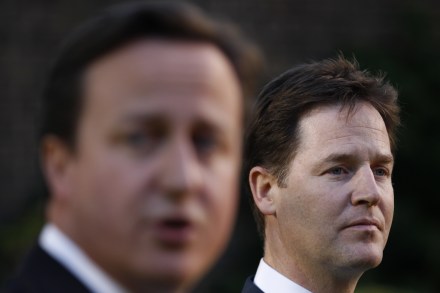
The quotes emerging, in advance, from Nick Clegg's Westminster Hour interview are a mix of the unsurprising and the intriguing. To the first category belongs his claim that "parties in government tend to get a dip in their popularity" – I mean, he's hardly going to say that the Lib Dems' decline in the polls is a disaster, is he? But this, for instance, belongs firmly in the second category: "If we weren't in a coalition now I don't think people would take any notice of the Liberal Democrats ....  If we were in a coalition with Labour, arguably our identity crisis would be even worse." In other words, the Lib Dems are better off in coalition – and they could well be better off in coalition with the Tories.

Remembering the few

Today is the 70th anniversary of Winston Churchill's 'Few' speech. Here's how the Spectator reviewed it at the time: Mr Churchill looks ahead, The Spectator, 23 August 1940 Mr Churchill surpassed even his own masterpieces of lucid and spirited exposition in his speech on Tuesday, in which he surveyed the first year of the war and the last exciting days of victory in the air and looked fearlessly into the future. During the previous fortnight, and especially during the previous week, the nation had become aware of the fact that the intensified air attack was part of that onslaught on Britain whose approach was trumpeted in Germany.