Peter Hoskin

A Boris success story?

As strange as it sounds, the launch of Boris's cycle hire scheme is a significant moment for the Mayor of London. It's exactly the kind of ruse which, if it fails, will provide his opponents with an exaggeratedly high-profile target to aim at come election time.

The Balls dilemma

How could I have forgotten to mention this in my last post? In that YouGov poll on the Labour leadership race, Ed Balls finished in a resounding last place. Yep, the former Schools Secretary is stuck on 11 percent of first preference votes – behind both Diane Abbott and Andy Burnham, who are tied on 12 percent, as well as both Miliband brothers of course. And the news has got Jim Pickard and Mehdi Hasan wondering: just what will Balls do next? Has he given up on winning? Will he drop out of the race and concentrate on becoming shadow chancellor? I know plenty of Tories who wouldn't know whether to laugh or cry if that turned out to be the case. But the leading article in this week's edition of the magazine sets out just why Tories should still be worried about Balls.

Jon Cruddas continues to swing behind David Miliband

One thing's for sure: the Labour leadership contest is a lot more uncertain than a lot of people expected. Polls such as that by YouGov today, and analysis by Left Foot Forward last week, suggest that the Brothers Miliband are pushing each other all the way to the finishing line – particularly when second preference votes are stirred into the mix. Which is perhaps the main reason why even the smallest interventions could have an influence on the result, and are worth tracking if you're minded towards that kind of thing. In which case, I point you towards Jon Cruddas's article for the latest New Statesman in which he makes the case that Labour needs to do more to court English votes. And who else has made a similar argument recently?

At last, IDS gets his chance to reform benefits

For some time now, we on Coffee House have been raving about Iain Duncan Smith's plans for reforming benefits. And, today, it finally looks as though they – or something like them – will soon be put into action. The DWP is releasing a consultation document which aims to simplify and straighten out a benefits system which now acts as a barrier to work. Over the next few months, various think-tanks and other organisations will submit their own ideas for doing just that. Someone who will no doubt take part in that process, Policy Exchange's Neil O'Brien, has a written a very useful summary of the main questions and arguments here.

Clegg confirms his fiscal hawkishness

Nick Robinson's documentary on the coalition negotiations is just under four hours away, but I suspect we've already heard about one of its key moments. As various outlets are reporting this afternoon, Nick Clegg tells Robinson that he had changed his mind about the pace of spending cuts sometime before the coalition agreement. Or as he puts it: "I changed my mind earlier than that ... firstly remember between March and the actual general election ... a financial earthquake occurred in on our European doorstep." This matters because the Lib Dem manifesto said that spending shouldn't be cut (above and beyond Labour's plans) this year – and that the squeeze should wait until next year.

The coalition needs to think harder about renewing Trident

What do we have here, then? Another public disagreement between Downing Street and Liam Fox? Certainly looks that way, as George Osborne assures an interviewer in India that the entire cost of Trident should be borne by the Ministry of Defence's budget. As the Telegraph reminds us, Fox suggests that the running costs of Trident should be part of the MoD's responsibilities (as they are currently), but the approximate £20 billion capital cost of renewing the nuclear deterrent should be paid for by central government. In his words, on Marr a couple of weeks ago: "To take the capital cost would make it very difficult to maintain what we are currently doing in terms of capability.

5 days that changed the country

Westminster has rewound the tape today, in anticipation of Nick Robinson's documentary on the coalition negotiations tonight. There's speculation about what Nick Clegg did or didn't say back in May; Anthony Seldon has a piece on Gordon Brown's side of things in the Independent; and Robinson himself has a summary article in the Telegraph. Much of what's revealed so far could already be pieced together from the Mandelson memoirs, as well as from Westminister chatter, but some of the new contexts are eyecatching. This, for instance, from Robinson, suggests just how important personality politics was during those days after the election: "Gordon Brown had not prepared a policy offer, nor got the backing of his Cabinet, nor developed a relationship with Nick Clegg.

WikiLeaks rightly suffers a backlash

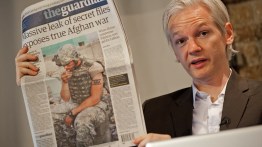
Is it just me, or is there something deeply unsettling about Julian Assange's comments in the Times today? After the paper revealed yesterday that the leaked Afghan War files could easily put informants' lives at risk, the WikiLeaks founder sets about defending his decision to publish them – and he does so in dangerously complacent terms. Take his opening proclamation, where he says: "No one has been harmed, but should anyone come to harm of course that would be a matter of deep regret — our goal is justice to innocents, not to harm them. That said, if we were forced into a position of publishing all of the archives or none of the archives we would publish all of the archives because it’s extremely important to the history of this war.

More grist for the welfare reform mill

How many incapacity benefit claimants could actually work? Well, we get a sense of the answer with some figures released by the Department for Work and Pensions today. They show that, of the people who have gone through the new Work Capability Assessments so far, some three-quarters are able to look for a job. Scale that up for everyone on incapacity benefits, and it suggests that around 1.8 million claimants could return to the labour market. Although the numbers are eye-catching, they're not entirely surprising: similar figures were published when the WCA was introduced under Labour.  And it could be worth holding fire until the necessary review of those assessment tests has reported back later this year.

Cameron’s provocative language over Gaza serves to obscure the issue

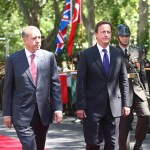
And there's me thinking that David Cameron's overtures to Turkey were newsworthy enough, when he drops this into his speech in Ankara: "Let me also be clear that the situation in Gaza has to change. Humanitarian goods and people must flow in both directions. Gaza cannot and must not be allowed to remain a prison camp. But as, hopefully, we move in the coming weeks to direct talks between Israel and the Palestinians so it's Turkey that can make the case for peace and Turkey that can help to press the parties to come together, and point the way to a just and viable solution." In a wider sense, this is indicative of the West's firmer attitude towards Israel in the wake of the flotilla incident.

The coalition’s summer challenge

How striking that, as another Parliamentary term draws to a close, all the talk is of some sort of union between the Tories and the Lib Dems.  There was Mark Field's blog post about an electoral pact, yesterday, of course.  But now Rachel Sylvester follows it up with an article in the Times outlining a possible "metrosexual merger" between the two parties.  And Paul Goodman has a piece in the Telegraph suggesting that such a merger may well be in the offing. In many repsects, all this chatter is testament to the early success of the coalition.  What we have seen over the past few months has, on the whole, been responsible and surefooted government by a group of people who seem to get on personally as well as politically.

The coalition must tread carefully over electoral pacts

Well, Mark Field has certainly got Westminster talking with his suggestion that the Lib Dems and Conservatives might not oppose each other in marginal seats come 2015. It's the kind of idea that has been sloshing around for a few weeks now, but having it relayed through a Tory MP's blog post gives it a little extra punch. And so plenty of questions abound. What would this mean under AV? Who would do better out of it? Is it sensible for both parties to effectively make the next election a referendum on the coalition? etc. etc. But one question doesn't seem to be getting enough airtime: what would this mean for the voters themselves? You see, these electoral pacts may, more or less, make sense when it comes to strengthening the coalition.

The Hayward saga draws to a close

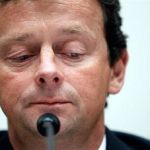
There has been an inevitability about Tony Hayward's departure from BP ever since the first aftershocks of the Deepwater Horizon disaster. But now, despite BP's peculiar denials this morning, that inevitability has reached fever pitch - and it's widely expected that Hayward will be booted out of his job tomorrow morning. As a thousand comment writers have quipped, he can now get his life back. The question on most observer's minds is, does he deserve it? And it's a question which Allister Heath answers persuasively in City AM today. My quick take is that, yes, Hayward came under unfair and politically-motivated fire at times, but much of the criticism flung in his direction was warranted and understandable.

Guess who’s back | 26 July 2010

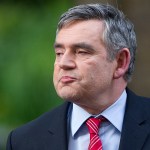
Oh look, Gordon Brown has continured his return to public life with a sizeable interview in today's Independent.  It's a generous portrait which seems designed to dispel any rumours about the former Prime Minister's wellbeing. Apparently, he "looks healthy and fit … seems quite cheerful." And we're treated to descriptions of his face, "like a map of a man's soul." For those who can read any further, there are accounts of his constituency work and his aspirations to "do more on international development". The world shudders. Despite his claims to the contrary, there are ominous signs that Brown is keen to impact upon our national politics.

Same old perversions

Memory Lane always looked so unthreatening to me. But this is Bret Easton Ellis, so a cast reunion for the characters he first wrote about in Less Than Zero 25 years ago is bound to end in tears, screaming and blood. And so it does, with grim efficiency. No sooner has our protagonist, Clay, checked back into his Hollywood apartment complex, than he is plunged feet-first into a swamp of paranoia, sin and violent double-cross. As the doorman says to him on his return, ‘Welcome back.’ So what’s Clay been up to all these years? Becoming a screenwriter would be the literalist’s answer, but drifting further into Easton Ellis’s subconscious is more the truth of it.

Cameron: 2015 is a “long term cut-off point” for troops in Afghanistan

Remember when David Cameron said that Britain "cannot be [in Afghanistan] for another five years"?  Since then, the coalition has expended a good deal of energy trying to clarify this statement.  The latest formulation was something like that given by William Hague to the Telegraph a couple of weeks ago: "By the time of the next election, [Cameron] hopes we won't still be fighting on the ground ... but there is 'no strict or artificial timetable'." But now Cameron has brought up the 2015 date again, and this time it sounds a lot more like a pledge than a hope.  Here's what he said at a PM Direct event today: "I don't think we should set lots of short term deadlines ....  I've set, if you like, a long term cut off point of 2015.

Clegg and the coming of liberal conservatism

Nick Clegg is a liberal, and just in case you'd forgotten that fact he gave a speech today in which the word features some 64 times.  As it was made at the think-tank Demos, it's a touch more wonkish than his recent efforts on cutting back the state - but still worth a read for those who want a general sense of how the coalition sees itself. The main purpose of the speech is, I suspect, political.  It says, to any of Clegg's sceptical colleagues, that the government's agenda is liberal, liberal, liberal all the way.  From cutting state spending to Michael Gove's schools reforms, the goal is to "disperse power and build capability in our citizens.

The unions start to swing behind Ed Miliband

Bear with me, CoffeeHousers, while I return to the Labour leadership contest. You see, the GMB has this afternoon announced that it is backing Ed Miliband for the job – which is a fairly significant intervention. This is first endorsement from one of the major trade unions, and it overshadows the support that David Miliband has received from lower league organisations. The question now is whether Unite and Unison will follow GMB's lead. Many expect that they will. The influence of the unions in internal Labour elections has, in the past, been overstated. But there's reason to believe that they'll wield quite some power over this contest.

A solid performance from Osborne

If only PMQs were more like select committee sessions. Sure, the latter aren't completely free from tribalism, even if it takes a subtler hue – but they are still considerably more insightful than Wednesday's pantomime in the chamber. Frequently, they play like a demonstration of how democracy can, and should, work. Such was the case with George Osborne's appearance before the Treasury Select Committee this morning.  The questions, particularly those on whether the Budget hits the poorest hardest, were generally measured and insistent.  But Osborne stood up well through it all, pointing out how any party in power would have to implement hefty spending cuts and tax rises.

Meetings galore

All of a sudden, the coalition partners can't get enough of their backbenchers.  Last night, it was David Cameron meeting the 1922 Committee to reassure them about their mutual relationship.  And, today, Nick Clegg is going on an "away day" with that half of his party which isn't in government, all to explain his close affair with the Tories.  Presumably, flowers and chocolates will be involved. The Clegg meeting, in particular, is worth dwelling on – and Sam Coates and Greg Hurst do just that in an insightful article for this morning's Times.  For those who can't travel beyond the paywall, here's the line which stands out: "Lib Dem MPs will be warned that history shows that small parties that walk out of a coalition are destroyed at the polls.