Peter Hoskin

The Balls equation

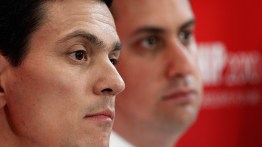
One of the few things that could briefly enliven the Labour leadership contest is if Ed Balls stood down and gave his backing to another candidate. True, it didn't happen when it probably should have – that is, when all the big unions gave their backing to Ed Miliband. But as the summer advances without any slip in the Mili-lead, then maybe – just maybe – Balls might start reconsidering his options. In which case, this insight from Philip Collins' latest article in the Times (£) is worth noting down: "In 1999 Mr Balls and David Miliband used to meet regularly in Churchill’s, a café opposite the Treasury on Whitehall, in a forlorn attempt to join up the Government.

Party time | 19 August 2010

Utterly incredible. Over at ConHome, Alex Deane has highlighted something that is just utterly incredible – Team David Miliband's guide to hosting a "house meeting" in his honour. You really have to read the 6-page pdf to take in the full, fastidious horror of it all. But this tip for, erm, "building accountability" into the guest-list deserves pulling out: "Remind your guests the day before – try and build accountability into the relationship. If someone confirms then they should be there and you need to let people know you are disappointed if they don’t turn up… even if it’s just your mates!" What fun. UPDATE: By way of a hat-tip, this was first spotted by Jess Freeman over at the Total Politics blog.

Ed Miliband’s backhanded offer to the Lib Dems

As Channel 4 reminds us, there have been two major trends in recent opinion polls. First, the precipitous decline in the Lib Dem vote share. And, second, a solidification of the Labour position, such that some polls even have them as the biggest party in a hung parliament. Predictably, this has stirred the omnipresent Simon Hughes, and some other folk around Westminster, into talking about a LibLab coalition. Which is why Ed Miliband's comments in the New Statesman today are so eyecatching. He tells Jason Cowley and Mehdi Hasan that he couldn't go into the coalition with the Lib Dems if they were led by Nick Clegg. He's got problems with "what [Clegg] is supporting," you understand. This is a new approach from one of the Labour leadership candidates.

The Tories tone down their rhetoric on A-levels

The latest A-level results have been released and – surprise, surprise – success rates have risen. The proportion of papers marked at grade E or above increased to 97.6 percent from 97.5 percent last year. And 27 percent achieved an A or the new A* grade, with 8 percent at A* overall. So, naturally, and rightly, the usual arguments about "dumbing down" are out in force. The Tories used to love getting stuck into this debate, accusing the New Labour government of eroding exam standards. But it's noteworthy that, now they're in power, their rhetoric on the matter has become considerably less provocative.

This Parliament’s key dividing line?

They may have faded from the front pages, but middle class benefits are still one of the most important stories in town. What we are witnessing here could be the birth of this Parliament's defining dividing line – a cuts vs investment for the new decade. In truth, the birthing process began before the election, with this Ed Miliband interview in the Guardian. In it, he made a distinction between a "residual welfare state that is just for the poor, which is the Tory position," and a "more inclusive welfare state" that encompasses the middle classes. His point was that the former goes against "all the evidence of maintaining public support [for the welfare state]" and, ergo, the Tories have got this wrong.

Cowboy clampers are just the tip of the iceberg

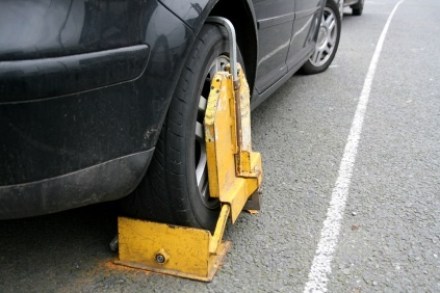
It looks like the wheel-clampers are in retreat after Haroon Zafaryab's heroics the other day and Lynne Featherstone's subsequent "ban on clamping and towing on private land". And as they leave the field, it's worth returning to a piece that Ross Clark wrote for The Spectator last year in which he tied the cowboy clampers in with a wider malaise: the last government's "blind spot" for business, such that "it simply cannot distinguish between where business ends and racketeering begins". Here's the full article for the benefit of CoffeeHousers: We have become a nation of shysters, Ross Clark, The Spectator, 17 October 2009 Power cuts and uncollected rubbish form most people’s memories of the economic debacle that was the 1970s.

The coalition’s choice over Winter Fuel Allowance

The Winter Fuel Allowance has tapdanced back onto the political landscape today, and it's all thanks to some insightful work by the FT's Alex Barker. He had an article in this morning's pink 'un which suggested that IDS is lobbying to have it, and and some other "middle-class benefits", trimmed to help pay for his benefit reforms. And he's followed that up with a blog-post explaining how even an apparent "cut" in the allowance may not result in savings for the Treasury or the DWP. Strange but true, as they say. This could be a delicate situation for the coalition. In the background to it all is David Cameron's pre-election pledge that the Tories wouldn't cut Winter Fuel Allowance.

Is Cameron slowly winning the argument on public service reform?

Guido has already highlighted one of the most important graphs from this Ipsos MORI treasure trove, showing that the public have overwhelmingly accepted the need for spending cuts. But this other graph forms a striking companion piece: Sure, the public may be split on whether the coalition will be good for public services. But the main thing to note is that overall optimism is at its highest level since 2001 – and rising. Maybe, contra Brown and Balls, people are realising that you can get more for less.

The task facing UKIP’s next leader

That didn't take long, did it? After only a year in charge of UKIP, Lord Pearson has quit the role even more abruptly than he took it. In his resignation statement, he confesses that he is "not much good" at party politics – and it is hard to disagree. A memorable low was his interview on the Campaign Show in which he was only dimly acquainted with his party's own policy. But more damaging, to my mind, was the general erosion of UKIP's identity: Pearson's policy of campaigning for Eurosceptic candidates from other parties may have been magananimous, but it also made you wonder whether UKIP are more a party or a pressure group. This morning, Nigel Farage hinted that he might put his name forward for the leadership.

An important fortnight for Nick Clegg

Another reason to be glad of the Brown government's downfall is that there seems to be less silliness about the summer holidays. Today, Nick Clegg returns to London to steer government in David Cameron's absence – but there's no fanfare, nor energetic pretence that the Lib Dem leader is actually "running the country". Unlike those times when Harriet used to have a go at it, followed by Peter, followed by Alistair, followed by Jack, the overriding impression is just business as usual. But that doesn't mean that the next two weeks are insignificant for Clegg. Rather, he can make sweeping advances on a number of fronts. The most important, and least public, will be how he handles the ongoing spending review.

Simon Hughes and the deputy leader’s pulpit

My, what a busy character Simon Hughes is at the moment. Seems like hardly a day goes by without some fresh observations from the Lib Dem deputy leader – and he doesn't even rest on a Sunday. Today, there are two Hughesbites worth noting down, both from an interview with Sky. The first: "We should have no preference at the next election between the Tories and Labour and other parties. We are going to stand on our own." And the second: "Our party is committed constitutionally to standing in every seat. We will be standing in every seat at the next election. There will be no deals, there will be no pacts…" So, no ruling out a LibLab coalition and no electoral pacts.

The return of Alan Milburn

Frank Field, John Hutton and now Alan Milburn – the red tinges to the coalition mix are like a Who's Who of reforming Labour politicians. Milburn, we learn today, is to return to government as an adviser to David Cameron on social mobility. It's a role he should be accumstomed to, as he was tasked with writing a report on the issue under Brown. That time, his suggestions were buried by a government which didn't want to face up to the sorry facts. This time, you hope they meet with a more constructive response. But why wasn't a Conservative (or conservative) appointed? That's the question which Iain Dale asks over at his blog – and you can see his point. There are plenty of people on the right who could have stepped into the role, not least someone like Jill Kirby.

Waiting for the autumn

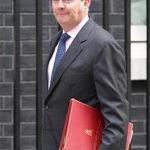
A curious, intermediate kind of speech from Liam Fox this morning. The general emphasis on streamlining the armed forces, and shifting power away from Whitehall and towards the military, was welcome. But we're going to have to wait for a trio of reviews before we know what that will look like in practice: the Spending Review, the Strategic Defence Review and a review by the new Defence Reform Unit, chaired by Lord Levene. As Douglas Carswell points out, Levene has fought for choice and competition in defence procurement before now – so we have an idea of where his review will head – but, for the time being, it's still a bit of a waiting game.

What can Green achieve?

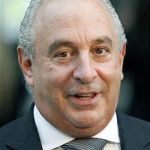
Handbags across Whitehall this morning, as Vince Cable responds to the government's appointment of Sir Philip Green as an efficiency adviser in a disgruntled, if evasive, manner. He tells City AM: “There’s a lot I could say on this, but I’d better miss this one out ... I’m tempted to comment, but I think I’d better not.”   And it's clear why the Business Secretary, and many others, might be a little peeved. A hard-partying, perma-tanned, rotund and ostentatious figure, with question marks hanging over his tax status, Sir Philip is simply not designed for this age of austerity. He is nothing like the cadaverous technocrats who usually sift through Whitehall accounts.   Such concerns miss the point, though.

Where are the cuts?

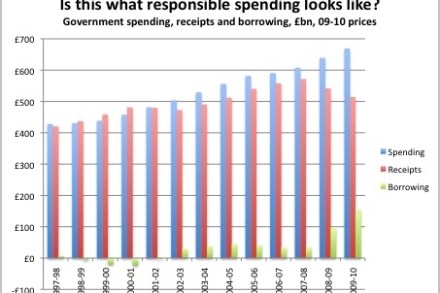
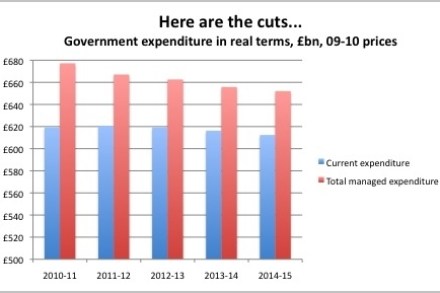
John Redwood has entered the debate with a unique argument: spending isn't being cut. He points to figures in the Budget which show "current" spending rising from around £600 billion now to around £700 billion in 2015. As Alex says, that suggests an increase of 15 percent over five years – hardly what anyone would describe as a cut. And there's a similar picture for "total" spending, which will rise from around £670 billion to £737.5 billion.   Yet it's worth pointing out that Redwood isn't using inflation-adjusted figures (aka, "real terms" figures).

Bravo, Mr Pickles

I think it's fair to say that Eric Pickles doesn't look like a pioneer of the Cameroonian "Post-Bureaucratic Age". But that's exactly what he is, as his department becomes the first to publish data on all its spending over £500. At the moment, the document provides plenty of ammunition for – rather than against – the coalition, covering as it does the financial year between 6 April 2009 and 5 April 2010. And thus we read of how, under the last administration, £17,000 was spent at a luxury hotel, £635,000 on taxis, £13,000 on Manchester United catering costs, and so on. But this isn't just a retrospective exercise: the prospect of these figures being released in future should hopefully restrain some of the more egregious spending now.

David Miliband reinforces his monetary advantage

I can't work out what's stranger: that anyone, let along the author Ken Follett, should donate £100,000 to Ed Balls' leadership campaign, or that the Liverpool footballer Jamie Carragher ("Mr Liverpool") should give £10,000 to the devoted Evertonian Andy Bunrham. Either way, they're probably the two stand-out entries in the latest list of Labour leadership donations. But the real story is the same as the last time the donations were published: David Miliband's monetary advantage. Even with Ed Balls raising £103,000 in July, the elder Miliband brother still comes out on top with £138,835 – adding to an overall war chest which dwarfs those of all the other contenders.

Cameron devolves the tricky issue of alcohol pricing

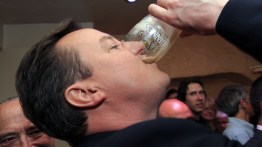
Politicians often get nervous around alcohol – and not just because, in these straitened times, a glass of champagne can broadcast the wrong image. No, the real concern is the more basic, fiscal one: how should it be taxed and priced? There's a difficult trade-off involved. Pushing up the cost of alcohol could halt the staggering advance of binge drinking and all its associated social and medical ills. But, depending on what booze is targeted, it could also hit the least well-off harder than anyone else. And who's to say whether the effect on drinking habits would be that substantial anyway? The trickiness of the situation was clearly demonstrated by Labour's internal ding-dong over minimum pricing back in January.

Obama defeats our shameful libel laws

Here's one divergence between the US and the UK where we can all get behind our American brethren. Yesterday, Barack Obama signed into law a provision blocking his country's thinkers and writers from foreign libel laws. The target is "libel tourism," by which complainants skip around the First Amendment by taking their cases to less conscientious countries. And by "less conscientious countries," I mean, erm, here.         As various organisations have documented, not least the Index on Censorship, the libel laws in this country are a joke – and a pernicious one at that.