Peter Hoskin

David Cameron: Linda Norgrove may have been killed by US rescue team

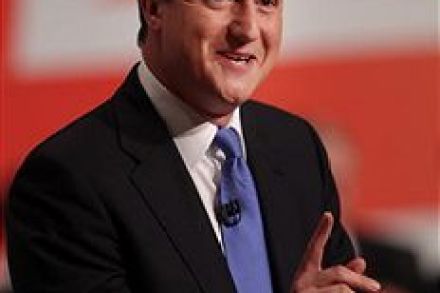
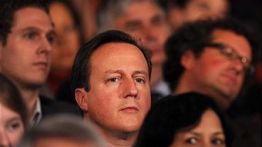
David Cameron arrived at his press conference forty-five minutes late, and was visibly shaken when he took to the microphone. A few sentences in, it was clear why. "Linda [Norgrove, the British aid worker who recently died in Afghanistan] may not have died at the hands of her captors as originally believed," Cameron said, "[she] could have died as a result of a grenade detonated by the task force during the assault." The PM explained that he had been told this by General Petraeus this morning, and that Ms Norgrove's parents have since been informed. Cameron emphasised that he had backed the rescue operation, and believed that it was the right thing to do. "The best chance of saving Linda's life was to go ahead," he said.

Reforming incapacity benefit will not be easy – but it is crucial

'500,000 to lose sick pay as welfare reforms bite'. Those words boom from the front-page of the Times this morning – and they're based on an article by Iain Duncan Smith (£) in which he admits that some 23 percent of the country's 2.1 million Incapacity Benefit claimants could be found fit for work. This, it is said, should save the Exchequer some £4 billion. The numbers are striking enough, but the policy behind them shouldn't be surprising at all. Even the last Labour government intended to reverse a political deceit that they had nurtured, but which was birthed during the Thatcher years: the artificial swelling of the sickness rolls. And the coalition has long planned to put rocket boosters under that process.

Vince Cable’s discomfort is shared by the coalition

The trouble with holding a ministerial debate in public is that, when it comes to the crunch, it's obvious who the winners and losers are. So it is with Vince Cable and higher education funding. A couple of months ago, the business secretary tap-danced onto the stage with a (problematic) plan for a new graduate tax. Now, it seems clear that the Browne Review will reject his advice (£) in favour of increasing tuition fees. And so Cable has had to send out an excruciating email explaining why a graduate tax was never really a good idea in the first place. After the flip comes the flop, so to speak. But this isn't just about Cable's embarrassment.

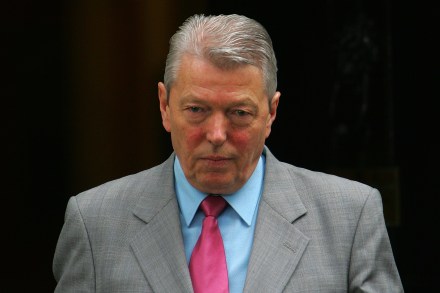
Alan Johnson, from affable to aggressive  

If Alan Johnson continues as he has started, then he may be a surlier, snarlier shadow chancellor than many of us expected. He's got an article in today's News of the World and an interview in The Observer – and, in both, he's on unusually combative form. Osborne's cuts are labelled as "deep and irresponsible," and the VAT rise is highlighted as a measure that will affect "those on middle and low incomes the most." Johnson even claims, with Balls-like stridency, that the coalition could drag us screaming into double-dip. And there's more. With a disingenuousness that would impress even Gordon Brown, Johnson glowers that the coalition's cuts are deeper than those during the Thatcher years. Depending on which metric you use, that's true enough.

Ed Miliband may have just made the defining choice of his leadership

There are several eyecatching appointments in Ed Miliband's shadow cabinet. Ed Balls at Shadow Home puts Labour's most vicious scrapper up against a wobbly government department. Yvette Cooper as Shadow Foreign Secretary is a suitable reward for her showing in the elections, but it is a counterintuitive use of her background in economics. MiliE loyalists Sadiq Khan and John Denham have duly received plum jobs in Justice and Business, respectively. But perhaps the most surprising appointment is also the most important: Alan Johnson as Shadow Chancellor. On a purely presentational level, you can see what Ed Miliband is thinking.

Breaking: Alan Johnson is shadow chancellor…

...and Yvette Cooper is shadow foreign secretary. Ed Balls gets shadow home. So, looks as though Ed Miliband has bypassed the family psychodrama with an appointment that few expected, or even thought of, until this morning. Johnson was 16/1 with Ladbrokes for the shadow chancellorship going into today. UPDATE: Paul Waugh has the full list. Here it is: Leader of the Opposition --- Rt. Hon.

Cameron sells the Big Society to the public sector

David Cameron clearly wants us to waltz into the weekend with the Big Society on our minds – so he's written an article on the idea for the Sun. It rattles through all the usual words and phrases, such as "responsibility" and "people power", but it strikes me how he applies them just as much to the public sector as to the general public. This is something that he did in his conference speech, describing the "Big Society spirit" of a group of nurses: "It's the spirit that I saw in a group of NHS maternity nurses in my own constituency, increasingly frustrated by the way they were managed and handled, who wanted to set up a co-op to use their own expertise, their ideas, their contacts to provide a better serice for the mums in their area.

Cameron’s tangled web

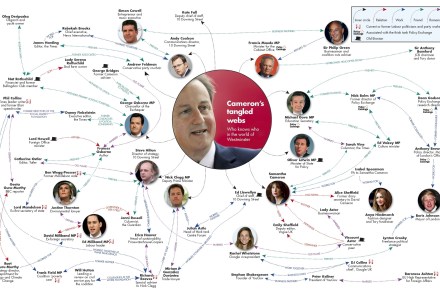
How do you get from David Cameron to Simon Cowell in two, easy steps? Answer: Andy Coulson. The former News of the World editor is, of course, Cameron's director of communications – but he also happens to be on friendly terms with the X-Factor impresario. We set out this, and all the other tangled relationships around the Prime Minister, in a spider graph for this week's magazine. From Nick Clegg to the designer Anya Hindmarch, from Steve Hilton to Baroness Ashton: it's not a map of the government, but rather of the people both in and around No.10 who form what we call the New Establishment. To see them in their entirety, all CoffeeHousers need do is click on the image above, or download a pdf .

Waiting for the shadow cabinet

You can say what you like about Labour's penchant for internal elections, but at least it makes for good, political entertainment. Tonight, the results of the shadow cabinet elections will be released, and we'll discover which of the 49 nominees made it into the final 19. Then it will fall to Ed Miliband to force some very square pegs into the round holes on his party's front bench. Good luck with that, Mr Miliband. According to most observers, Yvette Copper is favourite to come top – a forecast supported by a readers' poll published on Left Foot Forward today. In the same poll, Ed Balls finished second. It rather encapsulates the toughest choice facing Ed Miliband: who to pick as shadow chancellor?

Delaying the cuts

Put aside all the post-match analysis of David Cameron's speech: the most intriguing story in the papers this morning is this one in the FT. It claims that the Treasury is working on plans to "reprofile" the spending cuts, which basically means "delay" them. The idea would be to push the bulk of the cuts back to the end of this Parliament. And the underlying concern is, apparently, that early cuts could trigger various financial penalties, such as those for breaking contracts. The paper even suggests that ministers are worried that, "deep deficit reduction in 2011-12 could undermine the fragile recovery." The Treasury have firmly denied the story, and I'd certainly be surprised if we saw significant delays in the cuts.

Cameron’s peculiar speech

Ok, so that was a peculiar kind of speech from David Cameron – neither wholly successful, nor wholly unsuccessful. In terms of its general tone, it was much as we expected: a dose of bitter realism about the public finances, lacquered over with heavy optimism about what the country can be. But its content was more surprising, brave even. For this was the moment when the Big Society returned with a vengeance. In truth, we haven't heard much in recent months about the idea that framed the Tories' election campaign. Coalition seemed to have displaced it from the Cameroonian lexicon, if not their thinking. But it made an early appearance in one of the most unconventional sections of Cameron's speech.

David Cameron speech live blog

1537, PH: And Cameron ends on that note, calling on the public to get involved in fixing society: "So come on: let's pull together. Let's come together. Let's work, together, in the national interest." Standing ovation. More reaction on Coffee House shortly. 1537, PH: This is good, liberal-conservative stuff from Cameron. He says that the government recognises that it is there to push power to the people. "I know the British people: they are not passengers, they are drivers." 1535, PH: Strong line: "Mine is not just a vision of a more powerful country, it is of more powerful people." 1536, PH: The Big Society returns, with a lenghty section on volunteering and social action. Cameron calls this a "call to arms".

Cameron stumbles onto the stage

Who'd have guessed that David Cameron would go into his conference speech on the backfoot? This was supposed to be a moment tinged, if anything, with jubilation: the first Tory PM for thirteen years addressing a party that seems to have fallen in love with him. But instead we've got the child benefit row, and with it apologies, rebuttals and hasty repositioning. It is to Cameron's credit that he can breath the two words that evade other, more culpable politicians: "I'm sorry". But on the eve of his big speech? Far from ideal. This exercise in damage limitation may have slightly eased Cameron's situation today – but it has put him in a more difficult long-term position.

IDS sets out his vision for combating poverty

There was a quiet momentousness about Iain Duncan Smith's speech in Birmingham today – even before he started speaking. When IDS resigned the Tory leadership in 2003, he could barely have imagined that he would one day address his party as a leading member of the government. Even a few weeks ago, he couldn't have been sure that the coalition would implement the policy agenda that he developed during his time at the Centre for Social Justice. Yet here IDS was, receiving a standing ovation for his efforts. What a difference seven years make. And then to the speech itself. Much of it reverberated to the same reforming drumbeat that we've heard throughout this Tory conference.

Boris well ahead in the first Mayoral poll

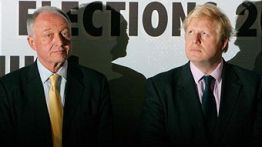
The first Boris vs Ken poll of the season carries an obvious health warning: there are other candidates to come, not to mention another one-and-half years of the current mayoral term. Yet Tories might still be pleased that their man is 9 points ahead of his predecessor and main rival at this stage. And that's even with Labour beating out the Tories, in the same poll, when it comes to London's general election voting intentions. Andrew Gilligan puts two and two together to create a striking parallel: Boris is more popular than the Tory party in London, whereas Ken is less popular than Labour. Stir in the fact that Livingstone is polling lower than he did in the 2008 election, and his enforced spell on the sidelines has clearly done little to bolster his reputation.

Cameron says “yes” to the Trident upgrade – but questions remain

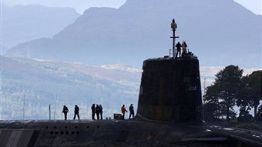
Courtesy of Ben Brogan, one of the most noteworthy passages from David Cameron's appearance on Today this morning: 'Jim Naughtie: Is the Trident upgrade untouchable? David Cameron: We do need an independent nuclear deterrent… JN: Is that a yes? DC: Yes. Basically I was going to give you a longer and fuller answer but the short answer is yes… To me and the Coalition government, yes, Britain’s independent nuclear deterrent is being replaced.' It is certainly the most assertive that Cameron has been on the subject since the advent of the coalition, but a couple of questions remain that prevent it from being utterly unequivocal. First, what timeframe is the PM operating along?

Cameron tries to defuse the child benefit row

Whether you agree with the plan to restrict child benefit or not – and, broadly speaking, I do – there's little doubting that it has met with some fiery resistance in the papers today. The Telegraph leads the attack, calling it "a hastily conceived about-turn bundled out on breakfast TV". The Daily Mail highlights the "blatant anomaly," currently riling up the Mumsnet crowd, that a single earner family on £44,100 a year might lose the benefit, while a dual earning family on £87,000 can keep it. And the Independent does likewise. It should be said, though, that the Sun, the Times and the Financial Times are considerably more generous about Osborne's proposal. The FT even calls on the Chancellor to go further.

Boris vs the unions

It was all so Osborne-a-go-go earlier that we didn't have chance to mention Boris's speech to the Tory conference. By way of rectifying that oversight, here's footage of the Mayor of London taking on the trade unionists who have organised a Tube strike today.