Peter Hoskin

The defeated brother delivers a winning speech

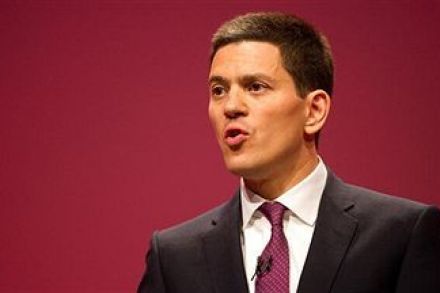
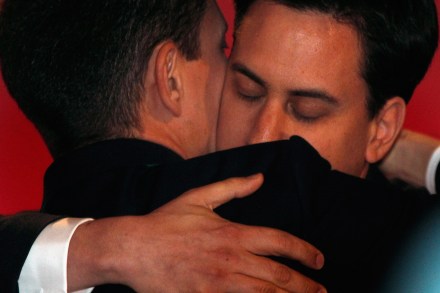
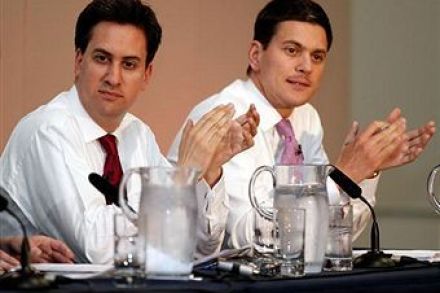
David Miliband's address to the Labour conference ended as it began: with a  standing ovation. Sentimentality and sympathy, perhaps – but it was also deserved. This was a speech that his younger sibling will be hard pressed to match tomorrow. Indeed, I doubt even MiliD has matched it himself before now It began, of course, with an attempt to massage out the tensions of the past few days. There were some gags about how Miliband had draft speeches for Saturday and Tuesday on his computer - "so I've got a couple of speeches to draw on." And he implored Labour to unite behind his brother – "we have a great new leader and we've got to get behind him." He added, by way of a fraternal backslap, "I'm incredibly proud of my brother". So far, so smooth.

The Whelan factor

Is Ed Miliband is in cahoots with the unions? My guess is that he will have to be – and perhaps is – more centrist than all that. But, in any case, this kind of testimony from Charlie Whelan, speaking to the Guardian's Jonathan Freedland, is hardly going to defuse the issue: "The former spokesman for Gordon Brown told me in the Radisson hotel how the 'Big Four' union leaders had sat together in the summer working out who was best placed to be the 'stop David' candidate. Their own personal preference would probably have been Ed Balls, but a lack of initial support among MPs suggested his chances were limited.

Ed Miliband tries to detoxify his brand

The scrubbing job starts in earnest this morning, as Ed Miliband tries to erase that "Red" epithet from before his name. Exhibit A was his appearance on the Andrew Marr show, in which he took every opportunity to cast the manner of his victory in a favourable light. "If you look at this as one vote-one member, then I got more votes than anyone else," he assured us, before going on to say that he won the union vote because, "I spoke about things that matter to working people in this country." When asked whether he would sway under pressure from the union leadership, he averred, "I'm nobody's man, I'm my own man – and I'm very, very clear about that." And as a final flourish, "I'm certainly not Bob Crow's man.

The unions deliver Ed Miliband to the throne

In the end, it was all quite exciting. After four months of soporific campaigning, after a speech by Gordon Brown, after tribute video upon tribute video, it all came down to an astonishingly tense round of results. And Ed Miliband edged out his brother by just over 1 percentage point overall, 50.6 to 49.4. It may have been the outcome that most punters expected coming into today – but it is not one that many would have predicted, with any confidence, back in May. Looking at the full voting split, a less flattering picture emerges. David Miliband actually won two of the three voting blocks: the MPs turned out 53-47 in his favour, the members 54-46 likewise. But it was the unions wot won it for Ed: the brothers gave him their votes in a 60-40 ratio.

Ed Miliband elected Labour leader: live blog

1704, PH: We'll leave it there, although we'll have more reaction on Coffee House shortly. 1702, PH: I've already forgotten Miliband's final line, although it involved the phrase "new generation". Not a great speech, but some turnaround for him over the course of the contest. 1700, PH: Ooh, what does that mean for Ed Balls? Miliband says that, "I do believe we've got to reduce the deficit, but we've got to do more to help the country". 1700, JF: It is what Labour MPs were calling the Doomsday scenario, Ed loses MPs and Members but wins thanks to massive support in the union section. Tonight there will be those who will question the legitimacy of a leader who did not win the majority support of either his MPs or his party members.

The real battle begins tomorrow

So what's all the fuss about today, then? Ah, yes, the election of the new Labour leader. We should know the result around 1640 this afternoon – but, this morning, most commentators are indulging in the idea that Ed has won it. The younger Miliband and his team said to be optimistic, his elder brother less so. At the very least, a remarkable turnaround has taken place. Just before the contest began, MiliD was some way ahead of his sibling in the bookies' calculations. Now, Ladbrokes have suspended betting on MiliE. What happens today, though, is in some respects less important than what happens tomorrow. Today will be the day for triumph and commiseration, for tubthumping speeches about taking Labour back into government.

Yvette Cooper: a better Balls?

One thing's for sure: Iain Duncan Smith won't pay much attention to Yvette Cooper's article in the Times (£) today – but the public might, and that's what makes it such an artful piece of opposition politics. The whole thing is structured as a letter to IDS and, crucially, the tone is conciliatory and cooperative. "You and I agree that we should get more people into work," she begins, before eventually landing on, "you need to stand up and shout for this in government. We will support you if you do." But underneath this sweet talk there's a streak of malicious intent that comes straight from her husband's political textbook. And so we read that the Treasury is "on a sabotage mission".

Hancock strikes again<font size="1"><font face="Helvetica, Verdana, Arial"><span style="font-size: 9pt;"><br /> </span></font></font>

Yesterday, Matthew Hancock constructed what you might call the defensive part of the government's argument on cuts: an explanation of how spending restraint can be good for the country. Today, he strides forward with the offensive component: an attack dossier that asks of the new Labour leader, "What would you cut, Mr Miliband?" By Hancock's calculations, David Miliband needs to set out £55 billion of cuts to meet his deficit reduction plans. For Ed Miliband, that figure hits £67 billion. The attack is two-pronged. First, it pushes the idea – contra Ed Balls – that cuts are necessary. And, second, it puts the Labour leader immediately on the back foot.

From the archives: Labour election special

A double hit from the Spectator archives, this week, in recognition of events in Labour land. The first is a recent piece, by Andrew Gilligan, on why the battle between Ken and Oona – now resolved, of course – is the real battle for Labour’s soul. And the second is Boris’s take on Blair’s election to the Labour leadership back in 1994. Enjoy, as they say. The real battle for Labour’s soul, Andrew Gilligan, The Spectator, 11 September 2010 This summer’s election to choose a new deputy regional sales manager of the Co-op, sorry, a new leader of the Labour party, has rather obviously failed to set the nation on fire.

Ed Balls steps up his bid for the shadow chancellorship

With the result but a day away, there's plenty of radio chatter about the Labour leadership election this morning. The Guardian reports that MiliD will work for MiliE if he loses. The FT observes Harriet Harman shifting towards the Eds' position on the deficit, even if she is remaining neutral in the contest itself. A Populus poll for the Times (£) suggests that Gordon Brown is currently more popular among Labour supporters than either of the Milibands (which is deeply amusing). And Political Betting is calling it for Ed Miliband. But perhaps the most noteworthy contributions come courtesy of Ed Balls, compiled and skilfully analysed by Sunder Katwala over at Next Left.

A salesman for the cuts

One of the biggest problems facing the coaltion has been presentational: how to sell the cuts? In the absence of a coherent, vigourous message, the Balls school of economic thought has been allowed to grease onto the scene – to the extent that some polls have three-quarters of respondents rejecting the government's deficit reduction plan. But now, at last, signs that the coalition is getting into gear. It's a process which began last week, when Matthew Hancock – a new Tory MP and former adviser to George Osborne – highlighted falling interest rates in Parliament (column 606, here); a point he has been pushing around Westminster ever since. And today Hancock expands on it in an article for the Times (£).

The ballot closes

"Quietly confident." That's how Diane Abbott felt as the Labour leadership ballot entered its final hours today. I can only assume that she meant "…of victory," but the bookies, and all sensible observers, are telling a different story. With the polls now closed, Ladbrokes has David Miliband as the 4/7 favourite, Ed Miliband is on 5/4, Ed Balls and Andy Burnham are both 100/1 shots – and Abbott? Well, Abbott is wheezing along at 150/1. Whoever wins, one thing is for certain: we are about to enter a new cycle in British politics, and one which should clear up a few itchingly persistent questions. How will the coalition fare against an opposition which actually has a proper leader in place? Who will be shadow chancellor? What will become of the losing Miliband?

Michael Fallon to replace Lord Ashcroft as Tory deputy chairman

So says Benedict Brogan, who rightly describes this as a "smart appointment": "Mr Fallon is being brought in to CCHQ to help Lady Warsi, who has not so far succeeded in establishing herself as a media voice for the Coalition. Mr Fallon is an adept media performer (and a regular and fluent commentator in the Telegraph – would more politicians could write like him). My sense is that this is much more about creating an unofficial minister for the Today programme, available at all times to go into the studios and defend the Government or duff up the Opposition, or both. Those who wondered as we approached Tory conference what Dave was doing to give the Tory side a stronger voice will be applauding him tonight.

All so predictable from Cable

If Vince Cable has achieved anything, it's to enliven a Lib Dem conference that had settled into cosy anonymity after Clegg's speech on Monday. He has now delivered the address that David blogged about earlier – and all of the firebrand passages trailed in this morning's papers were present and correct. "Capitalism," Cable warned, "kills competition where it can." And he followed that lead to kick the bankers where he could. In between passages extolling the virtues of "pro business, pro market" policy, he set about the "spiv and gamblers" who had triggered the financial crisis. To be honest, though, I find it hard to get too worked up about this. Sure, the bash-a-banker rhetoric is equal parts lazy and unhelpful.

Hughes retracts his claws (for now)

Few observers would have expected Simon Hughes to tear into the coalition with full force in his speech today. The mood in Liverpool is geared towards support, not destruction. But the deputy Lib Dem leader's effusiveness was still fairly surprising. He reassured the audience that he is a "rock solid supporter of the coalition – which our party has democratically agreed will last for five years". He echoed one of Clegg's central messages from yesterday, saying that "when you move from the touchline to the pitch, there is a risk you may get some knocks and pick up a few bruises – but on the touchline you never get the chance to change the game." And he finished with a flourish of optimism: "This is the best opportunity of our lifetimes".

Why David Miliband is the most dangerous candidate for the coalition

Now how's this for an opinion? Writing for Labour Uncut, Dan Hodges announces that David Miliband has won the Labour leadership contest. His piece starts: "This Saturday David Miliband will become leader of the Labour party. He will have won a majority of his Parliamentary colleagues and the wider membership, along with sufficient support from unions and other affiliates to secure not just victory but  an overwhelming mandate. The New Labour era will be over." To most other observers, myself included, it still looks too close to call. But the more I think about it, the more I feel that David Miliband is best equipped to win this contest. If the Labour party has its eyes on government, then the Hodges prediction should translate into reality on Saturday.

Is Laws writing himself out of a return to government?

A noteworthy snippet in Andrew Pierce's column this morning: "[David Laws] is hard at work on a book. The title - 22 Days In May - is hardly likely to set pulses racing, but the book will be the first insider account of the negotiations which led to the coalition. Laws is also planning to cover the early days of the Government - days which, of course, include his downfall." Not that this would completely scupper his colleagues' plans to draft Laws back into government, of course. But, as we've seen with the spate of New Labour memoirs, insiders' accounts do tend to wait until the insider has left government for good.

Clegg shades the coalition yellow for his Lib Dem audience

It's hard to know quite what to make of Nick Clegg's speech just now. It never really soared as a piece of oration, but he skipped quite expertly across all the issues that might concern, delight and enliven a Lib Dem audience. And so we heard about how much the Lib Dems are contributing towards government; about how the cuts are a prerequisite for fairness; and about how the party will maintain its independence. On the whole, this was coalition politics shaded yellow. But Clegg managed to drop in a few unadulterated sweeteners for his audience – including a dig at the "still illegal" Iraq War.

Clegg speech live blog

1653, PH: And that, aside from Clegg's stroll around the crowd, is that. There'll be further analysis on Coffee House shortly. The applause continues... 1652, PH: Clegg ends with a flourish: "Stick with us, and we will change Britain for good." The crowd is on its feet. 1651, PH: Is Clegg moulding his party as the party of coalition? He says that the next few years may make the case of "liberal, pluralist politics". 1650, PH: Clegg says that if AV triumphs in the referendum next year, then "the clapped-out system of first-past-the-post will be gone for good." 1648, PH: A return to the theme of the beginning of the speech.

A yellow spanner in the works

The teaching unions, it seems, haven't been wasting their time in Liverpool: the Lib Dem conference has just passed a motion opposing the coalition's free schools agenda. Even though the result throws up the bizarre image of, as Guido puts it, "Lib Dems voting against liberalism," it comes as little surprise. As Fraser reported last night, there's a tidal opinion in Lib Dem circles that these school reforms are little more than an attack on hardworking local authorities. A pity that Sarah Teather's message about the "dead hand of local government" didn't filter downwards sooner.   The concern now is what this actually means for the free schools programme.