Peter Hoskin

From the archives: What do you mean ‘Happy Christmas’?

A more scientific view of proceedings, courtesy of a Yale professor writing for The Spectator's Christmas issue in 1994:What do you mean ‘Happy Christmas’?, Robert Buck, The Spectator, 17 December 1994 It is the time of year when the pursuit of happiness is at its most frantic. People believe they should be happy in the holiday period because they are surrounded by tradition, mercantile enthusiasm and a desire to return to childhood, where, for the most part, it did not require an effort to be happy. Is the experience of happiness only psychological? We know that the reductionist trends of science must be leading towards a molecular theory of practically everything. Will Christmas get scrunched down to a molecular evil?

From the archives: Jeffrey Bernard does Christmas

By way of a Christmas aperitif for CoffeeHousers, here's Jeffrey Bernard enduring the festive season for his Low Life column in 1988: Eastern Promise, Jeffrey Bernard, The Spectator, 17 December 1988 Speaking as a man with little faith I find this whole business of Christmas one hell of an inconvenience. It must be even worse for a turkey. One of the things that annoys me is the fact that I can hardly find a table in any of the restaurants I use because of the number of wretches who only seem to eat and drink once a year. Where the hell are they in, say, August? I spent one Christmas in St Stephen’s Hospital years ago and it passed almost unnoticed. The fact that I was not allowed to eat anything at the time was a blessing in disguise.

The final sting

It's Christmas Eve, and the Daily Telegraph have wrapped up their sting operation in time for tomorrow. The final victims are the Foreign Office minister Jeremy Browne and the children's minister Sarah Teather. As it happens, Teather gets off without blemishing her copybook: her greatest indiscretion is to claim that Michael Gove is "deeply relieved" to be in coalition, as it means more funding for schools. Browne, though, is a touch more forthright: he says that Tory immigration policy is "harsh" and "uncharitable," but that Lib Dem involvement will provoke a "more enlightened" outcome. He adds that the Tories' EU grouping contains parties that "are quite nutty and that's an embarrassment to them.

Labour step onto the front foot

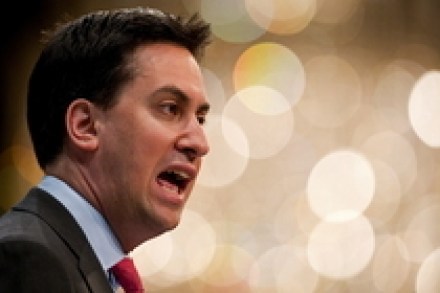
Talk about a Christmas miracle: Ed Miliband has set about the task of Opposition with ruthless efficiency today. As both Guido and Nicholas Watt have noted, the Labour leader is all across the broadcast news this afternoon, after upping the heat on Vince Cable and the coalition. His party's attack comes in the form of a letter sent by the shadow business secretary, John Denham, to the Cabinet Secretary, Gus O'Donnell. It asks, mischieveously, whether Vince Cable has broken the ministerial code by promising to wage war against Rupert Murdoch, and whether Jeremy Hunt is impartial enough to step into the breach. And while nothing is likely to come of these exhortations, they have already done their work in terms of grabbing Labour, and Miliband, some rare attention.

The political year in ten videos

With Westminster winding down for Christmas, and Coffee House with it, it's probably time to start looking back on the year in politics. In which case, here's an opener: a chronological selection of ten videos that capture the some of the glories, iniquities and embarrassments of 2010. If CoffeeHousers have any alternative suggestions, then just shout out in the comments section, and we can add them to the bottom of this post. Here goes: 1.Terror on Downing St: The Movie A Taiwanese news report about the bullying allegations made against Brown in Andrew Rawnsley's book. The computer animations are astonishing, to say the least: 2. Gordon Brown calls the election (and the sound fails him) 3.

The poison has not yet been sucked from the Cable story

There we have it. After all the frenzy in Westminster this afternoon, Vince Cable is simply staying put as Business Secretary. But he does not stand unchastised. All his responsibilities for media competition – and that includes telecoms and digital, as well as television and print – will be transferred over to Jeremy Hunt. Which means that Cable's war against Rupert Murdoch has ended before Christmas. At least he still has his nuclear option, I suppose. Many will say that Cable got off lightly – and they'd be right. Putting aside the Business Secretary's suitability to arbitrate over the Murdoch case, his judgement has been stripped and revealed as faulty today. Yes, he fell prey to journalists pretending to be something they weren't.

Cable waltzes into trouble with an attack on Murdoch

Those choppy waters that I mentioned earlier? They've just become perilous for Vince Cable. The BBC's Robert Peston has an extract from the Telegraph tapes that was omitted from the paper's coverage – and it is revelatory stuff. In it, the Business Secretary discusses Rupert Murdoch's bid to take majority control of BSkyB, and he drops this particular line: "And I don't know if you have been following what has been happening with the Murdoch press, where I have declared war on Mr Murdoch and I think we are going to win." Declaring war on Rupert Murdoch – and declaring that you're declaring war – may be inadvisable for most politicians.

Cameron and Clegg play the expectations game

You know the drill by know: a Cameron and Clegg joint press-conference, so plenty of easy bonhomie and political japery. And today was no different. The Lib Dem leader set the tone with his opening gag, aimed at Vince Cable: "I haven't seen as many journalists in one room since my constituency surgery." After that, it was pretty much a gag a minute. Underneath all that, though, was some serious business. Cable came up ("very apologetic," apparently), along with his claims about Winter Fuel Allowance ("not true"). But, as Iain Martin has noted, the most intriguing moment was when Cameron claimed only that he "expects" the Tories and Lib Dems to fight as separate parties at the next election. Obviously, that falls some way short of a guarantee that they will.

A tale of two quads

There could barely be a starker contrast between Danny Alexander's interview with the FT today and the, ahem, Cableleaks. Unlike his fellow Lib Demmer, the Treasury Secretary knew that he was speaking to a journalist – and he keeps well within the lines when discussing the coalition. "My impression," he says, "is that the Liberal Democrats support the coalition. People knew the first couple of years would be extremely tough." Alexander saves his most enthusiastic rhetoric for the quad: the group of four ministers – David Cameron, George Osborne, Nick Clegg and himself – who met regularly during the spending review period to decide where the cuts would fall. As he puts it, "it was a very effective way of making sure the government is joined up".

Leaked Cable

Loose lips sink ships – but can they sink sages too? Probably not, but Vince Cable has certainly entered tumultuous seas with the publication of candid remarks he made to a couple of Telegraph journalists posing as Lib Dem voters. In the tapes – which you can listen to above – the Business Secretary rattles on unrestrainedly about the inner workings of the coalition. The stand-out line is his claim that "If they push me too far then I can walk out of the government and bring the government down" – but there's more, including: 1) The arguments that are being waged, and won.

Len McCluskey leaves Miliband floating

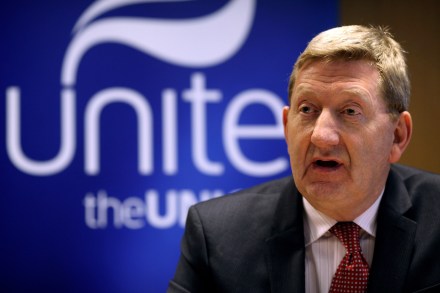
You can stuff your beer and sandwiches, Prime Minister – the unions want war. That's the broad sentiment of Unite's new leader, Len McCluskey, writing in the Guardian today. The union capo urges his brothers to rally behind the protesting students, and prepare to militate against the coalition. Or as he puts it, with nary a hint of self-awareness: "While it is easy to dismiss 'general strike now' rhetoric from the usual quarters, we have to be preparing for battle." Which, reading on, seems pretty similar to, erm ... general strike now. Putting aside the prospect of industrial unrest, this will be as nectar for the Tories.

Miliband the Monk has more bleak poll numbers to contemplate

And the award for quotation of the day goes to the unnamed Labour MP who says, in the Sunday Times (£), of Ed Miliband: "We've got a new nickname for him: the monk, because he wants two years of quiet contemplation to work out what he's going to do."  And second prize goes to another Labour MP, quoted in the same article, for this: "I give him 18 months. Tops." Words alone may not hurt Miliband, however acidic they are – but throw in another set of poor poll ratings for the Labour leader, and he is rather limping towards next month's 100 day milestone. Today's YouGov poll has a 29-44 split between those who think he is doing well and those who think he is doing badly.

Cable hopes to generate light from heat

First Clegg, now Cable – the Lib Dems really are putting their all into this year-end attack on the bankers. In an interview with the Sunday Times (£) today, the Business Secretary speaks unequivocally and with some zeal. "We've got to…start shining a light onto what's actually going on at the top of the leading banking institutions," he says, "If you keep people in the dark, you grow poisonous fungus." And just in case you were wondering which half of the coalition is wielding the anti-fungal torchlight, Cable makes sure to add that, "standing up to militant bankers is probably more difficult for [the Tories]." The subtext: we took on the students, you've got to do this one for us. Question is, how much can actually be done?

From the archives: Ratzinger’s vision

A propos of nothing – except perhaps the religious time of year – here's The Spectator's report on one Cardinal Ratzinger setting out his "cautious and conservative" vision for Catholicism at the Extraordinary Synod of 1985: Ratzinger’s synod, The Spectator, Vera Buchanan, 7 December 1985
 Rome – Well, the Extraordinary Synod is nearly over – it has been a well planned, well executed flop. Thus it was conceived and thus it has borne fruit – bland, musty fruit. In Rome no one expected anything else. While foreign presses tried to titillate the public with dramatic tales of clocks being turned back, rivers of modernism dammed, the spirit of Vatican II laID, here in the cynical Eternal City we knew better.

Cameron’s good will to all Lib Dems

Cameron wishes the Lib Dems well in the Oldham by-election. We know this because he said so, in Brussels this afternoon, no less than three times in thirty seconds. The Telegraph's James Kirkup has the full transcript, here. The PM does caveat his well-wishing - adding that "we'll be fighting for the same votes" - but his general effusiveness isn't going to reassure those Tories who suspect he'd quite like a Lib Dem victory, really. Already the murmuring has started, with ConHome's Jonathan Isaby casting an understandably sceptical eye across proceedings, this morning. What's clear is that this Oldham by-election will be used as a political barometer by all sides.

Clegg turns his attention from the students to the banks

'Tis the season to bash a banker – or it is if you're a Lib Dem, at least. After the stresses of last week, Nick Clegg lets off steam with an aggressive interview in the FT. "They don't operate in a social vacuum," he says of the City's moneymen, before seething that, "it is wholly untenable to have millions of people making sacrifices in their living standards, only to see the banks getting away scot-free." He even suggests that the government should consider a one-off bonus tax, like that introduced by Labour last year.   Will anything come of it? On the evidence so far, probably not. The coalition – from Vince Cable to George Osborne – has certainly not shied away from tough rhetoric on lending and bankers' bonuses.

Ainsworth has a point

Much ado about Bob Ainsworth this morning, and his views on drug policy. The former defence secretary, and a junior Home Office minister under Tony Blair, has become the most high profile political figure to call for the legalisation of drugs. Or, as he put it: "It is time to replace our failed war on drugs with a strict system of legal regulation, to make the world a safer, healthier place, especially for our children. We must take the trade away from organised criminals and hand it to the control of doctors and pharmacists." To my mind, this is a welcome intervention. It's not that the case for legalising drugs is completely watertight – it isn't.

Eric Pickles kickstarts the local blame game

We've got lots of power – please take some. That's the central message of today's localism bill, and of Eric Pickles' article in the Telegraph to accompany it. Indeed, the government's 15-page document to explain the bill features the word "power" (in the context of shifting power away from the centre) over 50 times. Eight of those come in Nick Clegg's short, Lib Dem-friendly foreword. The specifics of the bill are, on the whole, already familiar. It's all about elected mayors, local referendums and greater budgetary control for councils. But just because we've heard this drumbeat before, it doesn't make it any less radical. As the BBC's Mark Easton notes, some of the measures are utterly totemic.

And a comprehensive rejection?

After Ed Miliband's buttery overtures to the Lib Dems earlier, a response courtesy of the party president, Tim Farron. It offers, on the surface at least, a vicious rebuke to the Labour leader – and a staunch defence of what the coalition has achieved. Here it is in full: "Labour have just spent 13 years sucking up to Rupert Murdoch and George Bush - why would any sane progressive even give them a second glance? As part of the coalition government, Liberal Democrats have started fixing Labour's economic mess, taking millions of people out of Income Tax and reforming British politics. Things Labour had 13 years to do but failed to deliver.