Peter Hoskin

Frank Field’s report highlights the coalitions within the coalition

Frank Field's review of child poverty policy covers a daunting expanse of ground. From breast-feeding to the little society ("the younger sister of the Big Society"), it's stuffed with more ideas than reviews that are twice the size – and will take some time to digest properly. But, in a way, that's precisely the point. Field's central argument is that New Labour took an overly simplistic view of poverty. For Brown & Co. it was all about funnelling cash handouts to poor families, often to lift them from just under an arbitrary poverty line to just above it. For Field, it is more about improving opportunities across the board, with a particular focus on children aged 0 to 5.

From the Archives: 1966 and all that

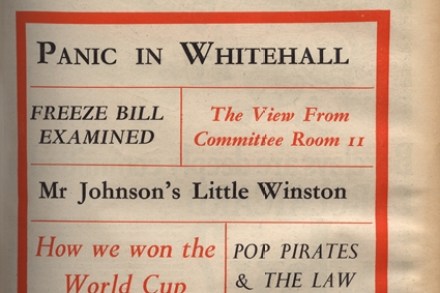
Yesterday, Coffee House recommended that disappointed English football fans take solace, as always, in memories of 1966. To that end, here's The Spectator's review of England's World Cup victory at the time. These were clearly more innocent times, as evidenced by the closing observation: "whether we win or not is not a matter for negotiation between heads of states or men in striped pants." Their cup runneth over, D.N. Chester, The Spectator, 5 August 1966 Let it be for ever recorded. At 5.15 pm on Saturday July 30 1966, the Swiss referee blew his whistle and England had won the World Cup for the first time, having just beaten West Germany 4-2. Winning deservedly, in my opinion, for they were the best all-round team in the competition.

BREAKING: England lose their 2018 World Cup bid

Bad news, I'm afraid: Russia has won the contest to host the World Cup in 2018. According to some sources, England didn't even make it beyond the first round of voting. So, not the fairytale result that David Cameron, or most English football fans, would have wanted – nor, indeed, the one that was expected earlier today.

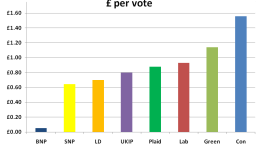
Who got good value-for-money in the general election?

Coffee House has wrung today's party expenditure figures through the calculator to produce the colourful graphs below. As the headings suggest, they show how much was spent by each party* for every individual vote and seat they won in the general election: *That is, each party that received over 100,000 votes. Excluding Northern Ireland-based parties.

A winning bid?

Football and Coffee House rarely mix, except of course when Manchester United win the European Cup. Yet I'm sure plenty of CoffeeHousers want to see England come out on top when the winning nation of the 2018 World Cup bid is announced later today. This morning saw the English delegation – including Davids Cameron and Beckham, and Prince William – make their final presentation to FIFA dignitaries. To my eyes, it was schmaltzily effective stuff, but you can judge for yourself from the video above. All that remains to do is echo Iain Dale's call of "Come on England!" And if we don't win, then it was obviously fixed. P.S. There's even some World Cup-related embarrassment for Ed Miliband.

A grim turning point for Ed Miliband

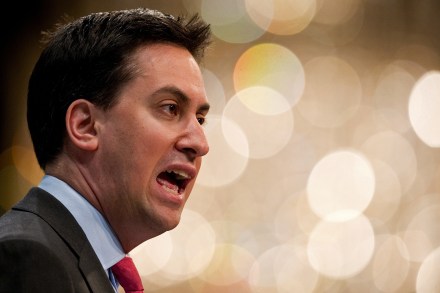
Yesterday's PMQs already feels like a turning point. It wasn't so much the nature of David Cameron's victory – comprehensive though it was – but rather the way  Labour MPs have reacted to Ed Miliband's defeat. Whatever doubts some of them held privately about their leader have suddenly spilled out, mercilessly, across the snow. In his Daily Mail sketch, Quentin Letts describes Miliband's excrutiating exit from the chamber yesterday; Guido and the Telegraph are carrying remarks from disgruntled Labour figures. The volume of hostile radio chatter has risen considerably over the past twenty-four hours. Of course, there are several caveats to be slapped across all this – not least that Labour are bobbing up above the Tories in the polls.

Leaked embassy cable: what the Americans thought of Thatcher

Forget the children of Thatcher, here's what the Americans were saying about the Iron Lady herself when she became Tory party leader. The source is a confidential cable from the American Embassy in London to the US State Department, dated 16 February 1975, and referenced in Claire Berlinski's book There is No Alternative: Subject: Margaret Thatcher: Some First Impressions 1. We understand Department is providing Secretary with biographic data on Margaret Thatcher prior to his meeting with her February 18, Here are our initial impressions of Britain's newest political star. 2. Margaret Thatcher has blazed into national prominence almost literally from out of nowhere.

PMQs live blog | 1 December 2010

VERDICT: A freewheeling, swashbuckling sort of performance from Cameron today, that was encapsulated by a single line: "I'd rather be a Child of Thatcher than a Son of Brown". Sure, that may not go down too well with lefty Lib Dems nor, indeed, many Scottish voters. But, in the context of PMQs, it was a rapier response to Ed Miliband's sclerotic lines of questioning. Why the Labour leader chose to completely ignore today's Mervyn King quotes, and sift unpersuasively through the footnotes of the OBR report, I'm not sure. In any case, the plan didn't work at all. This was yet another PMQs which generated more heat than light, but Miliband was the only participant who got burnt.  1233: And that's it. My quick verdict shortly.

Pakistan’s double game comes under the spotlight once again

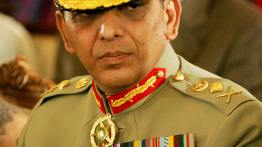
The leak that keeps on leaking has one or two embarrassing titbits about our domestic policymakers this morning. Yet far more noteworthy are the documents on Pakistan. While they don't tell us too much that is surprising – being mostly about the duplicitous game that country is playing with the West – they do highlight some potentially worrying trends. Chief among them is the growing influence of General Ashfaq Pervez Kiyani, the head of Pakistan's army. His name is littered generously throughout the US briefings, and it is often connected with dangerous conspiracy and double-dealing. One document, for instance, suggests that Kiyani was prepared to overthrow the Pakistani President, Asif Zardari, last year.

Labour’s ice cream moment

This from Matthew Taylor – the former No.10 head of policy, speaking to the Times for their series (£) on the fall of New Labour – deserves a post of its own: "For me, New Labour died when Tony bought Gordon an ice cream in 2005. I remember sitting in Downing St two days after the election win and chucking into the bin the proposal to break up the Treasury.

Ed Miliband has a choice to make about the unions

On the surface, there are one or two baubles to delight a Labour supporter: their party leader has just had a second son, of course; they are pushing ahead of the Tories in a number of polls; and the coalition will surely come under sustained and heavy attack as the cuts make themselves felt. But strip back the gloss veneer, and Labour has some agonising problems to worry about. Chief among those problems – as I've written before – is their uncertain message on the economy, stretching into an uncertain policy prospectus overall. Just what do Labour stand for? Then there's the simmering resentments between teams Ed and David, with the Balls axis looking to capitalise in between.

The Harman bounce

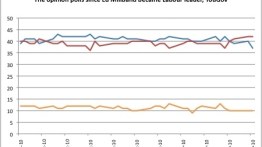
I kid, I kid – but it's still striking that Labour are pushing ahead in the polls as soon as Ed Miliband takes his paternity leave. According to today's YouGov poll, they are now 5 points ahead of the Tories: their biggest lead since 2007, and an escalation of the 2-point advantage they recorded in a couple of polls earlier this week. The question, of course, is whether this is a momentary blip, or representative of wider discontent over tuition fee rises and the like.

PMQs live blog | 17 November 2010

VERDICT: Harriet Harman's questions must have looked quite clever on paper: a heavy emphasis on police cuts, followed by a quick dose of indigation over the vanity photographers. But, in reality, they were breezily repelled by Cameron. All he had to do was cite the words of Alan Johnson and refer to a list of Labour's own dodgy hires. By the time Harman attacked the cost of elected police commissioners, leaving Cameron to stand up for greater local democracy and accountability, it was clear who had won this bout: the Prime Minister, by some distance. Although, as Andrew Neil and Tim Montgomerie have noted, the absence of any talk about an Irish bailout was unsettling, to say the least. 1233: Labour are persistently talking down the economy, claims Cameron.

Sovereignty, and the loss of it

The superb Slugger O'Toole blog highlights what is certainly the most resonant quote if the day: "When you borrow, you lose a little bit of your sovereignty, no matter who you borrow from." Those words were uttered by the Irish finance minister Brian Lenihan this morning, and they capture his country's grisly predicament perfectly. The Irish government has been fighting the European attempt to bail them out because they believe, quite understandably, that it would mean a final handover of control to Brussels and Berlin. But their loose economic policy – built on debt, and structured around a stubborn currency – has already seen them lose control to the point where the IMF is dispatching its observers to the scene.

The divide over the Guantanamo settlements

After being pre-empted by the morning newspapers, Ken Clarke's statement this afternoon contained nothing that was unexpected. "We've paid the money so we can move on," he said. And he went on to emphasise that the Guantanamo payouts are not an admission of culpability, but rather all about sparing the public's money and the spooks' time. More striking were some of the responses from Clarke's coalition stablemates. Take Tom Brake, the Lib Dem MP for Carshalton and Wallington, who suggested that the government wouldn't have made the payments if the UK didn't have a case to answer.

A good day to bury good news

It's not just the embarrassing and the difficult that will be buried underneath the Wills 'n' Kate coverage tomorrow – some good news will be too. Among it is the coalition's plan to expand the provision of personal budgets. According to the Lib Dem health minister Paul Burstow, speaking today, some one million elderly people will be given control of their own personal care budgets, up from 250,000 now. As I've suggested before, this is a worthwhile idea. Personal budgets promise to be one of the most concrete elements of what the Tories used to call their Post-Bureaucratic Age agenda, but has now been stuck with the Big Society label.

A royal wedding bounce?

Slap all kinds of health warnings on this, but – in view of speculation that the Wills and Kate nuptials might work in the coalition's favour – I thought CoffeeHousers might like to see what happened to the the Tory government's poll rating in 1981, around when Prince Charles married Diana. So here's a graph I've put together from Ipsos MORI's figures. The dotted line represents the date of the wedding: PoliticsHome suggests that the "royal wedding worked wonders for Thatcher" – but, on the basis of the above, I'm not so sure. It's worth nothing, though, that the Tories surged ahead of Labour as soon as the Falklands War flared up in 1982. By June 1982, Thatcher's party were 27 points ahead of their rivals. P.S.