Peter Hoskin

Labour may be doing alright, but Miliband is still dodgy on the public finances

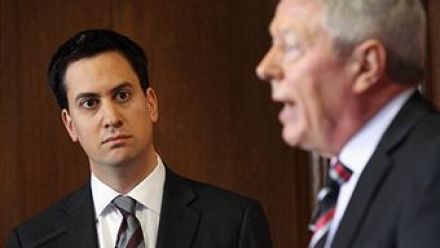
Ed Miliband's leadership may be young, but his trickery on the public finances is already well worn. We got it all in his interview with Andrew Marr earlier – and then some. There was the claim that Labour "paid down the debt" (that I dealt with here). There was the claim that Labour's spending was responsible (my response here). And there was a straight-up lie about Miliband's forecast for a double-dip. So far, so Brown. What caught my ear, though, was this exchange: Andrew Marr: I mean Tony Blair said in his memoir that by 2005, he was worried that the party was spending too much. And Alistair Darling said actually it was about 2007, he was worried that the party had been spending too much - before the crash happened.

From the archives: Remembering John Gross

As Charles Moore explains in the latest issue of the magazine, the late John Gross achieved the distinction – among many others – of being the "shortest-serving literary editor of The Spectator ever". For this week's archival interlude, I have pasted Charles's account of Gross's brief appointment in 1983 below, as well as one of the three book reviews that Gross wrote for The Spectator that year. Charles Moore's memories of John Gross John Gross, who has just died, had many distinctions in the world of letters, but his obituaries did not report that he was the shortest-serving literary editor of The Spectator ever. In 1983, Alexander Chancellor, the editor, sacked A.N.

Warsi takes on the Tory right

After the result, the spin. We got the first drafts of each party's response to the Oldham by-election in the dark hours of this morning – but the picture is solidifying now that the sun has risen. What's clear is that both Labour and the Lib Dems are having an easier time putting on a united front than the Tories. The Labour response was typified by Yvette Cooper's appearance on the Today Programme earlier. She broadcast the message that her party would have broadcast whatever the result: that this is defining proof that the public doesn't back the coalition and its economic policy. And as for the Lib Dems, they're all chirping the same lyric of, "Oh, well, yes, we did alright, really, given the circumstances." But it's a little trickier for the Tories.

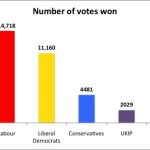
Comfortable win for Labour in Oldham East & Saddleworth

And all on a turnout of 48.1 percent. So far as the Lib Dems and Labour are concerned, these numbers probably met expectations. Overall support for Elwyn Watkins has held firm since the general election, but he was always going to struggle to get within 103 votes of Labour once again. While a 10-point victory for Debbie Abrahams is encouraging for Labour, without quite suggesting a tidal shift in the public mood. The 14 percent drop in the Tory vote is a little more striking, though – and it's telling that Andy Burnham dwelt on it in his response to the Beeb. For their part, the Tories are pointing to the natural squeeze on third parties in by-elections.

More Tory discontent with the Speaker

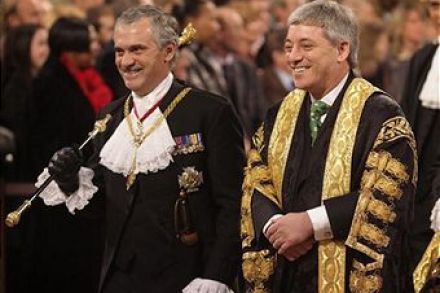
Guido and Benedict Brogan have already drawn attention to Paul Waugh's latest post. But a story this good deserves repeating, at length: "Tory MP Mark Pritchard is not one to swear. In fact he's ribbed by colleagues in the Tea Room for saying "Schmidt" instead of sh*t. But today, he exploded when the Commons Speaker confronted him over an alleged breach of the courtesies of the House. It all started when Pritchard got to his feet towards the end of Business Questions. As he rose, the Tory backbencher was told by John Bercow that as he was not present for the beginning of Sir George Young's business statement, he could not ask a question.

Miliband talks the language of cuts

Much of Ed Miliband's Grand Confession on the economy is wearily familiar. I mean, we've known his take on the deficit for some time: that the drop in tax receipts from a crumbling financial sector was to blame, rather than Brown's spending. And to have him argue that Labour should have made the economy less dependent on the City is just another way of saying exactly the same thing. But there is something new in there, too. Miliband is set to admit that Labour didn't "talk the language of cuts" soon enough. Not that he's saying Labour should have – or still should – cut deeper and faster, mind. It's simply that Brown and his ministers didn't breath the c-word early enough.

Five more things you need to know about the IDS reforms

Last November, I put together a ten-point summary of IDS's benefit reforms – so why add five more points now? Two reasons. First, it's worth dwelling on what, I believe, will be one of this government's defining achievements. Second – and far more prosaic – the Insistute for Fiscal Studies released a report on the matter yesterday. The following points have all been harvested from that document, and represent the IFS's judgement, so to speak. Only one judgement among many, but one that warrants some attention. Here goes: 1. Who gains and who loses (in financial terms)? This question courses through most of the IFS report, and stands out in most of the news coverage this morning.

Eric Illsley announces his resignation

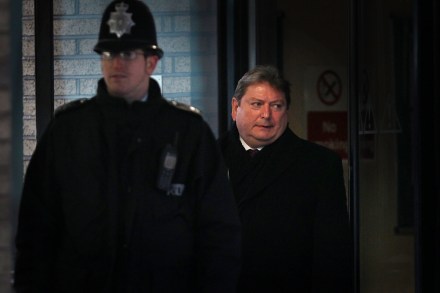
With the Labour party motioning to unseat him, and David Cameron and Ed Miliband speaking out against him, it was always likely to end thus for Eric Illsley. The receipt offender has just issued this statement: "I would like to apologise to my constituents, family and friends, following my court appearance, for the distress and embarrassment caused by my actions that I deeply, deeply regret. I have begun to wind down my parliamentary office, following which I will resign from Parliament before my next court appearance. I will be making no further comment." Which leaves us with the prospect of a by-election in Barnsley Central, probably in May. It's one that Labour will expect to win, not least because they achieved 47.

PMQs live blog | 12 January 2011

VERDICT: Woah. If you ever needed a PMQs to brush away the last morsels of festive cheer, then this was it. Every question and answer came laced with some sideswipe or other, and it made for a scrappy exchange between the two party leaders. Both struck blows against each other, but both were also guilty of errors and mis-steps. Miliband squandered an easy attack on bankers' bonuses, even allowing Cameron to turn it back against Labour. While, for his part, the Prime Minister was so relentlessly personal that it came across as unstatesmanlike. I don't think either one really emerged victorious, or well, to be honest. It was simply unedifiying stuff. 1230: And that's the end of the first PMQs of 2011 - and what a heated one it was, too. My verdict shortly.

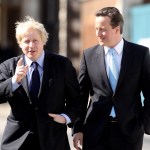
Dave and Boris, united in anger

A potent Tory tag team in the Sun today, as David Cameron and Boris Johnson join pens to take on the unions. The tone of their article is as blunt as anything we've heard from them on the matter, particularly the Prime Minister. "Let's call these threats what they are," it says about the prospect of strikes during the Royal Wedding and the Olympics: "nothing more than headline grabbing to score political points". And it continues to deliver a warning to union bosses: "you can try to drag this country back to the 1970s, to a time when militants held our country to ransom, but you will not succeed." It's not all frontal assault, though. There's a subtler vein of divide-and-conquer in all this.

Illsley’s untenable position

After David Chaytor's conviction last week, the dominoes just keep on tumbling. Today, it was Eric Illsley's turn to confess to his expenses-related sins – and he did so by pleading guilty to three "false accounting" charges in Southwark Crown Court. Given that he's still MP for Barnsley Central – although now as an independent, rather than the Labour MP he was elected as – that makes him the first sitting parliamentarian to face sentencing as a receipt offender. A dubious accolade, to be sure. In terms of day-to-day politics, the next question is whether Illsley will be able to hang on to his seat. He could, theoretically, remain in place if his sentence is under a year's jail time.

The broken Lib Dem pledge that didn’t provoke riots

Coalition politics sure does throw up some peculiar situations. Take today's vote on the EU Bill. As part of the horse-trading that's going on around it, Tory Eurosceptics have put forward a series of amendments to mould the Bill more to their liking. Of these, the most striking is Peter Bone's suggestion that Parliament should legislate for a referendum, not on this minor constitutional change or that, but on whether we should leave the EU altogether. So far, so unsurprising. But the curious part of all this is that the Lib Dems once offered an in-out referendum on Europe themselves. If you remember back to the row over Lisbon, Clegg's get-out clause was what he called "a referendum on Europe with substance".

What are the best literary extras?

We all know about the extra features on DVDs: those behind-the-scenes documentaries and deleted scenes that accompany the main feature – often uninformative pap, very occasionally sublime. But what about extra features for books? The trend towards stirring more and more content into a book first struck me when I read a Harper edition of Tim O'Brien's If I Die In a Combat Zone some years ago. Its cover promised what it called a P.S. section, a supplementary dose of reviews, interviews and articles about the title in hand. And, sure enough, there they were: one publisher's attempt to add more value to their product in an uncertain marketplace. I've come across similar attempts since – but, really, the idea of adding written value to books isn't anything new.

The coalition decides to accept the flak over bonuses

The truth, as they say, is out: it doesn't look as though the coalition will be doing much about bankers' bonuses after all. According to this morning's Times (£), it's a case of the Tories getting one over the Lib Dems – and particularly Vince Cable – by not pushing down with more taxes on the City. But that, I suspect, is only half the story. The other half is that the coalition never had much in their armoury, but harsh rhetoric, in the first place. If they want the banks to start lending to business again, then their most substantial hope has always been a trade-off over bonuses. Which – as Benedict Brogan suggests in an insightful post over at the Telegraph – is hardly an ideal situation for the coalition.

An unsurprising coup for UKIP

As Adam Boulton says, the Oldham by-election has produced another noteworthy moment. And, in this case, it's one of the smaller parties making the splash. In a press conference in the constituency this afternoon, UKIP confirmed that Stuart Wheeler has joined their party as treasurer. This is, of course, the Stuart Wheeler who gave £millions to the Tories during the wilderness year after 1997 – including a £5 million mega-donation in 2001 alone. That Wheeler has made the conversion is unsurprising. He was expelled from the Conservatives, in 2009, for donating £100,000 to UKIP. And, soon after, he wrote a piece for The Spectator explaining why he would be voting for Farage & Co. in the European elections.

Clegg sets his alarm clock

My prediction for this week: we're going to see a whole lot of defiant frontage from Nick Clegg. The last parliamentary session closed with him under attack over tuition fees; this one begins with the possibility of heavy defeat in Oldham East – and he's got to respond accordingly. Hence his interview on Today this morning, in which he dismissed the idea of a Lib Dem drubbing in May's local elections as "total nonsense," and stressed that the coalition is "setting in motion a number of very liberal reforms". There was also a warning over bonuses, along the usual lines, for state-owned banks. But the most intriguing news in Lib Dem Land is much more sedate than all that – revealed, as it was, in an unassuming paragraph at the bottom of a Sunday Times story (£) yesterday.

Will Balls and Cooper capitalise from Johnson’s mistakes?

You've probably heard about Alan Johnson's latest slip-up yesterday. But it's still worth highlighting the response made by a Labour spokesman – as Dizzy has – because it's simply extraordinary. Here it is: "We have a Shadow Chancellor who lives in the real world. He knows the difference between a progresive and regressive tax. He knows what it takes to get on in the real world. That is more important than taking part in a Westminster quiz game." Extraordinary that Labour should already have to make excuses on behalf of Johnson. But even more extraordinary that they should be made in this manner.

The pollsters have Labour running away with it in Oldham East

The same, but completely different. That's the electoral paradox that emerges from a couple of opinion polls on the Oldham East & Saddleworth by-election this morning. The same, because both the Lord Ashcroft survey for the Sunday Telegraph and the ICM survey for the Mail on Sunday produce the same result as in the general election: Labour first, the Lib Dems second and the Tories in third. Completely different, because this is no longer the achingly close contest that it was back in May. Both polls have Labour soaring 17 percentage points above the yellow bird of liberty. Of course, the polls aren't always right. Yet these latest will surely furrow some brows in Coalitionville.

Chaytor in chokey

Log it in your diaries, CoffeeHousers: on this day – Friday, 7th January, 2011 – a former MP was sent to jail for abusing the parliamentary expenses system. Yes, David Chaytor has been sentenced to eighteen months for, ahem, "false accounting" his way to £18,000 of taxpayers' cash. He's the first former parliamentarian to be sent down since Jeffrey Archer in 2001. As fallout from the expenses scandal goes, it's probably the most searing example yet. But the question now is whether there will be any fallout from the fallout, so to speak.