Peter Hoskin

Cameron’s gloomy brand of optimism

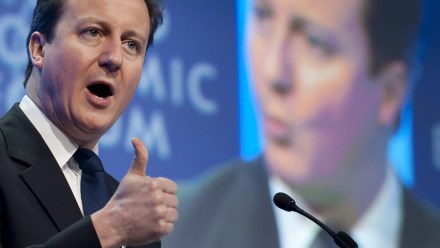
A weird, sprawling kind of speech from David Cameron in Davos this morning. It started off on an unusually, if expectedly, gloomy note: all talk of Europe's debt-induced decline in the face of competition from India, China and Brazil. And he emphasised, of course, that Britain would, and should, stick to its current trajectory of "tough" deficit reduction. But it's where it went from there that was more striking still. Cameron contrasted his position with that of "the pessimists". These people, he claimed, have a charter which includes propositions such as, "we in Europe are incapable of solving our debt and deficit problems," and, "we're attached to liberal values that are leaving us far behind the juggernaut of authoritarian capitalism".

Bookends: 75 Years of DC Comics

Peter Hoskin wrote the Bookends column for the latest issue of the Spectator. Here it is for readers of the blog: Did you know they once burned comic books? And in America, no less. In schoolyards. It was shortly after the end of the second world war, and legislators and parents were all shook up about what these ten-cent publications with their scenes of violence and distress were doing to the minds of their children. So on the concrete they went, in messy piles. A sprinkling of fuel, a lit match, and the fire soon caught hold. Some of the kids even cheered the flames on.

Boris: George knows I’m right

David Cameron and George Osborne must have hoped that their message from Davos today would be broadcast unimpeded. It is, after all, a blunt message, designed to smash through all the radio chatter: we must continue with deficit reduction, there is no alternative, etc. But, inconveniently for them, there are other voices saying what we must do – among them Boris Johnson. The Mayor of London's interview with the Telegraph is at once typical and quite intriguing. Typical, because he holds aloft the same standards as always. "I understand 50p tax politically," he says, "but there has got to be a sense of where we are going and where we want to be as a country.

The Big Society in 1997

Titter ye might. The Big Society? In 1997? If the idea was of, erm, limited electoral worth in our last general election, then it was certainly of little use when Tony Blair hurtled into power all those years ago. Yet there is was, mostly speaking, in the "Civic Conservatism" espoused chiefly by David Willetts. Danny Finkelstein, writing for the pre-paywall incarnation of Comment Central, has already alluded to the intellectual debt that Steve Hilton et al owe to Willetts' thinking back in the 1990s. Fraser did likewise in an interview with Willetts from four-and-a-half years ago. I mention this now for two conjoined reasons.

The Lib Dems reject Ed Miliband’s overtures (again)

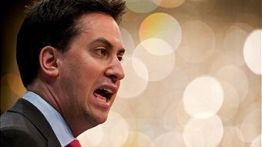
What a joy it is to watch Ed Miliband contort and twist so that he can offer a hand of friendship to the Lib Dems. It has been a three-act show, so far. First, during the Labour leadership contest, he described the Lib Dems as a "disgrace to the traditions of liberalism," adding that, "I can see the death of the Liberal party to be honest". Then, he said that he would actually work with those dying Liberals, but only if they ditched Nick Clegg first. And then today, in an interview with the Independent, he suggests that Clegg might be able to stay on, after all. As turnarounds go, this one is predictable and sensible - but it's no less amusing for that. The Lib Dem response has once again come from Tim Farron; almost certainly for the same reasons as before.

PMQs live blog | 26 January 2011

VERDICT: Ed Miliband had it all, going into today's PMQs: weak growth figures, the uncertain demise of control orders, rising youth unemployment, and more. And yet, somehow, he let most of it go to waste. Barely any of his attacks stuck – or, for that matter, stick in the mind – and Cameron rebuffed them with surprising ease. It helped that the Prime Minister seemed more comprehensively briefed than usual, with a decent compliment of statistics, and one or two sharp lines, at his disposal. (Although, measuring by the Labour cheers, I doubt he will thank Jacob Rees-Mogg for invoking Thatcher immediately after his exchange with the Labour leader.) In the end, a victory for Cameron – although that won't defuse the issues that Miliband should have detonated.

A businesslike State of the Union address

https://www.youtube.com/watch?v=nZ5DMpNznlA Jobs, people, work, new, years, make. You can get a good sense of Obama's State of the Union address purely from its most frequently used words. Yes, this one was all about the future, and – another popular word – "investing" in it. As the President himself put it, sounding like some freakish amalgam of David Cameron and Gordon Brown, "If we make the hard choices now to rein in our deficits, we can make the investments we need to win the future." The President wasn't short of ideas for the investment half of that equation, even if – as others have noted – there was an absence of specifics.

Why our national debt went up by £1,300 billion today

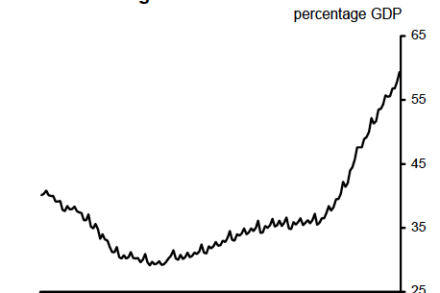
It's not just the growth figures, you know. Today, the Office for National Statistics also released its latest estimates for the state of the public finances. Among the headline findings was a crumb of consolation for the Treasury: it is on track to meet its borrowing target for the financial year. But that's by the by when compared to this other snippet from the ONS release: our national debt went up by £1,300 billion in December. Don't worry, though – it's not really as terrible as all that sounds. What's happened is that the human calculators have finally worked out how to account for Lloyds and RBS on the public balance sheet. This isn't new debt. It's simply a grand liability that wasn't included in the official statistics until now.

Brown takes the opportunity to peddle his “global growth plan”

As Iain Martin and Guido have noted, Ed Balls – and, for that matter, Ed Miliband – could probably have done without Gordon Brown hovering from the political graveyard to cast judgement on today's growth figures. But hover he has, as the above video of his appearance on CNBC News testifies. It's almost as though he wants to remind people that his spirit lives on in Labour's rearranged top team. As for the content of his interview, it was stodgy mix of the arguments in his recent book and the attacks that Balls was making earlier. "Europe and America, but particularly Europe," he said, "are now implementing policies that are more reminiscent of the 1930s, than reminiscent of the lessons we should have learnt from previous decades.

Ed Balls: I don’t think a double dip is the most likely outcome

And this, folks, is a day where Ed Balls is having his cake and eating it too. Not only is he basking in the grim light of the growth figures, but he is using the opportunity to recast his own stance on the economy. Speaking on the Daily Politics just now, he de-emphasised the argument that in-year cuts were to blame for today's numbers, instead claiming that people have "changed their behaviour in anticipation of what's coming in the future." And, more ear-catching still, he added: "I don't think [a double dip] is the most likely outcome." This, as Fraser suggested earlier, is surely necessary caution on Balls's part. He can't go too far with the dread warnings, lest the economy pick up again next quarter.

Why Coulson’s departure matters

Courtesy of the ConHome tag team of Paul Goodman and Tim Montgomerie, two articles that are worth adding to your Saturday reading list. Both capture why Andy Coulson's resignation matters, if not to the general swell of British politics, at least to internal operations in Coalitionville. The wider argument of Paul's article for the Guardian is captured by its headline: "Andy Couslon had a nose for the view of the aspirational voter." But it also homes in on the point that Coulson's departure tilts No.10 in favour of Steve Hilton – something that, rightly or wrongly, will bother the Tory right far more than it does Lib Dems of any persuasion. The obvious question is whether David Cameron will choose to correct than tilt, or maintain it.

And what about the Lib Dems?

After the gales of recent weeks, the past few days must have been relatively blissful for the Lib Dems. No fake constituents with hidden dictaphones. No massive student protests. No especial focus on their opinion poll ratings. But, instead, a mephitic heap of problems, or at least embarrassments, for Labour and the Tories. Warsi, Johnson, Coulson, even EMAs – Clegg & Co. have been spared the worst of it. Which isn't to say that the Lib Dems will be unaffected by recent events. For instance, as Paul Goodman suggests, Andy Coulson's departure unsettles the delicate balance of the coalition – and that will always have ramifications, however minute, for the yellow half of it. Yet it's the rise of Balls that may prove more significant for the Lib Dems.

From the archives: The resignation of Alastair Campbell

No need to explain why we're looking back on the resignation of Alastair Campbell for this week's entry from The Spectator archives. The piece itself is merciless stuff from the pen of Stephen Glover. Alastair Campbell's redtop values have contaminated our politics, Stephen Glover, The Spectator, 6 September 2003 When I learnt of Dr Kelly's suicide, my first thought was that he had been fatally drawn into Alastair Campbell's world. It is what many people felt. It was a reasonable assumption that Mr Campbell or his office or someone responsible to the Prime Minister's director of communications had deliberately put Dr Kelly's name in the public domain - with disastrous results.

The Coulson story won’t be buried – but will it matter?

There's not much chance that the Andy Coulson story will be buried in tomorrow's newspapers. Blair's appearance at the Chilcot Inquiry will scatter a handful of earth across it, as will AJ's travails. But it's not as though people outside the Westminster bubble will fail to notice all this. Watching the 24 hour news channels now, it's all Coulson, Coulson, Coulson. In which case, this is bound to inflict some damage on the government in the short term. The public is not inclined towards liking, or trusting, spin doctors. And Andy Coulson leaving Downing Street through a fug of phone-hacking allegations will not do anything to change that. Questions will be asked about David Cameron's judgement in appointing Coulson in the first place.

Coulson’s resignation statement

Here's Andy Coulson's resignation statement: "I can today confirm that I've resigned as Downing Street director of communications. It's been a privilege and an honour to work for David Cameron for three-and-a-half years. I'm extremely proud of the part I've played in helping him reach No 10 and during the coalition's first nine months. Nothing is more important than the Government's task of getting this country back on its feet. Unfortunately, continued coverage of events connected to my old job at the News of the World has made it difficult for me to give the 110% needed in this role. I stand by what I've said about those events but when the spokesman needs a spokesman, it's time to move on.

How things are different now that Balls is shadow chancellor

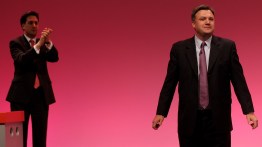
The timing could hardly have been more resonant. On the day that Tony Blair is paraded, once again, in front of the Iraq Inquiry, Team Brown is firmly back in charge of the Labour party. For, I'm sure you've noticed CoffeeHousers, three of the four great shadow offices of state are occupied by former members of the Brown coterie: Ed Miliband, Ed Balls and Yvette Cooper. The fourth belongs to someone who doesn't sit easily in either half of the TB-GB divide: Douglas Alexander. The question, of course, is what this means for Labour's economic policy. And the answer according to Miliband is "nothing much". The Labour leader has been keen to stress that his party's fiscal plans remain largely unchanged by Balls' ascension.

PMQs live blog | 19 January 2011

VERDICT: No winners, and no real losers, from this week's PMQs. Miliband's questions were insistent and straightforward. Cameron's answers were forceful and, in themselves, fairly persuasive. A no-score draw, then, if you want to look at it like that. There were one or two worrying leitmotifs for the coalition, though. First, the PM's tendency towards grouchiness under fire; far less pronounced than it was last week, but still present. And then the continuing absence of any clear explanation of the NHS reforms, beyond "well, we had to change what was there previously." The PM has a point about cancer survival rates and the like, but he's not yet setting out how the coalition's policies will make a difference. 1230: And that's it. My quick verdict shortly.

Is it worth paying young people to stay on at school?

Today's political news is brought to you by the letters E, M and A. Eeeema. While the political establishment debates the abolition of EMA – the Educational Maintenance Allowance – inside Parliament, campaigners will be protesting against it on the streets outside. The police, who are used to these things by now, have already set up the barricades. Behind all the fuss and froth, the argument is really this: is EMA good value? The coalition claim that paying 16-18 year-olds up to £30 a week to stay on at school is not only expensive, but also wasteful.