Peter Hoskin

Balls and Miliband fail the credibility test

Eds Miliband and Balls gathered the press corps together this morning to broadcast a straightforward message: oh yes, we do have an alternative. And the shape of that alternative? A repeat of the one-off tax on bankers' bonuses that, Balls claimed, raised £3.5 billion last year. The money would be used for an entire buffet of economic delights, from the creation of new houses to the funding of job schemes for the young. The upshot, apparently, would be 110,000 new jobs. Nice work, as they say — if you can get it. But there are a couple of problems with all that, the first of which Labour has pre-empted. It is that last year's bonus tax may not have raised as much as £3.5 billion, after all.

Another call for an in/out referendum

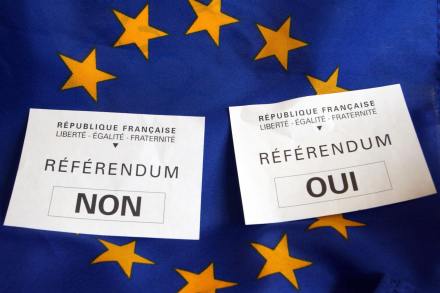
In or out? — that is the question that a new cross-party campaign would have put to the British people. And so they're launching their "People's Pledge" today. The idea is that voters would promise to support only those parliamentary candidates who back a referendum on our membership of the EU. The signatures will then be enumerated, presented on a website, and — it is hoped — shock Westminster into delivering the referendum itself. At the very least, it might persuade some candidates to face up to, and meet, the tide of public opinion on Europe. It seems we've been here, or somewhere like it, before now. Daniel Hannan, for instance, launched a campaign last year to collect signatures for an EU referendum.

The Arab League adds its weight to the calls for a no-fly zone

We're pushing for a no-fly zone. France is pushing for a no-fly zone. And now the Arab League is pushing for a no-fly zone too. The news fresh out of Cairo is that the organisation has voted in favour of restricting airspace above Libya. It will now push the UN to do the same, which is a considerably more proactive than the stance it adopted earlier this week. While one vote doesn't really seal anything, this is potentially a crucial moment. NATO has made regional support a key condition of a no-fly zone – and now it has it, officially. Those who have been sniffing around for alternatives to the UN and its resolutions will regard this as a positive step.

Balls sets Labour against Clegg (again)

It's not just the protestors who are rallying against Nick Clegg today. Here's what Ed Balls has to say about the Lib Dem leader, in interview with the Guardian: "'Clegg looks an increasingly desperate, shrill and discredited politician, losing both public and party support. People think that if Clegg says something, it cannot be the truth. The Liberal Democrats need to have some real hard thinking about what they stand for' He says it would be impossible for Labour to govern with Clegg after the election, arguing: 'I don't see how Nick Clegg could change direction again with any shred of credibility, or how he could work with Labour now, but that is not true of Liberal Democrats more widely.

From the archives: the tsunami of 2004

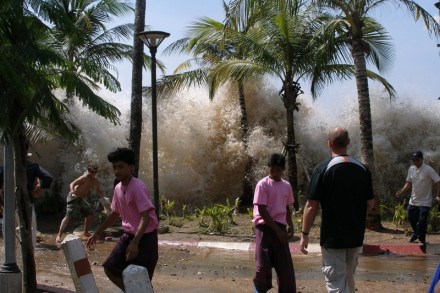
Devastation today, and devastation when a tsunami swept across Sri Lanka, and other countries around the Indian Ocean, in 2004. Here is Andrew Gilligan's report from Columbo at the time, which sought to set the facts straight: The littoral truth, Andrew Gilligan, The Spectator, 8 January 2005 Columbo The staff of Unicef’s Sri Lanka operation are in their Colombo offices dealing as best they can with a flood of desperate people, people at the end of their tether, people in overwhelming need of immediate help. CNN’s Christiane Amanpour, for instance.

A disaster film

And, meanwhile, William Hague and David Cameron have issued statements on the disaster. Here's Hague: "My thoughts are with the people of Japan at this time. We are in contact with the Japanese government and I have asked our Ambassador in Tokyo to offer all assistance we can as Japan responds to this terrible disaster. We are also working urgently to provide consular assistance to British Nationals. Our Embassy and Consulates-General across Japan are in touch with local authorities and making contact with British Nationals to provide consular assistance. We have set up a crisis centre in the Foreign Office to co-ordinate our response and offer advice to anyone concerned about relatives or friends in Japan.

Disaster in Japan

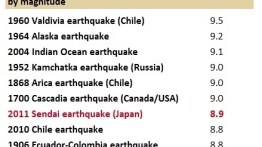
Graphs and tables cannot ever convey the full tragedy of the situation in Japan, but the one above captures an important fact: that today's earthquake is historic in size. At 8.9 magnitude, this Japanese disaster is the 7th largest on the US Geological Survey's books. Because it struck on the seabed, its destructive energy is distilled into the tsunami that is now sweeping across the island. What happens next is uncertain and could potentially worsen the catastrophe. A grim chorus of warning sirens is sounding from the coastlines of the Pacific, as everywhere from the Philippines to the west coast of America readies itself against the swells that may or may not come. Thankfully, the latest reports say that the tidal wave will not hit Australia.

Clegg ushers in the next phase of the coalition

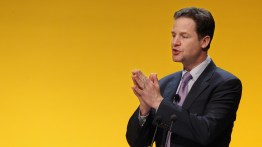
What have the Lib Dems ever done for us? That's the question that Nick Clegg sets about answering in interview with the Independent today — and he does so with righteous vigour. "Brick by brick, policy by policy, decision by decision, sometimes almost invisibly," he insists, "we are putting in place good policies that will make a long and lasting difference." He dwells, and rightfully so, on the pupil premium and raised personal allowance. "All these things will outlive the immediate task of dealing with the deficit." This salesmanship is only to be expected from Clegg, speaking on the eve of his party's spring conference and in the aftermath of their electoral cremation in Barnsley.

PMQs live blog | 9 March 2011

VERDICT: A turgid sort of PMQs, where most of the quips were clumsy rather than cutting. Cameron probably won it by virtue of one of the few direct hits – his line about Ed Miliband knifing a foreign secretary, aka MiliD – and because Miliband failed, really, to prod and aggravate the coalition's wounds over Libya. The Labour leader's main attack – over the competence of the coalition – was clear enough, though, and could have some purchase depending on, erm, how competent the coalition is. As it is, Cameron's hint that he still has the occasional cigarette will probably capture the spotlight. 1231: And that's it. My quick verdict shortly.

UN or not UN?

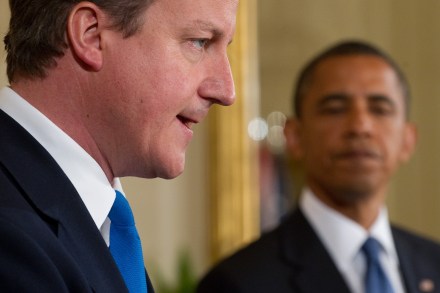
The garbled horror stories just keep on rolling out of Libya. According to the latest reports, Gaddafi's troops have attacked the rebels in Zawiyah with redoubled violence and force. Aircraft, tanks, bombs, mortars – all have been used against the city and its people, with what one assumes are bloody results. As one resident puts it to Reuters, "Zawiyah as you knew it no longer exists." It is unclear whether the rebels have now lost control there, but that is a strong possibility. Unsurprising, then, that the West is positioning itself to act. David Cameron, we are told, has been speaking with Barack Obama about the full spread of options before them.

David Miliband hurtles back into orbit

Ah, there it is, in the final sentence of the fourth paragraph: a flattering reference to Ed Miliband. Phew. Good job David Miliband squeezed his brother's name into his article on Labour's future (£) for the Times today, otherwise it might have been July 2008 all over again. As it is, MiliD's third newspaper article in as many days is enough to suggest that he's keen to remain a prominent figure, if not yet an actual rival for his brother's crown. In some respects, though, the recommendations made by MiliD are a challenge to his brother's Way of Doing Things. His suggestion that the left be "an ally of wealth creation," for instance, reads something like: "enough with the banker bashing, already.

Some context for those police cuts

What's it to be? Take a pay cut, or lose your job? That, as David suggested earlier, is the question being posed by Theresa May to police forces – and it's a question that they cannot shirk. With the police budget being cut by 4 per cent a year, there have to be reductions of one sort or another. And if they don't come from pay restraint – along the broad outlines of Tom Winsor's review today – then there will no doubt have to be extra job losses. This is the argument that George Osborne set out in his 2009 conference speech, only now it's being deployed from government. Not that there won't be job losses as well. Conveniently enough, a memo from the Association of Chief Police Officers puts a number on it all, and has been leaked to the Guardian.

The politics of Prince Andrew

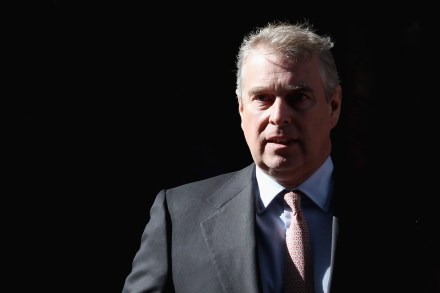
Uh-oh, the Prime Minster has "full confidence" in Prince Andrew as a UK trade envoy – the sort of endorsement that often means the direct opposite. In this case, though, I suspect that the line is more a hasty attempt to defuse some of the tension that has been building on this matter over the past few days. Only this morning, a Downing Street source told the Beeb that the Prince could be ejected from the role should any more revelations surface. Another suggested that "there won't be many tears shed if he resigns." And then there's the senior Tory putting it about that "there appears to be no discernible mental activity," on Prince Andrew's part. It has been – and continues to be – a right royal rumpus, to say the least.

Who watches the watchmen? | 7 March 2011

There's a fuse-meet-flame quality to PoliticsHome's smart little scoop this morning. Our parliamentarians are already somewhat hacked off with IPSA, the body tasked with overseeing their expenses. So how will they react upon reading that IPSA spent £300,000 of taxpayers' cash on furbishing their London office? The watchdog's shopping list includes 25 cabinets (£2,295 each), 14 "relaxer loungers" (£465 each) and a table at £837. It sounds awfully like some of the MPs' claims that were so controversial in the first place. IPSA are defending the spending, citing "industry standards" and such. But, whatever, it just fuels the sense that they are an unduly expensive and convoluted answer to the question at hand.

Khan comes to Ken Clarke’s support (kinda)

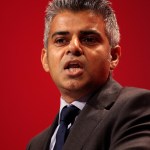
When it comes to the overall sway of British politics, Sadiq Khan's article for the Guardian is probably the most important of the day. We've heard Ed Miliband say before that, "when Ken Clarke says we need to look at short sentences in prison because of high re-offending rates, I'm not going to say he's soft on crime." But Khan's article, a summary of a speech he is giving later today, actually puts that sentiment into practice – and then some. His central argument is straight from the Hush Puppied One's playbook, particularly in its emphasis on the limitations of New Labour's policy: "Some claim crime fell because of the rise in the numbers imprisoned. But the relationship between crime rates and prison population is more complex than that.

From the archives: Mugabe’s rise to power

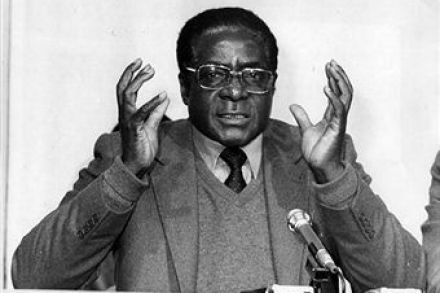
A strange sort of anniversary, but an anniversary nonetheless: it is 31 years, to the day, since Robert Mugabe took power in Zimbabwe, or Rhodesia as it was still called. In which case, here is The Spectator's leading article from the time. It is, for the large part, a good demonstration of the benefits conferred by hindsight. But its caginess about Mugabe is apparent in such observations as, "It is up to Mr Mugabe whether he leads his country into yet another black tyranny, corrupt and inefficient, or whether he builds on what has already been built." Mugabe, it seems, made his mind up on that one some time ago. Off the the Rhodesian hook, The Spectator, 8 March 1980 Mr Mugabe's victory in the Rhodesian elections is overwhelming.

Fuel for the fire

On any normal day, a missive from Tim Farron to George Osborne – urging him to axe the planned rise in fuel duty – would be striking enough. On a day when the Lib Dems finished sixth in a by-election, it has a whole lot more piquancy to it. I'm not saying that the Next Lib Dem Leader™ is trying to cause trouble, or even hastening to shore up support. He has, after all, been dutiful in defence of the coalition this morning, and he has been highlighting fuel costs for some time now. But Lib Dem backbenchers clearly have some demands for the government – and now's the time for this one. Farron's point is that the Treasury can use some of it's stronger-than-expected incomings to stave off the hike.

A grim morning for the coalition – as Lib Dems finish sixth in Barnsley

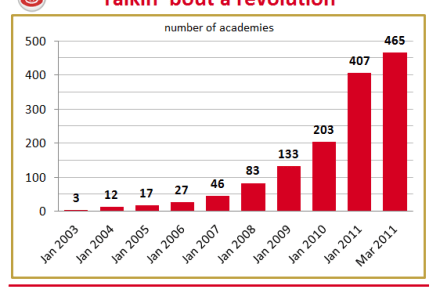
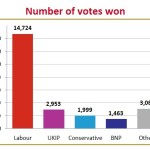
    You may notice that the Liberal Democrats don't feature in the first two graphs of the by-election result in Barnsley Central last night. Or, rather, they do – they're just subsumed under the 'Others' category, having finished in sixth place. Second in the general election, sixth last night. The 1,012 votes for the Lib Dems put them behind Labour, UKIP, the Tories, the BNP and an independent candidate called Tony Devoy. Their share of the vote has fallen by 13.1 points on last May's result. This was an unequivocal, almost ritualistic, beating. Blood everywhere. And the other half of the coalition hasn't escaped unbruised either. The Tories finished third in the general election, third now – so what's changed?

Cameron caught in the middle

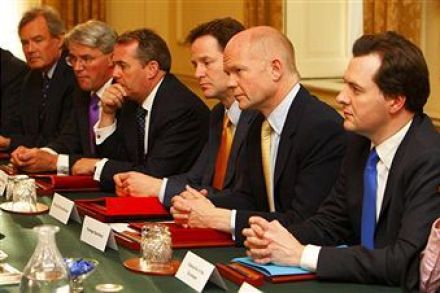
Need a bestiary to tell the hawks from the doves? Then this article (£) in the Times should serve your purpose. It's an account of Tuesday's Cabinet meeting on Libya, and the differences of opinion that transpired. Michael Gove, we are told, was "messianic" in his call for a tougher stance against Gaddafi. William Hague, for his part, was considerably more cautious. A graphic alongside the article puts George Osborne, Liam Fox and Andrew Mitchell in the Gove camp, and Nick Clegg and Danny Alexander with Hague. David Cameron, chairman of this diverse board, is said to be "caught in the middle". The government has since denied that the Cabinet is split.

Brits want to give money abroad – but not necessarily via the government

"A well-targeted aid budget is essential if Britain is to punch above its weight on the world stage." That's how Tim Montgomerie finishes his neat defence (£) of British aid policy for the Times today. But, putting aside the matter of whether it's wise to give aid to, say, India at a time of spending restraint back home, Tim's claim rather inspires a question: is our aid budget well-targeted? And the answer, it seems to me, is encoded in Ian Birrell's punchy piece for the Evening Standard. Ian's overall point is similar to that made by economists such as Dambisa Moyo, whose work we have mentioned on Coffee House before now: that international aid is failing, on a grand scale, to do anything about the poverty it's meant to alleviate. Worse, it even has counterproductive effects.