Peter Hoskin

The Tories’ middle-class problem?

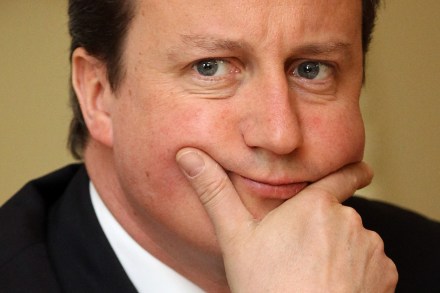
Back in July 2003, Bruce Anderson wrote a piece on David Cameron for The Spectator. Its tone was summed up by its headline — "My hero" — and that tone has suffused through much of Bruce's writing about the Tory leader since. Which is why his piece for the FT today is striking by virtue of its differentness. Its headline is that, "Cameron is losing touch with core Tories." Its argument is that the Tory party is ignoring the hopes, fears and aspirations of the white middle classes. Admittedly, Bruce doesn't put all this down to Cameron. On his account, there are demographic factors at play — not least that the growth of the middle classes, who are now "more numerous and more prosperous than ever before," has also made them more insecure.

The battle over universal benefits continues on the local front

Here's a question for you: should free school meals (FSM) be given to all pupils, regardless of their parents' income? I ask because this is precisely what the Labour-led council of Southwark is proposing for its primary schools. As the Evening Standard reports, the councilmen’s thinking is that by giving "healthy" FSMs to every pupil, every day, they might help "reduce childhood obesity." Oh, and the measure will cost some £4 million a year. Even if we put aside the question of whether the local praetorians should — or even could — tackle obesity on behalf of middle-class parents, this is still needling stuff.

Osborne enters the fray

Seems that the Tories can be more assertive too. After remaining more or less silent on the matter since the coalition was formed, George Osborne has today given his take on the AV referendum to the Daily Mail — and he's far from kind towards the Yes campaign. "What really stinks," says the Chancellor, "is actually one of the ways the Yes campaign is funded." What he has in mind are the campaign's ties to an organisation that sells vote counting services, as revealed by Ed Howker in The Spectator. "I think there are some very, very serious questions that have to be answered." But, rather than just attacking the Yes campaign itself, Osborne also has some choice barbs for the Lib Dem part of it.

Why we should be concerned about debt interest

There's an interesting post by Éoin Clarke on debt interest doing the rounds. It originally appeared on his blog, but was soon commandeered by LabourList — and little wonder why. Dr Clarke's point is a perceptive and striking one. Debt interest, he says, is lower now than it was under John Major. The implication is that when George Osborne rattles on about the money blown on just "servicing our debt," we should take it with an almighty heap of salt. It's not, perhaps, as bad as all that. Or, rather, that's one way of looking at it. There are other ways, which I would list thus:   1) Going beyond 2011.

From the archives: 50 years of human spaceflight

Here at Coffee House, we normally exhume a piece from The Spectator archives on Fridays. But we thought we'd make an exception, today, for the fiftieth anniversary of Yuri Gagarin's ascent into space. The piece below is actually the only one that the magazine ran at the time, and is by the politician/journalist/author Desmond Donnelly.

Nick Clegg meets Gillian Duffy

There's a new equation in British politics, and it's one that Nick Clegg came up against this morning: Politician + Rochdale = Gillian Duffy. The Deputy Prime Minister was quizzed by Gordon Brown's unassuming nemesis during his visit to the town earlier — and the results are in the video above. For what it's worth, he did fairly well, emphasising the pressing need to tackle Labour's poisonous fiscal legacy.

Panic over? Perhaps not…

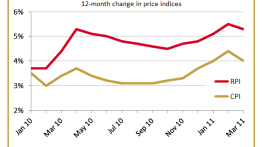
Is the inflation panic over? After rising for five consecutive months, CPI inflation went down by a 0.4 percentage points in March, to 4.0 per cent, taking the City by surprise. RPI inflation also went down, by 0.2 percentage points. The numbercrunchers at the Office for National Statistics put it down, largely, to a fall in food and drink prices. The cost of fruit is 2.7 per cent down on last March. The cost of bread and cereals, 2.6 per cent. Yet we shouldn't get ahead of ourselves. While this will certainly reduce the short-term pressure on the Bank to increase rates — as well as on the nation's pocketbooks — one month does not maketh a trend. The inflation debate in Britain is always carried out in the absence of a key metric: inflation forecasts.

What was Brown’s biggest mistake?

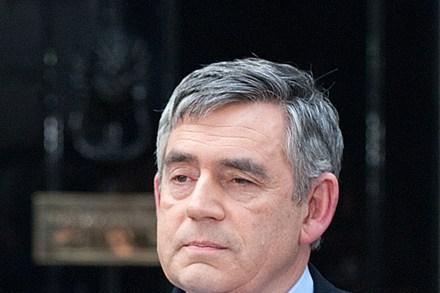
“I have to accept my responsibility.” Who would have thought that Gordon Brown would ever breathe those words, let alone breathe them to a conference in America over the weekend? Our former PM has, it's true, suggested that his regulatory system was inadequate to the financial crash before now. But here he was much more explicit: “We set up the Financial Services Authority believing the problem would come from the failure of an individual institution. That was the big mistake. We didn’t understand just how entangled things were.” And that's event before he got onto the "responsibility" bit. I'll repeat it, just in case it didn't sink in the first time: “I have to accept my responsibility.

Cameron takes it to the councils

Ignore what your council is telling you. So says no less a personage than the Prime Minister of our country, speaking at one of his freewheelin' roadshow events this afternoon. Cameron may have been referring specifically to the red tape being wrapped around Royal Wedding street parties, but it's still a pretty pugnacious point for a PM to make. Here's the full quotation, courtesy of the superb PoliticsHome: “I hope people are able to join in and celebrate and I am very much saying today that if people want to have a street party, don't listen to people who say 'it is all bureaucracy and health and safety and you cant do it.

Beyond the frontline

Labour's cartography department has been hard at work all weekend to produce this. It is, lest you haven't heard Yvette Cooper today, an "interactive web-map" of the job losses announced by police forces so far, all across the country. You can interact with it in ways that include clicking to view a larger version. So far as web campaigning goes, this is probably fertile ground for the Opposition. No one likes the idea of more crime — and "more crime" is often conflated with "fewer bobbies" in the public debate. Yet Labour's point is diluted, somewhat, by one simple fact: that their former Home Secretary refused to guarantee that police numbers wouldn't fall under his party.

Meanwhile, in America…

We really oughtn't let the weekend pass without some mention of political events across the Atlantic. As you've probably heard, a US government shutdown was avoided on Friday evening, and all thanks to a budget compromise which saw Barack Obama slash a cool $38 billion from his spending plans. Although the debate over who has credited or discredited themselves is still ongoing, it's striking that the Republicans — urged on by the Tea Party corps — achieved around two-thirds of the cuts that they demanded. Yet disaster, or at least the prospect of it, has still not been averted. The Tea Party has already claimed several fiscal scalps along the way — and the next target for their administrations is the impending debate over America's debt ceiling.

Lamb volunteers for the slaughter

We'll try to get the video later, but, for now, a transcript of Norman Lamb's appearance on the Politics Show will have to do (UPDATE: video added above). Here we had a very unusual political moment: an assistant whip, and adviser to Nick Clegg, not only calling for changes to government policy, but also threatening to resign should they not happen. His main argument was that the NHS reforms should be dealt with more slowly: "I think it would be a crying shame if that really important principle [giving GPs more power and responsibility] was lost because we rushed the reform process and got it wrong. My real concern is the financial risk of doing it too quickly because then you lose services, patient care suffers...

Lansley fights back, sorta

Pause, listen, engage and ... push back. That just about sums up Andrew Lansley's article for the Sunday Express today, as well as the government's general effort to reconstruct and repackage its shaky NHS reforms. Which is to say, the Health Secretary makes sure to mix reassurance ("There is no more important institution in this country than the NHS") with resolve ("The NHS is not some kind of museum") for his Sunday sermon. He dwells on the failures of the Labour years, particularly the proliferation of bureaucrats ahead of doctors and nurses.

The Treasury Select Committee gets prescriptive

Andrew Tyrie promised that the Treasury Select Committee would be an assertive, insistent body under his stewardship — and he hasn't disappointed so far. The committee's recent evidence sessions have been fiery affairs, particularly by the usual standards of these things. And today they have released the result: an extensive and prescriptive report into last month's Budget. Several of the report's observations are worth noting down — not least that advance briefing of the Budget is "corrosive of good government," and that "almost all the evidence received [about the government's Enterprise Zones] is unsure about the extent to which they will contribute to UK growth.

Doing the splits

When is a split not a split? When it's a subsidiary, of course. We learn this morning that the Vickers Banking Commission will not recommend a complete, Glass-Steagall-style separation of retail and investment activities. But it will advise that banks erect some sort of barrier between the two, to ensure that everyday savers' (and taxpayers') cash isn't risked by the Masters of the Universe. Specifically, it will propose that banks create subsidiaries out of their investment arms. Those subsidiaries could then go bust without, in theory, affecting the retail half of the equation. As Robert Peston explains, there are two ways of implementing these subsidiaries — and the Vickers Commission is expected to hurl them both out into the realm of public debate.

A headache made in Lisbon

Developments aplenty on the Portuguese front — the most noteworthy being that Britain is probably in for a €4.8 billion share of the €80 billion tab. Robert Peston explains the numbers here, although it basically comes down to the lending mechanisms that will be deployed. Add up our 13.5 per cent exposure to the European Financial Stabilisation Mechanism (EFSM) with our 4.5 per cent exposure to the IMF's pot, and it comes to €4.8 billion. Or, rather, £4.2 billion. The politics of the situation are precarious for the coalition. Yet I doubt they'll be unduly troubled by Ed Balls's suggestion that "it would be better if this was sorted out by euro area countries themselves given that this is a euro area issue".

More demands on George Osborne

Is the defence budget the most chaotic in all Whitehall? George Osborne said as much last October — and he's still dealing with its hellish intricacies now. The main problem, as so often in military matters, is one of overcommitment. Thanks to various accounting ruses on Labour's part, large parts of the MoD's costs were hidden in the long grass of the future. It was buy now, pay later — with Brown doing the buying bit, and the coalition doing the paying. The number that William Hague put on it last year was £38 billion. The MoD was spending £38 billion more, over this decade, than had been budgeted. Even after the cuts, elements of that overspend were likely to remain. Which is why this story from today's Telegraph is worth reading in full.

Osborne’s credit card fraud

Well, David Cameron is doing his part to boost the Spanish economy — by EasyJetting to the country with SamCam to celebrate her 40th Birthday. But what about Spain's peninsular cousins, the Portuguese? They were, more or less, the subject of George Osborne's speech to the British Chambers of Commerce conference earlier — but not how they might have hoped. The chancellor didn't dwell on the prospect of British help for their stricken economy, but he did cite Portugal as a kind of worst case scenario. "Today of all days we can see the risks that would face Britain," he said, "if we were not dealing with our debts and paying off our national credit card." Ed Balls has since struck out against Osborne's argument, describing  it as "scaremongering".

The Portuguese fallout

How much are we in for? That is the question that springs most readily to mind after Portugal's request for fiscal aid from the EU. And, sadly, the answer is difficult to work out. The figures being spread around range from £3 billion to £6 billion, with valuations in between. But, really, it depends on how much of the €80 billion package is agreed to by European finance ministers, and which lending mechanisms are used. The European Stability Fund, the EU's emergency fund and the IMF's pot of gold all have differing levels of UK involvement. If our country does end up making a significant contribution to any bailout package, then the government will certainly have some explaining to do.

Whither the NHS Bill?

Reassurance — that's what the happy trio of David Cameron, Nick Clegg and Andrew Lansley sought to emit during their NHS event earlier. And reassurance not just about where the coalition is taking the health service (although there was plenty of that), but also about the "listening exercise" they are engaging in now. Although all three men suggested that the broad scope of the NHS reforms would remain — decentralisation, greater responsibilities for GPs, and all that — they also hinted that "substantive" changes will be made to the Bill as it stands. As for what those changes will look like, there were few specifics. Yet it did sound as though the coalition is dwelling on the recommendations made by the health select committee yesterday.