Peter Hoskin

The trouble with today’s social care report

Uncertainty reigns. Or at least when it comes to today's Dilnot Report into social care it does. We largely know what measures will be contained within its pages: a higher threshhold for council-funded care, but a cap (of around £35,000) on how much individuals ought to be liable for. What's less clear is how the government will respond. Far from welcoming the report wholeheartedly - as has been the recent form with these things - there are signs that the government is set to resist some of its recommendations. Andrew Lansley spoke cagily of it yesterday, hinting that the cap was proving particularly difficult in Coalition Land. George Osborne is said to have concerns at the £2 billion cost of the cap, and at how that money will be raised.

Cooper takes on the coalition from the right

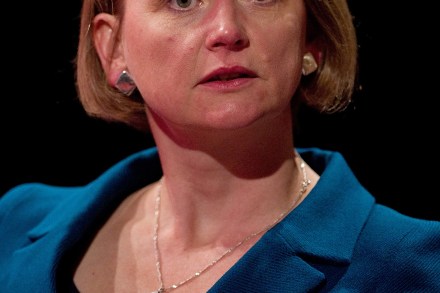
What an intriguing interview Yvette Cooper gave to Sky's Dermot Murnaghan show this morning — and not just because she was standing, ruffled and incongruous, in a field somewhere. I was live-tweeting proceedings here, and there was much to anticipate even before she appeared. On top of today's stories about housing benefit, social care and immigration, the shadow home secretary would also have to deal with the comments made by Lord Goldsmith during the show's newspaper review. "It's not clear what Ed Miliband stands for," said Goldsmith, to cheers from the Tory press team. "I don't think the rifts in the party have been healed.

From the archives: how The Spectator beat the strikes

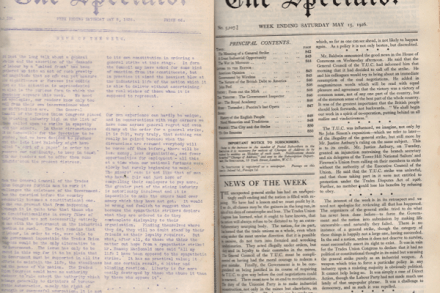
A change from the usual for this week's excavation into The Spectator archives — which is to say, we won't be digging out an article from the magazine's 183-year back-catalogue for CoffeeHousers' delectation. Instead, the images above, and a quick, little story. Given how nostalgic some people have recently been for the General Strike of 1926, my thinking was to present The Spectator's coverage from the time. (It is critical of both government and unions, as it happens). But it was the appearance of the issue dated 8th May 1926 that caught my eye, rather than its content. Its pages are thicker and rougher than the typical Spectators of that year. Its imprint looks straight off a typewriter, faded and blue. Its page-count is measlier.

Why IDS is right raise the link between immigration and worklessness

Before everyone gets too excited, Iain Duncan Smith is not saying in his speech today that immigration is a bad thing in itself. But he is saying that it has consequences, some of which impinge on native Brits. Many of these consequences are, as it happens, writ in the official statistics. As IDS highlights – and as Coffee House has detailed before – a good number of the jobs that sprang up during the New Labour years were accounted for by immigration; and there are signs that the process is continuing still. This is one of the reasons why the number of jobs in the economy can increase, while the dole queues barely shorten. Workers are imported, rather than nurtured.

Labour’s ambiguous victory in Inverclyde

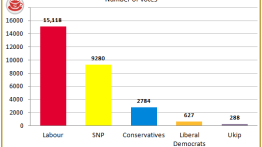
Amid all the union sturm und drang yesterday, it was easy to forget about last night's Parliamentary by-election in Inverclyde. But a by-election there was, after the death of the seat's previous Labour MP, David Cairns, in May. And the result was in some doubt, too. After the SNP's strong showing in last month's corresponding Scottish Parliamentary election, there was a sense, beforehand, that Labour's majority could be whittled down to naught. But, in the end, it wasn't to be. Labour won with a comfortable majority of 5,838 and a vote share of 53.8 per cent, albeit it down on the 14,416 and 56 per cent they secured in last year's general election.

The unions dip their toe into the water

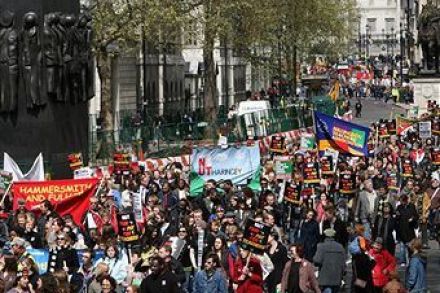
It's strange to think of the biggest, national walkout for years as a prelude to something even larger — but that's how some of the union bosses would have it today. Schools are shutting, civil servants are downing their keyboards, UK Border Agency staff are pausing their vigilant watch over our shores, and all the while the talk is of more to come. Christine Blower, the head of the NUT, tells the Times (£) that today is the "first phase" of a "coordinated campaign". Mark Serwotka — who appeared opposite Francis Maude on the Today Progamme earlier — warned yesterday that these are just the "opening skirmishes," and that, "If you won’t talk to us we will ensure the next national strike has three to four million of us.

Gove gets mathematical

Go go Gove, still trying to pack in the initiatives before summer recess. The focus today is on maths and the sciences, where the Education Secretary feels our students are falling behind. In a speech earlier, he set out a number of measures to help ameliorate the situation, including adding his name to City AM's appeal for bankers to donate to the Further Maths Support Programme charity. But, really, it was his more general remarks that caught the ear. He emphasised, for instance, the growing gap between us and the Asian nations: "At school, British 15-year-olds’ maths skills are now more than two whole academic years behind 15-year-olds in China.

What will emerge from the ashes in Afghanistan?

On Monday, James drew attention to Dexter Filkins' stark assessment of the situation in Afghanstan and of the strength of the Taliban. Today, the attack on a hotel in Kabul gives that assessment a fresh and tragic resonance. What we seem to be witnessing is the Taliban, or at least elements of them, flaunting their murderous intent as the West prepares to leave the country. From the assassination of General Daud to this Mumbai-style raid, their methods are becoming more ambitious, more headline-grabbing. Around ten innocents are said to have been killed this time around, along with six to seven of the Islamist militiamen.

The coming battle over university places

Until now, the debate over universities has dwelt inevitably on how much students need to stump up in tuition fees. With the release of today's White Paper, the government will hope that the emphasis shifts to what students receive in return for that cash. Basically, it is all about fixing a subverted market by making it more transparent. With universities good, bad and indifferent rushing to charge the maximum possible amount for fees, the idea is that forcing them to release more information about their courses — about teaching standards, job prospects and the like — will help students decide which are offering value-for-money. Who knows? It might even shame one or two institutions into lowering their asking prices.

Gove steps in to keep the schools running

A letter is bouncing around Whitehall, and I thought CoffeeHousers might care to see a copy. It has been penned by Michael Gove, and is being dispatched to all headmasters today. It urges them to Keep Calm and Carry On during the impending strikes over teachers' pensions. "My view," pens the education secretary, "is that we all have a strong moral duty to pupils and parents to keep schools open, and the Government wants to help you achieve that." You can read the full thing below. While much of this missive is dry, dry stuff — certainly drier than Gove's usual prose — it's also quite revealing of the government's approach to strikes.

Obama draws down his forces

It is as Matt Cavanagh predicted in his article for Coffee House, a few weeks ago. Barack Obama has decided to pull 10,000 of the 30,000 American "surge" troops out of Afghanistan this year. The remaining 20,000 will be outtathere by next summer. "Drawdown," is the word that the US President used in his address last night, and it is happening at quite a pace. He presented this approach as a victory, suggesting that America has already achieved most of its goals in the country, and that "the tide of war is receding". But there were one or two revealing notes of concession. "We will not try to make Afghanistan a perfect place," quoth Obama. And he nodded towards the fiscal cost of the war, as much as its human cost.

PMQs live blog | 22 June 2011

VERDICT: Ed Miliband repeated the same tactic as last week, concentrating on a specific policy area to test Cameron's command of the details — and again it had the desired effect, although not quite so tellingly as before. The Prime Minister floundered and generalised on the issue of rape arrests, but managed to turn some of his discomfort back on the Labour leader, and ended their exchange sounding more confident than perhaps he was. He was then consideraby more surefooted throughout the backbench questions, particularly when it came to public sector pensions and to attacking Labour's unfunded VAT cut. But, on the whole, this was another session to relieve the pressure on Miliband. 1235: And so another session of PMQs ends. My brief verdict coming up shortly.

America and Britain turn their minds to the (fiscal) cost of war

Five-thousand, ten-thousand, or fifteen-thousand? That's the question hanging in the air as Barack Obama prepares to clarify his withdrawal plan for Afghanistan this evening (or 0100 BST, if you're minded to stay up). And it relates to how many of the 30,000 "surge" troops he will decide to release from the country this year. Washington's money appears to be on 10,000, with half of them leaving this summer and half in December. But no-one outside of the President's clique really yet knows. His final decision will say a fair amount about his intentions in Afghanistan, or at least about just how fast he wants to scram out of there. What's really striking, though, is the emphasis being placed on the bill for Afghanistan.

Cameron muscles Clarke off the stage

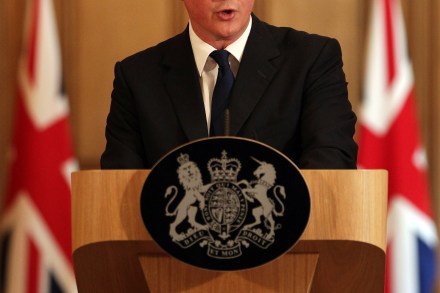
The toughening-up effort continued with David Cameron's press conference just now. There he was, at the prime ministerial lectern, not just announcing a stricter sentencing system than Ken Clarke broached a few weeks ago, but explaining why the government's change of mind was actually "a sign of strength". Out are the 50 per cent sentence reductions for those who plead guilty early. In is a commtiment to jail those caught using a knife threateningly, as well as a bundle of tougher measures all round. "Being strong is about being prepared to admit that you didn't get everything right the first time around," said Mr Cameron, again and again.

Cameron gets tough

Toughness, or at least the appearance of it, is clearly the theme of the week on Downing Street. After the vacillations over NHS reform, David Cameron seems to be going out of his way to sound that little bit more hard. There's the headline on the front of today's Times, for instance: "Cameron to Europe: not one penny more." And there was the PM's claim, yesterday, that a Tory majority government would be "tougher" on immigration and welfare. Even the recent hyperactivity of Michael Gove is, I'm sure, all part of the plan, given that schools reform is broadly one of the areas where the government will (probably) never apologise, never surrender. But the new hardline isn't just a straight one, oh no.

Gove reaffirms his faith in free schools

Invigorating, that's probably the best word for Policy Exchange's event on free schools this morning. Right from Sir Michael Wilshaw's opening address — which set out the reasons why he, as headteacher of Mossbourne Academy, is optimistic about education reform — to Michael Gove's longer, more involved speech, this was all about celebrating and promoting the new freedoms that teachers are enjoying. There were some specifics about the schools that are opening, and the numbers of them, but very little of it was new. For the first time in a week, Gove wasn't announcing policy, but instead referring back to it. Which isn't to say that this was an ornamental occasion — far from it. Sir Michael's "four reasons for optimism" were, by themselves, pretty noteworthy.

Boris’s one-two punch against the coalition

Boris, we know, has never had any compunctions about distinguishing his views from those of the coalition government. Take his recent proclamations on the unions or on the economy, for instance. But his latest remarks are still striking in their forthrightness. Exhibit A is the article he has written for today's Sun, which — although it doesn't mention Ken Clarke by name — clearly has the Justice Secretary in mind when it exhorts that "it's time to stop offering shorter sentences and get-out clauses." And Exhibit B is his column for the Telegraph, which waxes condemnatory about Greece and the euro.

It’s not just about public sector pensions

The bustle around public sector pensions has obscured an equally significant, pensions-related story today: the Sunday Telegraph's claim that George Osborne is considering sucking £7 billion from the pensions of higher earners. The way it would be achieved, reports Patrick Hennessey, would be to terminate the tax relief on pension contributions made by those in the 40 and 50 per cent income tax brackets. He adds that the Exchequer could spend the resulting funds on deficit reduction, or on notching up the basic state pension. At the moment, it sounds as though this is just one of those on-the-table type deals: an idea being passed around the Treasury, but not yet decided upon.