Peter Hoskin

Brooks stands firm

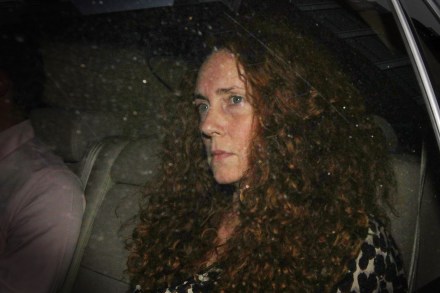
More fuel for the firestorm: this time, a letter by Rebekah Brooks, answering questions put to her by the Home Affairs select committee. It truth, it doesn't say much that wasn't either spelt out or suggested in Brooks' earlier statement this week. But its three main assertions are still worth noting: Brooks had "no knowledge" about the hacking of Milly Dowler's phone, she claims; likewise for "any other cases during [her] tenure"; and "the practice of phone hacking is not continuing at the News of the World." In the meantime, Labour are keeping up the political pressure — asking, now, for a judge-led inquiry to convene sooner, sooner, sooner, in view of concerns that evidence may disappear along with the News of the World tomorrow.

Roadblocked to death?

You may doubt that Downing Street is doing much politics beyond the phone hacking saga at the moment — but it is. The coming week will see the launch of the long-awaited, much-delayed public services White Paper, which is intended to set the framework for more or less every service we receive from the state. You may remember that Cameron heralded it with an article for the Telegraph back in February. Then, he suggested that private and charitable providers would be as privileged as state ones, writing both that, "we will create a new presumption that public services should be open to a range of providers competing to offer a better service," and that, "the state will have to justify why it should ever operate a monopoly.

The story sticks to No.10

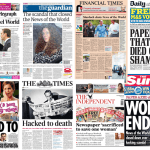
Big and bold, the contraction "No.10" appears on most of this morning's front pages. Or, failing that, the words "former Cameron aide". After the arrest of Andy Coulson yesterday, it was ever going to be thus. But it's still a sign of how closely Downing Street is being bound into the phone hacking scandal. Cameron's call, yesterday, for a judge-led inquiry into the whole, stinking affair — which was, you suspect, intended to deflect some of the heat away from his prime ministerial pulpit — is treated almost as a footnote. It's all Cameron, Coulson, Cameron, Brooks. There's more emphasis on Downing Street inside the papers, too.

Lampooning the royals

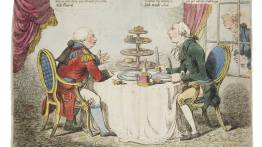
After all the splendiferous photographs of the Duke and Duchess of Cambridge, how about something more subversive? That is what Kew Palace delivers in its exhibition of George III caricatures from the collection of Lord Baker. This is royalty filtered not through the flattering lenses of the modern photographer, but through the sharp nibs of 18th-century cartoonists such as James Gillray. The results are vicious. Delightfully so. The fashion among Gillray and his co-conspirators was to lampoon the King for his interest in agriculture. ‘Farmer George’ is shown as more mouldy peasant than monarch, with billowing lips and the shoulder-heavy gait of an ox. But this is nothing compared with the satirical treatment of his wife, Queen Charlotte.

Miliband is running out of attacks — but he’ll use what he’s got

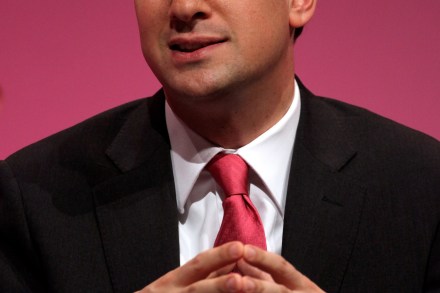
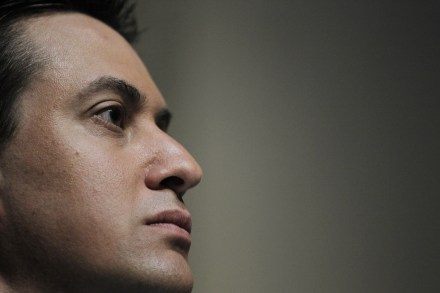
It's a strange thing, amid all venom and spite over the phone hacking scandal, how the three main parties are actually converging on the same responses. A judge-led inquiry? That's now party policy for them all. The end of the PCC? Likewise. In his press conference earlier, Cameron even came close to saying that Rebekah Brooks should have lost her job. For once, there are trace quantities of Agreeing With Ed in the air at Westminster. This is both a boon and a bitterness for Ed Miliband. A boon, because he can at least claim that Labour led the debate, and Cameron followed. A bitterness, because the politics of the situation were so much easier for him when there were clear divides between his party and the government.

Clegg: don’t let’s be beastly to the eurozone

If you strain your ears, and listen very carefully above the din of the phone hacking scandal, then you may just hear Nick Clegg's voice wafting across the Channel from Paris. Our Deputy Prime Minister is on the Continent today, delivering a speech that, in other circumstances, might have made more of a splash. This is, after all, a speech in which he stands up for the eurozone, and chastises those eurospectics — some of them within the coalition parties — who are eagerly anticipating its collapse. Or as he puts it himself: "A successful eurozone is essential for a prosperous UK. So there is no room for Schadenfreude here, no place for wagging fingers.

A newspaper has died, and the recriminations are only just beginning

The blood of the News of the World is sprayed right across the front pages this morning. And yet there's still more bleeding to be done, it seems. The Guardian has been reporting since last night that Andy Coulson is to be arrested today, over suspicions about his knowledge of phone hacking and police bribery at the paper he once edited. The Mail quotes "supporters of Mr Coulson" as saying that, "he could make damaging claims about Mrs Brooks, who edited the News of the World before him, which in turn could result in her being questioned." Which rather captures the sense that this story could still intensify, even after Rupert Murdoch's dramatic attempt to cauterise the wound.

Breaking: News of the World to close

The Murdochs have acted — and how. The News of the World, a 168 year-old publication, is to close, for good, this weekend. The current speculation is that a Sunday edition of the Sun will take its place, but, for now, here's the official statement from James Murdoch: News International today announces that this Sunday, 10 July 2011, will be the last issue of the News of the World. Making the announcement to staff, James Murdoch, Deputy Chief Operating Officer, News Corporation, and Chairman, News International said: “I have important things to say about the News of the World and the steps we are taking to address the very serious problems that have occurred.

What the papers won’t say

Remember Operation Motorman? You may not, because little was made it at the time — and nothing like the current phone hacking furore. Yet many of the themes are identical. In 2003, a private investigator called Steve Whittamore was busted. His job was to simply to snoop out information for various newspaper groups, often using illegal methods. They'd pay him, he'd hand over the information. It really was that simple. Until, that is, the Information Commissioner got its hands on his records, which included details of some of the transactions made between him and his client journalists. By 2006, it had emerged how many journalists had been caught paying Whittamore for information, and which publications they worked for.

The phone hacking scandal tests the ties that bind the coalition

Gosh, this phone hacking scandal is moving at a pace. Fresh from the wire comes news that even the government is reviewing its advertising contracts with the News of the World; signs that Jeremy Hunt won't budge on the BSkyB deal; as well as further interventions by everyone from Ed Miliband to Boris Johnson. Overarching all that, though, are the hardening differences of opinion between the Tories and the Lib Dems. The yellow half of the coalition is going further and further in pushing for both an enforced pause to the BSkyB deal and a judge-led inquiry into the whole mess. Both Lord Oakeshott and Simon Hughes have called for the former. Nick Clegg's email to party members last night called for the latter, as did Chris Huhne on the Today Programme earlier.

The stakes rise for Rupert Murdoch

The business pages have more electricity to them than usual today, and all because of their overlap with the phone hacking scandal. In many ways, yesterday marked a turning point in the whole affair, in that it is now hitting Rupert Murdoch in the pocketbook. News Corporation shares — which had held up for a day or two — finally fell by 3.6 per cent, leaving its chairman and CEO some £120 million worse off. And, as we reported on the new Spectator Business Blog, shares in BSkyB took a similar course; due, no doubt, to prevailing concerns that Murdoch's takeover might be posponed indefinitely. Ofcom are just one of the many interested parties sniffing around the deal with renewed vigour and suspicion. Naturally, the polticians are sniffing around too.

PMQs live blog | 6 July 2011

VERDICT: A crescendo of a PMQs, which started in sombre fashion but soon swelled into a vicious confrontation between the two leaders. It is strangely difficult to say who won, not least because both men had their moments. Ed Miliband's persistent anger — including over Rupert Murdoch's takeover of BSkyB — will have chimed with public sentiment. But Cameron went further than expected by backing a public inquiry into the phone hacking affair, and without much equivocation either. In the end, though, I'd say Miliband probably came out on top, for seeming less on the side of News International. 1242: No surprises from Cameron's statement on Afghanistan.

Schooling the judges

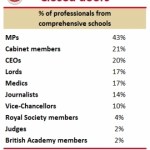
The judges are judging the judges, or at least judging by the cover of this morning's Times (£) they are. "Radical reform of the selection of judges," some leading figures tell the paper, "is needed to break the stranglehold of white Oxbridge males at the top of the judiciary." The story continues inside the paper, with a tranche of statistics on just how white, Oxbridge and male the judiciary actually is (i.e. very). It all reminded me of a table we put together for Coffee House some months ago, and which I thought I'd excavate this morning. Here it is, with judges sitting firmly at the bottom: Of course, some caveats apply to those figures: the state sector isn't just made up of comprehensives; this refers to the schools system of some decades ago; and so on.

Westminster prepares for a day of News International

The cascade of News of the World stories has, this morning, become a deluge. On top of last night's Andy Coulson news — which, as George Eaton points out, really oughtn't be that surprising — we have the Indepedent claiming that Rebekah Brooks personally "commissioned searches" from one of the private investigators tangled up in the Milly Dowler affair. The Guardian reveals that Cabinet ministers are minded to establish a full review into both ownership and regulation of the media. And the Telegraph suggests that the bereaved families of those killed in the 7 July bombing may have had their phones targeted.

Labour make a public inquiry their cause

I briefly mentioned Ed Miliband's assertive remarks about the News of the World earlier. But it is worth returning to the video, above, to highlight one of his specific demands. "A police inquiry needs to take place without fear of favour," said the Labour leader, "and then we need a much wider inquiry to restore the reputation of British journalism." Harriet Harman has since echoed this sentiment in Deputy Prime Minister's Questions, urging the government to "act" and establish a public inquiry into the newspaper trade. So, only hours after Tom Watson berated his party leadership for their timidity on this front, a public inquiry appears to have become official Labour policy.

Rebekah Brooks statement on phone hacking

Released in the last hour or so: Dear All, When I wrote to you last week updating you on a number of business issues I did not anticipate having to do so again so soon. However, I wanted to address the company as a matter of urgency in light of the new claims against the News of the World. We were all appalled and shocked when we heard about these allegations yesterday. I have to tell you that I am sickened that these events are alleged to have happened. Not just because I was editor of the News of the World at the time, but if the accusations are true, the devastating effect on Milly Dowler's family is unforgivable.

Regulators on the rack over phone hacking

The latest, hideous developments in the phone hacking scandal are emblazoned across all this morning's papers — all, that is, expect the tabloids. And our political leadership is putting voice to its concerns, too. Only this morning, David Cameron said of the allegations surrounding the News of the World that, "If they are true, this is a truly dreadful act and a truly dreadful situation." And Ed Miliband has since given an atypically firm and assertive interview, calling on Rebekah Brooks to "consider her conscience and consider her position." Perhaps he was stung by Tom Watson's criticism, last night, that all three party leaders have "let the Dowler family down" by not calling for a public inquiry.

The Afghan conflict creates other conflicts for Cameron

Another day, yesterday, to remind us of the precariousness of everything in Afghanistan. With David Cameron in the country, it was announced, first, that a British soldier had gone missing from his base; and, then, that the same soldier had been found dead with gunshot wounds. "His exact cause of death is still to be established," said a spokesman, "and the circumstances surrounding his disappearance and death are currently under investigation." His is the 375th British military death in the country since operations began. And, of course, the politics quiver on in the background.

A shameful episode | 4 July 2011

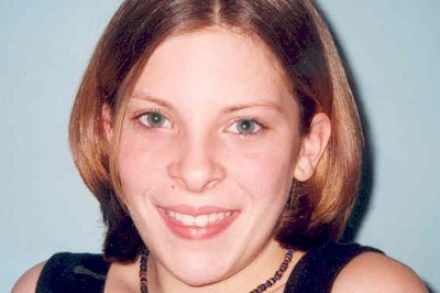
Even by the standards of what has been a particularly shameful episode in British media history, the latest phone-hacking revelations are disgraceful stuff. According to the Guardian, private investigators hired by the News of the World targeted the phones of the then-missing schoolgirl Milly Dowler and her family, in 2002, to listen into their voicemails. And, worse, the paper is said to have deleted voicemails from Milly Dowler's phone to make room for more — an act which it thought to have given the police, and her parents, hope that she was still alive. There is much more detail here, including news that the Dowlers are now pursuing a damages claim against the News of the World. We cannot yet be completely certain about the truth of these new claims.

Greece is haemorrhaging its sovereignty

One of the upshots of the euro was always a certain loss of self-determination. Even on a basic level, its member states had relinquished control of their monetary policy and handed it over, wholesale, to the European Central Bank in Frankfurt. But — as James suggested last week — it's only now that we're seeing the dismal endpoint of that equation. The conditions attached to the bailout packages mean that Greece's fiscal policy is ever more decided in Brussels, and decreasingly in Athens. Which is why Jean-Claude Junker's comments from over the weekend are worth returning to now, as an example of this unforgiving process. "The sovereignty of Greece will be massively limited," is how the Eurogroup chief put it to a German magazine.