Peter Hoskin

Cable tries to keep everyone happy – apart from the unions

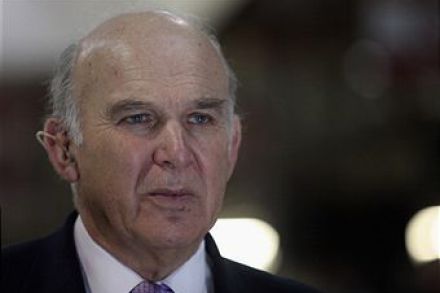
When the GMB union invited Vince Cable to address their conference today, I doubt they wanted this: a warning that the government could legislate if the brothers decide to militate. The Business Secretary does add that "the case for changing strike law is not compelling," so long as industrial action remains limited. But, on the surface, this is still the firmest coalition attack on the unions since David Cameron and Boris wrote that angry article for the Sun in January. And it comes from the side of the coalition, the Lib Dems, who were thought to be opposed to taking on the unions in the first place. Perhaps Cable really is more ruthless on this than his reputation would suggest. The question, though, is of how the rhetoric will translate to reality.

So long, Saleh?

The Middle Eastern merry-go-round takes another turn with the news that President Ali Abdullah Saleh has fled to Saudi Arabia. He has been promising to depart his role, if not his country, for some time now — but the wounds he allegedly sustained after an attack on his compound may have forced the issue. There's always the possibility that he could return to Yemen after his treatment across the border, although it's an unlikely prospect. The Saudis have already gone out of their way by granting this brutal dicatator some degree of clemency, without foisting him back upon his country. And Saleh will already have lost power and influence by accepting their help.

The vanguard of the universities revolution?

One new institution does not a revolution make. But there's still something a little revolutionary about the New College of the Humanities that is set to open, in London, in September 2012. Perhaps it's the idea behind it: a private university that charges fees of £18,000 a year (with bursaries available to those who can't afford that). Or perhaps it's the names who are fronting it: AC Grayling, Richard Dawkins, Niall Ferguson, etc. They will, apparently, be conducting tutorials themselves. The public academics, it seems, are pitching their tents on the private sector. Mary Beard lists some reasons no to get too excited here. This is, she says, little more than a US-style liberal arts college that won't offer science courses or post-graduate qualifications.

The return of the signature parade

Oh dear, we're back to letter-writing again. 52 academic sorts — including the Labour advisor Richard Grayson and Blue Labour proponent Stuart White — have a letter in today's Observer urging George Osborne towards a 'Plan B' for the economy. They even sketch out, in less than 150 words, what that Plan B might look like. And, strangely enough, it has more than a tinge of Ed Miliband about it, including — and I quote — a green new deal; a focus on targeted industrial policy; the empowerment of workers; "unsqueezing" the incomes of the majority, and so on. I say we're back to letter-writing again, because it's all so reminiscent of one of the most unedifying episodes in the fiscal debate so far, from before last year's election.

Lansley’s inflated sense of his own department’s spending

The listening is over, now for the legislating. But if you're keen to find out how Andrew Lansley's health reforms will look in the end, then don't expect many clues in his article for the Telegraph today. Aside from some sustained hints about involving "town halls" and "nurses" in the process, this is really just another explanation of why the NHS needs to change — not how it will change. Lansley's central justification is one that he has deployed with greater frequency over the last few weeks: that, without change, the NHS will become too cumbersome and costly a beast.

Where next on social care?

There is, as Paul Goodman notes, a grim tide of stories about the vulnerable — and their maltreatment — in the papers today. Perhaps the most disgraceful is the case highlighted by last night's Panorama, of the abuse suffered by adults with learning disabilities at a specialist hospital in Bristol, which has led to four arrests. But there is also the slow financial collapse of Southern Cross, the country's largest care home operator. The FT's Jim Pickard has a useful summary of the situation here. But the basic point is that if Southern Cross shatters, then over 30,000 elderly people will be relying on other groups, landlords and councils to pick up the pieces. There is a lot of tragic potential in that uncertainty.

More ermine troubles for Nick Clegg

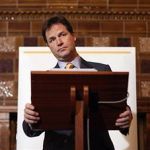
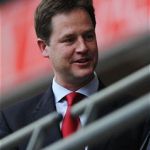
Tory backbenchers have been whispering to the Times (£), and their words will not hearten Nick Clegg. If the coalition pushes for Lords reform, one says, then about 50 of them will rebel. "If you were listing priorities for the Tories, I'm not sure you would put this at the top," another adds, "[it might be] bumped down by other priorities that come along." Much hinges on how eager David Cameron is to confront this resistance, and hasten a policy that was more or less writ into his party's manifesto. In the weeks following the AV referendum, the Tory leader has been happy for Clegg to act alone as the scourge of an unelected Lords. But, without support, Clegg could just look like the fall guy, there to take the heat for yet another Lib Dem disappointment.

The inflation battle heats up

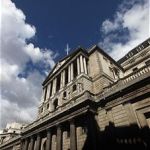
He left with a warning. "I think that there is a big risk emerging to the credibility of the Bank," said Andrew Sentance last night, on his final day as a member of the Monetary Policy Committee. And he continued, "If inflation does not come down in the way that the Bank is suggesting — and I think there is a big risk that is the case — then that is going to have a big knock on effect on the credibility of the bank's commitment to its inflation target." Sentance's views are unsurprising.

The coalition’s 2015 problem

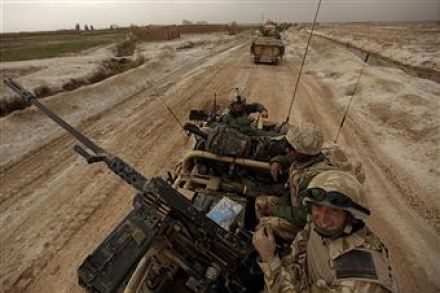
The generals and the politicians are at odds with each other. This much has been clear since the run-up to last year's Defence Review, but it finds a particularly clear expression in the Telegraph's interview with Lt Gen James Bucknall today. Britain's most senior commander in Afghanistan may not say, in terms, that we should avoid a timetable for withdrawal from the country — but he skirts awfully close to it. "It is of utmost importance that we stay the course, that we stay as long as it takes to finish our job," he says, only a fortnight after David Cameron announced that 450 troops will be pulled out of the country this year. More specifically, Bucknall wants at least "two winters and two fighting seasons" without a diminished combat capacity.

Britain’s other, bigger debt problem

And what about the other sort of debt? We spend so much time harrumphing about the national debt that an important point is obscured: personal debt, the amount owed by individuals, is even higher. I wrote an article on the subject for a recent issue of The Spectator, as well as the Thunderer column (£) for last Saturday's Times. But, really, a piece in the latest Spectator (subscribers here) by Helen Wood — the former prostitute who transacted with Wayne Rooney, as well as with a "married actor" who has slapped her with a superinjunction — puts voice to the problem in blunter fashion. "My mistake," she writes, "was to get into debt": "I borrowed £800 to go on holiday, followed by £500 to pay the rent — both from loan sharks.

Clegg’s ermine troubles

Turkeys don't vote for Christmas, that much we know. But thanks to the wonders of modern science, we can now poll them on it. Today's Times carries a survey of the 789 peers who are entitled to sit in the Lords — of whom, 310 responded. It's not a huge sample size, but the results, you assume, are representative. 80 per cent oppose a wholly or mainly elected second chamber, including 46 per cent of Lib Dem peers. 81 per cent believe that the Lords works well as it is. And 74 per cent believe that it wouldn't be "constitutionally correct" for the Commons to force through a cull of the unelecteds by deploying the notorious Parliament Act.

From the archives: Bush in London

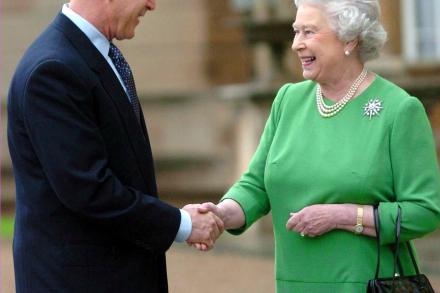
You may have noticed that Barack Obama came to the country on a state visit this week. But he wasn't the first US President to be extended an invitation from the Queen, oh no. George W. Bush beat him to that particular honour in 2003. Here are a couple of Spectator pieces from the time, the first the magazine's leader column, the second by Peter Oborne: Don't burn Bush, The Spectator, 15 November 2003 The Queen's state carriage has carried some pretty rum types over the years. Nicolae Ceauscescu took a break from murdering his countrymen to take a ride down the Mall in June 1978. In 1994 it was Robert Mugabe's privilege and in 1979 Kenya's President Daniel arap Moi - at a time when Moi's corrupt administration was bleeding his country of £00 million a year.

Off target

Target culture. It's a pejorative phrase, and understandably so. As we discovered during the New Labour years, targets designed to encourage good public services can frequently do the opposite — replacing genuine care with box-ticking, and action with bureaucracy. I mention this now because of an article in this week's Spectator (do subscribe, etc.) by an anonymous Metropolitan Police officer. He describes how a target culture has skewed the work of the force and, in some cases, even the law itself. Here's one anecdote, which rather sums it all up: "I know of one instance in which a uniformed sergeant stole (or neglected to hand in) some confiscated cannabis.

More freedom for some schools means better schools all round

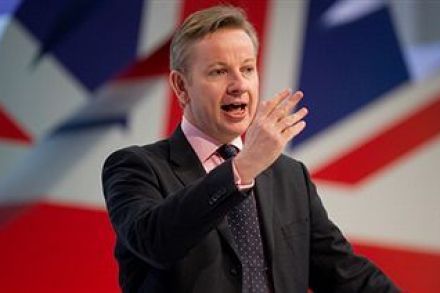
Academies, as CoffeeHouser knows, are booming. There were around 200 of them when Michael Gove became Education Secretary last May. Now, just a year later, and steaming well ahead of expectations, there are over 600. This is, as Benedict Brogan suggests in his Telegraph column today, one of the great successes of the coalition era — albeit one that owes a debt to Andrew Adonis, Tony Blair and all the school reformers that came before them. And it is a triumph of quality, as well as of quantity. The simple, overwhelming truth is that academies are, on the whole, better than the schools they replace.

Cable’s punditry could come unstuck

"It's not imminent. But you can see this happening." So sayeth Vince Cable about the prospect of another global financial crisis, in interview with the New Statesman today. To be fair, you can see his point: there is a pervasive sense that the contradictions of the banking sector still haven't been fixed, and — as I have written recently — our economy, and economies worldwide, are still afflicted by debt of all varieties. But that's not going to calm those Tories who regard Cable as a combustive liability. In the weeks since the Lib Dems'  annihilation at the polls, the Business Secretary has increasingly reverted to his pre-coalition form: a professional commentator on the state of the economy.

Cameron and Obama’s mutual appreciation has its limits

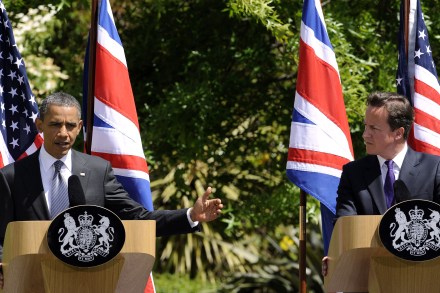
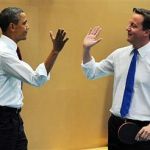
And the Word of the Day is "we". Both David Cameron and Barack Obama deployed it liberally in their joint press conference just now, as they ran through all the mutual pleasantries and backslapping that attends these events. "We have discussed the two things we care about the most," flushed Cameron, "getting our people jobs, and keeping our people safe." From there on in it was first name terms — "thank you, David" — and claims about the strength of our two countries' special, essential, unique relationship, etc. With the sun blazing down on the garden of Lancaster House, I'm sure the photos will turn out nice. Cameron appeared to be the more eager of the two men, however.

The state of the NHS

I know most CoffeeHousers aren't particularly enamoured of paywalls, but the Times has given you a persuasive reason (£) to dive behind theirs today. (Or least to borrow a copy of the paper.) It's the first of three reports by Camilla Cavendish on the NHS, this one concentrating on the Way Things Are Now. It is both a disheartening read and a powerful reminder of how taxpayers' cash is being funnelled into a system that is dysfunctional in the extreme. Here is one snippet for your displeasure: "Care in Britain ranges from world-class to shocking. Between 1998 and 2006, 1.6 per cent of bowel cancer sufferers died within a month at the Manchester Royal Infirmary, compared with 15.6 per cent at Queen’s Hospital, Burton upon Trent.

The Tory divide over European bail-outs

As Obama and Cameron played table tennis yesterday, a considerably more furious game was being waged between the government and Tory backbenchers. It related to a Parliamentary motion tabled by Mark Reckless – and described here – that sought to stem UK involvement in any future bailouts for eurozone countries. All well and good, you'd think, until a rival amendment percolated down from on high to dilute Reckless's proposals. This new amendment would only go so far as to "urge the Government to raise the issue of the [bailout mechanism] at the next meeting of the Council of Ministers of the European Council". The green benches were set for a violent back-and-forth 'tween one side and the other. The outcome of all this was revealed yesterday evening.

Why Miliband needs to be more specific — and quick

Ed Miliband owes Coffee House contributor Ed Howker a drink. In his speech today, the Labour leader borrows the central idea — and the title — of the stunningly insightful book that Ed wrote with Shiv Malik last year, Jilted Generation: How Britain Bankrupted its Youth. It is, basically speaking, the idea that the current generation of twenty-somethings is, in many respects, disadvantaged in comparison their baby-boomer forbears. From the burden of dealing with debt, both personal and national, to the fluctuations of the housing and labour markets, young people are up against it. And it may get worse. As Miliband puts it, "I am worried — and every parent should be worried — about what will happen to our children in the coming decades.

Going big on the Big Society

You certainly can't fault David Cameron for his perseverance. Six years after pushing the thinking behind the Big Society in his pitch for the Tory leadership, and three relaunches of the idea later, he is still at it in a speech today. He will, apparently, stress that the Big Society is not some nebulous nothingness — but, rather, "as gritty and as important as it gets". And as if to underline the point, the PM will announce some solid new measures to bolster his grand projet, such as £40 million of extra funding for volunteering. Cameron is, I suspect, making this case for two main reasons: to counter criticism of his Big Idea and to present a sunny flipside to the cuts, cuts, cuts. But an accident of timing adds to the resonance of this speech.